

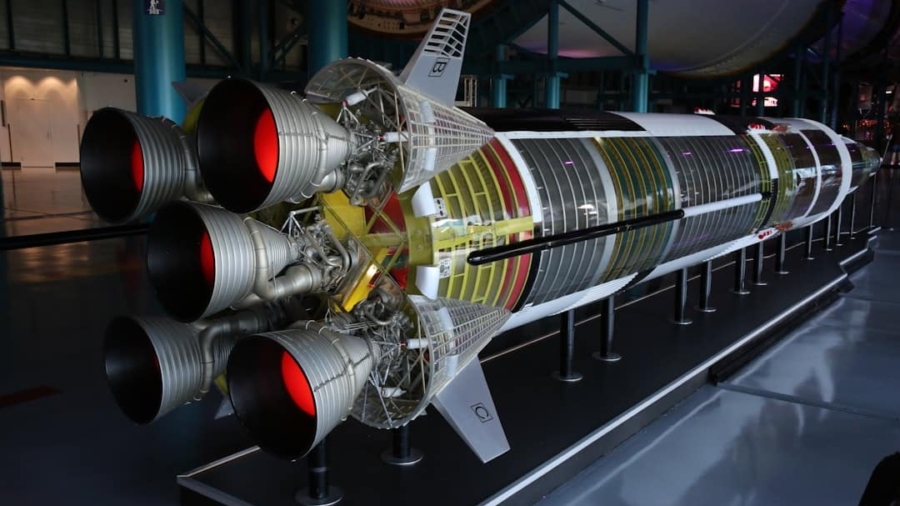
Nuclear thermal propulsion (NTP) is a game-changer for deep space exploration, offering a way to travel much faster and further than current chemical rockets. Think of it as a significantly beefier engine that can keep its thrust going for much longer, making those ambitious journeys to Mars and beyond far more feasible. The core idea is simple: use a nuclear reactor to heat a propellant (usually hydrogen) to incredibly high temperatures, then expel it through a nozzle to generate thrust. This is a fundamentally different approach to how we’ve been launching things for decades, and the advancements we’re seeing are pushing the boundaries of what’s possible in space travel.
When we talk about “deep space,” we’re not just talking about a hop to the Moon. We’re talking about venturing to Mars, the outer planets like Jupiter and Saturn, and even destinations beyond our solar system. The problem with our current rocket technology – the chemical rockets that launch everything we send into orbit and beyond – is that they are incredibly fuel-hungry. To get anywhere substantial in the solar system, we need enormous amounts of fuel, and that fuel is heavy. This creates a vicious cycle: more fuel means a heavier rocket, which means you need even more fuel to get that heavier rocket moving.
This severely limits the speed and duration of our missions. A trip to Mars, for example, can take anywhere from six to nine months with chemical rockets. That’s a long time for humans to be in space, dealing with radiation, psychological stress, and the logistical challenges of life support. For robotic missions to the outer planets, the travel times can stretch into years or even decades. This isn’t just an inconvenience; it means that opportunities for scientific observation are limited by transit time, and the cost of these long missions escalates dramatically.
The Time Barrier
The sheer amount of time it takes to reach distant destinations is a major hurdle. For human missions, extended travel times increase the risk of health problems for astronauts, including bone density loss, muscle atrophy, and weakened immune systems. The psychological toll of being confined in a small space for months on end is also a significant concern. Furthermore, mission windows – specific times when planets are in the right alignment for efficient travel – are often dictated by these long transit times, meaning we might have to wait years for the next optimal launch opportunity.
The Radiation Challenge
In deep space, astronauts are exposed to much higher levels of cosmic radiation than they are in Earth’s orbit or on the Moon. This radiation can damage DNA and increase the risk of cancer and other health problems. Shorter transit times significantly reduce this cumulative exposure, making human missions to the outer solar system far safer. While shielding can help, it adds mass and complexity to spacecraft, which is another reason why speed is so valuable.
Scientific Opportunities
For robotic probes, faster travel means arriving at scientific targets sooner. This allows for more frequent and focused observations, enabling us to study dynamic phenomena in the outer solar system, like Jupiter’s auroras or Saturn’s rings, with greater detail and over longer periods. It also opens up the possibility of sending probes to destinations that are currently almost inaccessible due to the immense time commitment required.
Recent advancements in nuclear thermal propulsion (NTP) have the potential to revolutionize deep space missions, significantly reducing travel time to distant destinations such as Mars and beyond. For those interested in exploring the technological innovations that support such advancements, a related article can be found at this link: Best Software for 3D Animation. This article discusses the software tools that can aid in visualizing and simulating complex systems, including those used in the development of nuclear thermal propulsion technologies.
Key Takeaways
- Clear communication is essential for effective teamwork
- Active listening is crucial for understanding team members’ perspectives
- Conflict resolution skills are necessary for managing disagreements
- Trust and respect are the foundation of a successful team
- Collaboration and cooperation are key for achieving common goals
How Nuclear Thermal Propulsion Works
At its heart, NTP leverages the immense energy contained within a nuclear reactor. Instead of using a chemical reaction that burns fuel, NTP uses a controlled nuclear fission process to generate heat. This heat is then transferred to a propellant, typically liquid hydrogen, which expands and is expelled through a nozzle at high velocity. This creates a thrust that is far more efficient than what chemical rockets can achieve.
The key advantage of NTP lies in its specific impulse. Specific impulse is a measure of how efficiently a rocket engine uses its propellant. Higher specific impulse means more thrust for the same amount of propellant, or equivalently, the same amount of thrust for less propellant. NTP systems boast specific impulses that are roughly double that of the best chemical rockets, meaning a spacecraft powered by NTP could achieve the same speed with half the propellant mass, or travel twice as fast with the same propellant mass.
The Reactor Core: The Heart of the System
The nuclear reactor in an NTP system is designed to be compact and lightweight, suitable for spaceflight. It’s fueled by enriched uranium, similar to reactors used in power plants, but optimized for the specific demands of spacecraft propulsion. The fission process generates an intense heat, which is then used to heat the propellant. Extensive research has gone into making these reactors safe, reliable, and controllable in the harsh environment of space. Key challenges include managing heat, ensuring long-term operation, and shielding astronauts from radiation.
The Propellant: Hydrogen’s Advantage
Liquid hydrogen is the propellant of choice for most NTP designs due to its low molecular weight. When heated to extremely high temperatures by the reactor, hydrogen molecules become highly energetic and expand rapidly. This rapid expansion through the nozzle is what generates the propulsive force. Because hydrogen is so light, it can be expelled at very high speeds, contributing to the high specific impulse of NTP. Storing and handling liquid hydrogen in space, however, presents its own set of engineering challenges, including boil-off and tank insulation.
Nozzle and Thrust Generation
The hot, high-pressure gas produced from the heated propellant is channeled through a specially designed nozzle, usually a de Laval nozzle. This type of nozzle is shaped to accelerate the gas to supersonic speeds as it expands, maximizing the thrust generated. The efficiency of the nozzle design is crucial for translating the thermal energy from the reactor into kinetic energy of the expelled propellant. Materials science plays a vital role here, as the nozzle must withstand incredibly high temperatures and pressures.
Advancements in Reactor Technology

The nuclear reactors for NTP are a far cry from the massive, complex power plants we see on Earth. For space applications, they need to be small, light, and incredibly robust, capable of operating for extended periods in extreme conditions. Recent advancements have focused on several key areas to make these reactors more practical and efficient for space missions.
Compact Reactor Designs
One of the primary goals has been to miniaturize the reactor core while maintaining sufficient power output.
Innovations in fuel element design, moderator materials, and control rod mechanisms have led to significantly smaller and lighter reactor designs. This means less mass to launch, which is always a critical factor for space missions. The focus is on achieving high power density – a lot of heat generated from a small volume.
Fuel Innovations
New fuel types and forms are being developed to improve safety and performance.
For instance, ceramic-coated fuel particles (TRISO fuel) are highly robust and can withstand very high temperatures, reducing the risk of fuel dispersal in the event of an anomaly. This type of fuel holds the fission products within multiple protective layers, significantly enhancing its safety profile. Research also continues into optimizing fuel enrichment and burn-up rates for longer mission durations.
Enhanced Heat Transfer
Efficiently transferring heat from the reactor core to the propellant is paramount.
Advanced heat exchanger designs and materials are being explored to maximize heat transfer rates while minimizing weight and complexity. This involves careful consideration of fluid dynamics, thermal conductivity, and the materials used in the heat exchanger system itself, ensuring they can endure the extreme temperatures and stresses.
Safety and Control Systems
Developing sophisticated control systems is critical for ensuring the safe operation of NTP reactors in space. This includes redundant systems, fail-safe mechanisms, and autonomous control capabilities.
The goal is to have reactors that are inherently safe, meaning they would shut down safely even in the event of unexpected situations, and can be precisely controlled from launch to shutdown. Extensive testing and simulation are crucial to validate these safety features.
Propellant Handling and Management

While the reactor is the engine’s heart, managing the propellant is equally vital for NTP to be effective. Liquid hydrogen, while providing exceptional performance, is notoriously difficult to handle. It’s extremely cold, has low density, and tends to boil off. Significant engineering effort is directed towards overcoming these challenges.
Minimizing Propellant Boil-Off
In-space storage of liquid hydrogen for extended periods presents a significant challenge due to boil-off. Advancements in cryogenic insulation technology, including multi-layer insulation (MLI) and vacuum jackets, are crucial for reducing heat leak into the propellant tanks. Cryocoolers and vapor-cooled shields are also being developed to actively remove heat and reliquidize any hydrogen that does vaporize, keeping the propellant cold and minimizing losses.
Advanced Tank Designs
The design of the propellant tanks themselves plays a key role. Lightweight composite materials are being explored for tank construction to reduce overall spacecraft mass. Innovative tank geometries and propellant management devices are also being developed to ensure that propellant is readily available to the engine, even under varying acceleration conditions or during prolonged coast phases. This includes systems that ensure propellant settles correctly in the tank for optimal feed to the engine.
Efficient Propellant Delivery
Ensuring a consistent and reliable flow of propellant to the reactor is essential for stable engine operation. This involves sophisticated pump and turbine systems, often driven by the hot hydrogen itself, to pressurize the propellant and deliver it at the required rate. The interface between the propellant system and the reactor is a critical area of design, requiring materials that can withstand extreme temperatures and pressures.
Recent developments in nuclear thermal propulsion are paving the way for more efficient deep space missions, significantly enhancing our capabilities for exploring distant planets.
For those interested in the technological advancements that support such missions, a related article discusses the best laptops for engineering software, which are essential tools for designing and simulating these complex systems.
You can read more about it in this It could even enable missions to collect samples from comets or asteroids and return them to Earth for detailed analysis with unprecedented speed. Another exciting prospect is the potential for NTP to enable more complex logistical operations in space. For instance, refueling stations could be established in orbit or at Lagrange points, where spacecraft could refuel using propellants mined from asteroids or derived from lunar water ice. NTP-powered tugs could then ferry these propellants to spacecraft that are preparing for deep space journeys, reducing the amount of fuel that needs to be launched from Earth. This concept of in-space logistics is crucial for enabling larger, more ambitious exploration architectures. This could also extend to enabling rapid response capabilities for unexpected scientific opportunities or for supporting future space infrastructure development. The ability to quickly move large amounts of mass between destinations is key to building a sustainable presence beyond Earth. Nuclear thermal propulsion (NTP) is a type of propulsion system that uses a nuclear reactor to heat a propellant, typically hydrogen, to generate thrust. The heated propellant is then expelled through a nozzle to produce thrust, allowing for efficient and high-speed space travel. Nuclear thermal propulsion offers several advantages for deep space missions, including higher specific impulse (efficiency) compared to traditional chemical propulsion systems, which allows for faster travel and reduced mission duration. Additionally, NTP systems can enable larger payloads and more efficient cargo delivery to distant destinations. Recent advancements in nuclear thermal propulsion technology include the development of more efficient and compact nuclear reactors, improved propellant heating and expulsion systems, and enhanced safety features to mitigate potential radiation risks. Additionally, research is ongoing to optimize reactor design and fuel elements for long-duration space missions. Challenges and risks associated with nuclear thermal propulsion include the need for robust radiation shielding to protect crew and sensitive equipment, as well as the potential for nuclear accidents or reactor malfunctions. Additionally, regulatory and public acceptance hurdles may need to be addressed before NTP systems can be implemented for deep space missions. Nuclear thermal propulsion has the potential to revolutionize space exploration by enabling faster and more efficient travel to distant destinations, such as Mars and beyond. NTP systems could also support the establishment of permanent human habitats on other planets and facilitate the extraction of resources from celestial bodies.
Enjoying our content? Make us a preferred source on Google: Refueling and In-Space Operations
FAQs
What is nuclear thermal propulsion (NTP) and how does it work?
What are the advantages of nuclear thermal propulsion for deep space missions?
What are the current advancements in nuclear thermal propulsion technology?
What are the potential challenges and risks associated with nuclear thermal propulsion?
What are the potential future applications of nuclear thermal propulsion in space exploration?
, Saturn’s mysterious moons (Titan, Enceladus), or Uranus and Neptune. The ability to reach these destinations in a matter of years rather than decades allows for more timely scientific discoveries and the potential to observe transient phenomena. It also allows for more complex, multi-target missions within the outer solar system.</p>
<h3>Advanced Science Missions</h3>
<p>Beyond planetary exploration, NTP could power novel science missions, such as advanced observatories in the vastness of space or missions to study interstellar phenomena. The ability to achieve high velocities allows for rapid deployment and repositioning of scientific instruments, and participation in unique scientific campaigns that require quick access or movement.</p>
<blockquote style=)