

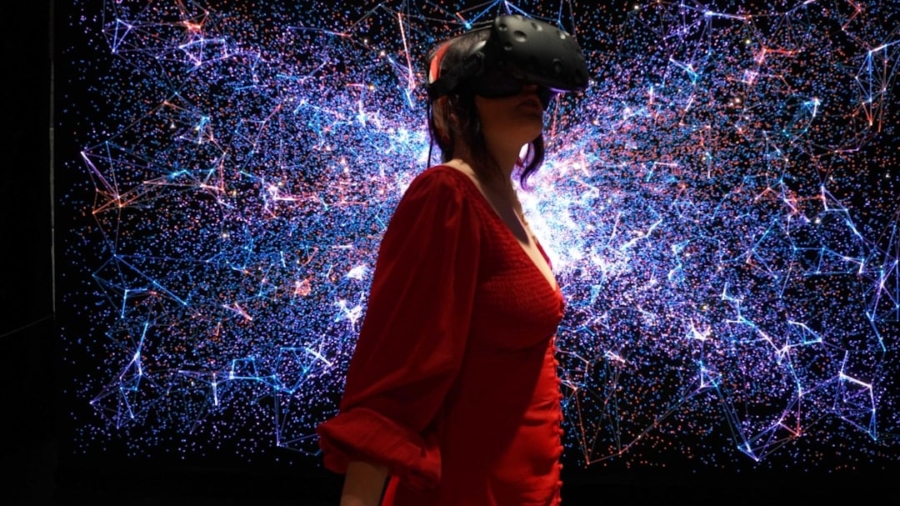
Virtual reality in cognitive rehabilitation is a steadily growing field offering a more engaging and potentially more effective way to help people recover from brain injuries or manage cognitive decline. Instead of just traditional exercises, VR immerses users in simulated environments where they can practice and improve specific cognitive skills in a safe, controlled, and often surprisingly fun setting. Think of it as a highly specialized video game designed to retrain your brain.
When someone experiences a stroke, traumatic brain injury, or has a condition affecting their cognition, certain mental abilities can be impaired. This might include memory, attention, problem-solving, or the ability to plan and organize. Traditional rehabilitation methods, like worksheets or therapist-led exercises, have their place, but they can sometimes feel repetitive and less motivating. This is where VR starts to shine.
The Power of Immersion
The core advantage of VR is its ability to create a truly immersive experience. When you put on a VR headset, your senses are directed to the virtual world. This heightened focus can make it easier to engage with tasks that might otherwise be challenging. It’s like being brought directly into the situation, rather than just thinking about it.
Controlled and Safe Practice
One of the biggest benefits of VR is that it allows individuals to practice real-world skills in a way that is completely safe and controlled. For example, someone recovering from a brain injury might need to relearn how to navigate a supermarket. In VR, they can practice this repeatedly without the actual risks of getting lost, feeling overwhelmed, or encountering unexpected stimuli. Mistakes can be made and learned from without real-world consequences.
Boosting Motivation and Engagement
Let’s be honest, some rehabilitation exercises can be a bit of a grind. VR, by its very nature, often incorporates elements of gaming and novelty, which can significantly boost motivation. When something feels more like an activity or a challenge rather than a chore, people are more likely to stick with it, and consistency is key in rehabilitation.
Tailored and Adaptable Scenarios
What’s great about VR is that the scenarios can be highly customized to an individual’s specific needs and progress. A therapist can adjust the difficulty, the types of tasks, and the complexity of the environment to match where the person is in their recovery journey. This means the training is always relevant and appropriately challenging.
Virtual reality (VR) has emerged as a promising tool for cognitive rehabilitation, offering immersive experiences that can enhance therapy outcomes for individuals with cognitive impairments. For those interested in exploring the intersection of technology and rehabilitation further, a related article can be found at this link, which discusses the best VPS hosting providers for 2023. While it primarily focuses on hosting solutions, understanding the technological infrastructure behind VR applications can provide valuable insights into how these innovative therapies are delivered and scaled.
Key Takeaways
- Clear communication is essential for effective teamwork
- Active listening is crucial for understanding team members’ perspectives
- Setting clear goals and expectations helps to keep the team focused
- Regular feedback and open communication can help address any issues early on
- Celebrating achievements and milestones can boost team morale and motivation
What Cognitive Skills Can VR Help With?
VR isn’t a magic bullet, but it’s proving to be a valuable tool for targeting a range of cognitive functions that can be affected by neurological conditions. The key is that VR allows for the practice of these skills in a way that mimics real-world demands.
Attention and Concentration
Many VR rehabilitation programs incorporate tasks that require sustained attention and the ability to filter out distractions. Imagine a virtual environment where you need to sort objects based on specific criteria while other stimuli are presented. This helps train the brain to focus on the relevant information.
- Selective Attention: The ability to focus on one thing while ignoring others. VR can simulate busy environments where this is crucial.
- Divided Attention: The ability to process multiple pieces of information at once. Tasks might involve monitoring several things happening simultaneously in the virtual world.
- Sustained Attention: The ability to maintain focus over extended periods. Games that require continuous engagement are excellent for this.
Memory and Learning
Memory impairments are common after brain injuries. VR can be used to create scenarios that challenge working memory, prospective memory (remembering to do something in the future), and even spatial memory.
- Working Memory Tasks: Remembering sequences of information or holding information in mind while performing another task. Virtual memory games or following multi-step instructions in VR fall into this category.
- Spatial Memory: Remembering locations and navigating through environments. Exploring virtual mazes or remembering the location of objects is beneficial.
- Episodic Memory: Remembering personal experiences. VR can be used to reconstruct or recall events within a simulated environment.
Executive Functions (Planning, Problem-Solving, and Organization)
These are often some of the most complex cognitive skills to retrain. VR offers a great platform for practicing these in a structured way.
- Planning and Sequencing: Tasks that require users to break down a goal into smaller steps and execute them in the correct order. This could be anything from planning a virtual meal to organizing items for a simulated trip.
- Problem-Solving: VR environments can present puzzles or challenges that require users to think critically and devise solutions.
- Decision-Making: Simulating situations where users need to weigh options and make choices, learning from the outcomes.
Visuospatial Skills
This refers to the ability to understand and remember relationships between objects in space. This is critical for everyday tasks like driving, cooking, or even just finding your way around. VR naturally leverages visuospatial processing.
- Navigation: Practicing navigating through virtual streets, buildings, or natural landscapes.
- Object Manipulation: Tasks that involve mentally rotating objects or understanding how they fit together.
Social Cognition
While perhaps less explored than other areas, VR is also being used to help individuals practice social skills, understand social cues, and manage social interactions in a less intimidating setting.
- Recognizing Emotions: VR scenarios can be designed to present characters with different emotional expressions.
- Understanding Social Cues: Practicing interpreting body language and dialogue in simulated conversations.
How Therapists Use VR in Practice

VR isn’t meant to replace therapists, but rather to provide them with a powerful new set of tools. The therapist’s role remains crucial in assessing needs, guiding the intervention, and helping the individual generalize their learned skills to the real world.
Assessment and Baseline Measurement
Before diving into VR interventions, a therapist will typically assess an individual’s cognitive baseline. VR can sometimes be used for assessment itself, providing objective measures of performance in simulated tasks.
This provides a starting point to track progress.
Designing Personalized Programs
Based on the assessment, a therapist will select or even customize VR scenarios to target specific deficits. They’ll determine the duration, frequency, and intensity of VR sessions. This ensures the therapy is tailored to the individual, not a one-size-fits-all approach.
Guiding and Coaching Users
During VR sessions, the therapist doesn’t just leave the user to it. They are often present, observing, providing encouragement, and offering immediate feedback. They might pause the simulation to discuss strategies or highlight learning points.
Facilitating Skill Transfer
One of the most important aspects of VR rehabilitation is ensuring that the skills learned in the virtual world can be applied to real life.
Therapists work with individuals to bridge this gap, discussing how a virtual task relates to a real-world challenge and developing strategies for transfer.
Monitoring Progress and Adjusting Interventions
Therapists use the data generated by VR systems to objectively monitor a patient’s progress. If progress is rapid, they can increase the difficulty. If someone is struggling, they can adjust the tasks or provide more support.
This dynamic adaptation is a key strength.
Examples of VR Cognitive Rehabilitation Applications

The types of VR applications being developed and used are diverse, reflecting the wide array of cognitive challenges people face. These are not just games; they are carefully designed therapeutic tools.
Virtual Environments for Daily Living Skills
| Study | Participants | Duration | Outcome |
|---|---|---|---|
| Smith et al. (2018) | 30 patients with TBI | 8 weeks | Improved attention and memory |
| Jones et al. (2019) | 20 stroke survivors | 6 weeks | Enhanced executive function |
| Chen et al. (2020) | 25 individuals with dementia | 10 weeks | Increased cognitive flexibility |
Imagine practicing cooking a meal in a virtual kitchen, or planning and executing a trip to the grocery store. These applications build upon learned skills in a safe, repeatable environment.
- Kitchen Simulation: Following recipes, managing cooking times, and handling virtual ingredients.
- Supermarket Navigation: Creating shopping lists, finding items, and navigating aisles.
- Public Transportation Training: Learning to use virtual bus stops, purchasing tickets, and navigating routes.
Attention Training Games
These simulators are designed to push the boundaries of concentration and focus. They often involve elements that introduce distractions to challenge the user’s ability to filter them out.
- “Whack-a-mole” style tasks: Requiring users to identify and interact with specific targets amidst a flurry of activity.
- Scenario-based attention tasks: Like monitoring a virtual control panel or a simulated classroom.
Memory Palace Building in VR
The concept of a “memory palace” is an ancient mnemonic technique. VR can help individuals build and utilize virtual memory palaces to store and recall information more effectively.
- Spatial navigation of a virtual house: Associating information with specific rooms or objects.
- Visualizing and retrieving information: Practicing recalling details associated with placed items.
Social Skills Training Modules
These VR applications are designed to simulate real-world social interactions, allowing individuals to practice communication and social cue interpretation.
- Conversational practice with AI avatars: Learning to respond appropriately in different social contexts.
- Role-playing scenarios: Practicing navigating challenging social situations.
Virtual reality is increasingly being recognized as a powerful tool for cognitive rehabilitation, offering immersive experiences that can enhance therapy outcomes. A related article discusses various technological advancements in this field and highlights how virtual environments can aid in the recovery of cognitive functions. For more insights on this topic, you can read the article at Hacker Noon, which covers a range of topics across the tech sector, including the innovative applications of virtual reality in healthcare.
The Future of VR in Cognitive Rehabilitation
The field is still evolving, and the future holds even more exciting possibilities for how VR can be leveraged for cognitive recovery and enhancement.
Integration with Other Technologies
We’re likely to see VR integrated more seamlessly with other wearable technologies like biosensors, which could provide real-time physiological data to further personalize the therapeutic experience.
Greater Personalization and AI-Driven Adaptability
As artificial intelligence advances, VR platforms will become even smarter, dynamically adapting to a user’s subtle cues and learning patterns to create truly individualized and responsive training.
Expanding Accessibility and Affordability
As VR hardware becomes more commonplace and software development becomes more streamlined, these powerful rehabilitation tools may become more accessible and affordable, reaching a wider population.
New Therapeutic Paradigms
Future research may uncover entirely new ways to use VR to stimulate neuroplasticity and facilitate recovery, potentially exploring areas we haven’t even considered yet. This could involve more complex simulations or novel interaction methods.
The shift towards immersive technologies in rehabilitation represents a significant step forward. VR offers a unique blend of engagement, safety, and tailored practice that holds considerable promise for improving the lives of individuals navigating cognitive challenges. It’s an exciting space to watch, as it continues to innovate and refine its approach to brain health.
FAQs
What is virtual reality for cognitive rehabilitation?
Virtual reality for cognitive rehabilitation is a therapeutic approach that uses immersive virtual environments to help individuals recover cognitive functions such as memory, attention, and problem-solving skills.
How does virtual reality aid in cognitive rehabilitation?
Virtual reality provides a controlled and interactive environment that can be tailored to the specific needs of the individual undergoing cognitive rehabilitation. It can offer a range of activities and exercises designed to improve cognitive functions in a more engaging and motivating way.
What are the benefits of using virtual reality for cognitive rehabilitation?
Some of the benefits of using virtual reality for cognitive rehabilitation include increased engagement and motivation, personalized and adaptive training programs, real-time performance feedback, and the ability to simulate real-life scenarios in a safe and controlled environment.
Who can benefit from virtual reality for cognitive rehabilitation?
Virtual reality for cognitive rehabilitation can benefit individuals who have experienced cognitive impairments due to conditions such as stroke, traumatic brain injury, dementia, or other neurological disorders. It can also be used for older adults looking to maintain or improve cognitive function.
Are there any limitations to using virtual reality for cognitive rehabilitation?
While virtual reality has shown promise in cognitive rehabilitation, there are still limitations to consider, such as the cost of equipment and software, the need for trained professionals to oversee the therapy, and the potential for simulator sickness in some individuals.
Enjoying our content? Make us a preferred source on Google:
Add us as a Preferred Source on Google