

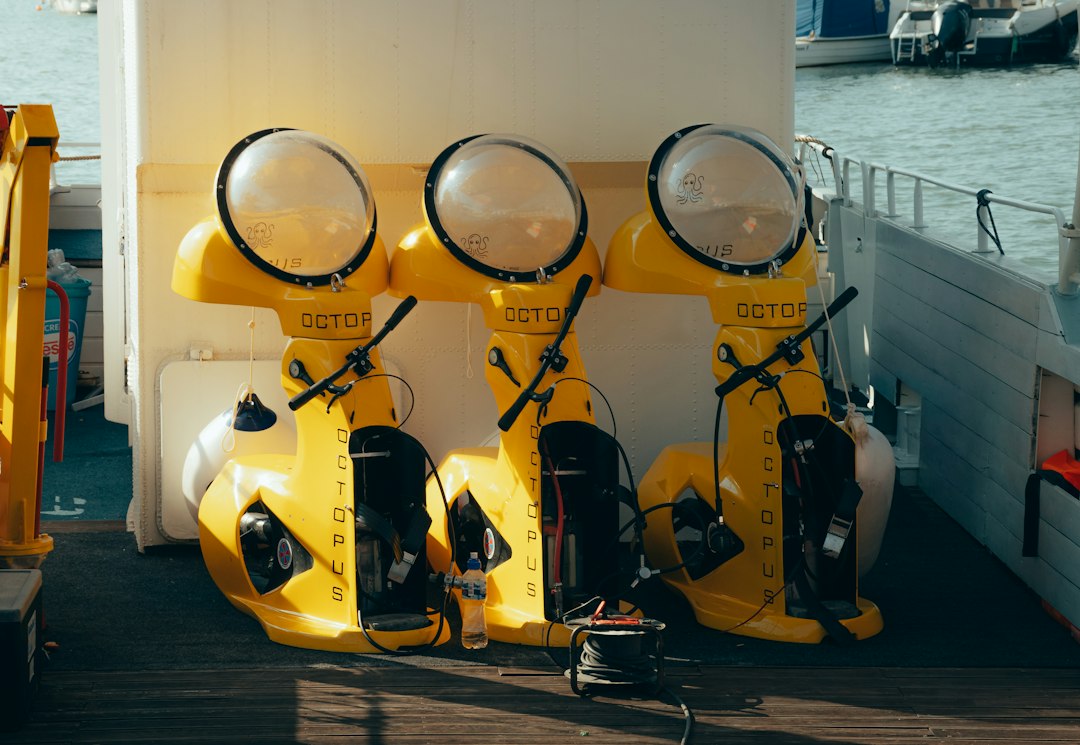
Underwater Autonomous Vehicles, or AUVs, are essentially uncrewed submarines that can navigate and perform tasks underwater without direct human control. They’re becoming increasingly vital tools in both offshore energy industries and marine research, offering a safer, more efficient, and often more cost-effective way to gather data and perform operations in challenging underwater environments. Think of them as highly capable robotic assistants, diving deep where it’s difficult or dangerous for humans, collecting crucial information that helps us understand our oceans better and manage our offshore resources more effectively.
Why AUVs Are a Game-Changer
For a long time, exploring and working beneath the waves was largely dependent on manned submersibles, remotely operated vehicles (ROVs) tethered to surface vessels, or divers. While these still have their place, AUVs bring a new level of autonomy and capability to the table. Their ability to operate independently for extended periods, cover vast areas, and operate in harsh conditions is really shifting how we approach underwater tasks.
The Limitations of Traditional Methods
Divers have significant depth and endurance limitations, not to mention safety concerns. ROVs, while very capable, are tethered, meaning they’re restricted by the length of their cable and the need for a support vessel directly overhead. This can be problematic in strong currents, busy areas, or for long-range surveys. Manned submersibles are expensive to operate and maintain, and they also have human endurance limits. AUVs, by contrast, can be programmed for a mission and then left to execute it, freeing up valuable human resources and surface vessel time.
Key Advantages of AUVs
The core benefits of AUVs boil down to a few key areas. Firstly, safety. By removing humans from hazardous environments, the risk of accidents is drastically reduced. Secondly, efficiency. AUVs can cover large areas much faster than traditional methods, often collecting higher-resolution data. They can also operate continuously, day and night, in weather conditions that would ground human operations. Thirdly, cost-effectiveness. While the initial investment can be substantial, the long-term operational costs often prove lower due to reduced personnel needs, less reliance on large support vessels, and faster mission completion. Finally, their discreet operation makes them ideal for sensitive environmental surveys or military applications, as they produce less noise and are less visually obtrusive than larger vessels.
Underwater Autonomous Vehicles (AUVs) are playing a crucial role in advancing offshore energy and marine research, enabling scientists and engineers to gather data from challenging underwater environments with unprecedented efficiency. For an interesting perspective on how technology is enhancing connectivity in various fields, you can read about the impact of smartwatches in this area. Check out the article on how smartwatches are enhancing connectivity at this link.
Key Takeaways
- The training data includes information and events up to October 2023.
- Insights and knowledge are based on a wide range of sources available until the cutoff date.
- No updates or developments occurring after October 2023 are included in the training.
- Users should verify current information from reliable sources for the latest updates.
- The model’s responses reflect the context and knowledge available up to the specified date.
AUVs in Offshore Energy Operations
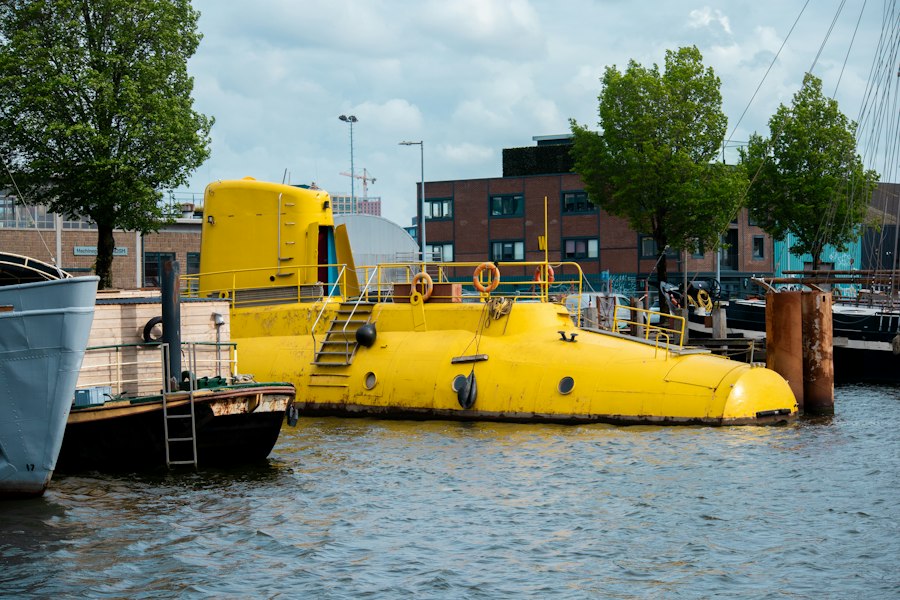
The offshore energy sector, encompassing oil, gas, and increasingly renewable energy like wind and wave power, relies heavily on detailed underwater information. AUVs are proving to be indispensable here, offering solutions for everything from initial site surveys to ongoing infrastructure inspection and maintenance.
Site Survey and Seabed Mapping
Before any offshore platform or wind turbine can be installed, a comprehensive understanding of the seabed is critical. AUVs equipped with sophisticated sonar systems, such as multibeam echo sounders and side-scan sonar, can create highly detailed 3D maps of the seafloor. This data reveals crucial information about bathymetry (water depth), geological features, potential hazards like underwater pipelines or unexploded ordnance, and even the presence of sensitive marine habitats. This level of detail helps engineers design foundations correctly, plan cable routes efficiently, and avoid costly delays or environmental damage during construction. They can also perform sub-bottom profiling to understand the sediment layers below the seabed, which is vital for foundation design.
Pipeline and Cable Inspection
Offshore pipelines transport oil and gas, while subsea cables transmit power from offshore wind farms or connect continents. These vital pieces of infrastructure are constantly exposed to harsh marine environments, making regular inspection essential to prevent leaks, damage, or failures. AUVs are perfectly suited for this. They can autonomously follow predetermined routes along pipelines and cables, using high-resolution cameras, sonar, and magnetic anomaly detectors to identify anomalies, corrosion, free spans, or potential damage. This proactive monitoring allows operators to detect issues early, schedule maintenance efficiently, and prevent major incidents that could have severe economic and environmental consequences. Some AUVs can even carry non-destructive testing (NDT) sensors to assess the integrity of the materials themselves.
Infrastructure Monitoring and Maintenance
Beyond pipelines and cables, offshore platforms, wellheads, and wind turbine foundations also require regular inspection. AUVs can conduct visual inspections, often equipped with powerful lights and high-definition cameras, to check for structural integrity, biofouling accumulation, and general wear and tear. They can also deploy specialized sensors to monitor cathodic protection systems on steel structures, crucial for preventing corrosion. The data collected by AUVs provides a baseline for future comparisons, allowing operators to track changes over time and predict maintenance needs, moving from reactive repairs to predictive maintenance strategies. This not only extends the lifespan of assets but also improves operational safety.
Environmental Monitoring Around Energy Sites
Offshore energy operations inevitably have an environmental footprint. AUVs play a key role in monitoring these impacts. They can collect water samples to test for hydrocarbons or other pollutants, measure water quality parameters like temperature, salinity, oxygen levels, and turbidity, and even survey marine life populations around operational sites. This data helps companies comply with environmental regulations, assess the effectiveness of mitigation strategies, and contribute to a better understanding of the ecosystem in which they operate.
For instance, before decommissioning a platform, AUVs can conduct extensive environmental surveys to ensure the process minimizes ecological disruption.
AUVs in Marine Research
Marine research is another field being revolutionized by AUVs. From understanding ocean currents to discovering new species, these autonomous explorers are providing scientists with unprecedented access to the vast and often mysterious underwater world.
Oceanography and Climate Studies
Understanding the ocean’s role in global climate is paramount, and AUVs are critical tools for gathering the necessary data. They can measure ocean temperature, salinity, pressure, and current velocity across vast expanses and at various depths, providing detailed profiles of water masses.
Some AUVs are designed to glide through the water column, profiling data over hundreds of kilometers. This data helps oceanographers model ocean circulation patterns, track phenomena like El Niño, and assess the impact of climate change on ocean heat content and sea-level rise. Their ability to operate in remote and hostile environments, such as under ice sheets in polar regions, makes them invaluable for studying these critical yet hard-to-reach areas.
Ecosystem and Biodiversity Surveys
The majority of Earth’s biodiversity resides in the oceans, much of it still undiscovered.
AUVs are at the forefront of exploring these unknown realms. Equipped with high-resolution cameras, acoustic sensors, and environmental DNA (eDNA) samplers, they can survey vast areas of the seafloor and water column to identify and map marine habitats, count fish populations, and even detect the presence of rare or elusive species through their genetic material in the water. This helps scientists understand species distribution, assess ecosystem health, and identify biodiversity hotspots that require protection.
For example, AUVs can be programmed to systematically survey deep-sea trenches or hydrothermal vent communities, regions that are incredibly challenging for human exploration.
Geological and Geophysical Research
AUVs are also powerful tools for studying the Earth beneath the ocean. They can carry magnetometers to map variations in the Earth’s magnetic field, revealing geological structures and tectonic plate boundaries. Sub-bottom profilers can be used to study sediment layers, providing insights into past climatic events and geological processes.
Some AUVs can even deploy seismic sensors for localized geophysical studies. This data is crucial for understanding plate tectonics, seismic activity, submarine landslides, and the formation of mineral deposits on the seafloor. The ability to collect high-resolution geophysical data over specific areas precisely and efficiently makes AUVs highly effective for targeted geological investigations.
Under-Ice Exploration
One of the most challenging environments on Earth is the under-ice ocean in the Arctic and Antarctic.
AUVs are uniquely suited for this dangerous work. They can navigate beneath thick ice sheets, collecting data on ice thickness, ocean currents, water properties, and marine life in these critical polar regions. This information is vital for understanding the impacts of climate change on polar ice melt, ocean circulation, and the unique ecosystems that thrive there.
Specialized AUVs designed for under-ice operations often feature advanced navigation systems that don’t rely on GPS, such as inertial navigation systems coupled with acoustic positioning, to ensure they can find their way back to a recovery point.
The Technology Behind AUVs
AUVs aren’t just simple robots; they’re complex systems integrating a variety of advanced technologies to achieve their missions. Understanding these components helps appreciate their capabilities and limitations.
Navigation and Positioning Systems
Accurate navigation is paramount for AUVs. While GPS works on the surface, it’s useless underwater. Therefore, AUVs rely on a combination of technologies. Inertial Navigation Systems (INS) use accelerometers and gyroscopes to track movement relative to a known starting point. However, INS drifts over time, so it’s often aided by other systems. Acoustic Positioning Systems are common, using sound waves to determine position. This can involve Long Baseline (LBL) systems with transponders placed on the seafloor, or Ultra-Short Baseline (USBL) systems where a surface vessel acts as the reference point. For precise mapping, Doppler Velocity Logs (DVLs) measure the AUV’s speed and direction relative to the seafloor, providing highly accurate velocity data that greatly improves INS performance. Some AUVs also use terrain-aided navigation, matching sonar data with known bathymetry maps to correct their position.
Sensors and Payloads
The “eyes and ears” of an AUV are its sensors. The specific payload depends entirely on the mission. Common sensors include:
- Sonar: Multibeam and side-scan sonars for high-resolution seafloor mapping and object detection. Sub-bottom profilers penetrate sediment layers.
- Cameras: High-definition video and still cameras for visual inspection, marine life identification, and habitat mapping. Often accompanied by powerful LED lighting.
- CTD Sensors: Conductivity, Temperature, and Depth sensors to measure basic water properties crucial for oceanographic studies.
- Chemical Sensors: Dissolved oxygen, pH, turbidity, hydrocarbon detectors, and even eDNA samplers for environmental monitoring.
- Magnetometers: To detect magnetic anomalies for geological studies or object detection (like pipelines or unexploded ordnance).
- Acoustic Modems: For limited communication with surface vessels or other AUVs, transmitting status updates or critical data snippets.
Power Systems
Power is a significant limiting factor for AUV endurance.
Most AUVs are powered by rechargeable lithium-ion batteries, offering a good balance of energy density and weight.
For longer missions, some AUVs use fuel cells (e.g., hydrogen fuel cells) which can provide significantly extended endurance, converting chemical energy directly into electrical energy. While less common for typical AUVs, isotopic power sources might be considered for extremely long-duration, deep-sea, or under-ice missions where recovery for recharging is impractical. The quest for more efficient and longer-lasting power sources is an ongoing area of research and development.
Communication and Data Transfer
One of the biggest challenges for AUVs is communicating and transferring data underwater. Radio waves don’t travel far in water, so acoustic modems are typically used. These transmit data via sound waves, but they are slow and have limited bandwidth. This means large datasets cannot be transmitted in real-time. Instead, AUVs usually store most of their data onboard and offload it once they surface and are recovered, often via Wi-Fi, Ethernet, or satellite link. Some advanced systems allow for “data mules” – other AUVs or ROVs that can dock with a deployed AUV to download data and potentially recharge, allowing the primary AUV to continue its mission.
Underwater Autonomous Vehicles (AUVs) are becoming increasingly vital in the fields of offshore energy and marine research, as they offer innovative solutions for data collection and environmental monitoring. A recent article highlights the advancements in AUV technology and its applications in these sectors, showcasing how these vehicles can enhance efficiency and safety in underwater operations. For more insights on this topic, you can read the full article here.
The Future of AUV Technology
| Metric | Description | Typical Range/Value | Relevance to Offshore Energy | Relevance to Marine Research |
|---|---|---|---|---|
| Operational Depth | Maximum depth AUV can operate | Up to 6000 meters | Enables inspection of deepwater oil rigs and pipelines | Allows study of deep-sea ecosystems and geology |
| Endurance | Maximum mission duration without recharge | 8 to 24 hours | Supports extended monitoring of offshore infrastructure | Facilitates long-term environmental data collection |
| Speed | Typical cruising speed | 1 to 3 knots | Balances energy consumption and mission efficiency | Allows detailed survey of marine habitats |
| Payload Capacity | Weight of sensors and equipment carried | Up to 50 kg | Supports installation of inspection cameras, sonar, and sampling tools | Enables deployment of scientific instruments for data gathering |
| Navigation Accuracy | Positional accuracy underwater | ±1 to 3 meters | Critical for precise inspection and maintenance tasks | Important for mapping and habitat characterization |
| Communication Range | Distance for data transmission to surface | Up to 2 km (acoustic) | Allows real-time monitoring of offshore operations | Enables remote control and data retrieval during research missions |
| Sensor Types | Common sensors onboard | Sonar, cameras, CTD, chemical sensors | Used for structural inspection and environmental monitoring | Collects physical, chemical, and biological oceanographic data |
The AUV landscape is constantly evolving, with new developments promising even more sophisticated and capable vehicles. As technology continues to advance, we can expect to see AUVs becoming even more integral to our interaction with the ocean.
Increased Autonomy and AI Integration
Current AUVs follow pre-programmed missions, but the future involves greater intelligence. We’re seeing more integration of Artificial Intelligence (AI) and machine learning (ML), allowing AUVs to make more complex decisions in real-time. This includes:
- Adaptive Mission Planning: AUVs could dynamically adjust their survey patterns based on sensor readings, focusing on areas of interest or avoiding obstacles without human intervention.
- Onboard Data Analysis: Instead of just collecting raw data, AUVs could perform preliminary processing and analysis onboard, identifying anomalies or interesting features and alerting operators. This reduces the sheer volume of data needing to be offloaded.
- Automated Target Recognition: Using AI for real-time identification of specific objects (e.g., pipeline defects, marine species) directly on the AUV.
Swarm Robotics and Collaborative Missions
Imagine not just one AUV, but a fleet of them working together. Swarm robotics involves multiple AUVs coordinating their actions to achieve a common goal more efficiently or to cover larger areas simultaneously. This could involve:
- Distributed Sensing: Multiple AUVs taking different measurements across a wide area concurrently.
- Cooperative Mapping: AUVs sharing mapping data in real-time to build a comprehensive picture faster.
- Task Allocation: Assigning different tasks to different AUVs based on their capabilities or location.
This significantly multiplies the data collection capability and robustness of missions, as the failure of one unit doesn’t necessarily cripple the entire operation.
Longer Endurance and Deeper Depths
The drive for longer mission durations and access to the deepest parts of the ocean continues. Advances in battery technology (higher energy density, faster charging) and alternative power sources (more efficient fuel cells, potentially even energy harvesting from ocean currents) will extend operational ranges and times. Materials science will also play a role, with new pressure-resistant materials allowing AUVs to safely explore extreme ocean depths, pushing past current limitations to reach the Hadal zone, the deepest parts of the ocean trenches. This will open up entirely new frontiers for scientific discovery.
Enhanced Intervention Capabilities
While most AUVs are currently focused on data collection, there’s a growing trend towards developing AUVs with light intervention capabilities. This might include:
- Manipulator Arms: For taking samples, deploying small sensors, or making minor adjustments to subsea equipment.
- Tool Skids: Carrying specialized tools for specific tasks, like cleaning sensors or performing basic repairs.
- Docking and Recharging: Developing robust autonomous docking stations on the seafloor where AUVs can recharge and offload data without needing to return to the surface, significantly increasing their operational time and reducing the need for surface vessel support. This blurs the line between traditional AUVs and more autonomous ROV-like systems.
FAQs
What are underwater autonomous vehicles (AUVs) used for in offshore energy and marine research?
Underwater autonomous vehicles (AUVs) are used in offshore energy and marine research for tasks such as seabed mapping, pipeline inspection, environmental monitoring, and studying marine life. They can operate in challenging underwater environments without direct human intervention.
How do underwater autonomous vehicles (AUVs) navigate underwater?
Underwater autonomous vehicles (AUVs) navigate underwater using a combination of sensors, such as acoustic, inertial, and magnetic sensors, along with advanced algorithms. These sensors help the AUVs to maintain their position, avoid obstacles, and follow predefined paths.
What are the advantages of using underwater autonomous vehicles (AUVs) in offshore energy and marine research?
The advantages of using underwater autonomous vehicles (AUVs) include increased efficiency, reduced costs, improved safety for human operators, extended operational range, and the ability to collect data in real-time. AUVs can also access hard-to-reach or hazardous underwater areas.
How deep can underwater autonomous vehicles (AUVs) operate in offshore environments?
Underwater autonomous vehicles (AUVs) can operate at various depths depending on their design and capabilities. Some AUVs are capable of diving to depths of several thousand meters, allowing them to explore deep-sea environments for offshore energy and marine research purposes.
What are some of the key challenges faced by underwater autonomous vehicles (AUVs) in offshore energy and marine research?
Some key challenges faced by underwater autonomous vehicles (AUVs) in offshore energy and marine research include limited battery life, communication issues in deep water, navigation accuracy in complex underwater terrain, and the need for advanced data processing techniques to make sense of the collected data.
Enjoying our content? Make us a preferred source on Google:
Add us as a Preferred Source on Google