

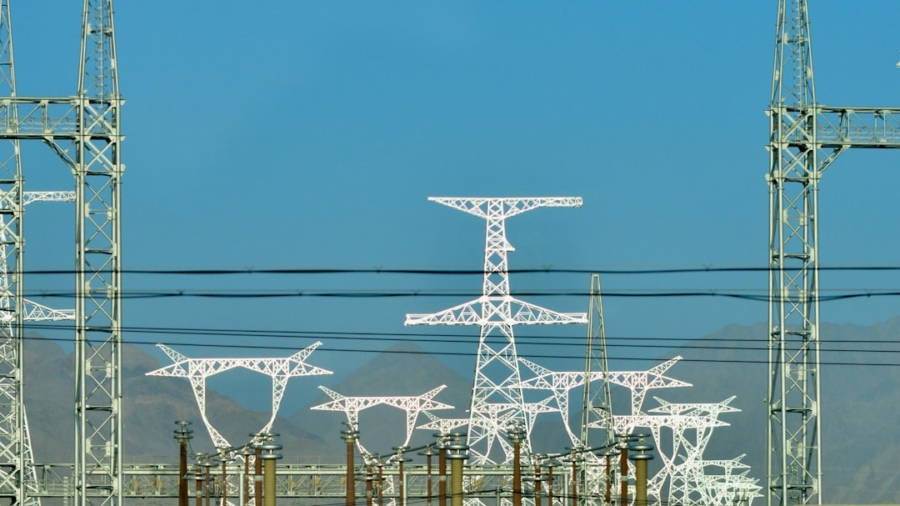
So, you’re wondering how a smart grid gets, well, smarter? The short answer is through something called “advanced edge computing algorithms.” Think of it like this: instead of sending all the raw data from every sensor and device on the grid all the way back to a central supercomputer for processing, we’re now doing a lot of that heavy lifting right there, at the ‘edge’ – close to where the data is actually generated. This dramatically speeds things up, makes decisions quicker, and ultimately makes the grid more reliable and efficient. It’s about getting vital information acted upon in milliseconds, not minutes or hours.
The traditional power grid, while robust, was designed for a one-way flow of electricity and information. The smart grid, however, introduces complexity: renewable energy sources that fluctuate, electric vehicles charging, and smart homes consuming power dynamically. All these components generate a massive amount of data. Centralized data processing, while powerful, often struggles with the sheer volume and the need for real-time responsiveness. This is where edge computing steps in, fundamentally altering the paradigm of how grid data is managed and utilized.
The Latency Problem Solved
Imagine a sudden surge in solar power output in a small town. If the data from local inverters has to travel hundreds of miles to a central processing center, be analyzed, and then commands sent back to adjust other grid components, that takes time. During that time, voltage fluctuations or even outages could occur. Edge computing places processing power right at or near these inverters. This significantly reduces latency – the delay between data generation and action. For critical grid operations, where milliseconds count, this reduction in latency is invaluable. It allows for immediate responses to local disturbances, preventing them from cascading into larger grid issues. This isn’t just about efficiency; it’s about grid stability and resilience.
Bandwidth Savings and Network Efficiency
Think about the sheer amount of data generated by thousands of smart meters, sensors on power lines, and distributed energy resources (DERs) like solar panels and wind turbines. Sending all this raw data constantly over communication networks to a central cloud is like trying to fit a firehose into a garden hose – it’s inefficient and costly. Edge computing allows for initial processing, filtering, and aggregation of data right at the source. Instead of sending every individual meter reading, the edge device might send only aggregated consumption data every few minutes, or an alert if an anomaly is detected. This drastically reduces the amount of data that needs to be transmitted over the network, saving bandwidth, reducing communication costs, and freeing up network capacity for truly critical information.
Enhanced Security and Privacy
While often overlooked, security and privacy are significant benefits of edge computing in smart grids. By processing data locally, sensitive information, such as individual household consumption patterns, might not need to leave the local network at all. Only anonymized or aggregated data might be sent further upstream. This reduces the attack surface for cyber threats, as fewer data points are traveling across potentially unsecured wider networks. If a local edge device is compromised, the impact is localized, rather than risking a breach of the entire centralized system. It’s about containing risks and controlling data flow more granularly.
In the realm of energy management, the integration of smart grid optimization with advanced edge computing algorithms is becoming increasingly vital. A related article that explores the intersection of technology and energy efficiency can be found at Unlock the Power of the Galaxy with the Samsung S22 Ultra, which discusses how cutting-edge devices can enhance connectivity and data processing capabilities. This synergy between smart grids and advanced computing is essential for creating resilient and efficient energy systems.
Key Takeaways
- Clear communication is essential for effective teamwork
- Active listening is crucial for understanding team members’ perspectives
- Conflict resolution skills are necessary for managing disagreements
- Trust and respect are the foundation of a successful team
- Collaboration and cooperation are key for achieving common goals
Advanced Edge Computing Algorithms in Action
It’s not enough to just have computing power at the edge; what you do with that power is key. Advanced algorithms are the brains behind the operation, turning raw data into actionable insights and intelligent decisions. These aren’t just simple rule-based systems; they leverage sophisticated computational techniques to optimize various aspects of grid operation.
Real-time Demand Response and Load Balancing
One of the most immediate benefits of edge computing is its ability to facilitate real-time demand response. Historically, utility companies might issue general appeals to reduce power during peak times. With edge algorithms, smart meters and connected devices in homes and businesses can communicate local demand information directly to edge devices. These edge devices, running predictive algorithms, can then identify imbalances between local supply and demand. They can then intelligently orchestrate load shedding or shifting for non-critical loads (like adjusting thermostat settings by a few degrees or delaying a clothes dryer cycle) or even activate local battery storage – all without significant human intervention. This happens in real-time, allowing for rapid adjustments that smooth out demand peaks and balance the grid dynamically. This immediate, localized response prevents the need for bringing expensive “peaker plants” online and reduces stress on the transmission infrastructure.
In the realm of energy management, the integration of advanced technologies is crucial for enhancing efficiency and reliability. One such innovation is the application of edge computing algorithms in smart grid optimization, which allows for real-time data processing and decision-making at the network’s edge. For those interested in exploring how technology can improve performance in different fields, a related article discusses the best laptops for SolidWorks, highlighting essential features that can support engineering tasks effectively. You can read more about it in this expert guide.
Predictive Maintenance and Anomaly Detection
Think about the thousands of miles of power lines, transformers, and circuit breakers.
Detecting faults preemptively or identifying anomalies before they lead to outages is a huge challenge.
Edge devices equipped with sensors (temperature, vibration, acoustic, current) can continuously monitor the health of grid components. Advanced algorithms, particularly machine learning models, running on these edge devices can analyze this sensor data in real-time. They can learn normal operating patterns and then immediately flag deviations. For instance, a transformer showing a slight but consistent increase in temperature over several weeks, or unusual vibration patterns, could trigger an alert at the edge. This allows maintenance crews to investigate and address potential issues before a catastrophic failure occurs, reducing downtime, repair costs, and ensuring higher reliability for consumers.
Seamless Integration of Distributed Energy Resources (DERs)
The proliferation of DERs, like rooftop solar, community batteries, and small wind farms, presents both opportunities and challenges. While they offer clean energy, their intermittent nature can introduce volatility into the local grid. Edge computing algorithms are crucial for managing this complexity. They can monitor the output of individual DERs, predict their generation based on local weather data, and coordinate their output with local demand. For example, if a sudden cloud cover reduces solar output, edge algorithms can quickly dispatch power from a local battery storage unit or request a brief increase from another local DER to maintain grid stability. This intelligent orchestration allows the grid to seamlessly integrate a higher proportion of renewable energy without compromising reliability.
Microgrid Management and Optimization
Microgrids are self-sufficient energy systems that can operate independently or connected to the main grid. Edge computing is fundamental to their effective operation. Within a microgrid, edge algorithms are responsible for balancing local generation (e.g., solar, wind, generators) with local demand, managing energy storage, and ensuring stable power quality. When disconnected from the main grid (islanded mode), these algorithms become even more critical, ensuring the microgrid’s complete autonomy and stability. They can optimize energy dispatch to minimize costs, maximize renewable self-consumption, and maintain critical loads during outages. Think of it as a mini-utility management system operating entirely at the edge, making decisions in milliseconds to keep the lights on for a campus or community.
Key Algorithmic Approaches and Techniques

The “advanced algorithms” we’re talking about aren’t just single solutions; they often involve a combination of sophisticated computing techniques. These range from established methods to cutting-edge artificial intelligence.
Machine Learning for Pattern Recognition and Prediction
Machine learning (ML) is at the heart of many advanced edge applications. Algorithms like neural networks, support vector machines, and decision trees can be trained on vast datasets of historical grid performance, weather patterns, and consumption data. At the edge, these trained models can then perform tasks such as:
- Load Forecasting: Predicting local demand for electricity a few minutes or hours in advance, allowing for proactive resource allocation.
- Renewable Energy Forecasting: Predicting solar or wind output based on local weather conditions, enabling better integration.
- Anomaly Detection: Identifying unusual patterns in sensor data that indicate equipment malfunction or cyber threats.
- Equipment Lifetime Prediction: Estimating the remaining useful life of assets based on operational data and environmental factors.
The beauty of ML at the edge is that the models can be continuously updated with new local data, improving their accuracy over time without constantly sending all raw data to a central cloud for retraining.
Optimization Algorithms for Resource Allocation
Grid optimization is fundamentally about making the best decisions given a set of constraints (e.g.
, available generation, line capacities, cost).
Edge computing leverages various optimization algorithms to achieve this:
- Linear Programming/Mixed-Integer Programming: Used for optimizing dispatch of DERs, energy storage, and demand response resources to meet local load at the lowest cost or with the highest reliability.
- Dynamic Programming: Can be applied to problems involving sequential decision-making, such as managing battery charging and discharging cycles over time to maximize benefits.
- Heuristic Algorithms: For very complex problems where finding a perfect optimal solution is computationally too expensive, heuristics (problem-solving methods that employ a practical approach to reach an immediate or short-term goal) can provide good-enough solutions quickly.
Examples include genetic algorithms or simulated annealing, which can be adapted for local grid scheduling.
These algorithms enable edge devices to make intelligent trade-offs, for instance, deciding whether to store excess solar power, sell it back to the grid, or use it to meet immediate local demand.
Distributed Consensus and Multi-Agent Systems
In a highly distributed smart grid, where many edge devices are making independent decisions, there’s a need for coordination. This is where distributed consensus algorithms and multi-agent systems come into play.
- Multi-Agent Systems (MAS): Imagine every smart meter, every inverter, every battery as an “agent” capable of making decisions. MAS frameworks allow these agents to communicate and negotiate with each other to achieve a common goal, such as maintaining local voltage stability or optimizing power flow across a small network segment.
Each agent can operate with a degree of autonomy but also collaborate.
- Consensus Algorithms: These are crucial for ensuring that these distributed agents agree on a common state or action, even in the presence of faulty agents or communication delays. While often complex, they are essential for coordinated control in microgrids or between interconnected edge devices. It’s about allowing localized decision-making while still achieving overall grid stability and efficiency.
Challenges and Future Directions

While the benefits of edge computing are clear, deploying these advanced algorithms effectively across an entire smart grid isn’t without its hurdles.
Interoperability and Standardization
One of the biggest challenges is ensuring that all the diverse devices and systems on the grid can talk to each other. We have different manufacturers, legacy equipment, and various communication protocols. For edge algorithms to work effectively, they need to access and process data from a multitude of sources seamlessly. Developing common standards for data formats, communication protocols, and API interfaces is crucial. Without robust interoperability, the promise of a fully integrated and optimized smart grid will remain elusive. Initiatives like the OpenADR Alliance and various IEEE standards bodies are working on these issues, but it’s an ongoing, complex effort.
Security and Resilience at the Edge
While edge computing can enhance security in some ways by localizing data, it also introduces new attack vectors. Each edge device becomes a potential point of entry for cyber threats. Securing thousands or even millions of distributed edge devices from physical tampering, firmware attacks, and network intrusions requires a comprehensive and scalable security strategy. This involves robust authentication, encryption, continuous monitoring for anomalies, and the ability to quickly patch vulnerabilities across a vast and geographically dispersed infrastructure. Furthermore, ensuring the resilience of edge devices – their ability to continue functioning even if partially compromised or if communication links fail – is paramount for critical grid operations.
Computational Power and Algorithm Development
While edge devices are becoming more powerful, they still have constraints compared to centralized data centers. Developing sophisticated machine learning and optimization algorithms that can run efficiently on resource-constrained edge hardware is an ongoing area of research. This includes optimizing models for lower power consumption, reducing memory footprints, and ensuring real-time execution capabilities. There’s a fine balance between algorithmic complexity and the practical limitations of edge deployment. Furthermore, as the grid evolves, so too must the algorithms. Continuous research and development will be needed to address new challenges presented by emerging technologies, climate change impacts, and evolving consumer demands. The algorithms must be adaptive and capable of self-learning or being updated remotely and securely.
Workforce Training and Skill Gaps
Implementing and managing a smart grid optimized by advanced edge computing requires a highly specialized workforce. This isn’t just about traditional electrical engineers; it requires data scientists, cybersecurity experts, software developers, and control systems engineers who understand both grid operations and cutting-edge computing technologies. There’s a significant skill gap currently. Utilities and educational institutions need to invest heavily in training programs to equip the current and future workforce with the necessary expertise to design, deploy, maintain, and evolve these complex systems. Without a skilled human element, even the most advanced algorithms will struggle to deliver their full potential.
FAQs
What is smart grid optimization?
Smart grid optimization refers to the use of advanced technologies and algorithms to improve the efficiency, reliability, and sustainability of electrical power distribution and consumption within a smart grid system.
What is edge computing in the context of smart grid optimization?
Edge computing involves processing data closer to the source of data generation, such as at the edge of the network, rather than relying on a centralized data processing system. In the context of smart grid optimization, edge computing allows for real-time data analysis and decision-making at the edge of the grid, enabling faster response times and more efficient energy management.
How do advanced edge computing algorithms contribute to smart grid optimization?
Advanced edge computing algorithms enable the analysis of large volumes of data in real time, allowing for more accurate predictions, proactive maintenance, and dynamic energy management within the smart grid. These algorithms can optimize energy distribution, reduce waste, and improve overall grid performance.
What are the benefits of using advanced edge computing algorithms for smart grid optimization?
The benefits of using advanced edge computing algorithms for smart grid optimization include improved energy efficiency, reduced operational costs, enhanced grid reliability, better integration of renewable energy sources, and the ability to accommodate the growing demand for electric vehicles and other emerging technologies.
What are some examples of advanced edge computing algorithms used in smart grid optimization?
Examples of advanced edge computing algorithms used in smart grid optimization include machine learning algorithms for predictive maintenance, real-time energy demand forecasting, distributed energy resource management algorithms, and optimization algorithms for grid stability and resilience.
Enjoying our content? Make us a preferred source on Google:
Add us as a Preferred Source on Google