

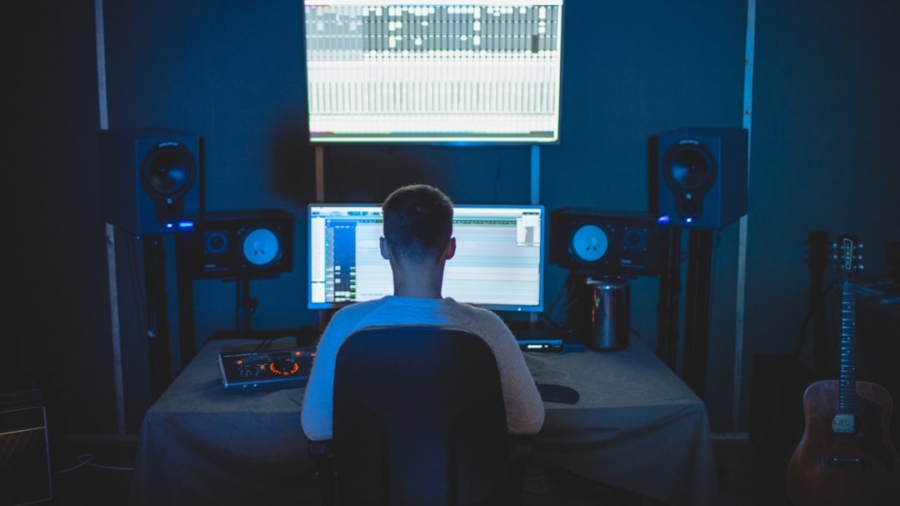
Hey there! Wondering how live music broadcasting is getting a major upgrade thanks to VR? Basically, we’re moving beyond simple 2D streams into fully immersive, high-fidelity virtual reality experiences that make you feel like you’re actually at the show – think incredible audio, realistic visuals, and a sense of presence you just can’t get from a flat screen.
The Evolution of Live Music Broadcasting
For a long time, watching live music from home meant a static camera, maybe a few awkward cuts, and audio that was, well, good enough. We’ve all been there with those slightly blurry, often delayed festival streams. But as technology has advanced, so too have our expectations.
Beyond the Flat Screen
Traditional streaming, while convenient, has its limits. You’re always an observer, looking at the performance. The magic of live music often comes from the shared atmosphere, the energy of the crowd, and the feeling of being part of something bigger. That’s where VR steps in to bridge the gap.
The Appeal of Immersion
Immersion is the key here. It’s about convincing your brain you’re somewhere else. For live music, this means transforming a passive viewing experience into an active, engaging one. You’re not just watching the band; you’re there.
In the realm of enhancing live music experiences, the article on project management software can provide valuable insights into the organizational aspects of high-fidelity virtual reality streaming. Effective project management tools are essential for coordinating the various elements involved in live music broadcasting, from scheduling to resource allocation. For more information on how to streamline these processes, you can read the article here: Best Software for Project Management.
The Core Technology Behind High-Fidelity VR
Achieving this level of immersion isn’t just about slapping a VR headset on. It requires a sophisticated blend of hardware and software working in harmony.
Advanced Camera Systems
Traditional cameras just won’t cut it for immersive VR.
We need specialized equipment to capture the full 360-degree environment.
Volumetric Capture
This is a game-changer. Instead of just capturing a flat image, volumetric capture records every angle of a performance space and the artists within it. Imagine seeing a guitarist from the front, then turning your head to see them from the side, with full depth and realism. It’s like creating a 3D model of the performance in real-time. This requires an array of cameras, often dozens, strategically placed to capture every angle simultaneously. The data is then stitched together to create a navigable 3D space.
360-Degree Spherical Cameras
While not as comprehensive as volumetric, high-quality 360 cameras are becoming more sophisticated. They capture an entire sphere of a scene, allowing viewers to look around the virtual environment. Improvements in lens technology and sensor size are leading to much sharper, more realistic 360-degree video, moving past the blurry, fish-eye look of early models.
Light Field Technology
This is pushing the boundaries even further. Light field technology captures not just the color and intensity of light from different directions, but also the direction of every light ray. This allows for a truly dynamic viewing experience where you can slightly adjust your viewpoint within the virtual space, seeing subtle shifts in perspective, much like you would in real life. It offers true parallax, adding a layer of realism that even volumetric capture sometimes struggles to achieve perfectly.
Spatial Audio Excellence
Visuals are only half the story. Without incredible audio, the illusion of presence quickly breaks.
Binaural Audio Recording
This technique uses microphones placed in a dummy head (or positioned to mimic human ear characteristics) to capture sound in a way that replicates how our ears hear in a 3D space. When listened to with headphones, it creates an incredibly realistic sense of direction and distance for sounds, making it feel like the music is happening all around you. You can pinpoint where the drums are, where the vocals are coming from, and even hear crowd noises from specific directions.
Object-Based Audio (e.g., Dolby Atmos, DTS:X)
These systems go beyond channel-based audio. Instead of assigning sounds to left or right channels, they treat individual sound elements (like a guitar riff, a vocal line, or a drum hit) as “objects” in a 3D space. This allows for incredibly precise positioning and movement of sounds within the virtual environment, offering a truly immersive auditory experience that adapts to the listener’s head movements. Imagine a guitar solo seeming to move around you as the guitarist walks across the stage.
Head-Related Transfer Functions (HRTFs)
No two people hear exactly alike. HRTFs are mathematical functions that describe how sound is filtered by our head, ears, and torso before it reaches our eardrums. Advanced VR audio often incorporates personalized or generalized HRTFs to make the spatial audio experience even more convincing, matching how your unique anatomy would process sound in that environment.
High-Bandwidth Streaming and Compression
All this high-fidelity data needs to get to your headset, and that’s a significant challenge.
Efficient Codecs
Broadcasting massive amounts of 360-degree video data, especially volumetric content, requires incredibly efficient compression algorithms. We’re talking about codecs like HEVC, AV1, and specialized VR codecs that can compress high-resolution, high-frame-rate content without introducing noticeable artifacts or quality degradation, all while minimizing latency.
Edge Computing and 5G Integration
To deliver these experiences with minimal latency and maximum reliability, edge computing plays a crucial role. This involves processing data closer to the user, reducing the round-trip time to a central server. Coupled with the high bandwidth and low latency of 5G networks, it becomes possible to stream truly demanding VR content smoothly. This is especially important for live events where every millisecond counts.
The VR Concert Experience: What It Feels Like
So, what does it actually feel like to attend a high-fidelity VR concert? It’s a significant leap from traditional streaming.
A Sense of Presence
This is the big one. Instead of just seeing a band on a screen, you genuinely feel like you’ve been transported to the venue. The combination of realistic visuals and spatial audio tricks your brain into believing you’re physically there. You can look around, observe fellow “attendees” (if they are represented), and experience the atmosphere.
Choosing Your Viewpoint
Imagine being able to choose your “seat.” Want to be front row center? Go for it. Prefer to be up in the balcony for a wider view? Click, and you’re there. Some advanced systems might even allow you to teleport onto the stage (from a fixed, non-interfering perspective, of course) or behind the mixing desk to see how the magic happens. This dynamic control over your perspective massively enhances engagement.
Interacting with the Environment (Passive)
While you might not be able to high-five the lead singer, you can passively interact by exploring the venue. Look at the architecture, the lighting setup, the crowd. In some experiences, you might see virtual elements or dynamic light shows that respond to the music, further enhancing the atmosphere. The environment itself becomes part of the performance.
The Social Aspect (Evolving)
One of the biggest criticisms of early VR was its isolated nature. But that’s changing rapidly for live events.
Shared Virtual Spaces
Imagine attending a concert in VR alongside your friends, who might be halfway across the world. You can see their avatars, hear their voices (spatially rendered, of course), and react to the music together. This social layer transforms a solo experience into a communal one, replicating some of the bonding unique to live events.
Virtual Merch and Interactions
Beyond just watching, there’s potential for virtual merchandise booths, digital artist meet-and-greets (think virtual autographs or brief Q&As), and even fan-created content that can be displayed within the virtual venue. This adds layers of engagement beyond just the music itself.
Challenges and the Road Ahead
It’s not all smooth sailing; there are definitely hurdles to overcome before this becomes a mainstream norm.
Technical Hurdles
The technology is powerful, but it’s still evolving.
Latency and Synchronization
For a live event, any noticeable delay between the performance and what the viewer experiences in VR can break the immersion. Keeping audio and video perfectly synchronized across multiple users, potentially globally, is a significant technical feat. This is where 5G and edge computing become essential.
Rendering Power and Hardware Requirements
High-fidelity VR requires powerful hardware, both on the capture side and the viewer’s device. Many current standalone VR headsets, while good, might struggle to render the most complex volumetric or light-field captured events at sufficiently high frame rates without aggressive compression, which can impact visual quality.
PC-tethered VR offers more power but is less convenient.
The push for more powerful, yet affordable, standalone headsets is crucial.
Content Creation Complexity
Capturing a truly high-fidelity VR concert is far more complex and expensive than setting up a few 2D cameras. It involves specialized teams, numerous cameras, massive data handling, and sophisticated post-production (or real-time processing) pipelines. This high barrier to entry can limit the amount and variety of available content.
Accessibility and Cost
For VR to truly elevate live music, it needs to be accessible to a wide audience.
Headset Availability and Affordability
While VR headsets are becoming more affordable, they’re still a significant investment for many. Until they become as ubiquitous as smartphones or smart TVs, the audience for high-fidelity VR concerts will remain somewhat niche. The “killer app” that drives mass adoption is still being sought.
Internet Bandwidth Requirements
Streaming multi-gigabit per second VR content reliably requires a robust internet connection, especially if you’re aiming for the highest fidelity. Not everyone globally has access to such speeds, limiting potential audience reach.
User Experience and Comfort
VR motion sickness (simulation sickness) is still a factor for some users, and wearing a headset for an entire concert (an hour or more) needs to be comfortable. Improvements in headset design, weight distribution, and resolution are continually working to address these issues.
Artistic Integration and Opportunity
Beyond the technical, there’s a world of creative potential.
Immersive Storytelling
VR isn’t just about recreating a physical space; it’s about creating new ones. Artists can design fantastical venues, incorporate interactive visual effects that respond to their music, or even guide viewers through a narrative during the performance. The stage is no longer limited by physics.
Hybrid Events and Augmented Reality
We might see more hybrid events where a live audience is present, but VR viewers can access unique angles or enhanced visual effects not available to those physically there. Augmented reality (AR) could also play a role, overlaying digital elements onto a real-world concert view for both physical and virtual attendees.
New Revenue Streams for Artists
Beyond ticket sales, VR opens up new avenues for artists, including exclusive virtual concerts, virtual meet-and-greets, limited-edition NFTs tied to the VR experience, or even personalized virtual content. This could be particularly impactful for artists unable to tour globally, or those looking to expand their reach and diversify their income.
In the realm of innovative technology, the intersection of live music and virtual reality is gaining significant attention, particularly in the context of enhancing audience experiences. A related article discusses how one founder recognized the potential of sustainable energy, which could play a crucial role in powering high-fidelity virtual reality streaming for live music events. This synergy not only promises to elevate the quality of broadcasts but also aligns with eco-friendly practices. To explore this fascinating connection further, you can read the article here.
The Future is Now (and Even More So Tomorrow)
High-fidelity VR streaming for live music isn’t some distant sci-fi fantasy; it’s happening right now, albeit in its early stages. We’ve already seen examples from artists experimenting with volumetric capture and specialized VR platforms.
Early Adopters and Pioneering Platforms
Companies like MelodyVR (now a part of Napster), Wave, and Sensorium Galaxy are already exploring this space, hosting virtual concerts with major artists. These platforms are pushing the boundaries of what’s possible, from fully animated, fantastical performances to incredibly realistic reproductions of actual concert venues.
The Metaverse Connection
As the concept of the metaverse gains traction, live music in VR will undoubtedly be a cornerstone. Imagine hopping from a concert in one virtual world to a social gathering in another, all within a persistent, interconnected digital space. Your digital identity and experience would seamlessly transition between these events.
A New Era of Accessibility
Ultimately, this technology has the power to democratize access to live music. Geographic, financial, or physical limitations that prevent people from attending concerts in person can be sidestepped. A fan in a remote village might “attend” a stadium show in another country, or someone with mobility challenges can experience the energy of a mosh pit from their living room.
Conclusion
Elevating live music broadcasting through high-fidelity VR streaming is a journey that promises to redefine how we experience music. It’s a complex dance of advanced optics, intricate audio engineering, robust networking, and creative vision. While challenges certainly remain, the potential for truly immersive, engaging, and accessible musical experiences is too compelling to ignore. Get ready to put on your headset and step into the future of live music.
FAQs
What is high-fidelity virtual reality streaming for live music broadcasting?
High-fidelity virtual reality streaming for live music broadcasting refers to the use of advanced virtual reality technology to capture and broadcast live music performances in a highly immersive and realistic manner. This technology aims to provide viewers with a sense of presence and an enhanced audio-visual experience, allowing them to feel as if they are actually attending the live event.
How does high-fidelity virtual reality streaming enhance the live music broadcasting experience?
High-fidelity virtual reality streaming enhances the live music broadcasting experience by offering viewers a more immersive and engaging way to enjoy live music performances. Through the use of VR headsets, viewers can feel as if they are physically present at the concert venue, with the ability to look around and experience the performance from different angles. The high-fidelity audio and visual quality further contribute to a more realistic and captivating experience.
What are the benefits of using high-fidelity virtual reality streaming for live music broadcasting?
Some of the benefits of using high-fidelity virtual reality streaming for live music broadcasting include:
1. Enhanced viewer engagement and immersion
2. Expanded reach to global audiences
3. Opportunity for new revenue streams through virtual ticket sales and sponsorships
4. Ability to capture and preserve live performances for on-demand viewing
5. Differentiation and competitive advantage for music broadcasters and event organizers
What are the technical requirements for high-fidelity virtual reality streaming of live music events?
The technical requirements for high-fidelity virtual reality streaming of live music events typically include:
1. High-resolution VR cameras capable of capturing 360-degree video
2. Advanced audio capture equipment for high-fidelity sound recording
3. VR streaming software and platforms for live broadcasting
4. High-speed internet connection for seamless streaming
5. Compatibility with VR headsets and playback devices for viewers
What are some examples of high-fidelity virtual reality streaming used in live music broadcasting?
Several music events and broadcasters have already embraced high-fidelity virtual reality streaming for live music broadcasting. Examples include:
1. Live concerts and music festivals offering virtual reality live streams for remote viewers
2. Music venues and clubs using VR technology to broadcast performances to a global audience
3. Music streaming platforms integrating VR capabilities for immersive live music experiences
4. Virtual reality concerts and exclusive events designed specifically for VR viewing
5. Collaborations between VR technology companies and music industry stakeholders to elevate the live music broadcasting experience.
Enjoying our content? Make us a preferred source on Google:
Add us as a Preferred Source on Google