

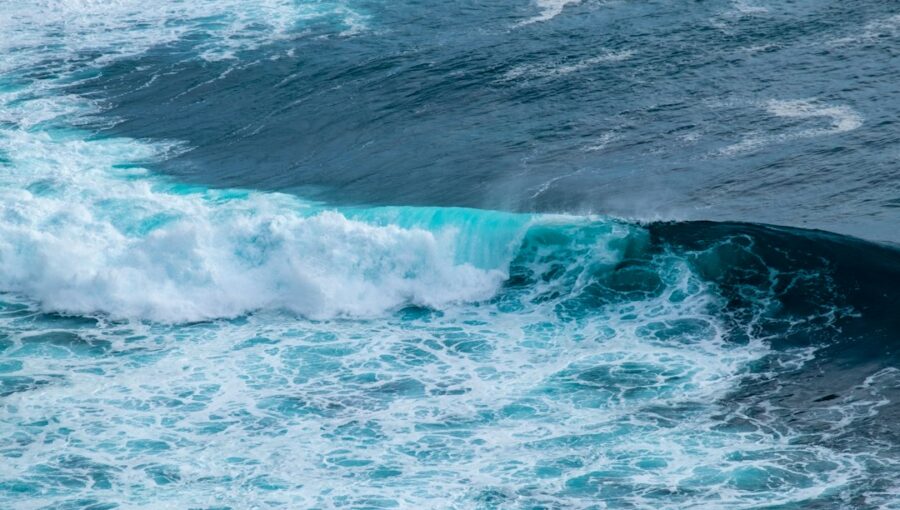
The fundamental difference between ocean wave energy and tidal energy lies in their power source and predictability. Wave energy is generated by wind blowing over the ocean surface, creating oscillating water masses. This makes it somewhat variable, depending on weather conditions. Tidal energy, on the other hand, comes from the gravitational pull of the moon and sun on Earth’s oceans, resulting in predictable, twice-daily rises and falls in sea level. This predictability is a key advantage for tidal power. Both offer significant potential for generating clean, renewable electricity and integrating into marine power grids, though they face distinct engineering and environmental challenges.
Understanding Ocean Wave Energy Conversion
Ocean wave energy conversion involves capturing the kinetic and potential energy of ocean waves and transforming it into usable electricity. The sheer power contained in waves is immense, making it an attractive renewable resource. However, harnessing this energy efficiently and reliably presents unique engineering hurdles due to the dynamic and often harsh marine environment.
Principles of Wave Energy Generation
Wave energy converters (WECs) operate on various principles, each designed to capture different aspects of wave motion. The primary forces at play are the vertical movement of water particles (heave), the horizontal movement (surge), and the pressure variations within a wave. Most WECs rely on these movements to drive a power take-off (PTO) system, which then generates electricity. The PTO system can involve hydraulic pumps, air turbines, or direct mechanical linkages.
Types of Wave Energy Converters
There’s a diverse array of WEC technologies, each with its own advantages and disadvantages. They can generally be categorized by their operating principle and deployment location.
Attenuators
Attenuators are long, multi-segment structures that float parallel to the direction of wave propagation. They absorb energy from waves as they pass along their length, flexing at the joints between segments. A classic example is the Pelamis device, which used hydraulic rams at its hinged joints to pump fluid through turbines. The main challenge for attenuators lies in their structural integrity in large waves and efficiently converting the relative motion between segments into continuous power. Their large footprint can also be a consideration for navigation and other marine activities.
Point Absorbers
Point absorbers are typically floating structures that absorb energy from all directions through their heave (vertical) motion relative to a fixed or much larger structure. They are usually small in comparison to the wavelength and capture energy through the rise and fall of their buoyant body. An example is a buoy with an internal mechanism that converts the up-and-down motion into linear or rotary motion to drive a generator. Their compact size makes them potentially suitable for deployment in arrays, but scaling them up for significant power output requires efficient tuning to wave periods and robust mooring systems. Maintenance can be challenging due to their often remote locations.
Oscillating Water Columns (OWCs)
OWCs are structures, either fixed to the seabed or floating, that enclose a column of air above a water column. As waves enter the chamber, the water column oscillates, compressing and decompressing the air above it. This airflow drives an air turbine, which in turn generates electricity. The turbine is usually a Wells turbine, designed to rotate in the same direction regardless of the airflow direction, making it highly efficient for this application. OWCs can be integrated into breakwaters or constructed as standalone offshore devices. Key challenges include optimizing chamber geometry for various wave conditions and ensuring the reliability of the air turbine in a humid, corrosive environment.
Overtopping Devices
Overtopping devices, sometimes called wave dragon devices, use a ramp or reservoir to capture incoming waves. As waves break over the ramp, the water is channeled into a reservoir at a higher elevation than the surrounding sea level. This elevation difference creates potential energy, which is then converted into kinetic energy as the water flows back down through low-head turbines, similar to hydroelectric dams. These devices often require significant structural engineering due to the large volumes of water involved and are typically large-scale installations. Site selection is crucial, as they need consistent, large waves to be effective.
Submerged Pressure Differential Devices
These devices are located on the seabed and exploit the pressure variations caused by passing waves. As a wave crest passes, the pressure increases, and as a trough passes, the pressure decreases. These pressure changes can be used to compress a fluid or air, which then drives a generator. Their advantage is being less exposed to surface wave impacts, but they face challenges with deployment, maintenance, and effectively capturing sufficient energy from the pressure differentials.
Power Take-Off (PTO) Systems
The PTO system is the heart of any WEC, converting the mechanical motion of the device into electrical power. Different WEC types utilize various PTO mechanisms.
Hydraulic PTO
Many WECs, especially those with hinged or oscillating components, use hydraulic systems. The mechanical motion drives hydraulic pumps, which pressurize a fluid. This high-pressure fluid then drives a hydraulic motor connected to an electrical generator. Hydraulic systems offer flexibility in converting irregular wave motion into a smoother power output. However, they require robust seals and maintenance in corrosive environments.
Air Turbine PTO
As seen in OWCs, air turbines are used to convert the oscillating airflow into rotational energy. Wells turbines are particularly common due to their ability to rotate unidirectionally regardless of airflow direction. The efficiency of these turbines is critical, and they must be designed to withstand salt spray and varying air densities.
Direct Mechanical PTO
Some WECs use direct mechanical linkages to drive generators. This can involve racks and pinions, gearboxes, or other mechanisms that convert linear or oscillatory motion directly into rotary motion. While conceptually simpler, direct mechanical PTOs can be more susceptible to the irregular forces of waves, potentially leading to increased wear and tear.
Direct Drive Linear Generators
A more advanced approach involves direct drive linear generators, where the generator’s moving part (e.g., the translator in a linear generator) is directly coupled to the wave-absorbing element. This eliminates the need for intermediate mechanical or hydraulic systems, reducing complexity and potentially increasing efficiency. However, designing linear generators that can withstand high forces and long strokes while maintaining high efficiency in a marine environment is a significant engineering challenge.
Challenges and Limitations of Wave Energy
Despite its potential, wave energy faces several significant hurdles that are slowing its widespread adoption.
High Capital Costs
The initial investment for designing, manufacturing, deploying, and connecting WECs to the grid is substantial. The harsh marine environment requires robust materials and engineering, leading to higher costs compared to some other renewable technologies.
Reliability and Survivability
WECs must withstand extreme weather conditions, including storm waves, corrosion from saltwater, and biofouling. Ensuring long-term reliability and survivability without frequent maintenance interventions is a major challenge. Device failures can lead to significant downtime and repair costs.
Environmental Impact Concerns
While clean in operation, the deployment of WECs can have environmental impacts. These include potential effects on marine life (e.g., entanglement, noise pollution, habitat alteration), visual impact (for nearshore devices), and changes to sediment transport and wave patterns. Thorough environmental impact assessments are crucial for any deployment.
Grid Integration Issues
The variability of wave energy output, while somewhat predictable in the long term, can present challenges for grid stability. Integrating large amounts of variable power requires advanced grid management systems, energy storage solutions, or hybridization with more stable power sources.
Ocean wave and tidal energy converters are at the forefront of renewable energy technology, providing innovative solutions to harness the immense power of marine environments. For those interested in exploring the broader implications of energy conversion technologies, a related article discusses the best software to clone HDD to SSD, which can be crucial for optimizing data storage and management in energy systems. You can read more about this topic by visiting this link.
Key Takeaways
- The training data includes information and events up to October 2023.
- Insights and knowledge are based on a wide range of sources available until the cutoff date.
- No updates or developments occurring after October 2023 are included in the training.
- Users should verify current information from reliable sources for the latest updates.
- The model’s responses reflect the context and knowledge available up to the specified date.
Exploring Tidal Energy Conversion
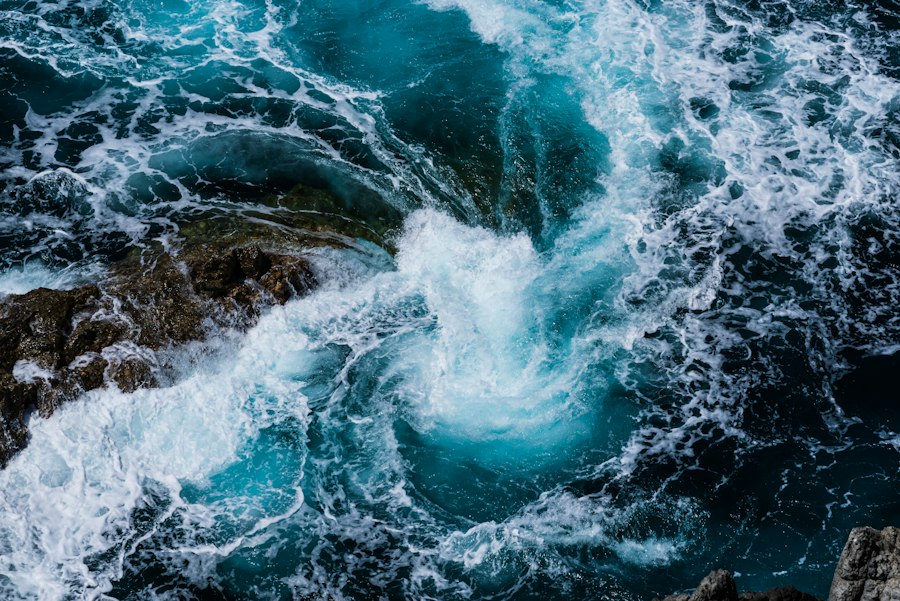
Tidal energy, driven by gravitational forces, offers a high degree of predictability, which is a major advantage for grid integration. The rhythmic rise and fall of ocean tides can be harnessed in two primary ways: tidal barrages and tidal stream generators.
Principles of Tidal Energy Generation
Tidal energy conversion relies on the kinetic energy of moving water (tidal streams) or the potential energy difference between high and low tides (tidal barrages). The gravitational interaction between the Earth, Moon, and Sun creates predictable tidal currents and height variations, making tidal energy a highly reliable renewable source.
Types of Tidal Energy Converters
Similar to wave energy, tidal energy has various approaches to capture its power.
Tidal Barrages
Tidal barrages are essentially dams built across estuaries or bays, creating a basin behind them. As the tide rises, water flows into the basin through sluice gates. At high tide, the gates are closed, impounding the water. When the tide outside the barrage falls, a significant head difference is created. The impounded water is then released through turbines within the barrage, generating electricity similar to a conventional hydroelectric dam. The Rance Tidal Power Station in France is a prime example. While highly effective, barrages have a very high capital cost and significant environmental impacts due to the alteration of the natural estuarine ecosystem, affecting sediment transport, marine life migration, and water quality.
Tidal Stream Generators
Tidal stream generators (TSGs) are analogous to underwater wind turbines. They harness the kinetic energy of flowing water caused by tidal currents. These devices typically consist of rotors (similar to wind turbine blades) mounted on foundations on the seabed or tethered to the seabed. As tidal currents flow past the rotors, they spin, driving a generator to produce electricity. TSGs can be deployed in arrays, similar to wind farms, and are generally considered to have lower environmental impact than barrages as they don’t impede the natural flow of water or significantly alter habitats.
Designs of Tidal Stream Generators
Within TSGs, there are several design variations, each with specific advantages.
Horizontal-Axis Turbines
These are the most common type, resembling conventional wind turbines. They have blades that rotate around a horizontal axis. They are efficient at capturing energy from unidirectional flows but require careful orientation to the current. Many designs are bi-directional, meaning they can generate power from both incoming and outgoing tides by adjusting blade pitch or rotating the entire nacelle.
Vertical-Axis Turbines
Vertical-axis turbines (VATs) have blades that rotate around a vertical axis. A key advantage is that they are omni-directional, meaning they can capture energy from currents flowing from any direction without needing to yaw or pitch. This simplifies their design and operation in complex flow environments. However, they can be less efficient than horizontal-axis turbines in purely unidirectional flows.
Oscillating Hydrofoils
Instead of rotating, oscillating hydrofoils use the lift and drag forces of tidal currents to cause a foil or wing to oscillate up and down. This oscillating motion is then converted into rotary motion by a hydraulic or mechanical system to drive a generator.
These devices can be effective in lower current speeds but are generally less mature than turbine technologies.
Venturi Effect Devices
Some designs utilize the Venturi effect, where a constriction in the flow path accelerates the water, thereby increasing its kinetic energy in a localized area. Turbines are placed within this constricted section to take advantage of the higher flow speeds. This can potentially allow for power generation in areas with lower ambient current speeds but involves significant structural engineering.
Challenges and Limitations of Tidal Energy
Despite its predictability, tidal energy also faces hurdles.
High Capital Costs
The construction and deployment of tidal energy devices, whether barrages or stream generators, are capital-intensive. Robust materials are needed to withstand the powerful forces of tidal currents and the corrosive marine environment.
Environmental Impact Concerns
While generally less impactful than barrages, tidal stream generators still raise environmental concerns. These include potential impacts on marine life (collision risk for fish and marine mammals, habitat disturbance, noise pollution), changes in local current patterns and sediment transport, and electromagnetic fields from subsea cables. Detailed environmental assessments and monitoring are essential.
Site Specificity
Tidal energy is highly site-specific. Economically viable sites require strong tidal ranges or fast-flowing currents, which are not universally available. This limits the geographic scope for deployment.
Grid Integration and Scale
While predictable, the output from tidal energy varies over a tidal cycle. While the timing is known, the power output ramps up and down with the current speed. For large-scale deployments, this variability still needs careful management within the grid, potentially requiring energy storage or complementary generation sources. Scaling up arrays of tidal stream generators also presents challenges in terms of installation logistics, maintenance, and interactions between devices.
Integrating Marine Energy into Power Grids
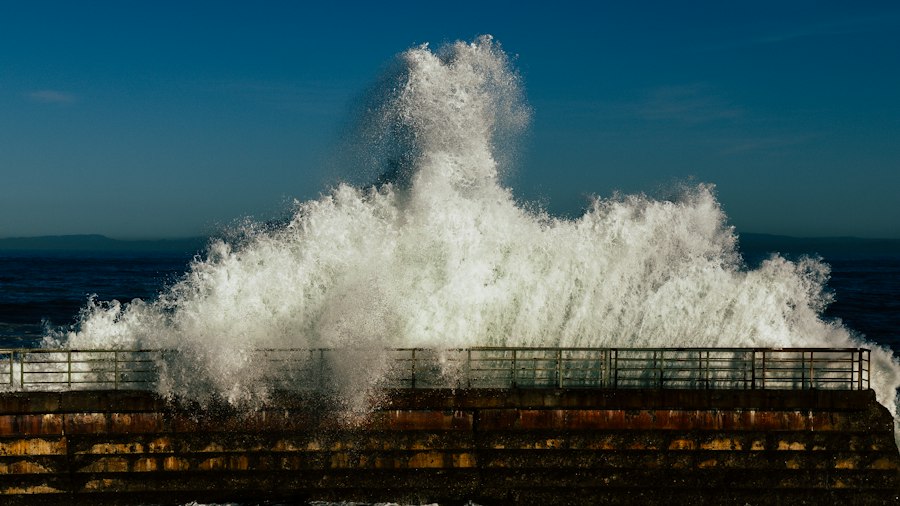
Connecting wave and tidal energy converters to the existing electrical infrastructure is a critical step in their development. This involves more than just running a cable; it requires strategic planning for grid stability, reliability, and economic viability.
Subsea Cable Infrastructure
The backbone of marine energy grid integration is the subsea cable network. These cables transmit the electricity generated offshore to onshore substations.
Design and Installation
Subsea cables are complex, requiring specialized design to withstand hydrostatic pressure, abrasion from the seabed, and potential damage from fishing activities or ship anchors.
Installation involves dedicated cable-laying vessels that meticulously lay and bury the cables where possible to protect them. The choice of cable (AC or DC) depends on the distance to shore and power levels, with DC often preferred for longer distances to minimize transmission losses.
Reliability and Maintenance
Maintaining subsea cables is challenging and costly. Faults can be difficult to locate and repair, requiring specialized equipment and often long repair times.
Protecting cables from damage and biofouling is crucial for ensuring grid reliability. Redundancy in cabling can help mitigate the impact of a single cable failure.
Grid Connection Points and Capacity
Connecting to the grid involves finding suitable points with sufficient capacity to absorb the incoming power without destabilizing the network.
Onshore Substations
Electricity from marine energy converters is typically brought to onshore substations, where its voltage is transformed, and it is fed into the national or regional grid. The capacity of these substations and the surrounding grid infrastructure must be able to handle the peak power output from the marine energy project.
Grid Upgrades
Often, existing grid infrastructure in coastal areas is not designed for large-scale power injection from offshore sources.
This can necessitate significant upgrades to transmission lines, transformers, and switchgear, adding to the overall project cost and timeline.
Grid Management and Stability
Integrating variable renewable energy sources like wave and tidal power requires sophisticated grid management strategies.
Forecasting and Prediction
While tidal energy is highly predictable, wave energy is more variable. Accurate forecasting models for wave conditions are essential for grid operators to anticipate power output fluctuations and manage grid stability. Even for tidal, knowing the precise output over the lunar cycle helps in scheduling other generation sources.
Energy Storage Solutions
To smooth out the variability and provide firm capacity, energy storage solutions can be integrated with marine energy projects.
This could include battery storage, pumped hydro (where geographically feasible), or even hydrogen production (power-to-X) where excess electricity is used to produce green hydrogen, which can then be stored or used as a fuel.
Hybrid Systems
Combining wave and tidal energy with other renewable sources, such as offshore wind, can create hybrid systems that offer a more stable and diverse power output. The intermittency of one source might be offset by the output of another, leading to a more reliable overall supply. For example, offshore wind might be stronger when wave power is lower, or vice-versa.
Regulatory and Policy Frameworks
Supportive regulatory and policy frameworks are crucial for fostering the development and deployment of marine energy.
Permitting and Licensing
Obtaining the necessary permits and licenses for marine energy projects is a complex and often lengthy process, involving multiple governmental agencies and stakeholder consultations.
Streamlining these processes while ensuring environmental protection is vital.
Financial Incentives
Feed-in tariffs, tax credits, and capital grants can help de-risk marine energy projects and attract investment, bridging the gap until the technologies reach commercial maturity and cost competitiveness. Research and development funding is also crucial for technological advancements.
Marine Spatial Planning
Integrated marine spatial planning helps allocate sea areas for various uses, including marine energy, while minimizing conflicts with other activities like shipping, fishing, and conservation. This forward-looking approach can accelerate deployment by pre-identifying suitable sites.
Environmental Considerations and Mitigation
The marine environment is sensitive, and the deployment of wave and tidal energy converters must be carefully managed to minimize adverse impacts. A thorough understanding of potential effects and proactive mitigation strategies are paramount.
Impacts on Marine Life
Marine energy devices can interact with marine ecosystems in several ways, both directly and indirectly.
Collision Risk
For tidal stream turbines, there is a concern about collision risk for marine mammals (e.g., seals, dolphins) and large fish. While current data from operational projects suggest a low collision rate, monitoring and research are ongoing. Measures like slower blade rotation speeds, avoidance technologies (e.g., acoustic deterrents), and careful site selection away from migration routes can help.
Noise Pollution
The installation and operation of marine energy devices can generate underwater noise. Pile driving for foundations, operational sounds from turbines and generators, and vessel traffic can all contribute to noise pollution. This can interfere with marine mammal communication, navigation, and foraging behavior. Mitigation includes using quieter installation methods, sound dampening materials, and operating during periods of lower marine activity.
Habitat Alteration
Deployment of devices and associated infrastructure (foundations, cables) can alter seabed habitats. This might involve disturbance during installation, creation of artificial reefs (potentially beneficial or detrimental depending on species), or changes in sediment dynamics. Careful site selection, minimizing seabed footprint, and restoring disturbed areas are important.
Electromagnetic Fields (EMF)
Subsea power cables emit electromagnetic fields. Research is ongoing to understand the potential effects of these EMFs on marine life, particularly species sensitive to electrical or magnetic fields, such as sharks, rays, and certain fish. Burying cables or using shielding can help reduce EMF emissions.
Changes in Hydrodynamics and Sediment Transport
Large-scale deployment of marine energy arrays can potentially alter the natural flow of water and sediment.
Current Speed Reduction
Tidal stream arrays extract energy from currents, which can lead to a localized reduction in current speeds downstream. This might affect sediment transport, potentially leading to increased deposition or erosion in certain areas, and could impact species that rely on specific flow regimes.
Wave Pattern Modification
Wave energy converters, especially larger arrays or overtopping devices, can dissipate wave energy, potentially reducing wave heights down-wave from the devices. While this could offer some coastal protection benefits, it might also alter natural beach dynamics and habitat characteristics.
Visual and Navigational Impacts
While often less prominent than offshore wind, marine energy devices can still have visual and navigational implications.
Visual Impact
For nearshore wave energy devices or surface-piercing tidal devices, there can be a visual impact on coastal landscapes and seascapes. This needs to be balanced with energy generation goals, potentially leading to preferences for fully submerged designs.
Navigation and Fishing Exclusion Zones
Marine energy arrays require exclusion zones for navigation and fishing for safety reasons. This can displace existing marine activities, requiring careful stakeholder engagement and compensation where appropriate. Marking arrays with aids to navigation is essential for safety.
Monitoring and Adaptive Management
To effectively manage environmental impacts, robust monitoring programs and an adaptive management approach are crucial.
Baseline Studies
Before deployment, comprehensive baseline studies are needed to understand the existing marine ecosystem and establish a reference point for future monitoring. This includes characterizing habitats, identifying key species, and understanding oceanographic conditions.
Post-Deployment Monitoring
Ongoing monitoring after deployment is essential to detect actual environmental changes, validate impact predictions, and assess the effectiveness of mitigation measures. This includes ecological surveys, acoustic monitoring, and remote sensing.
Adaptive Management
Based on monitoring results, an adaptive management approach allows for adjustments to operations, mitigation strategies, or even device designs to further reduce environmental impacts. This iterative process ensures that learning from experience leads to continuous improvement in environmental performance.
In exploring the potential of marine energy, the article on Ocean Wave and Tidal Energy Converters highlights the innovative ways in which we can harness the power of our oceans. For those interested in understanding how technology influences various sectors, a related article discusses essential tips for selecting the right laptop for students, which can be found here. Both pieces emphasize the importance of making informed choices, whether it be in renewable energy or educational tools.
The Future of Marine Power Grids
| Metric | Ocean Wave Energy Converters | Tidal Energy Converters | Comments |
|---|---|---|---|
| Average Power Output (MW) | 0.5 – 2.0 | 1.0 – 10.0 | Tidal converters generally produce higher power due to predictable tidal flows |
| Capacity Factor (%) | 25 – 40 | 30 – 45 | Both have moderate capacity factors; tidal is slightly higher due to predictability |
| Typical Installation Depth (meters) | 5 – 30 | 20 – 50 | Tidal devices often installed in deeper channels or estuaries |
| Environmental Impact | Low to Moderate | Moderate | Both have minimal emissions; tidal may affect marine life migration |
| Grid Integration Challenges | Intermittency and variability | Predictable but cyclical output | Tidal energy easier to forecast for grid management |
| Typical Lifespan (years) | 15 – 25 | 20 – 30 | Durability depends on marine conditions and maintenance |
| Current Global Installed Capacity (MW) | ~500 | ~600 | Both technologies are emerging with growing installations |
The journey from individual marine energy converters to robust, integrated marine power grids is complex but holds immense promise for a sustainable energy future. Continued innovation, strategic planning, and collaborative efforts are essential.
Technological Advancements and Cost Reduction
The marine energy sector is still relatively nascent compared to wind and solar, meaning there’s significant room for technological improvement and cost reduction.
Device Optimization
Ongoing research and development focus on optimizing the efficiency, reliability, and survivability of WECs and TSGs. This includes advancements in hydrodynamic design, materials science (e.g., corrosion-resistant alloys, biofouling-resistant coatings), and advanced control systems that can adapt to varying marine conditions.
Industrialization and Standardization
As technologies mature, moving towards industrial-scale manufacturing and standardization of components can drive down costs significantly. Learning-by-doing in deployment and operation will also contribute to efficiency gains.
Advanced Materials and Manufacturing
The use of advanced composites, smart materials, and additive manufacturing techniques can lead to lighter, stronger, and more durable devices that are easier to produce and maintain. This is particularly crucial for devices operating in harsh marine environments.
Hybridization and Multi-Use Platforms
The future marine power grid is likely to be characterized by integrated, multi-source systems.
Offshore Energy Hubs
The concept of offshore energy hubs involves combining multiple renewable energy sources (e.g., offshore wind, wave, tidal) at a single location, sharing common infrastructure like subsea cables and substations. This can reduce overall costs, improve grid reliability, and allow for a more consistent power supply.
Co-Location with Other Marine Activities
Marine energy platforms could be co-located or integrated with other marine activities, such as aquaculture, desalinization plants, or even offshore data centers. This multi-use approach can maximize the value derived from ocean space and shared infrastructure.
Smart Grid Integration and Digitalization
The effective integration of marine energy into future grids will rely heavily on smart grid technologies and digitalization.
Advanced Forecasting and Control
More accurate and real-time forecasting of wave and tidal conditions, coupled with advanced control systems for energy converters, will enable better grid management and more efficient power dispatch. Digital twins of marine energy farms can help in predictive maintenance and operational optimization.
Grid Interconnection and Supergrids
The concept of offshore supergrids, interconnecting multiple countries and renewable energy sources via high-voltage direct current (HVDC) links, could enable the efficient transmission of large amounts of marine energy across vast distances, enhancing energy security and market flexibility.
Cybersecurity
As marine energy infrastructure becomes more digitized and interconnected, robust cybersecurity measures will be paramount to protect against potential cyberattacks that could disrupt power supply or compromise sensitive operational data.
Policy Support and International Collaboration
Realizing the full potential of marine power grids requires sustained policy support and global cooperation.
Long-Term Vision and Investment
Governments need to provide clear, long-term policy signals and consistent investment frameworks to de-risk marine energy projects and attract private capital. This includes continued R&D funding and supportive market mechanisms.
International Research and Development
Given the global nature of ocean resources and the shared engineering challenges, international collaboration in research, development, and demonstration projects can accelerate technological progress and share best practices.
Regulatory Harmonization
Harmonizing regulations and standards across different jurisdictions can simplify permitting processes and facilitate the deployment of marine energy technologies on a larger scale. This is particularly important for cross-border projects.
The path to fully realizing marine power grids is long and challenging, but the immense, predictable, and clean energy potential of our oceans makes it a journey well worth pursuing. As technology advances, costs decrease, and integration strategies mature, wave and tidal energy are poised to play a crucial role in the global transition to a sustainable energy future.
FAQs
What is ocean wave energy?
Ocean wave energy is a renewable energy source that harnesses the power of ocean waves to generate electricity. It involves converting the kinetic and potential energy of waves into usable electrical power.
How do ocean wave energy converters work?
Ocean wave energy converters work by capturing the energy from the motion of ocean waves and converting it into electricity. This is typically done using devices such as buoys, oscillating water columns, or submerged pressure-differential systems.
What is tidal energy and how is it harnessed?
Tidal energy is a form of renewable energy that captures the energy from the rise and fall of tides to generate electricity. Tidal energy converters, such as tidal turbines or barrages, are used to harness this energy by capturing the kinetic energy of moving water.
What are the advantages of using ocean wave and tidal energy converters?
Some advantages of using ocean wave and tidal energy converters include their renewable nature, predictability, low greenhouse gas emissions, and potential for providing a consistent source of energy. They also have the advantage of being less visually intrusive compared to some other forms of renewable energy.
What are the challenges associated with ocean wave and tidal energy conversion?
Challenges associated with ocean wave and tidal energy conversion include high initial costs, potential environmental impacts on marine ecosystems, variability in energy production based on weather conditions, and the need for further technological advancements to improve efficiency and reliability.
Enjoying our content? Make us a preferred source on Google:
Add us as a Preferred Source on Google