


Smart locks are super convenient, but like any tech connected to your home’s security, they come with their own set of vulnerabilities. Simply put, hardening smart lock firmware means making it tougher for unauthorized individuals to bypass your lock, whether they’re trying to pick it physically or hack it digitally. It’s about building robust defenses into the lock’s brain – its firmware – to protect against both types of attacks.
Understanding the Attack Landscape for Smart Locks
Before we dive into how to harden firmware, it’s crucial to understand what we’re up against. Smart locks are unique because they straddle the physical and digital security worlds. This means attackers have a broader range of tactics they can employ, from traditional lock-picking to sophisticated cyberattacks.
Physical Bypass Methods
Even with all the fancy electronics, a smart lock is still a lock.
This means it’s susceptible to many of the same physical bypass methods as a traditional lock, sometimes with new twists due to their electronic components.
Traditional Lock Picking and Manipulation
A well-designed smart lock should still be difficult to pick, even if the electronics fail or are disabled. This involves the mechanical core itself. Attackers can use standard lock-picking tools and techniques, including raking, single-pin picking, and impressioning, to try and manipulate the internal tumblers. Some smart locks might even have mechanical overrides that, if poorly implemented, could be easier to exploit than a standard deadbolt.
Destructive Entry
This is the brute-force approach. Attackers might try drilling the cylinder, using bolt cutters on the shackle (if it’s a padlock style), or even applying significant force to break the lock mechanism. While often noisy and noticeable, some destructive methods can be surprisingly quick and quiet if the lock’s materials or design are weak.
Side-Channel Attacks (Physical)
This is where the physical and digital start to blur. Side-channel attacks involve observing the lock’s physical behavior to extract information. For instance, analyzing power consumption spikes when certain codes are entered, or listening to subtle clicks and whirs during operation, could potentially reveal clues about the internal state or even the unlock code. These are often complex but can be devastating if successful.
Digital Bypass Methods
This is where smart locks introduce an entirely new layer of vulnerability compared to traditional locks. Their connectivity and embedded software open doors to a host of digital threats.
Bluetooth, Wi-Fi, and Zigbee Exploits
Most smart locks rely on wireless communication protocols like Bluetooth Low Energy (BLE), Wi-Fi, or Zigbee to connect to your phone or a smart home hub. Each of these protocols has its own potential vulnerabilities. Attackers might try to eavesdrop on communication, spoof legitimate devices, or exploit known vulnerabilities in the protocol’s implementation to gain unauthorized access or control. Poor encryption or authentication mechanisms are often the weakest links here.
Firmware Vulnerabilities and Exploits
The firmware itself is the brain. Bugs, backdoors, or unpatched vulnerabilities within the lock’s operating system or application code can be exploited. This could involve buffer overflows, arbitrary code execution, or privilege escalation. If an attacker can inject their own code or modify existing code, they can essentially take control of the lock.
API and Cloud Service Attacks
Many smart locks integrate with cloud services for remote management, user accounts, and automation. If these cloud services or their APIs (Application Programming Interfaces) are poorly secured, an attacker could potentially gain access to user credentials, unlock codes, or even directly send unlock commands to the device. This highlights the importance of end-to-end security, not just on the device itself.
Replay Attacks
In a replay attack, an attacker intercepts a legitimate communication (like an unlock command) and then “replays” it later to trick the lock into opening. Robust security protocols include mechanisms to prevent replay attacks, often by using unique, time-sensitive tokens or nonce values.
Brute-Force Attacks (Digital)
While less common for direct unlocking (due to rate limiting and account lockouts), attackers might try to brute-force unlock codes or passwords through the digital interface if the lock’s software doesn’t adequately prevent it. This is more likely to target the associated cloud account rather than the lock itself directly.
In the ongoing discussion about enhancing security measures for smart devices, the article on hardening smart lock firmware against physical and digital bypass presents critical insights. For those interested in exploring the broader implications of security in consumer electronics, a related article that delves into the vulnerabilities of smartwatches, specifically the Xiaomi brand, can be found here: Xiaomi Smartwatches Review. This review not only highlights the features of these devices but also addresses potential security concerns that users should be aware of.
Key Takeaways
- The training data includes information and events up to October 2023.
- Insights and knowledge are based on a wide range of sources available until the cutoff date.
- No updates or developments occurring after October 2023 are included in the training.
- Users should verify current information from reliable sources for the latest updates.
- The model’s responses reflect the context and knowledge available up to the specified date.
Foundational Principles for Secure Firmware Design
Hardening firmware starts long before a single line of code is written. It begins with adopting a security-first mindset throughout the entire design and development lifecycle. This means anticipating threats and building defenses in from the ground up, rather than trying to patch them in later.
Secure Boot and Firmware Integrity
One of the most critical foundational principles is ensuring that the firmware running on the lock hasn’t been tampered with. This is achieved through secure boot mechanisms.
Chain of Trust
A secure boot process establishes a “chain of trust.” It starts with a small, immutable piece of code (often burned into the hardware, known as a Root of Trust) that verifies the authenticity and integrity of the next stage of the bootloader. This verified bootloader then verifies the main firmware image before it’s loaded and executed. If any stage in this chain fails verification (e.g., due to a tampered signature), the boot process should halt, preventing malicious or corrupted firmware from running.
Cryptographic Signatures
Firmware images should always be cryptographically signed by the manufacturer. The lock’s hardware contains a public key (or a hash of it) that can verify this signature. This ensures that only authorized, untampered firmware from the legitimate manufacturer can be loaded onto the device. Any attempt to load unsigned or incorrectly signed firmware should be rejected.
Anti-Rollback Mechanisms
Firmware updates are essential for patching vulnerabilities. However, an attacker might try to “rollback” the firmware to an older, vulnerable version that they know how to exploit. Anti-rollback mechanisms prevent this by ensuring that the device will only load firmware versions that are equal to or newer than the currently running version (or a minimum allowed version). This usually involves version numbers stored in secure, non-volatile memory that cannot be easily reset or downgraded.
Robust Update Mechanisms
Firmware updates are a necessary part of maintaining security. A poorly implemented update process can itself be a major vulnerability.
Over-the-Air (OTA) Update Security
Most smart locks rely on OTA updates. These updates must be protected end-to-end. This means the update package should be downloaded over a secure, encrypted channel (e.g., HTTPS). The package itself must also be cryptographically signed by the manufacturer, and the device should verify this signature before applying the update. Failed updates should be handled gracefully, ensuring the device remains functional or can safely revert to a previous working state.
Secure Communication for Updates
The communication channel used to deliver updates should employ strong encryption and authentication. This prevents attackers from injecting malicious updates or tampering with legitimate update packages in transit. Protocols like TLS (Transport Layer Security) are standard for this purpose.
Device State Management During Updates
During an update, the device might be in a vulnerable state. The firmware should be designed to handle power interruptions or other anomalies during the update process without bricking the device or leaving it in an insecure, partially updated state.
This often involves dual-bank memory architectures or atomic update procedures.
Secure Development Practices
The quality of the firmware’s code is paramount. Following secure development practices significantly reduces the likelihood of introducing vulnerabilities.
Code Review and Static/Dynamic Analysis
Regular and thorough code reviews by security experts can catch potential vulnerabilities early. Tools for static analysis (examining code without executing it) and dynamic analysis (examining code during execution) can help identify common programming errors, memory leaks, buffer overflows, and other security flaws.
Input Validation and Sanitization
A significant percentage of vulnerabilities arise from improper handling of user input. All input, whether from an app, a physical keypad, or network packets, must be rigorously validated and sanitized to prevent injection attacks, buffer overflows, and other malicious data from being processed. Assume all input is hostile until proven otherwise.
Memory Safety
Languages like C and C++ are powerful but prone to memory safety issues (buffer overflows, use-after-free, etc.) if not handled carefully. Secure coding practices, compiler-based protections, and memory-safe abstractions should be employed to mitigate these risks.
Least Privilege Principle
Firmware components and processes should operate with the minimum necessary privileges to perform their function. If a component doesn’t need network access, it shouldn’t have it. If it doesn’t need to write to certain memory regions, it shouldn’t have that permission. This limits the damage an attacker can do if they manage to compromise a particular component.
Hardening Communication Protocols
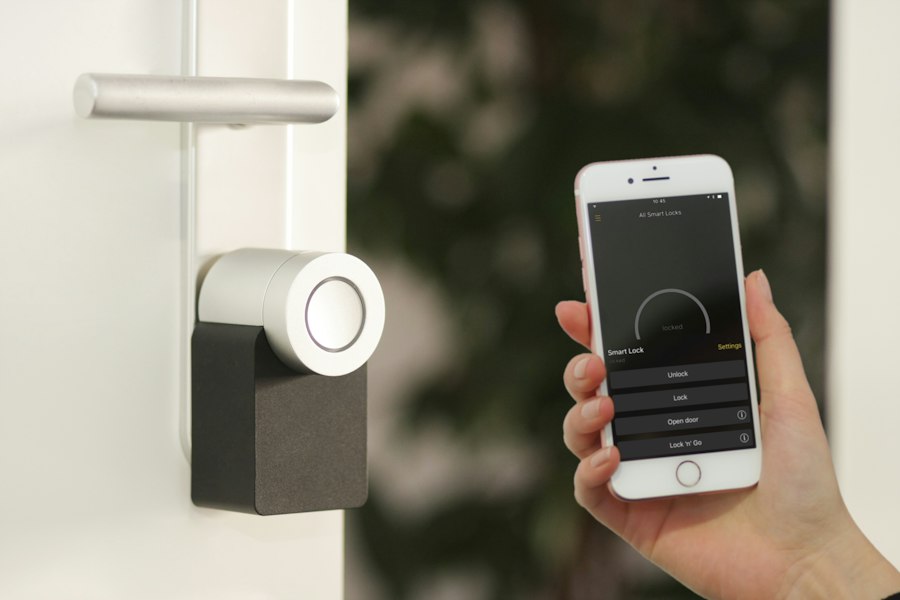
Smart locks are, by definition, connected. Protecting their communication channels is non-negotiable. This involves encryption, authentication, and careful protocol design.
Robust Encryption
Encryption scrambles data so that only authorized parties can read it.
It’s fundamental for protecting data in transit.
Strong Cryptographic Algorithms
The firmware must use strong, industry-standard cryptographic algorithms (e.g., AES-256 for symmetric encryption, RSA-2048 or ECC for asymmetric encryption) for all sensitive data. Avoid outdated or proprietary algorithms that haven’t been rigorously vetted by the security community.
Proper Key Management
Encryption is only as strong as its keys. Keys must be generated securely, stored securely (ideally in hardware-backed secure elements), and never hardcoded into the firmware.
Key rotation and revocation mechanisms should also be in place for long-term security.
End-to-End Encryption
Ideally, communication should be encrypted end-to-end, from the smart lock to the controlling device (e.g., smartphone) or cloud service. This means data remains encrypted even if it passes through intermediate, untrusted networks.
Mutual Authentication
Authentication verifies the identity of communicating parties. For smart locks, mutual authentication is critical, meaning both the lock and the connecting device verify each other’s identity.
Device-to-Cloud Authentication
When the lock communicates with cloud services, it must securely authenticate itself to the cloud, and the cloud must authenticate itself to the lock.
This prevents spoofing of either party. Digital certificates and TLS are common methods for achieving this.
Device-to-Mobile App Authentication
Similarly, when your phone app talks to the lock directly (e.g., via Bluetooth), both should authenticate each other. This prevents unauthorized apps from controlling the lock and ensures the lock is talking to your legitimate app.
This often involves pairing processes that generate shared secrets or exchange unique device identifiers.
Preventing Replay Attacks
As mentioned earlier, replay attacks involve an attacker intercepting and retransmitting legitimate commands. Communication protocols must incorporate mechanisms like nonces (numbers used once) or time-sensitive tokens to ensure that each message is unique and cannot be simply replayed to achieve the same effect.
Secure Protocol Implementations
It’s not enough to just use a protocol; it must be implemented correctly and securely.
Avoiding Common Protocol Vulnerabilities
Many standard protocols (Bluetooth, Wi-Fi, TLS) have known vulnerabilities if implemented improperly. Firmware developers must follow best practices, patch known issues, and avoid deprecated or insecure features within these protocols. For example, ensuring proper certificate validation in TLS, or secure pairing procedures in Bluetooth.
Limiting Attack Surface
If a feature or protocol isn’t strictly necessary for the lock’s core functionality, it shouldn’t be enabled or included in the firmware.
Disabling unused ports, services, or communication methods reduces the potential entry points for an attacker.
Rate Limiting and Flood Protection
Digital interfaces, especially those exposed over wireless protocols, can be targets for brute-force or denial-of-service attacks. The firmware should implement rate limiting on attempted password entries, connection attempts, or command executions to slow down attackers and prevent the lock from being overwhelmed.
On-Device Security Enhancements
Beyond secure communication and robust firmware design, there are specific measures taken directly on the device itself to make it more resilient to attacks.
Hardware-Backed Security
Leveraging dedicated security hardware significantly strengthens the firmware’s defenses by providing a tamper-resistant environment for critical operations.
Secure Elements (SE) and Trusted Platform Modules (TPM)
These are specialized hardware components designed to securely store cryptographic keys, certificates, and other sensitive data. They perform cryptographic operations in isolation, making it extremely difficult for software-based attacks to extract or tamper with these secrets. A secure element can ensure that the private key for signing firmware updates or authenticating the device never leaves the hardware.
Hardware Random Number Generators (RNG)
Cryptographic operations rely heavily on truly random numbers for generating keys, nonces, and other cryptographic primitives. Software-based RNGs can sometimes be predictable. Hardware RNGs provide a source of high-quality, unpredictable random numbers, which is crucial for cryptographic strength.
Tamper Detection and Response
Some advanced smart locks incorporate physical tamper detection sensors. These might detect if the casing is opened, if the lock is forcibly removed, or if specific components are being probed. Upon detection, the lock’s firmware can take predefined actions, such as locking down, erasing sensitive keys, or alerting the user/cloud.
Runtime Protections
Even with secure boot and robust coding, attackers might try to exploit vulnerabilities once the firmware is running. Runtime protections aim to detect and prevent such exploitation.
Address Space Layout Randomization (ASLR)
ASLR randomly arranges the address space positions of key data areas, such as the base of the executable and the positions of the stack, heap, and libraries. This makes it much harder for an attacker to reliably execute exploit code that relies on knowing specific memory addresses.
Data Execution Prevention (DEP)
DEP marks certain memory areas as non-executable. This prevents an attacker from injecting and executing malicious code in memory regions that should only contain data (like the stack or heap), thus mitigating certain buffer overflow attacks.
Watchdog Timers
A watchdog timer is a hardware timer that, if not “petted” (reset) by the firmware within a certain time interval, will automatically reset the device. This can help recover from software crashes or hangs caused by bugs or malicious attacks, ensuring the lock remains operational or reboots to a known good state.
Secure Storage and Configuration
Sensitive data stored on the device itself, such as user PINs, Wi-Fi credentials, and encryption keys, must be protected at rest.
Encrypted Non-Volatile Memory
All sensitive data stored persistently on the lock (e.g., flash memory) should be encrypted. This prevents an attacker who gains physical access to the memory chip from simply reading out the data. The encryption keys for this data should ideally be derived or stored within a secure element.
JTAG/SWD Debugging Port Protection
Debugging interfaces like JTAG (Joint Test Action Group) or SWD (Serial Wire Debug) provide low-level access to the device’s processor and memory. While invaluable during development, these ports must be disabled or locked down in production firmware to prevent attackers from using them to extract firmware, inject code, or bypass security mechanisms.
Secure Configuration Management
Configuration settings (e.g., network settings, user permissions) must be stored securely and protected from unauthorized modification. Changes to critical settings should require proper authentication and potentially trigger alerts.
In the ever-evolving landscape of smart home security, ensuring the integrity of smart lock firmware is crucial to prevent both physical and digital bypass attempts. A related article discusses how IT decision-makers can effectively identify and implement technologies that bolster security measures. For more insights on this topic, you can read the article here: TechRepublic Helps IT Decision Makers Identify Technologies. By staying informed about the latest advancements, homeowners can better protect their properties against potential vulnerabilities.
Incident Response and Lifecycle Management
| Metric | Description | Typical Value | Target Value for Hardening | Measurement Method |
|---|---|---|---|---|
| Firmware Attack Surface | Number of accessible interfaces and entry points in firmware | 10-15 interfaces | ≤5 interfaces | Code review and interface mapping |
| Bootloader Security | Presence of secure boot and signature verification | Partial or no secure boot | Full secure boot with cryptographic signature verification | Firmware analysis and boot process testing |
| Encryption Strength | Cryptographic algorithm and key length used for firmware and communication | AES-128 or lower | AES-256 or higher with secure key storage | Cryptographic audit and penetration testing |
| Physical Tamper Detection | Ability to detect physical tampering attempts | Absent or basic sensors | Multi-sensor tamper detection with alerting | Hardware testing and simulated tampering |
| Firmware Update Security | Mechanism to securely update firmware remotely | Unencrypted or unsigned updates | Encrypted, signed, and authenticated updates | Update process validation and security testing |
| Authentication Mechanisms | Methods used to authenticate users and devices | Basic PIN or password | Multi-factor authentication with cryptographic tokens | Authentication protocol analysis |
| Response Time to Bypass Attempts | Time taken to detect and respond to bypass attempts | Minutes to hours | Seconds to under a minute | Simulated attack and monitoring |
| Firmware Code Complexity | Measured by cyclomatic complexity to reduce vulnerabilities | High complexity (>15) | Low to moderate complexity (≤10) | Static code analysis tools |
| Access Logging and Audit | Capability to log access attempts and firmware changes | Limited or no logging | Comprehensive, tamper-proof logging | Log review and integrity checks |
Even with the best preventative measures, vulnerabilities can emerge, and attacks can happen. Having a plan for what to do when something goes wrong is just as crucial as trying to prevent it in the first place.
Vulnerability Reporting and Patching
A responsible manufacturer understands that their products might have vulnerabilities discovered over time.
Clear Reporting Channels
There should be a clear, public, and easy-to-find channel for security researchers and users to report potential vulnerabilities. This often involves a dedicated security email address or a bug bounty program.
Timely Security Patches
Once a vulnerability is reported and confirmed, the manufacturer must act swiftly to develop and release a patch. The OTA update mechanism discussed earlier is critical here, ensuring patches can be delivered to devices efficiently. Transparency about the vulnerability (once the patch is available) is also important for building trust.
Long-Term Support for Devices
Smart locks have a potentially long lifespan. Manufacturers should commit to providing security updates for a reasonable period after the product’s release, even for older models, to protect users from newly discovered threats.
Logging and Auditing
Understanding what happened during a security incident is vital for investigation and future prevention.
Secure Event Logging
The lock’s firmware should log significant events, such as unlock attempts (successful and unsuccessful), firmware updates, configuration changes, and connectivity issues. These logs should be stored securely, ideally encrypted, and ideally transmitted to a secure cloud service if possible.
Tamper-Resistant Logs
If logs can be easily altered or deleted by an attacker, their value is diminished. Implementations should strive to make logs tamper-resistant, for instance, by cryptographically signing log entries or ensuring they are written to a write-once memory area or immediately offloaded.
Remote Diagnostic Capabilities
When issues arise, remote diagnostic capabilities (with proper authorization and privacy safeguards) can help troubleshoot problems and understand potential attack vectors without requiring physical access to the device.
Responsible Disclosure Policy
A transparent and responsible disclosure policy outlines how the manufacturer will handle vulnerabilities reported by external researchers.
Collaboration with Researchers
Manufacturers should aim to collaborate with security researchers rather than treating them as adversaries. This means acknowledging their work, providing necessary resources for testing (within limits), and working together towards a solution before public disclosure.
Coordinated Disclosure
A coordinated disclosure process ensures that a patch is available before a vulnerability is made public. This minimizes the window of opportunity for attackers to exploit the flaw once it’s known.
End-of-Life Planning
Eventually, all hardware reaches its end-of-life, and support is discontinued. This phase needs to be managed securely.
Secure Data Erasure
When a lock is reset or retired, the firmware should provide a secure way to erase all user data (PINs, credentials, network settings) and cryptographic keys, ensuring that sensitive information cannot be recovered by a subsequent owner or attacker.
Clear Communication on Support EOL
Users need to be informed well in advance when a product will no longer receive security updates. This allows them to make informed decisions about upgrading or taking additional security precautions.
Hardening smart lock firmware isn’t a one-time task; it’s an ongoing process that encompasses design, development, deployment, and continued maintenance. By focusing on these foundational principles and specific technical implementations, manufacturers can significantly enhance the security posture of their smart locks, providing users with both convenience and genuine peace of mind.
FAQs
What is smart lock firmware?
Smart lock firmware is the software that controls the operation of a smart lock, including authentication processes, encryption methods, and communication protocols.
How can smart lock firmware be bypassed physically?
Smart lock firmware can be bypassed physically through methods such as manipulating the hardware components, exploiting vulnerabilities in the firmware, or using specialized tools to override the lock mechanism.
What are common digital methods used to bypass smart lock firmware?
Common digital methods used to bypass smart lock firmware include brute force attacks, sniffing communication channels for authentication data, and exploiting software vulnerabilities to gain unauthorized access.
How can smart lock firmware be hardened against physical bypass?
Smart lock firmware can be hardened against physical bypass by implementing tamper-resistant hardware components, encrypting sensitive data stored in the firmware, and utilizing secure boot mechanisms to prevent unauthorized firmware modifications.
What measures can be taken to protect smart lock firmware from digital bypass?
To protect smart lock firmware from digital bypass, measures such as implementing strong encryption algorithms, regularly updating firmware to patch vulnerabilities, and using multi-factor authentication methods can be employed.
Enjoying our content? Make us a preferred source on Google:
Add us as a Preferred Source on Google