


Network slicing is essentially about creating dedicated, virtual networks on top of a shared physical infrastructure. For mission-critical enterprise applications, this means you can carve out a specific “slice” of the network that’s tailor-made to guarantee the quality of service (QoS) those applications absolutely need. Think of it like having a private, express lane on a busy highway, ensuring your critical traffic always gets through without delay or congestion, even when the rest of the network is experiencing heavy load. This isn’t just about speed; it’s about predictable performance, low latency, and reliable connectivity, all crucial for applications where even a momentary glitch can have significant consequences.
Understanding the Core Concept of Network Slicing
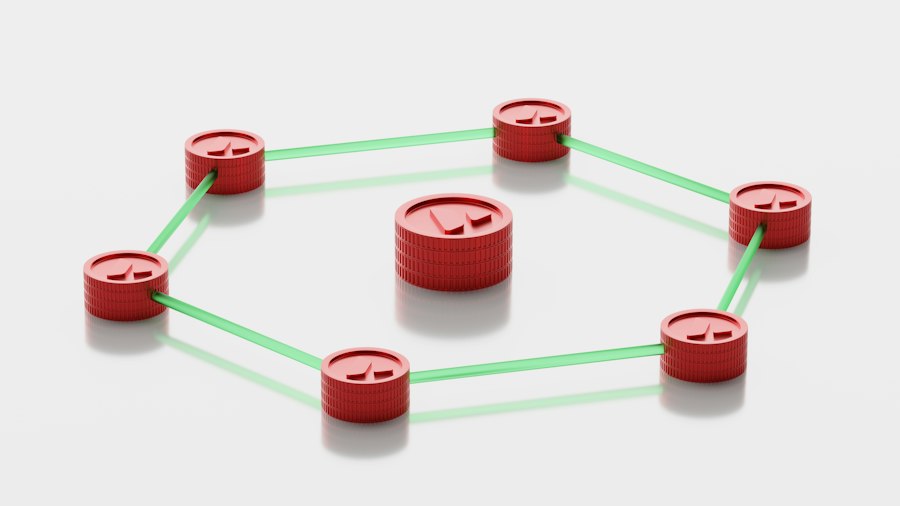
At its heart, network slicing leverages software-defined networking (SDN) and network function virtualization (NFV) to create these isolated, end-to-end logical networks. Instead of building entirely separate physical networks for different services or customers, you’re essentially partitioning the existing infrastructure. Each slice can have its own dedicated resources – bandwidth, processing power, storage – and its own set of policies for security, latency, and reliability. This allows for incredible flexibility and efficiency, as resources can be dynamically allocated and reallocated based on demand.
The “Why” Behind Network S Slicing for Enterprises
For enterprises running mission-critical applications, the traditional “best-effort” internet simply isn’t good enough. Imagine a remote-controlled surgical robot, an autonomous vehicle fleet, or a real-time financial trading platform. These applications demand ultra-low latency, extremely high reliability, and guaranteed bandwidth. A dropped packet or a few milliseconds of extra delay can mean the difference between success and failure, or even life and death. Network slicing provides the mechanism to deliver these stringent QoS requirements by isolating critical traffic from less sensitive data, preventing congestion and ensuring predictable performance. It moves beyond simply prioritizing traffic to actually reserving and dedicating resources.
How Slices Are Built: A Technical Overview
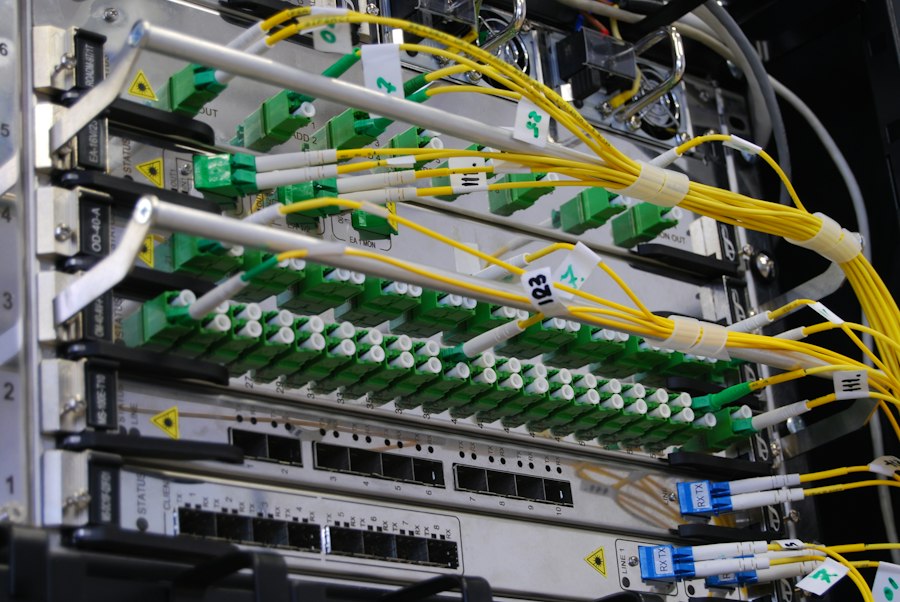
Building a network slice involves several key components. First, you have the underlying physical infrastructure – the radios, antennas, fiber optic cables, and core network equipment. On top of this, SDN controllers act as the brains, orchestrating and managing the network. NFV allows network functions (like firewalls, routers, or load balancers) to run as software on general-purpose servers, rather than dedicated hardware. This virtualization is crucial because it enables the dynamic creation and modification of network slices.
When a slice is provisioned, the SDN controller instructs the underlying network elements to allocate specific resources and configure pathways for that slice. This could involve reserving a certain amount of radio spectrum, dedicating specific virtual machines in the core network, and setting up strict forwarding rules. Each slice is logically independent, meaning traffic within one slice doesn’t interfere with traffic in another, even though they share the same physical infrastructure. Think of it as having multiple independent virtual private networks (VPNs) that are much more deeply integrated into the network infrastructure itself, offering far greater control and guarantees.
In the context of network slicing and its application in ensuring Quality of Service (QoS) for mission-critical enterprise applications, it is insightful to explore related resources that delve into the broader implications of technology in business operations. One such article is titled “Best Software for Project Management,” which discusses various tools that can enhance productivity and efficiency in project execution. You can read more about it here: Best Software for Project Management. This resource complements the discussion on network slicing by highlighting how effective project management software can support the deployment and management of advanced networking solutions in enterprises.
Key Takeaways
- The training data includes information and events up to October 2023.
- Insights and knowledge are based on a wide range of sources available until the cutoff date.
- No updates or developments occurring after October 2023 are included in the training.
- Users should verify current information from reliable sources for the latest updates.
- The model’s responses reflect the context and knowledge available up to the specified date.
Practical Applications for Mission-Critical Enterprise Needs
The real power of network slicing comes alive when we look at specific enterprise use cases. It’s not just a theoretical concept; it’s being deployed to solve tangible business challenges where traditional networking falls short.
Manufacturing and Industrial Automation
In modern manufacturing, processes are increasingly automated and interconnected. Robots, sensors, and control systems communicate in real-time, often over wireless networks. For applications like remote machine control, predictive maintenance, or quality control using high-resolution video analytics, latency and reliability are paramount. A network slice dedicated to the factory floor can guarantee the ultra-low latency needed for robot coordination, preventing collisions and ensuring precise movements. It can also ensure reliable data transmission from critical sensors, allowing for immediate anomaly detection and proactive maintenance, avoiding costly downtime. Imagine a scenario where a critical batch process relies on precise temperature control; a dedicated slice ensures the sensor data reaches the control system without delay, preventing product spoilage or safety hazards.
Healthcare: Remote Surgery and Patient Monitoring
The healthcare sector is rapidly adopting connected technologies, especially in areas like remote surgery, telemedicine, and real-time patient monitoring. For a remote surgical procedure, even a slight delay or jitter in the network could have catastrophic consequences. A network slice can be provisioned to provide a dedicated, ultra-reliable, and low-latency connection between the surgeon’s console and the robotic surgical equipment. Similarly, for patients with critical conditions being monitored remotely, a dedicated slice can ensure that vital signs data is transmitted continuously and reliably to healthcare professionals, triggering immediate alerts if necessary, without being impacted by other network traffic like video streaming or general internet browsing.
Autonomous Vehicles and Transportation
The future of transportation heavily relies on autonomous vehicles communicating with each other (V2V), with infrastructure (V2I), and with centralized control systems. These communications are inherently mission-critical, impacting safety and operational efficiency. A network slice can guarantee the low-latency and high-bandwidth connectivity required for autonomous vehicles to exchange sensor data, coordinate movements, and receive real-time traffic updates. This ensures that vehicles can react instantaneously to changing road conditions, preventing accidents and optimizing traffic flow. For public transportation, this could extend to real-time fleet management and predictive maintenance for buses or trains, all running on their own dedicated, guaranteed slices.
Energy Grids and Utilities
Modern smart grids rely on a vast network of sensors, actuators, and control systems to monitor and manage energy distribution efficiently and securely. For applications like fault detection, load balancing, and demand response, real-time communication is essential. A network slice can provide the secure, reliable, and low-latency connectivity needed for these critical control messages, ensuring the stability and resilience of the power grid. This means that if a fault occurs, the system can react in milliseconds to isolate the problem and reroute power, preventing widespread outages. It also enables more efficient integration of renewable energy sources, which often require precise real-time management.
Designing and Deploying Network Slices
While the concept sounds promising, putting network slicing into practice requires careful planning and execution. It’s not a plug-and-play solution; it involves understanding your application’s precise needs and configuring the network accordingly.
Defining Your Application’s QoS Requirements
The first and most crucial step is to thoroughly understand the QoS requirements of your mission-critical application. This goes beyond just saying “we need it fast.” You need to quantify:
- Latency: What’s the maximum acceptable delay (e.g., 5ms, 100ms)?
Is it one-way or round-trip?
- Jitter: How much variation in latency can be tolerated? (e.g., +/- 2ms)
- Bandwidth: What’s the minimum sustained data rate required, and what are the peak demands? (e.g., 10 Mbps always available, with bursts up to 50 Mbps)
- Reliability/Availability: What percentage of uptime is absolutely essential (e.g., 99.999%)?
What’s the acceptable packet loss rate (e.g., 0.001%)?
- Security: What level of isolation and encryption is needed for the data within the slice?
Without clear, quantifiable requirements, you can’t effectively design a slice that meets your needs. This often involves working closely with application developers and operational teams to pinpoint these critical metrics.
Orchestration and Management Tools
Deploying and managing network slices at scale requires sophisticated orchestration and management tools. These tools automate the entire lifecycle of a slice, from creation and modification to monitoring and deletion.
They interact with the underlying SDN controllers and NFV infrastructure to allocate resources, configure network functions, and establish end-to-end connectivity.
Key functionalities include:
- Slice Template Definition: Defining reusable templates for different types of slices (e.g., “ultra-low latency slice,” “high-bandwidth slice”).
- Resource Allocation: Dynamically assigning bandwidth, computing power, and storage based on slice requirements and available resources.
- Lifecycle Management: Automating the creation, modification, scaling, and termination of slices.
- Monitoring and Analytics: Providing real-time visibility into slice performance, resource utilization, and QoS adherence.
- SLA Enforcement: Actively monitoring whether the guaranteed QoS levels are being met and triggering alerts or remedial actions if deviations occur.
These tools are often complex, requiring expertise in network automation and cloud orchestration platforms.
They are essential for turning the theoretical concept of slicing into a practical, manageable reality.
Security Considerations for Sliced Networks
While network slicing provides logical isolation, security remains paramount. Each slice, while independent, still shares the underlying physical infrastructure. Therefore, robust security measures must be in place.
- Inter-Slice Isolation: Ensuring that traffic and control plane information from one slice cannot leak into or affect another.
This involves strict access controls and virtualization security mechanisms.
- Slice-Specific Security Policies: Each slice can have its own dedicated security policies, firewalls, and intrusion detection systems tailored to the specific application’s risk profile. For example, a slice for industrial control might have very restrictive inbound access rules.
- Secure Orchestration Layer: The orchestration and management plane itself must be highly secure, as it controls the entire network. Any compromise here could affect all slices.
- Data Encryption: Implementing end-to-end encryption within slices, especially for sensitive data, adds another layer of protection.
- Threat Detection and Response: Continuous monitoring for anomalies within each slice and across the entire infrastructure is crucial to detect and respond to potential security threats quickly.
The goal is to provide the same or even enhanced security compared to physically separated networks, leveraging the agility of software-defined controls.
Challenges and Considerations for Enterprise Adoption
While network slicing offers significant advantages, it’s not without its challenges. Enterprises considering its adoption need to be aware of these hurdles to plan effectively.
Integration with Existing Enterprise Infrastructure
One of the biggest challenges is integrating network slicing capabilities, often provided by a service provider (e.g., a 5G network operator), with an enterprise’s existing IT and operational technology (OT) infrastructure. This involves:
- API Integration: Ensuring that enterprise applications and management systems can programmatically request and manage network slices.
- Hybrid Cloud Environments: Seamlessly extending slices from the service provider’s network into enterprise data centers or private cloud environments.
- Legacy Systems: Adapting or integrating older, non-virtualized systems to leverage the benefits of sliced networks. This might require gateways or protocol translation layers.
- Operational Silos: Bridging the gap between traditional IT networking teams and new operational models required for managing dynamic, sliced networks.
Successful integration requires careful planning, standard interfaces, and often a collaborative effort between the enterprise and its network service provider.
Cost and Complexity of Deployment
Deploying a fully functional network slicing environment, especially one that extends into private enterprise networks, can be complex and costly.
- Infrastructure Upgrades: Enterprises might need to upgrade their own network equipment to be slice-aware and compatible with SDN/NFV principles.
- Software and Licensing: The orchestration and management software required for slicing can involve significant licensing fees.
- Skill Gaps: Operating and managing sliced networks requires new skill sets in areas like SDN, NFV, cloud orchestration, and network automation. Enterprises may need to invest in training or hiring new talent.
- Service Provider Engagement: If relying on a public 5G network for slicing, understanding the service provider’s offerings, SLAs, and pricing models is crucial, as these can vary significantly. The initial investment might be substantial, but the long-term operational efficiency and enablement of new services could justify it.
Vendor Interoperability and Standards
The ecosystem for network slicing is still evolving, and while standards bodies like 3GPP are working diligently, vendor interoperability can sometimes be a concern.
- Multi-Vendor Environments: Enterprises often use equipment from multiple vendors. Ensuring that slice orchestration works seamlessly across different vendors’ hardware and software components can be challenging.
- Standardization Progress: While core concepts are standardized, specific implementations and APIs can differ. This can lead to vendor lock-in if not carefully managed.
- Testing and Validation: Thorough testing of end-to-end slice functionality across different vendor domains is critical before deployment to ensure performance guarantees are met.
As the technology matures, interoperability is expected to improve, but enterprises should factor this into their planning and vendor selection processes. Open-source initiatives and industry collaborations are helping to drive greater consistency.
In the context of enhancing quality of service for mission-critical enterprise applications, the concept of network slicing has gained significant traction. A related article that explores the best laptops for coding and programming can provide valuable insights for developers working on these applications. For those interested in optimizing their development environment, this resource can be found here, offering recommendations that align well with the demands of modern software development.
The Future of Enterprise Connectivity with Network Slicing
| Metric | Description | Typical Value | Target for Mission-Critical Apps |
|---|---|---|---|
| Latency | Time delay in data transmission | 20-50 ms | <10 ms |
| Bandwidth | Data transfer capacity per slice | 100 Mbps – 1 Gbps | 500 Mbps – 2 Gbps |
| Packet Loss Rate | Percentage of lost packets during transmission | 0.1% – 1% | <0.01% |
| Jitter | Variation in packet delay | 5-10 ms | <1 ms |
| Slice Isolation | Degree to which slices are independent | Medium | High |
| Availability | Network uptime percentage | 99.9% | 99.999% |
| Resource Allocation Efficiency | Utilization rate of allocated resources | 70-85% | 85-95% |
Network slicing is not just a technological gimmick; it’s a fundamental shift in how networks are designed, managed, and consumed. For enterprises, it represents a powerful tool to unlock new capabilities and ensure the reliable operation of their most critical digital assets.
Enabling New Business Models and Services
With guaranteed QoS, enterprises can confidently launch new services and embrace advanced technologies that were previously limited by network constraints.
- Real-time Analytics at the Edge: Deploying AI/ML models at the network edge for instantaneous decision-making, such as defect detection in manufacturing or rapid fraud detection in finance.
- Immersive Experiences: Delivering high-fidelity augmented reality (AR) and virtual reality (VR) applications for training, design, or remote assistance, requiring extremely low latency and high bandwidth.
- Hyper-Personalized Customer Experiences: Providing dedicated, high-performance network segments for premium customers or specific high-value services.
- Industry 4.0 and Beyond: Fully realizing the vision of interconnected smart factories, smart cities, and intelligent transportation systems, all underpinned by slices tailored to their specific needs.
Network slicing transforms the network from a generic pipe into a programmable, adaptable platform that can be shaped to meet the precise demands of innovation.
The Role of 5G and Beyond
While network slicing can be applied in various contexts, it truly comes into its own with 5G and future mobile network generations. 5G was designed from the ground up with network slicing as a core capability. Its enhanced mobile broadband (eMBB), ultra-reliable low-latency communication (URLLC), and massive machine-type communication (mMTC) features perfectly align with the granular control offered by slicing.
As 5G networks become more ubiquitous and mature, enterprises will increasingly leverage slices offered by mobile operators, extending their private networks seamlessly into the public domain with guaranteed performance. Beyond 5G, future network architectures will likely deepen the integration and automation of slicing, making it even easier to provision and manage these custom network segments on demand. This evolution promises even greater flexibility, scalability, and efficiency for enterprises.
Private 5G Networks and Enterprise Control
For enterprises with very specific security, performance, or operational requirements, private 5G networks combined with network slicing offer an unparalleled level of control. An enterprise can deploy its own dedicated 5G network, and then create and manage its own slices tailored exactly to its internal applications. This provides:
- Complete Control: Full ownership and management of the network infrastructure and its slices.
- Enhanced Security: Physical and logical isolation from public networks, with enterprise-grade security policies applied directly.
- Customization: Ability to precisely tune network parameters and slice characteristics to meet unique operational technology (OT) needs.
- Data Sovereignty: Keeping critical data on-premise, within the enterprise’s own network boundaries.
This approach offers the ultimate in guaranteed QoS and customized connectivity for mission-critical enterprise applications, bringing the power of network slicing directly into the hands of the enterprise.
FAQs
What is network slicing?
Network slicing is a technology that allows a single physical network to be divided into multiple virtual networks, each tailored to specific requirements such as bandwidth, latency, security, and reliability.
How does network slicing guarantee QoS for mission-critical enterprise apps?
By creating dedicated virtual networks through network slicing, service providers can allocate resources and prioritize traffic to ensure that mission-critical enterprise applications receive the necessary Quality of Service (QoS) levels, such as low latency and high reliability.
What are some examples of mission-critical enterprise applications that benefit from network slicing?
Applications such as real-time video conferencing, IoT devices in manufacturing plants, autonomous vehicles, and remote surgery systems are examples of mission-critical enterprise applications that require guaranteed QoS and can benefit from network slicing.
How does network slicing improve network efficiency and resource utilization?
Network slicing allows service providers to dynamically allocate resources based on the specific requirements of each virtual network, leading to improved efficiency by avoiding over-provisioning and ensuring optimal resource utilization across different applications and services.
What are the challenges associated with implementing network slicing for QoS assurance in enterprise applications?
Challenges include the need for robust network management and orchestration systems, ensuring interoperability between different network slices, addressing security concerns in multi-tenancy environments, and managing the complexity of maintaining and monitoring multiple virtual networks simultaneously.
Enjoying our content? Make us a preferred source on Google:
Add us as a Preferred Source on Google