

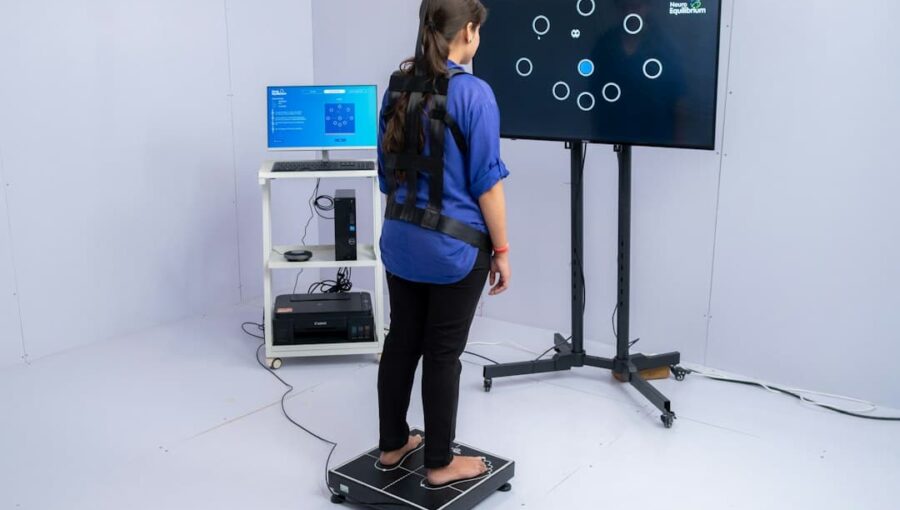
Spatial computing in medical training takes us beyond what traditional VR simulations offer by creating a much more realistic, interactive, and collaborative learning environment. Think of it as blending the digital world seamlessly with our physical space, allowing medical trainees to interact with virtual anatomical models or patient scenarios as if they were physically present, rather than just observing them on a screen or inside a headset. This means richer sensory feedback, more natural interaction, and the ability to work together in shared virtual spaces.
The Evolution Beyond Basic VR
Traditional virtual reality (VR) has undoubtedly revolutionized medical training. It allows students to practice procedures in a safe, repeatable environment, reducing the risks associated with real-world mistakes. However, traditional VR often isolates the user, placing them in a fully digital world. While effective for certain tasks, it lacks the integration with the physical environment and the natural social interaction that is crucial in a clinical setting. Spatial computing, often a broader term encompassing augmented reality (AR), mixed reality (MR), and advanced forms of VR, addresses these limitations by blurring the lines between physical and digital.
From Isolation to Integration
In a traditional VR simulation, a medical student might don a headset and find themselves in a completely virtual operating room.
They can interact with virtual instruments and patients, but their physical surroundings are entirely blocked out.
This can be great for focused procedural training, but it doesn’t prepare them for the real-world complexities of coordinating with a physical team, navigating a real hospital environment, or referencing physical patient charts.
Spatial computing, particularly through AR and MR, integrates digital information directly into the user’s view of the physical world. Imagine a surgeon-in-training wearing a lightweight headset that projects a 3D anatomical model directly onto a physical cadaver or even a live patient, allowing them to visualize internal structures without needing to cut. This isn’t just a static overlay; it’s an interactive model that can be manipulated, rotated, and explored while the trainee still sees their own hands, their instruments, and their colleagues.
Enhanced Realism and Fidelity
The level of realism in spatial computing goes beyond just visual fidelity. It’s about how natural the interaction feels. In a high-fidelity spatial computing environment, haptic feedback gloves can simulate the feel of different tissues, allowing a trainee to “palpate” a virtual tumor with their own hands and feel its consistency. This multi-sensory approach significantly enhances the learning experience compared to purely visual or audio cues.
Consider a scenario where medical students are learning to identify subtle signs of internal bleeding. In a spatial computing environment, they could view a virtual patient overlayed onto a mannequin, observing realistic changes in skin pallor, swelling, or even subtle internal movements that are hard to convey through 2D images or even basic VR. The ability to physically walk around the “patient,” observe them from different angles, and interact with overlaid diagnostic information creates a far more immersive and memorable learning experience.
Collaborative Learning in Shared Spaces
One of the significant breakthroughs spatial computing offers is the ability to facilitate collaborative learning in shared mixed-reality spaces. In traditional VR, multiple users might be in the same virtual environment, but they often experience it from their isolated perspectives, interacting with virtual avatars.
With spatial computing, multiple trainees and instructors can wear AR/MR headsets and collectively observe and interact with the same virtual objects, seamlessly integrated into their shared physical space. Imagine a team of medical residents practicing a complex surgical procedure on a virtual model. They can all see the same 3D anatomy, discuss approaches, and even take turns manipulating virtual instruments, all while physically standing next to each other in a real training room. An instructor can even point to specific virtual structures, and all trainees will see the instructor’s virtual pointer in their own field of view, making communication much more intuitive and effective than trying to describe complex spatial relationships verbally or through isolated screens.
In the realm of immersive spatial computing, particularly in medical training, advancements are paving the way for innovative learning experiences that extend beyond traditional VR simulations. A related article that delves into the transformative potential of technology in various fields is available at Rankatom Review: The Game-Changing Keyword Research Tool. This piece explores how cutting-edge tools and methodologies can enhance research and development, paralleling the evolution of immersive technologies in medical education.
Key Takeaways
- The training data includes information and events up to October 2023.
- Insights and knowledge are based on a wide range of sources available until the cutoff date.
- No updates or developments occurring after October 2023 are included in the training.
- Users should verify current information from reliable sources for the latest updates.
- The model’s responses reflect the context and knowledge available up to the specified date.
Key Technologies Powering Spatial Medical Training

The capabilities of immersive spatial computing in medical training are underpinned by a suite of rapidly evolving technologies. These aren’t just incremental improvements but represent fundamental shifts in how we interact with digital information.
Advanced Head-Mounted Displays (HMDs)
The quality and capabilities of HMDs are central to the spatial computing experience. We’re moving beyond bulky, low-resolution VR headsets towards lighter, more comfortable devices that offer wider fields of view, higher resolutions, and increasingly sophisticated optics.
Mixed Reality Headsets
Mixed reality (MR) headsets like Microsoft’s HoloLens or Magic Leap devices are particularly crucial here. Unlike VR headsets that completely occlude the real world, MR headsets are transparent, allowing users to see their physical surroundings while simultaneously overlaying digital content. This “see-through” capability is vital for medical training where physical instruments, real colleagues, and the actual environment remain important reference points. These devices use advanced sensors, cameras, and spatial mapping algorithms to understand the user’s physical environment, track their movements, and precisely place virtual objects within that space. This allows for persistent virtual objects that stay in place relative to the physical world, even as the user moves around.
High-Fidelity VR with Passthrough
Even high-fidelity VR headsets are incorporating “passthrough” capabilities, using external cameras to provide a real-time view of the physical world to the user. While not true MR (as the real world is still mediated through screens), these systems can achieve a form of “blended” reality, allowing users to switch between full VR immersion and a view of their physical surroundings, or even overlay certain digital elements onto the passthrough view. This is useful for hybrid scenarios where deep immersion is needed but occasional awareness of the physical world is also beneficial.
Real-time Spatial Mapping and Understanding
For virtual objects to be convincingly integrated into the real world, the spatial computing system needs to constantly understand and map the physical environment. This involves complex algorithms and hardware.
Environmental Reconstruction
Sensors on HMDs continuously scan the environment, building a real-time 3D map of rooms, furniture, and other physical objects. This map allows the system to correctly occlude virtual objects behind real ones (e.g., a virtual organ appearing behind a real surgical tray) and for virtual objects to “rest” on physical surfaces. This level of environmental understanding is critical for grounding virtual content and making it feel truly present.
Object and Hand Tracking
Precise object and hand tracking are fundamental. Systems track the user’s hands and fingers, allowing for natural gestures to manipulate virtual objects. This eliminates the need for clumsy controllers in many scenarios, making interaction much more intuitive. Furthermore, some systems can track real-world objects, like surgical instruments, and represent them digitally within the mixed-reality environment. Imagine a virtual patient whose organs can be manipulated with a real scalpel that the system tracks and renders virtually.
Haptic Feedback and Multi-Sensory Integration
Beyond just sight and sound, the sense of touch (haptics) adds an unparalleled layer of realism to spatial computing training.
Haptic Devices
Various haptic devices, from gloves that simulate pressure and texture to sophisticated robotic arms that provide force feedback, are being integrated. This allows medical trainees to “feel” the stiffness of a tumor, the tension of a suture, or the resistance of tissue during an incision. Such tactile feedback is crucial for developing fine motor skills and understanding tissue properties, which are impossible to convey through visual or auditory means alone.
Olfactory and Gustatory Systems (Emerging)
While still nascent, research is exploring the integration of olfactory (smell) and gustatory (taste) systems into immersive environments. Imagine a trainee learning about infectious diseases and experiencing a simulated “odor” associated with a particular bacterial infection, or even subtle changes in a patient’s breath. While these senses are more challenging to simulate convincingly, their eventual integration promises an even richer, more comprehensive training experience.
Practical Applications in Medical Education

The theoretical promise of spatial computing translates into tangible, transformative applications across various medical disciplines. These applications go far beyond simply viewing 3D models.
Advanced Surgical Training
Surgical education is a prime candidate for spatial computing, offering highly realistic and repeatable practice opportunities without patient risk.
Pre-operative Planning and Rehearsal
Surgeons can use MR headsets to overlay detailed 3D patient-specific anatomical data (derived from CT or MRI scans) directly onto a physical mannequin or even the patient themselves during a “dry run” before surgery. They can visualize tumors, blood vessels, and critical structures in their exact spatial relationship, allowing them to plan incision points, optimal trajectories, and identify potential complications.
This allows for personalized surgical rehearsal, similar to a pilot practicing a complex flight path. The ability to physically walk around the virtual organs and discuss strategies with a team in a shared mixed-reality space significantly enhances planning.
Intraoperative Guidance and Assistance
During actual surgery, AR overlays can provide surgeons with “X-ray vision,” projecting critical patient data, surgical plans, and even real-time physiological metrics directly onto their field of view. This could highlight hidden tumors, nerve pathways, or blood vessels, reducing reliance on glancing at separate monitors and improving precision.
While still in early stages for live surgery, the potential for enhancing accuracy and reducing surgical times is immense.
Skill Acquisition and Procedural Practice
Trainees can repeatedly practice complex procedures like laparoscopic surgery or suturing techniques on virtual organs integrated with physical mannequins. Haptic feedback can simulate the feel of tissue, instrument resistance, and suture tension, providing realistic tactile cues vital for developing motor skills. Instructors can remotely monitor trainees’ movements, provide real-time feedback, and even annotate the shared mixed-reality environment with guidance arrows or highlights.
Anatomical and Physiological Learning
Spatial computing revolutionizes how students learn anatomy and understand complex physiological processes.
Interactive 3D Anatomy Exploration
Instead of static diagrams or even traditional 3D models on a screen, students can interact with highly detailed, photorealistic 3D anatomical models directly integrated into their physical classroom or home study space.
They can walk around a virtual heart, virtually dissect layers, zoom in to microscopic structures, and highlight specific systems (circulatory, nervous, muscular) with gestures. This contextual and interactive exploration leads to a deeper spatial understanding that is difficult to achieve with traditional methods.
Dynamic Physiological Simulations
Beyond static anatomy, spatial computing can simulate dynamic physiological processes. Imagine students observing a virtual heart beating within a mannequin, seeing blood flow through vessels, or visualizing the electrical impulses of the nervous system in real-time.
They could manipulate variables, like medication dosage or disease states, and instantly see the simulated physiological response, offering a powerful tool for understanding complex bodily functions and pharmacological effects.
Emergency Medicine and Disaster Preparedness
Training for high-stress, time-critical situations benefits immensely from immersive and realistic spatial computing simulations.
Realistic Trauma Scenarios
Emergency medical technicians (EMTs) and paramedics can train in mixed-reality environments that simulate realistic trauma scenes. A virtual accident victim could be superimposed onto a physical mannequin in a simulated car wreck or disaster zone. Trainees would assess injuries, practice triage, and perform life-saving interventions using real equipment while interacting with the virtual patient and their physical team.
The system can introduce dynamic elements like changing vital signs, unexpected complications, or even environmental factors like smoke, increasing the realism and pressure.
Mass Casualty Incident Training
For mass casualty incidents (MCIs), spatial computing can create large-scale, complex scenarios where multiple trainees collaborate.
A training facility could be populated with dozens of virtual patients, each with unique injuries and needs, all visible to trainees wearing AR/MR headsets.
This allows for practicing command and control, resource allocation, and team coordination in a way that is impossible or prohibitively expensive with traditional drills. Instructors can introduce new variables, escalate the situation, or simulate various outcomes.
Overcoming Challenges and Future Directions
While the potential of spatial computing in medical training is immense, its widespread adoption faces several hurdles. Addressing these challenges will be key to unlocking its full transformative power.
Cost and Accessibility
Currently, high-end spatial computing hardware (like enterprise-grade MR headsets) and the development of sophisticated medical simulations can be quite expensive.
Reducing Hardware Costs
As the technology matures and scales, hardware costs are expected to decrease, similar to the trajectory of early computing and smartphone technology. Increased competition and broader consumer adoption will drive down prices, making these powerful tools more accessible to a wider range of medical institutions, including smaller hospitals and medical schools.
Developing Open-Source Platforms and Content
Encouraging the development of open-source platforms and shared content libraries can significantly reduce the cost of developing simulations. Collaborative efforts among academic institutions, medical organizations, and tech companies can lead to standardized frameworks and reusable modules, lowering the barrier to entry for content creation.
Data Security and Privacy Concerns
Working with patient data, even simulated data, raises significant security and privacy concerns, especially when integrating with real-world systems.
Secure Data Handling and Anonymization
Robust security protocols are essential for any spatial computing application that processes or displays sensitive medical information. This includes stringent data anonymization techniques for training datasets and secure, encrypted channels for any real-time data streaming. Compliance with regulations like HIPAA (in the US) and GDPR (in Europe) is paramount.
Ethical Considerations
Beyond data security, ethical considerations around data use, algorithmic bias in AI-driven simulations, and the psychological impact of highly realistic simulations need careful consideration. Developing clear ethical guidelines and frameworks for spatial computing in medical training will be crucial.
Integration with Existing Medical Systems
For spatial computing to be truly effective, it needs to integrate seamlessly with existing hospital information systems (HIS), electronic health records (EHRs), and medical equipment.
Interoperability Standards
Developing interoperability standards for spatial computing platforms is critical. This would allow simulations to pull real-time patient data from EHRs (in a secure, anonymized training environment) or push simulated outcomes back into a training record system. Such integration would create a more holistic and data-driven training ecosystem.
User Workflow and Ergonomics
The physical integration of spatial computing devices into clinical workflows needs careful consideration. Headsets need to be comfortable for long periods, easy to clean in sterile environments, and intuitive to use without distracting from critical tasks. Research into optimal user interfaces and ergonomic designs will continue to be important.
Future Innovations on the Horizon
The field of spatial computing is still rapidly evolving, with exciting innovations on the horizon that will further enhance medical training.
AI-Powered Intelligent Tutors
Integrating artificial intelligence (AI) with spatial computing can create intelligent virtual tutors that adapt to a trainee’s performance, identify knowledge gaps, and provide personalized feedback in real-time. These AI tutors could dynamically adjust simulation difficulty, offer hints, or even play the role of complex virtual patients with adaptive behaviors.
Bio-Feedback Integration
Integrating real-time bio-feedback from trainees (e.g., heart rate, eye-tracking, galvanic skin response) could allow simulations to adapt to a trainee’s stress levels, provide insights into their cognitive load, and help them develop resilience under pressure. This could lead to training that not only teaches procedures but also prepares individuals for the psychological demands of medicine.
Advanced Haptics and Olfaction
Continued advancements in haptic technology will offer even more nuanced and realistic tactile feedback, simulating a wider range of tissue textures and sensations. The development of reliable and diverse olfactory simulation systems could add another layer of sensory immersion, crucial for diagnostics and understanding patient environments.
Immersive spatial computing is revolutionizing medical training by offering experiences that go beyond traditional VR simulations. A related article discusses how advanced technologies are reshaping educational practices in healthcare, providing insights into the integration of augmented reality and artificial intelligence in training programs. For more information on this topic, you can read the article here, which explores the future of medical education and the potential of immersive technologies to enhance learning outcomes.
Conclusion: A New Era of Medical Preparedness
| Metric | Traditional VR Simulations | Immersive Spatial Computing | Improvement |
|---|---|---|---|
| Realism of Anatomical Models | Moderate (3D models with limited interaction) | High (Holographic, interactive, and context-aware models) | Significant |
| Spatial Awareness Training | Limited (2D or fixed 3D views) | Enhanced (True 3D spatial interaction and navigation) | High |
| User Engagement | Moderate (Screen-based VR) | High (Mixed reality with physical environment integration) | High |
| Haptic Feedback Integration | Basic or None | Advanced (Spatially accurate haptics and force feedback) | Significant |
| Collaborative Training Capability | Limited (Mostly single-user or virtual avatars) | Robust (Multi-user spatial environments with real-time interaction) | High |
| Adaptability to Real-World Environments | Low (Isolated VR environments) | High (Context-aware and environment-mapped simulations) | Significant |
| Training Outcome Improvement | Moderate (Improved knowledge retention over traditional methods) | High (Better skill transfer and procedural accuracy) | High |
| Cost of Implementation | Moderate | Higher (Advanced hardware and software requirements) | Increased |
Immersive spatial computing is not merely an incremental upgrade to traditional medical simulations; it represents a fundamental shift in how medical professionals learn, practice, and collaborate. By seamlessly blending digital content with the physical world, it offers an unprecedented level of realism, interactivity, and contextual understanding. From highly detailed anatomical exploration and complex surgical rehearsals to high-stakes emergency preparedness, spatial computing empowers trainees with richer sensory experiences, more natural interactions, and the ability to learn collaboratively in shared virtual-physical environments.
While challenges like cost, data security, and integration remain, the rapid pace of technological advancement, coupled with the critical need for highly skilled and adaptable medical professionals, ensures that spatial computing will continue its trajectory as a cornerstone of future medical education. It promises an era where medical training is not just about acquiring knowledge and skills, but about building confidence, honing critical thinking, and fostering teamwork in environments that mirror the complexities of real-world clinical practice, ultimately leading to better patient outcomes and a more prepared healthcare workforce.
FAQs
What is immersive spatial computing in medical training?
Immersive spatial computing in medical training refers to the use of advanced technologies such as virtual reality (VR), augmented reality (AR), and mixed reality (MR) to create realistic and interactive simulations for medical education.
How does immersive spatial computing enhance medical training compared to traditional methods?
Immersive spatial computing provides a more realistic and engaging learning experience for medical trainees by allowing them to interact with 3D models, practice procedures in a simulated environment, and receive immediate feedback on their performance.
What are some examples of immersive spatial computing applications in medical training?
Examples of immersive spatial computing applications in medical training include virtual surgeries, anatomy simulations, patient interaction scenarios, medical emergency simulations, and diagnostic training modules.
How can immersive spatial computing benefit medical students and healthcare professionals?
Immersive spatial computing can help medical students and healthcare professionals improve their clinical skills, enhance their decision-making abilities, increase their confidence in performing procedures, and provide a safe environment to practice without risking patient safety.
What are the challenges associated with implementing immersive spatial computing in medical training?
Challenges of implementing immersive spatial computing in medical training include the high cost of technology, the need for specialized training for instructors, ensuring the accuracy and reliability of simulations, and addressing potential issues related to motion sickness or simulator sickness in users.
Enjoying our content? Make us a preferred source on Google:
Add us as a Preferred Source on Google