


The race to connect ordinary smartphones directly to satellites is heating up, and at its core is a fascinating tug-of-war: should we rely on established, open cellular standards like 3GPP, or embrace more specialized, often proprietary, solutions? The short answer is, right now, both are being developed and deployed, each with its own advantages and challenges, and the industry is actively figuring out which approach will ultimately dominate – or if there will be room for both. This isn’t just a technical debate; it has huge implications for everything from emergency services to global connectivity, impacting device manufacturers, satellite operators, and ultimately, you and me.
The Core Conflict: Open vs. Closed Ecosystems
At the heart of the direct-to-device (D2D) satellite connectivity discussion lies the fundamental tension between open standards and proprietary systems. This isn’t a new fight in technology, but in the context of connecting billions of existing smartphones directly to satellites, the stakes are incredibly high.
What 3GPP Brings to the Table
The 3rd Generation Partnership Project (3GPP) is the global collaboration that defines specifications for mobile telecommunications technologies, including 5G and LTE. Its strength lies in its widespread adoption, mature ecosystem, and the sheer volume of devices and infrastructure already built around its standards.
Leveraging Existing Smartphone Hardware
One of the biggest advantages of 3GPP-based D2D satellite communication is the potential to minimize changes to existing smartphone hardware. Modern smartphones already contain advanced radios capable of sophisticated signal processing. By extending 3GPP standards to satellite links, the hope is to use as much of the existing cellular chipset as possible. This means lower manufacturing costs for satellite-enabled phones and a faster pathway to market since phone makers aren’t reinventing the wheel. It also means familiar user experiences, as the underlying protocols are already understood by the operating system and applications.
Roaming and Interoperability Potential
A truly open, 3GPP-compliant satellite D2D system offers the tantalizing prospect of global roaming and seamless interoperability. Imagine your phone automatically connecting to a satellite network in a remote area, much like it switches between different cellular providers when you travel. If multiple satellite operators adopt the same 3GPP standard, your phone could theoretically connect to any of them, broadening coverage and choice. This reduces vendor lock-in and fosters a more competitive market among satellite providers.
Well-Defined Security and Quality of Service
3GPP standards have evolved over decades to include robust security protocols and mechanisms for managing quality of service (QoS). These are critical for reliable and secure communication. Adapting these proven frameworks for satellite links means benefiting from years of refinement in areas like authentication, encryption, and prioritization of traffic. This is especially important for emergency services and other critical applications where reliability and security are non-negotiable.
The Allure of Proprietary Solutions
Despite the strong arguments for 3GPP, several players are pursuing proprietary or highly customized solutions. These often emerge from companies that already have extensive satellite infrastructure or specialized technical expertise.
Tailored for Satellite Constraints
Satellites, especially low Earth orbit (LEO) constellations, introduce unique challenges that cellular networks don’t typically face. These include significant path loss, large Doppler shifts (due to the satellite’s high speed relative to the ground), varying signal latency, and limited power budgets on both the satellite and the device.
Proprietary protocols can be specifically designed from the ground up to optimize performance under these exact conditions, potentially achieving better link budgets or lower power consumption than a generalized 3GPP standard might.
Faster Time to Market for Initial Services
Developing and standardizing a new 3GPP release is a lengthy, collaborative process involving many stakeholders. While thorough, it can be slow. Companies with proprietary solutions can often move faster, rapidly developing and deploying their technology without waiting for consensus from a global body. This speed can be a significant advantage for capturing early market share and demonstrating viability. SpaceX’s Starlink Direct to Cell, in partnership with T-Mobile, is a prime example of this aggressive, fast-paced approach.
Control Over the Entire Ecosystem
For companies that own both the satellite constellation and the D2D technology, a proprietary approach offers complete end-to-end control. This allows for tighter integration between the space and ground segments, optimizing every part of the system for maximum efficiency and performance. It also allows the company to differentiate its service and potentially capture more revenue by controlling the entire value chain. Apple’s partnership with Globalstar for its Emergency SOS via Satellite service is an example of a more controlled, proprietary-leaning integration, even if the underlying technology has some commonalities with satellite communications.
In the ongoing discussion about Direct-to-Device Satellite Standards, the competition between proprietary protocols and 3GPP standards is becoming increasingly significant. This battle not only impacts the future of satellite communications but also influences various industries, including affiliate marketing. For instance, understanding the best niches for affiliate marketing can provide insights into how emerging technologies, like satellite communication, can be leveraged for targeted advertising. To explore this further, you can read the related article on the best niches for affiliate marketing on Facebook at this link.
Key Takeaways
- The training data includes information and events up to October 2023.
- Insights and knowledge are based on a wide range of sources available until the cutoff date.
- No updates or developments occurring after October 2023 are included in the training.
- Users should verify current information from reliable sources for the latest updates.
- The model’s responses reflect the context and knowledge available up to the specified date.
Technical Hurdles: Making Satellites and Phones Talk
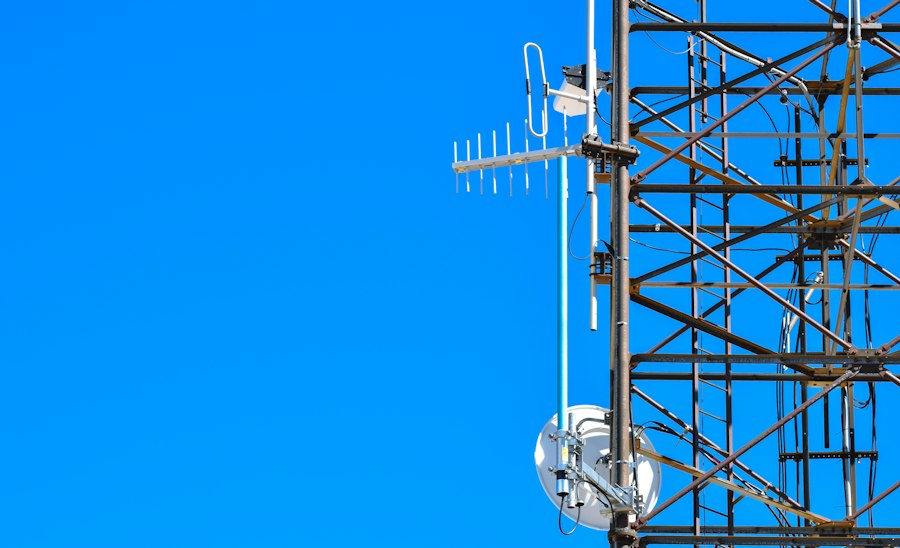
Connecting a small, low-power smartphone directly to a satellite hundreds of kilometers away is a monumental engineering challenge. Both 3GPP and proprietary approaches grapple with these fundamental physical limitations.
Overcoming Link Budget Challenges
The ‘link budget’ is a calculation of all the gains and losses from a transmitter to a receiver. For D2D satellite, it’s particularly challenging.
Weak Signals and Noise
Smartphone antennas are tiny, omnidirectional, and not designed for high gain or precise aiming. They transmit very little power compared to traditional satellite terminals. Satellites, while powerful, are also far away. This results in an incredibly weak signal arriving at the phone (downlink) and an even weaker signal transmitted from the phone (uplink). The signal-to-noise ratio (SNR) becomes critical, as any noise can easily drown out the faint signal. Both approaches need very sophisticated error correction, coding schemes, and potentially wider bandwidths to gather enough signal energy.
Antenna Constraints on Devices
Traditional satellite phones have bulky, directional antennas. Smartphones don’t. The challenge is to receive and transmit signals effectively using the existing, small, internal antennas or minimally modified ones. This limits the achievable gain and directly impacts the link budget. Solutions often involve sophisticated signal processing on the satellite side (e.g., large phased arrays, beamforming) to compensate for the phone’s limitations.
Dealing with Doppler Shift
Doppler shift is the change in frequency of a wave in relation to an observer who is moving relative to the wave source. For LEO satellites moving at thousands of kilometers per hour, this shift is substantial.
Frequency Changes in Motion
As a LEO satellite approaches, passes over, and moves away from a ground user, the frequency of the radio waves it transmits (and receives) will appear to shift. This shift can be hundreds of kilohertz or even megahertz, far more than cellular systems typically handle. If not compensated for, the phone and satellite literally won’t be tuned to the same frequency, making communication impossible.
Compensation Mechanisms
Both 3GPP and proprietary systems must implement robust Doppler compensation. This typically involves advanced signal processing algorithms on both the satellite and device. The satellite needs to predict and adjust its transmitted frequency, and the device needs to track and correct for the perceived frequency shift. This adds complexity to the radio hardware and software.
Latency and Handover Management
Unlike geostationary satellites which are fixed relative to the ground (but suffer from high latency due to distance), LEO satellites move rapidly across the sky.
Managing Rapid Satellite Movement
A LEO satellite is only visible to a user for a short period, often just a few minutes. As one satellite moves out of view, another must take its place for continuous communication. This requires frequent “handover” procedures, similar to how a phone switches between cellular towers, but much faster and more complex given the satellite’s speed and position uncertainty.
Impact on Protocol Design
The high latency (though less than GEO satellites, still significantly more than cellular) and rapid handovers impact protocol design. Connection establishment needs to be quick, and data transfer protocols must be efficient to maximize throughput during the short contact window. Both 3GPP and proprietary solutions are working on new handover procedures specifically for this dynamic environment.
3GPP’s Response: Non-Terrestrial Networks (NTN)

Recognizing the growing interest and potential of D2D satellite communication, 3GPP has actively incorporated “Non-Terrestrial Networks” (NTN) into its specifications. This demonstrates a commitment to making satellite communication a seamless extension of 5G.
Release 17 and Beyond
3GPP Release 17 marked a significant step forward for NTN. It introduced specifications for connecting 5G New Radio (NR) directly to satellites, focusing initially on low data rate applications like emergency messaging.
Enhancements for Satellite Channels
Release 17 addresses many of the technical hurdles discussed earlier.
It includes provisions for handling large Doppler shifts, mitigating propagation delays, and optimizing signal reception under challenging link budget conditions. This involves specific modifications to the physical layer (PHY) and medium access control (MAC) layers of the 5G protocol stack to account for the unique characteristics of satellite links.
Initial Focus: Emergency Messaging
The initial focus of 3GPP NTN in Release 17 is often on emergency messaging (e.g., Satellite IoT and narrowband data for critical communications). This is a pragmatic approach, as emergency messages require relatively low bandwidth but high reliability, making them a good starting point for demonstrating the viability of D2D satellite connectivity.
It also aligns with public safety mandates and provides a clear use case for early adoption.
Future 3GPP Releases (Release 18, 19, etc.)
The roadmap for 3GPP NTN extends well beyond Release 17, with ongoing work aimed at expanding capabilities and supporting a wider range of services.
Expanding to Broader Services
Future releases are expected to support higher bandwidth services, including voice and potentially even basic data browsing, closer to what users expect from terrestrial cellular networks. This will require further optimizations to improve spectral efficiency, manage power consumption, and handle more complex traffic patterns. The goal is to evolve NTN to support ubiquitous connectivity, not just emergency services.
Integration with Terrestrial Networks
A key aspect of 3GPP NTN is its seamless integration with existing terrestrial 5G networks.
The vision is for a device to intelligently switch between cellular and satellite connectivity based on availability and need, using the same SIM card and user identity. This “hybrid” approach offers the best of both worlds, leveraging the high capacity of terrestrial networks where available and the expansive coverage of satellites in remote areas. This integration will be crucial for a truly unified user experience.
The Proprietary Contenders and Their Strategies
While 3GPP works on its open standards, several influential players are actively deploying and refining their own, often proprietary, D2D satellite solutions.
Starlink Direct to Cell
SpaceX’s Starlink, in partnership with T-Mobile (and other mobile network operators globally), is a prime example of a proprietary approach aiming for widespread adoption.
Specialized LEO Constellation
Starlink’s existing LEO constellation, while primarily designed for fixed broadband, is being adapted for D2D. This involves launching new satellites with specialized phased array antennas capable of directly communicating with standard LTE phones. The satellites act as “flying cell towers,” essentially extending a mobile network operator’s coverage from space.
LTE-Based for Mass Market
Starlink Direct to Cell is designed to work with existing LTE phones, meaning users won’t need new hardware. This is a massive differentiator and a testament to their engineering prowess in designing the satellite payload to compensate for the phone’s limitations. The initial focus is on messaging, with voice and data planned for the future. The proprietary aspect lies in the specific satellite hardware, ground infrastructure, and the way the satellite-to-phone link is optimized, even if it speaks an LTE-like language at the device level.
Rapid Deployment and Partnerships
SpaceX’s ability to rapidly launch satellites gives them a significant advantage in deploying a global D2D network quickly. Their strategy of partnering with established mobile network operators (MNOs) allows them to tap into existing customer bases and billing relationships, accelerating market penetration. This aggressive timeline contrasts with the more deliberative pace of 3GPP standardization.
Apple’s Emergency SOS via Satellite (Globalstar Partnership)
Apple’s solution, launched with the iPhone 14, takes a different, highly integrated, and initially more constrained approach.
Focused on Emergency Services
Apple’s Emergency SOS via Satellite is strictly for emergencies, allowing users to send short text messages to emergency services when outside of cellular coverage. This targeted use case simplifies the technical requirements compared to full voice or data services. The user experience is highly curated, guiding the user to point their phone correctly to establish a connection.
Custom Hardware and Software Integration
While it uses Globalstar’s LEO satellites, the solution involves specific hardware enhancements within the iPhone (e.g., custom RF components and specialized software) to enable the connection. This tight integration ensures a seamless user experience within the Apple ecosystem. The communication protocol itself is highly optimized and proprietary to Apple, designed for maximum efficiency for short bursts of data.
Controlled User Experience
Apple maintains strict control over the user experience, from the phone’s UI to the message routing and delivery. This ensures reliability and simplicity for critical emergency communications but also limits the service’s broader applications. It’s a closed-loop system, demonstrating the power of vertical integration.
Other Notable Players
Beyond these two major players, several other companies are pursuing D2D satellite connectivity with varied approaches.
AST SpaceMobile
AST SpaceMobile is building its “SpaceMobile” network using very large LEO satellites with massive antenna arrays (BlueWalker 3 is a notable example). Their goal is to provide cellular broadband services directly to unmodified 2G, 4G, and 5G phones. This is a highly ambitious project, aiming for full broadband capabilities, making it a direct competitor to Starlink Direct to Cell, but with an even greater emphasis on leveraging existing phone hardware across multiple generations.
Their approach also relies on complex proprietary satellite technology.
Iridium and Inmarsat (Specialized Devices)
While not primarily focused on direct-to-smartphone connectivity for existing consumer devices, traditional satellite players like Iridium and Inmarsat continue to evolve their networks. They primarily use specialized satellite phones or terminals, which offer robust, reliable service for specific use cases (maritime, aviation, government). As the D2D market matures, these players might integrate their capabilities more closely with standard smartphones, potentially through hybrid devices or smaller, integrated modules, but their core networks are built on proprietary or highly specialized standards.
In the ongoing discussion about Direct-to-Device Satellite Standards, the tension between proprietary systems and 3GPP protocols is becoming increasingly significant. As the industry evolves, stakeholders are keenly observing how these competing frameworks will shape the future of satellite communications. For those interested in broader technological trends, a related article on the top trends on YouTube in 2023 offers insights into how digital platforms are adapting to new communication standards and consumer preferences. You can read more about it in this article.
The Future Landscape: Convergence or Diversification?
| Metric | Proprietary Protocols | 3GPP Protocols |
|---|---|---|
| Standardization | Vendor-specific, limited interoperability | Industry-wide, globally recognized |
| Device Compatibility | Restricted to specific manufacturers | Broad compatibility across devices |
| Network Integration | Standalone satellite networks | Seamless integration with terrestrial 5G/4G |
| Latency | Variable, often optimized per vendor | Standardized low-latency targets |
| Security Features | Proprietary encryption methods | Standardized 3GPP security protocols |
| Deployment Speed | Faster initial deployment due to fewer standards | Slower due to rigorous standardization process |
| Cost Efficiency | Potentially higher due to vendor lock-in | Lower due to economies of scale and competition |
| Market Adoption | Niche markets, early adopters | Mass market, telecom operators |
Looking ahead, the D2D satellite market is unlikely to be a winner-take-all scenario in the short term. We’re more likely to see a period of intense innovation and diversification before any significant convergence.
Coexistence of Standards
It’s highly probable that both 3GPP-compliant and proprietary solutions will coexist for the foreseeable future. Proprietary systems, with their faster deployment cycles and highly optimized designs, can capture early market share and address specific niches (like emergency services or specialized IoT). 3GPP NTN, with its promise of interoperability and integration into the broader 5G ecosystem, offers a more long-term, scalable vision for widespread adoption and a truly global, seamless experience.
Niche Applications for Proprietary Solutions
Proprietary solutions might continue to thrive in specific applications where deep integration, optimized performance for a particular type of traffic (e.g., highly reliable emergency messaging), or rapid deployment are paramount. They can offer a tailored service that might be harder to achieve with a more generalized standard.
Mass Market Adoption through 3GPP
For truly mass-market adoption, especially for everyday use cases beyond emergencies, 3GPP NTN holds a significant advantage. The ability to use existing or minimally modified smartphones, with familiar cellular roaming models and robust security, makes it a more appealing long-term solution for mobile network operators and consumers alike. As 3GPP further refines NTN, it will likely become the dominant standard for ubiquitous D2D connectivity.
The Role of Regulatory Bodies
Regulatory bodies worldwide will play a crucial role in shaping the future of D2D satellite communications. Spectrum allocation, licensing, and standards enforcement will heavily influence which technologies can operate and how.
Spectrum Allocation
Access to suitable spectrum is critical. Regulators will need to decide how to allocate spectrum to avoid interference between satellite systems and terrestrial networks, and also between competing satellite operators. This can be a contentious issue, as prime spectrum is a finite resource.
Interoperability Mandates
Regulators might introduce mandates or incentives for interoperability, encouraging satellite operators to adhere to open standards like 3GPP. This would benefit consumers by expanding coverage options and reducing vendor lock-in. However, striking a balance between fostering innovation (which proprietary solutions can drive) and ensuring open access will be key.
Evolving Device Capabilities
The capabilities of smartphones themselves will continue to evolve. As manufacturers integrate more advanced RF components and processing power, the technical barriers to D2D satellite communication will gradually decrease.
Integrated Satellite Chipsets
We may see the emergence of integrated chipsets that seamlessly handle both terrestrial 5G and satellite NTN communications, perhaps even with dynamic antenna tuning capabilities. This would further blur the lines between traditional cellular and satellite devices.
Software-Defined Radios
Advancements in software-defined radios could allow phones to dynamically adapt to different satellite protocols, whether 3GPP-compliant or proprietary, making devices more versatile and future-proof. This adaptability could ultimately pave the way for a more unified D2D experience, regardless of the underlying standard.
The “battle” between proprietary and 3GPP direct-to-device satellite standards is less about one definitively winning and more about a dynamic interplay of innovation, market forces, and technical realities. Both approaches are driving progress, and the ultimate outcome will likely be a hybrid landscape where specialized, tightly controlled solutions address particular needs, while open, standardized approaches enable broad, seamless integration of satellite connectivity into our everyday mobile lives. It’s an exciting time to watch this space evolve, promising to erase connectivity dead zones and bring communication to every corner of the planet.
FAQs
What are Direct-to-Device Satellite Standards?
Direct-to-Device Satellite Standards refer to the protocols and specifications that govern how satellite communications can be directly accessed by devices, such as smartphones and IoT devices, without the need for intermediary equipment. These standards aim to facilitate seamless connectivity and interoperability between satellite networks and consumer devices.
What is the difference between proprietary and 3GPP protocols?
Proprietary protocols are developed and controlled by specific companies or organizations, often leading to unique features but limited interoperability with other systems. In contrast, 3GPP protocols are open standards developed by the 3rd Generation Partnership Project, which promote compatibility and interoperability across different networks and devices, making them more widely adopted in the telecommunications industry.
Why is there a battle between proprietary and 3GPP protocols?
The battle between proprietary and 3GPP protocols stems from the competing interests of companies that want to maintain control over their technologies versus those advocating for open standards that enhance interoperability. Proprietary solutions may offer advanced features but can lock users into specific ecosystems, while 3GPP protocols aim to create a more unified and accessible communication landscape.
What are the potential benefits of adopting 3GPP protocols for satellite communications?
Adopting 3GPP protocols for satellite communications can lead to increased interoperability between devices and networks, reduced costs for manufacturers and consumers, and enhanced innovation through collaboration. It can also facilitate the integration of satellite services with existing terrestrial networks, improving overall connectivity and service quality.
How do these standards impact the future of satellite communications?
The ongoing development and adoption of Direct-to-Device Satellite Standards, particularly the competition between proprietary and 3GPP protocols, will significantly shape the future of satellite communications. A shift towards open standards could lead to broader market participation, improved user experiences, and the emergence of new applications and services that leverage satellite connectivity.
Enjoying our content? Make us a preferred source on Google:
Add us as a Preferred Source on Google