

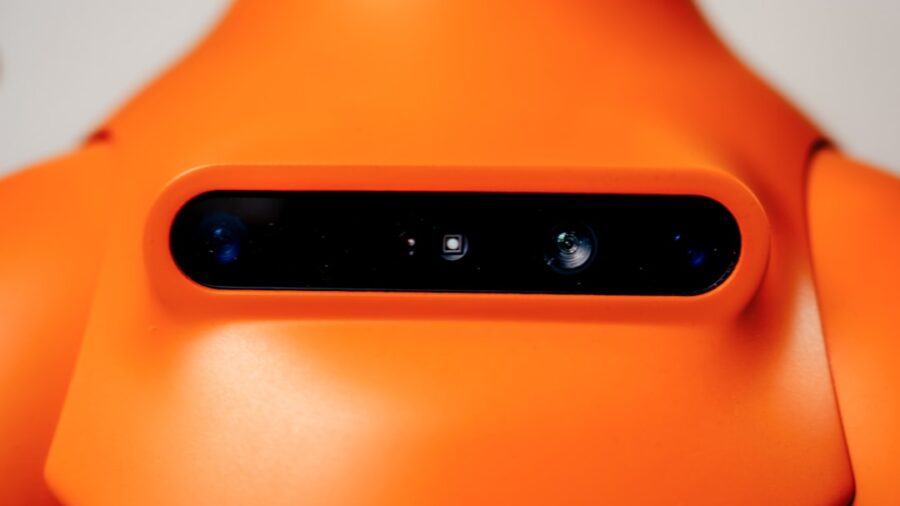
When we talk about robots working alongside people in factories, safety is obviously top of mind. Designing those “collaboration zones” – the areas where humans and robots share space – is all about making sure everyone stays safe and productive. It’s not just about putting up a fence; it’s a thoughtful process that involves understanding the robot’s movements, the human’s tasks, and the environment itself.
Before you even think about physical barriers, it’s crucial to get a handle on how the robot will be used. This isn’t about dreaming up futuristic scenarios, but about concrete, practical applications. What exactly will this robot be doing? Is it lifting heavy objects, performing intricate assembly, or just passing tools? The answers to these questions directly inform the level of risk and the safety measures required.
Task Analysis: What’s the Robot Actually Doing?
This is the bedrock of your safety design. You need to break down the robot’s entire operation into granular steps.
- Movement Patterns: How does it move? Is it linear, circular, or unpredictable? Does it have a large workspace or a confined one? Think about the speed and acceleration of its movements too. A slow, deliberate robot is less of a concern than one that whips around corners.
- Payload and Gripper: What is the robot holding or manipulating? A heavy object presents a different hazard than a delicate component. The type of gripper or end-of-arm tooling also matters – are there pinch points? Sharp edges?
- Predictability vs. Variability: Will the robot’s actions be exactly the same every single time, or are there variations based on sensor input or program logic? Unpredictable movements require more robust safety measures.
Robot Capabilities and Limitations
It’s easy to get excited about what robots can do, but understanding their limitations is just as important for safety.
- Sensing Capabilities: Does the robot have vision systems, proximity sensors, or force feedback? How reliable are these in the specific factory environment (e.g., dust, steam, reflections)?
- Emergency Stops: Where are the emergency stop buttons? Are they easily accessible to both robot operators and nearby personnel? How quickly does the robot stop when an E-stop is activated?
- Fail-Safe Mechanisms: What happens if the robot loses power or its control system glitches? Does it freeze in place, or does it move to a safe position?
In the realm of industrial automation, the design of safe human-robot collaboration zones on the factory floor is crucial for enhancing productivity while ensuring worker safety. A related article that explores the latest advancements in technology and ergonomics in workplace design can be found at this link. It highlights how innovative tools and equipment, including advanced computing devices, can facilitate better communication and efficiency in environments where humans and robots work side by side.
Key Takeaways
- Clear communication is essential for effective teamwork
- Active listening is crucial for understanding team members’ perspectives
- Conflict resolution skills are necessary for managing disagreements
- Trust and respect are the foundation of a successful team
- Collaboration and cooperation are key for achieving common goals
Human Factor Considerations: The People in the Zone
Robots don’t operate in a vacuum; they operate within a human-centric environment. Understanding how people work, their habits, and their limitations is paramount.
Workflow and Task Interdependence
How does the robot’s task integrate with the human’s tasks? Are they sequential, or do they happen concurrently?
- Hand-offs: If the robot hands off a part or tool to a human, this is a critical interaction point. The timing, location, and method of this hand-off need to be carefully designed to avoid collisions or surprise movements.
- Human Intervention Points: Are there times when a human needs to step into the robot’s workspace to perform maintenance, clear a jam, or assist in a task? These points need explicit safety protocols.
- Ergonomics: While not strictly a “collision” safety issue, the ergonomic design of the collaborative zone can impact worker fatigue and the likelihood of them making mistakes that could lead to unsafe situations.
Human Behavior and Perception
People aren’t machines. They get distracted, they make assumptions, and they can misjudge distances.
- Line of Sight: Can humans easily see what the robot is doing and where it is in its cycle? Obstructions can lead to dangerous surprises.
- Auditory and Visual Cues: Does the robot provide clear signals when it’s about to move, or when it’s approaching a critical point? Lights, sounds, or even simple displays can make a big difference.
- Expectation Management: Humans tend to expect things to behave in certain ways. If a robot is consistently stationary but then suddenly moves, it can catch someone off guard. Designing for predictable behavior is key.
Training and Awareness
This is where the human element truly comes into play.
A well-designed zone is useless if people don’t understand how to use it safely.
- Clear Procedures: What are the step-by-step instructions for working safely in the zone? These need to be written, demonstrated, and regularly reinforced.
- Hazard Identification: Workers need to be trained to recognize potential hazards within the collaborative zone, not just the obvious ones.
- Emergency Response: Everyone in the vicinity must know what to do in case of an emergency, including how to activate emergency stops and report incidents.
Designing the Physical Space

Once you have a solid understanding of the robot and the humans, you can start thinking about the physical layout and the safety measures that will separate or manage interactions.
Defining the Collaboration Zone Boundaries
This is where you establish the “rules of engagement” for the space.
- Fixed Guarding: Traditional safety fencing is often the first thought. However, in true collaborative spaces, the goal is to minimize or eliminate fixed guarding where direct interaction occurs. This is reserved for areas where there’s a high risk of collision or contact.
- Light Curtains and Area Scanners: These are excellent for defining dynamic safety zones.
When a person enters a light curtain or an area scanned by a laser, the robot can be programmed to slow down, stop, or move to a safe position. These are crucial for allowing interaction while maintaining a safety buffer.
- Safety Mats: These pressure-sensitive mats can detect a person stepping into a forbidden area and trigger a stop. They are a good supplementary measure.
Space Allocation and Layout
The physical arrangement of equipment and workstations is critical.
- Robot Reach vs.
Human Access:
Ensure that the robot’s operational envelope does not overlap with areas where humans are expected to perform tasks unless specific collaborative safety measures are in place. - Clear Aisles and Pathways: Dedicated pathways for human movement, separate from the robot’s primary operating area, are essential to prevent accidental entry.
- Stationary vs. Mobile Robots: Mobile robots introduce additional complexity. Their pathways, navigation systems, and ability to detect and avoid humans become paramount.
Consider how they will interact with fixed infrastructure and other moving equipment.
Tooling and Fixturing
The tools the robot uses and the fixtures it interacts with can also pose safety risks.
- Pinch Points: Design grippers and tooling to minimize pinch points, or ensure that these areas are adequately guarded when the robot is in operation.
- Sharp Edges: If the robot handles objects with sharp edges, consider how these might pose a risk to humans during hand-offs or unexpected contact.
- Secure Fixturing: Ensure that parts and tools are securely held by the robot and its fixtures to prevent them from falling or becoming projectiles.
Technology and Safety Systems

Modern robotics offers a range of technologies that can enhance safety in collaborative zones. It’s not just about passive barriers anymore.
Sensing and Detection Systems
These are the eyes and ears of the safe collaborative environment.
- Proximity Sensors: Capacitive, inductive, and ultrasonic sensors can detect the presence of a human near the robot, prompting a speed reduction or stop.
- Vision Systems: Advanced vision systems can identify human presence, their posture, and even anticipate their movements, allowing for more nuanced safety responses.
- Force/Torque Sensors: Integrated into the robot’s arm or end effector, these sensors can detect unexpected contact and immediately stop or reverse the robot’s movement. This is a cornerstone of many collaborative robot applications.
Safety-Rated Control Systems
These are the brains behind the safety operations.
- Safety PLCs (Programmable Logic Controllers): Dedicated controllers designed specifically for safety functions, ensuring that safety commands are executed reliably.
- Dual-Channel Monitoring: Critical safety functions are often monitored by two independent channels to ensure redundancy and fail-safe operation.
- Programmable Safety Zones: Modern robot controllers allow for the definition of dynamic safety zones that can adapt based on the robot’s speed, payload, or task.
Human-Robot Interface (HRI) Design
How humans interact with the robot’s interface is also a safety consideration.
- Intuitive Controls: Easy-to-understand control panels and teach pendants reduce the chance of operator error.
- Clear Status Indicators: Lights, sounds, and on-screen messages should clearly indicate the robot’s current state (e.g., operating, stopped, error).
- Emergency Stop Accessibility: E-stops should be prominently located and easily reachable from multiple points around the collaborative zone.
In exploring the intricacies of designing safe human-robot collaboration zones on the factory floor, it is essential to consider various factors that contribute to effective workspace integration. A related article discusses the best software for furniture design, which can provide valuable insights into optimizing layouts and ensuring safety in collaborative environments. By understanding how to create functional and ergonomic spaces, manufacturers can enhance both productivity and worker safety. For more information, you can read the article on furniture design software.
Implementation and Continuous Improvement
| Metrics | Data |
|---|---|
| Number of accidents | 15 |
| Number of collaborative robots deployed | 25 |
| Percentage of floor space designated as collaboration zones | 20% |
| Number of safety sensors installed | 50 |
Designing a safe collaborative zone isn’t a one-time event. It’s an ongoing process of assessment, refinement, and adaptation.
Risk Assessment Methodology
This is the formal process of identifying, analyzing, and evaluating potential hazards.
- ISO Standards: Familiarize yourself with relevant ISO standards for robot safety (e.g., ISO 10218, ISO/TS 15066). These provide a framework for conducting thorough risk assessments.
- Hazard Identification Workshops: Involve a cross-functional team (engineers, operators, safety personnel) to brainstorm potential hazards.
- Severity and Likelihood Matrix: Quantify the risk by considering the potential severity of an injury and the likelihood of it occurring.
Commissioning and Verification
Once the system is built, rigorous testing is essential.
- Testing All Safety Functions: Every safety system, from E-stops to light curtains, must be tested thoroughly under various scenarios.
- Real-World Simulation: Conduct tests that simulate actual operator tasks and potential fault conditions.
- Documentation: Keep meticulous records of all risk assessments, design choices, and test results. This is vital for compliance and future reference.
Ongoing Monitoring and Review
The factory floor is a dynamic environment.
- Regular Safety Audits: Periodically review the collaborative zone to ensure that safety measures are still effective and that no new hazards have emerged.
- Incident Reporting and Analysis: Any near misses or accidents, no matter how minor, should be investigated to identify root causes and implement corrective actions.
- Feedback from Operators: The people working in the zone are invaluable sources of information. Actively solicit their feedback on safety procedures and potential improvements.
- Adapting to Change: As tasks change, or new equipment is introduced, the safety design of the collaborative zone must be re-evaluated and updated accordingly. This is not a static solution.
By approaching the design of human-robot collaboration zones with a methodical, practical, and human-centered mindset, you can create environments where robots and people can work together effectively and, most importantly, safely. It’s about building trust through careful planning and continuous attention to detail.
FAQs
What is human-robot collaboration in the context of factory floor design?
Human-robot collaboration refers to the interaction and cooperation between humans and robots in a shared workspace on the factory floor. This collaboration aims to improve efficiency, productivity, and safety by allowing robots and humans to work together in close proximity.
What are the key considerations when designing safe human-robot collaboration zones on the factory floor?
When designing safe human-robot collaboration zones, key considerations include risk assessment, safety standards compliance, physical barriers, sensors and cameras for monitoring, training for employees, and clear communication between humans and robots.
How can physical barriers contribute to safe human-robot collaboration zones?
Physical barriers such as fences, cages, or light curtains can help create a clear separation between human and robot work areas, reducing the risk of accidental contact or collisions. These barriers also serve as a visual reminder of the boundaries within the collaboration zone.
What role do sensors and cameras play in ensuring safety in human-robot collaboration zones?
Sensors and cameras are used to monitor the movements and activities of both humans and robots within the collaboration zone. They can detect the presence of humans and automatically slow down or stop robot movements to prevent accidents. Cameras provide real-time visibility and allow for remote monitoring of the collaboration zone.
How can training and communication contribute to safe human-robot collaboration on the factory floor?
Training programs for employees can help them understand the capabilities and limitations of robots, as well as the safety protocols for working in close proximity to robots. Clear communication methods, such as visual indicators or audible signals, can also help humans and robots understand each other’s actions and intentions within the collaboration zone.
Enjoying our content? Make us a preferred source on Google:
Add us as a Preferred Source on Google