

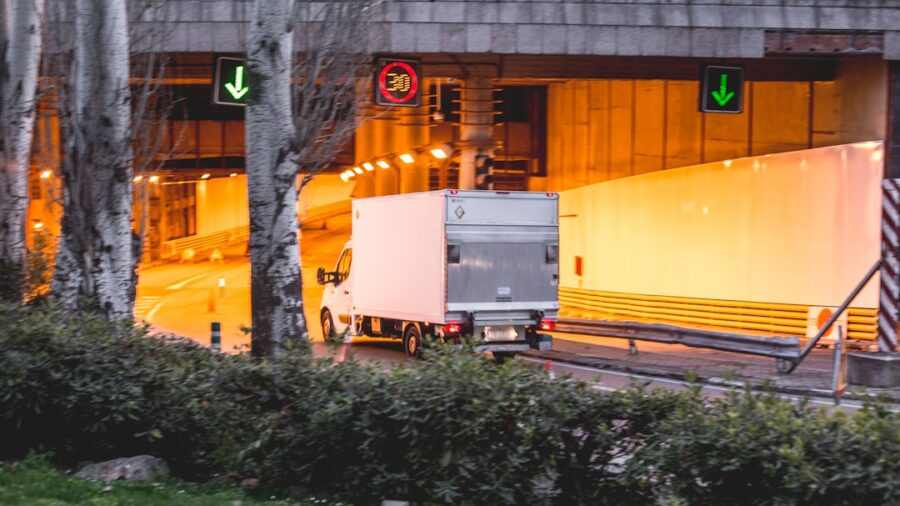
C-V2X is a game-changer for smart city traffic management, and here’s why: it lets vehicles talk to each other, to traffic infrastructure, and even to pedestrians, all using reliable cellular networks. This real-time information exchange is the key to unlocking smarter, safer, and less congested urban travel. Forget just reacting to traffic jams; C-V2X allows us to anticipate them, prevent accidents before they happen, and make every trip a little smoother. It’s not some futuristic concept anymore; it’s here, and it’s poised to transform how our cities flow.
At its heart, C-V2X is about communication. Think of it as a super-smart, high-speed conversation happening constantly between all the moving parts of our transportation system.
It leverages existing and evolving cellular technology, which is a huge plus, meaning we don’t need to build entirely new communication infrastructures from scratch.
Vehicle-to-Vehicle (V2V) Communication
This is where cars talk directly to other cars. Imagine your car knowing a vehicle ahead has suddenly braked hard, even before you see its brake lights. With V2V, this information can be instantly shared, giving you crucial extra milliseconds to react, potentially preventing rear-end collisions. It’s like having eyes in the back of every vehicle, all reporting to each other. This direct communication happens over a dedicated short-range cellular link, ensuring low latency and high reliability, critical for safety applications.
Vehicle-to-Infrastructure (V2I) Communication
Here, vehicles communicate with traffic lights, road sensors, digital signs, and even smart parking meters. This allows for incredibly dynamic traffic management. For example, a traffic light could detect a string of emergency vehicles approaching and automatically adjust its timing to clear a path. Or, your car could receive real-time updates on road closures or speed limit changes directly from the infrastructure. It’s about making the road network truly “smart” and responsive.
Vehicle-to-Network (V2N) Communication
V2N connects vehicles to cloud-based services and network operators. This is where the broader intelligence comes in. Think about real-time traffic updates that are far more accurate than what your GPS provides today, or predictive analytics that can warn you about potential congestion hotspots based on historical data and current events. It’s also how software updates and new features can be pushed to vehicles over the air, keeping them smart and secure.
Vehicle-to-Pedestrian (V2P) Communication
This aspect is all about safety for those outside the vehicle. Imagine a pedestrian’s smartphone or wearable device communicating with an approaching car, alerting the driver (or even the car’s automated driving system) to their presence, especially in blind spots or at busy intersections. It’s a powerful tool for reducing pedestrian accidents, especially as autonomous vehicles become more prevalent. This is still an emerging area, but the potential for enhanced safety is enormous.
In exploring the advancements in Smart City Traffic Management, one can find valuable insights in the related article that discusses the best screen recording software of 2023. This resource can be particularly useful for those looking to create presentations or tutorials on innovative technologies like Cellular Vehicle-to-Everything (C-V2X). For more information, you can read the article here: The Ultimate Guide to the Best Screen Recording Software in 2023.
Key Takeaways
- Clear communication is essential for effective teamwork
- Active listening is crucial for understanding team members’ perspectives
- Setting clear goals and expectations helps to keep the team focused
- Regular feedback and open communication can help address any issues early on
- Celebrating achievements and milestones can boost team morale and motivation
Tackling Traffic Jams and Congestion
Traffic congestion isn’t just an annoyance; it costs cities billions in lost productivity, wasted fuel, and increased emissions. C-V2X offers a multi-pronged approach to unblocking our urban arteries.
Dynamic Traffic Signal Optimization
Instead of fixed-time traffic lights or even inductive loop-based systems that react to a single car, C-V2X allows for a truly intelligent and real-time adjustment of traffic signals. Imagine an intersection where traffic lights are constantly receiving data on vehicle counts, speeds, and queue lengths from all approaching lanes. This data, combined with information about pedestrian crossings and emergency vehicle priority, allows the system to optimize signal timings on the fly, minimizing wait times and improving overall flow.
- Adaptive Green Waves: Traffic lights can be coordinated across multiple intersections to create “green waves,” allowing a continuous flow of vehicles through several lights without stopping, if speeds are maintained within a certain range. This is a significant improvement over static green wave systems.
- Emergency Vehicle Preemption: No more waiting for traffic to clear. Emergency vehicles can transmit their presence and route to upcoming intersections, which can then automatically turn lights green, clearing the path safely and efficiently. This dramatically reduces response times.
- Public Transit Prioritization: Buses and trams can also be given priority at intersections, helping them stick to schedules and making public transport a more attractive option.
Smarter Route Guidance
Current navigation apps are good, but they often rely on historical data and limited real-time inputs. C-V2X takes this to the next level. Vehicles can receive incredibly precise, up-to-the-minute information about road conditions, incidents, and congestion from both other vehicles and infrastructure.
- Real-time Incident Avoidance: If there’s an accident ahead, vehicles can be alerted much faster and rerouted proactively, not just after they’ve already encountered the jam.
- Predictive Congestion Management: By analyzing data from thousands of connected vehicles, the system can predict where congestion is likely to form before it happens, and then suggest alternative routes to drivers, distributing traffic more evenly.
- Optimized Freight and Delivery Routes: Commercial vehicles can benefit immensely, receiving dynamic routing that avoids bottlenecks, reduces delivery times, and cuts fuel consumption.
Parking Management
Finding parking in a busy city can be a nightmare. C-V2X can simplify this by connecting vehicles to available parking spaces.
- Real-time Parking Availability: Smart parking sensors can communicate real-time availability of spaces to approaching vehicles, guiding drivers directly to an open spot instead of circling blocks.
- Dynamic Pricing and Reservation: In the future, this could even extend to dynamic pricing based on demand or allowing drivers to reserve spots before they arrive. This reduces cruising time, which contributes significantly to urban congestion.
Enhancing Road Safety for Everyone

Safety is arguably the most compelling benefit of C-V2X. By enabling real-time awareness, it can help prevent accidents that current systems simply can’t address.
Collision Avoidance Systems
The ability for vehicles to “see” and “talk” to each other provides an extra layer of awareness beyond what a driver or even on-board sensors can achieve alone.
- Forward Collision Warning (FCW): A vehicle can warn its driver if a vehicle ahead is braking suddenly, even if it’s out of sight around a bend or obscured by other traffic.
- Intersection Collision Warning (ICW): One of the most dangerous driving scenarios is intersections. C-V2X can warn drivers of potential collisions with vehicles approaching from blind spots or running a red light.
- Blind Spot Warning (BSW) & Lane Change Assist (LCA): While some cars have internal sensors for this, C-V2X enhances it by allowing vehicles to communicate their presence, making these warnings more robust and reliable across different vehicle types.
- Left Turn Assist (LTA): Often, drivers misjudge oncoming traffic during left turns.
C-V2X can provide warnings about oncoming vehicles, reducing the risk of a crash.
Vulnerable Road User Protection
Pedestrians and cyclists are particularly vulnerable, and C-V2X has the potential to significantly improve their safety.
- Pedestrian & Cyclist Detection and Warning: With C-V2X enabled smartphones or wearables, pedestrians and cyclists can communicate their presence to approaching vehicles, especially in low-visibility conditions or at complex intersections. The vehicle can then alert the driver or, in an autonomous system, take evasive action.
- Work Zone Safety: Road construction zones are hazardous for both workers and drivers. C-V2X can alert drivers to the presence of workers and equipment, dynamic speed limit changes, and lane closures far in advance, giving them more time to react and proceed with caution.
Post-Crash Notification
In the unfortunate event of a crash, C-V2X can speed up emergency response.
- Automatic eCall: If a severe collision is detected (e.g., airbag deployment), the vehicle can automatically transmit its location and relevant crash data to emergency services, even if occupants are incapacitated.
This can significantly reduce response times, which are crucial for saving lives.
Laying the Groundwork for Autonomous Driving

While C-V2X isn’t only for autonomous vehicles, it’s an indispensable component for their safe and efficient integration into our cities. It provides a level of contextual awareness that on-board sensors alone cannot match.
Enhanced Situational Awareness
Autonomous vehicles rely heavily on their sensors (cameras, radar, lidar) to perceive their surroundings. However, these sensors have limitations – they can be affected by weather, line of sight, and range. C-V2X provides a crucial “sixth sense.”
- Beyond Line of Sight (BLOS) Perception: An autonomous vehicle can “see” around corners, through obstacles, and beyond the range of its own sensors by receiving information from other C-V2X enabled vehicles and infrastructure. This is critical for making informed decisions, especially at intersections or in complex urban environments.
- Redundancy and Reliability: C-V2X provides a redundant communication channel, enhancing the reliability of autonomous driving systems. If a sensor is temporarily blinded by glare or heavy rain, the vehicle can still receive critical safety information via C-V2X.
Coordinated Maneuvers
As autonomous vehicles become more prevalent, C-V2X will enable them to coordinate their actions on the road, leading to smoother traffic flow.
- Platooning: Groups of autonomous vehicles can travel in close formation, significantly reducing air resistance and fuel consumption, and increasing road capacity. C-V2X facilitates the precise, real-time communication needed for safe platooning.
- Cooperative Merge/Lane Change: Vehicles can communicate their intentions, allowing for smoother and more efficient merging onto highways or changing lanes, reducing “phantom” traffic jams caused by aggressive maneuvers.
- Intersection Coordination: Instead of stopping at every light, autonomous vehicles could cooperatively navigate intersections without stopping, optimizing flow and reducing fuel waste, especially in complex, multi-lane scenarios.
Smart City Traffic Management Powered by Cellular Vehicle-to-Everything (C-V2X) is revolutionizing the way urban environments handle traffic flow and safety. This innovative technology allows vehicles to communicate with each other and with infrastructure, leading to more efficient transportation systems. For those interested in exploring how technology is shaping our cities, a related article discusses the top trends on YouTube in 2023, highlighting the growing interest in smart city solutions and their impact on daily life.
You can read more about it
5G Innovations (13) Wireless Communication Trends (13) Article (343) Augmented Reality & Virtual Reality (902)
- Metaverse (266)
- Virtual Workplaces (35)
- VR & AR Games (34)
Cybersecurity & Tech Ethics (808)
- Cyber Threats & Solutions (3)
- Ethics in AI (33)
- Privacy Protection (32)
Drones, Robotics & Automation (489)
- Automation in Industry (33)
- Consumer Drones (33)
- Industrial Robotics (33)
EdTech & Educational Innovations (347)
- EdTech Tools (18)
- Online Learning Platforms (4)
- Virtual Classrooms (34)
Emerging Technologies (1,996) FinTech & Digital Finance (451) Frontpage Article (1) Gaming & Interactive Entertainment (385) Health & Biotech Innovations (717)
- AI in Healthcare (3)
- Biotech Trends (4)
- Wearable Health Devices (509)
News (97) Reviews (129) Smart Home & IoT (449)
- Connected Devices (3)
- Home Automation (4)
- Robotics for Home (33)
- SmartPhone (48)
Space & Aerospace Technologies (347)
- Aerospace Innovations (4)
- Commercial Spaceflight (3)
- Space Exploration (62)
Sustainable Technology (786) Tech Careers & Jobs (342) Tech Guides & Tutorials (1,150)
- DIY Tech Projects (3)
- Getting Started with Tech (60)
- Laptop & PC (58)
- Productivity & Everyday Tech Tips (327)
- Social Media (64)
- Software (324)
- Software How-to (3)
Uncategorized (146)