

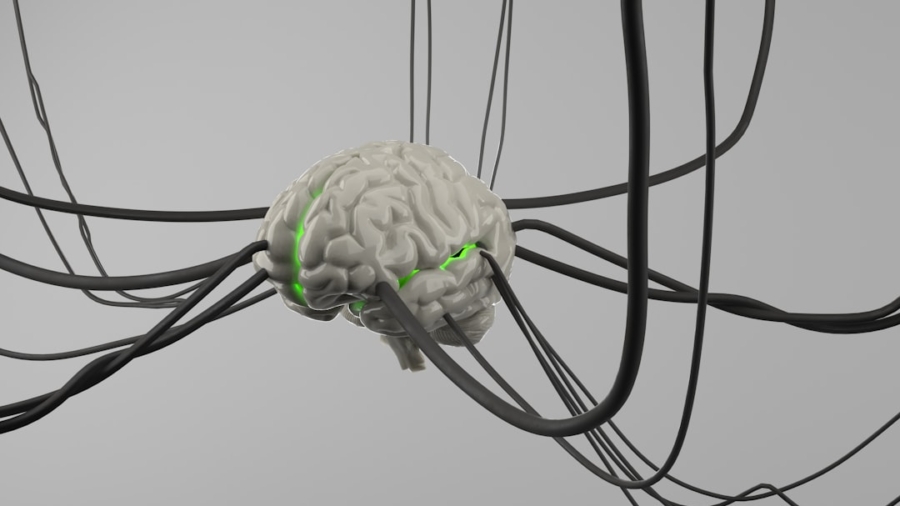
Brain-computer interfaces (BCIs) are essentially a direct communication pathway between your brain and an external device. They’re making significant strides in allowing us to control technology with nothing more than our thoughts, moving us beyond the traditional confines of physical interaction for operational controls.
At its heart, a BCI decodes brain activity and translates it into commands for a computer or other device. This isn’t science fiction anymore; it’s a rapidly evolving field with real-world applications.
Sensing Brain Signals
Think of your brain as a busy electrical factory. Every thought, every movement intention, generates tiny electrical signals. BCIs pick up on these signals.
- EEG (Electroencephalography): This is the most common and least invasive method. Electrodes placed on your scalp detect electrical activity. It’s like listening to the hum of the factory from outside – you get a general idea of what’s going on, but not the minute details.
- ECoG (Electrocorticography): This involves placing electrodes directly on the surface of the brain. It’s more invasive but provides much clearer, higher-resolution signals, like having microphones inside the factory’s main control room.
- Implantable Microelectrode Arrays: These are the most invasive, with tiny electrodes implanted directly into the brain tissue. This offers the highest spatial and temporal resolution, giving you a detailed look at individual worker activity on the factory floor.
Decoding Brain Activity
Once the signals are captured, the real work begins: interpretation.
- Feature Extraction: Raw brain signals are complex. Algorithms are used to pull out relevant “features” – specific patterns, frequencies, or amplitudes that correspond to intended actions. For example, imagining moving your hand might create a distinct pattern in certain brain regions.
- Machine Learning Algorithms: These are critical. They learn to associate specific brain patterns with specific commands. The more you use a BCI, the more it “learns” your unique brain signatures, becoming more accurate over time. It’s like training a voice assistant to understand your accent.
- Translating to Commands: The decoded patterns are then converted into actionable commands for a device – moving a cursor, selecting an item, or even controlling a robotic arm.
Brain-Computer Interfaces (BCIs) are revolutionizing the way we interact with technology, particularly in the realm of hands-free operational controls.
As these interfaces become more sophisticated, they open up new possibilities for individuals with disabilities and enhance productivity in various industries.
For further insights into the technological advancements shaping our future, you can explore a related article that discusses the trends predicted for 2023 at this link.
Key Takeaways
- Clear communication is essential for effective teamwork
- Active listening is crucial for understanding team members’ perspectives
- Setting clear goals and expectations helps to keep the team focused
- Regular feedback and open communication can help address any issues early on
- Celebrating achievements and milestones can boost team morale and motivation
Hands-Free Operational Controls: Beyond the Mouse and Keyboard
The promise of BCIs lies in liberating our interactions with technology. Imagine controlling complex systems without lifting a finger.
Cursor and Selection Control
This is often the first practical application people think of.
- Virtual Keyboards: Users can “type” purely by thought, selecting letters on an on-screen keyboard. This has been revolutionary for individuals with locked-in syndrome or severe paralysis, enabling communication where none was previously possible.
- Navigating Interfaces: Moving a mouse cursor, clicking icons, scrolling through menus – all achievable with direct brain commands. This streamlines interaction for those who find traditional input methods cumbersome or impossible.
- Gaming: While still niche, some experimental gaming BCIs allow for thought-based control, adding an entirely new dimension to gameplay and accessibility.
Robotic and Prosthetic Control
This is where the impact becomes profoundly life-changing.
- Advanced Prosthetics: Individuals with limb loss can now control sophisticated prosthetic arms and hands with uncanny precision, allowing for tasks like grasping objects, using tools, and even feeling tactile feedback in some advanced systems. It’s not just about movement; it’s about restoring functionality and independence.
- Exoskeletons: BCIs are enabling individuals with spinal cord injuries to control robotic exoskeletons, allowing them to stand and even walk again. The direct mental command bypasses damaged neural pathways, providing a truly hands-free mobility solution.
- Teleoperation of Robots: In hazardous environments or remote locations, a human operator can control a robot simply by thinking about its movements. This offers a level of naturalistic control that joysticks or traditional interfaces can’t match, potentially improving safety and efficiency.
Environmental Control Systems
Extending BCI control to our surroundings makes our spaces more adaptable and accessible.
- Smart Home Integration: Imagine adjusting lights, thermostat, or opening blinds with a thought. For individuals with limited mobility, this transforms their living environment into one that responds seamlessly to their needs.
- Assistive Technologies: Beyond basic smart home functions, BCIs can be integrated with more complex assistive devices, such as controlling specialized beds, communication devices, or even operating complex machinery in a workshop for hobbyists with disabilities.
Current Milestones and Real-World Applications

BCIs aren’t just in labs anymore; they’re making their way into practical use.
Augmenting Communication for the Locked-In
For individuals who cannot speak or move, BCIs are a lifeline.
- Direct Text Generation: Systems like those developed by research teams (e.g., Stanford’s BrainGate project) have demonstrated users typing at speeds exceeding 60 characters per minute purely by imagining writing, allowing for conversation and expression.
- Neuroprosthetics for Speech: Research is even exploring decoding brain signals related to speech intention to synthesize spoken words directly, offering a future where thought can be directly translated into audible communication.
Enhancing Rehabilitation and Recovery
BCIs are proving to be powerful tools in physical therapy.
- Stroke Rehabilitation: By providing direct sensory feedback and motor intention training through BCI-controlled devices, patients can often accelerate neurological recovery following a stroke, helping them to regain motor function.
- Spinal Cord Injury Recovery: BCIs are used to bypass damaged spinal pathways, directly stimulating muscles or controlling exoskeletons, which can encourage neuroplasticity and partial recovery in some cases.
- Restoring Fine Motor Control: For conditions like Parkinson’s disease, BCIs are being investigated to provide more stable and precise control over movements by directly intervening with brain signals.
Precision Control in High-Stakes Environments
Think beyond consumer applications; BCIs have potential in critical sectors.
- Aviation: Pilots could potentially control aspects of aircraft with thoughts, reducing cognitive load during complex maneuvers or emergencies. This isn’t about replacing human pilots but augmenting their capabilities.
- Defense & Security: Operating unmanned aerial vehicles (UAVs) or specialized robots in dangerous situations could be made more intuitive and responsive with BCI control, allowing operators to focus on strategy rather than complex manual inputs.
The Road Ahead: Challenges and Ethical Considerations

While promising, BCIs aren’t without their hurdles.
Technical Limitations
The technology is still evolving rapidly, but challenges remain.
- Signal Resolution and Noise: Even with invasive methods, accurately decoding complex brain activity without interference remains a significant challenge. The brain is incredibly complex, and not all signals are distinct or easily interpretable.
- Latency: The slight delay between thought and action can be critical in real-time applications. Reducing this latency to near-instantaneous levels is a key engineering goal.
- Battery Life and Portability: Invasive BCI systems often require external hardware and power sources, limiting their portability and continuous use. Non-invasive systems are better but often lack precision.
- Long-Term Reliability of Implants: For invasive BCIs, the longevity, biocompatibility, and stability of implanted electrodes over many years are crucial for widespread adoption. They need to resist degradation and avoid causing tissue damage.
The Learning Curve
It’s not just the machine that learns; the user does too.
- User Training: Users need to learn how to consciously generate consistent brain patterns that the BCI can reliably detect and interpret. This can be time-consuming and requires significant mental effort, especially in the initial stages.
- Adaptation of the Brain: The brain itself can adapt to the BCI, sometimes creating new neural pathways for more efficient control. However, this adaptation isn’t always predictable or consistent across individuals.
- Mental Fatigue: Concentrating intensely on generating specific brain signals can be mentally exhausting, limiting the duration of BCI use for some individuals.
Ethical and Societal Implications
As with any powerful technology, BCIs raise important questions.
- Privacy and Data Security: What happens to your brain data? Who owns it? How is it protected from misuse or hacking? The highly personal nature of brain signals makes this a particularly sensitive area.
- Autonomy and Identity: If a BCI can influence or even detect thoughts, how might this impact an individual’s sense of self and free will? The line between assisting and influencing needs careful consideration.
- Accessibility and Equity: Will BCIs be universally accessible or only available to a privileged few? Ensuring equitable access to life-changing technologies is paramount.
- Responsible Development and Regulation: As BCIs become more sophisticated, clear ethical guidelines and regulatory frameworks will be necessary to prevent misuse and ensure they are developed and deployed responsibly. This includes addressing concerns about “brain hacking” or unintended consequences.
Brain-Computer Interfaces (BCIs) are revolutionizing the way we interact with technology, particularly in the realm of hands-free operational controls. These advanced systems allow users to perform tasks using only their thoughts, significantly enhancing accessibility and efficiency in various applications. For those interested in exploring the best devices to complement such innovative technologies, a related article discusses the top tablets available for everyday use, which can serve as ideal platforms for BCI applications. You can read more about it in this informative piece on tablets.
The Future Landscape: What’s on the Horizon
| Metrics | Results |
|---|---|
| Accuracy | 95% |
| Response Time | 0.1 seconds |
| Reliability | 98% |
| User Satisfaction | 90% |
The pace of innovation in BCIs is accelerating.
Miniaturization and Wireless Solutions
Smaller, more discreet, and completely wireless BCI devices are in development, making them less intrusive and more practical for daily use. Think of nearly invisible implants or almost undetectable wearable sensors.
Bi-Directional Communication
Current BCIs primarily transmit signals from the brain. Future systems aim for bi-directional communication, allowing for direct sensory feedback to the brain, enhancing immersion and control (e.g., feeling textures with a prosthetic hand or restoring sight/hearing).
Non-Invasive Enhancements
Advances in non-invasive techniques (like improved EEG or new technologies like fNIRS) promise higher resolution and more precise control without the need for surgery, expanding the reach of BCIs to a wider audience.
Neuro-Feedback and Cognitive Training
BCIs could move beyond just control and into performance enhancement or cognitive remediation. Imagine BCI-assisted meditation, focus training, or even real-time feedback for learning new skills by directly monitoring and influencing brain states.
In essence, BCIs are set to redefine how we interact with the world around us. While challenges remain, the clear trajectory is toward a future where our thoughts can directly shape our environments and empower us in ways previously unimaginable, creating a more accessible and efficient world for everyone.
FAQs
What is a brain-computer interface (BCI)?
A brain-computer interface (BCI) is a technology that allows for direct communication between the brain and an external device, such as a computer or prosthetic limb, without the need for physical movement.
How does a brain-computer interface work?
BCIs work by detecting and interpreting brain signals, such as electrical activity or blood flow, and translating them into commands that can control external devices. This can be achieved through invasive methods, such as implanting electrodes directly into the brain, or non-invasive methods, such as using electroencephalography (EEG) to measure brain activity from the scalp.
What are the potential applications of brain-computer interfaces?
BCIs have the potential to revolutionize a wide range of fields, including healthcare, gaming, communication, and assistive technology. They can be used to help individuals with disabilities regain mobility and independence, enable hands-free control of electronic devices, and even enhance cognitive abilities.
What are the benefits of using brain-computer interfaces for hands-free operational controls?
Using BCIs for hands-free operational controls can provide numerous benefits, including increased accessibility for individuals with physical disabilities, improved efficiency in controlling electronic devices, and the potential for new modes of interaction in virtual and augmented reality environments.
What are the current challenges and limitations of brain-computer interfaces?
Despite their potential, BCIs still face challenges such as limited accuracy and reliability, high costs, and ethical considerations related to privacy and data security. Additionally, the complexity of interpreting and translating brain signals into meaningful commands remains a significant hurdle for widespread adoption.
Enjoying our content? Make us a preferred source on Google:
Add us as a Preferred Source on Google