

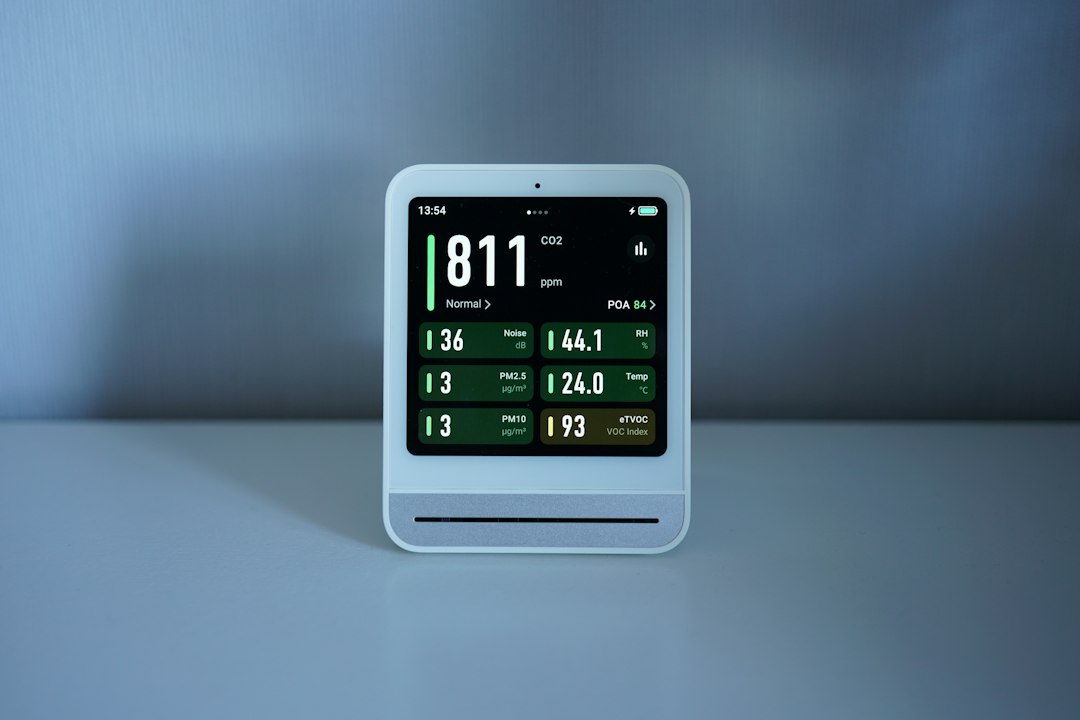
So, you’re wondering if Wi-Fi 7’s Multi-Link Operation (MLO) can actually make a difference for all those smart sensors packed into your home? The short answer is a resounding yes, and it’s a game-changer, especially for environments where you’ve got a ton of devices vying for attention. MLO significantly enhances reliability, reduces latency, and boosts overall efficiency, making it incredibly well-suited for high-density sensor deployments in your home.
Understanding the Home Sensor Landscape
Before we dive into the nitty-gritty of Wi-Fi 7, let’s set the scene. Modern homes are becoming increasingly smart, often without us even realizing the sheer number of devices we’ve accumulated. Think about it: smart door sensors, window sensors, motion detectors, temperature and humidity monitors, leak detectors, air quality sensors, smart lighting controls, even smart pet feeders – the list goes on. Each of these typically communicates wirelessly, and while many might use Zigbee or Z-Wave, a significant and growing number rely on Wi-Fi.
These Wi-Fi-enabled sensors, while convenient, have traditionally faced challenges in dense environments. They often transmit small packets of data intermittently, but when you have dozens or even hundreds of them, the aggregate traffic can still put a strain on your network. Latency, packet loss, and connection stability become crucial, especially for applications like security monitoring where real-time updates are essential.
The Growing Demand for Reliable Sensor Networks
The expectation for smart home devices is simple: they should just work, reliably and consistently. A door sensor that occasionally misses an open event, or a temperature sensor that lags significantly in reporting changes, diminishes the value and trust in the entire smart home system. As we add more sensors, the potential for these issues to crop up increases exponentially on older Wi-Fi standards.
Older Wi-Fi generations (like Wi-Fi 5 or even Wi-Fi 6) were primarily designed with high-bandwidth applications in mind – streaming video, large file downloads, gaming. While they could handle sensor traffic, they weren’t optimized for the specific characteristics of thousands of tiny, low-power, often bursty data transmissions from a multitude of devices. This is where Wi-Fi 7, and specifically MLO, enters the picture as a tailored solution.
Limitations of Previous Wi-Fi Generations for Sensors
In earlier Wi-Fi iterations, a device connects to a single band (2.4 GHz, 5 GHz) on a single access point. If that band becomes congested, experiences interference, or the signal quality degrades, the device’s performance suffers. For a single high-bandwidth device, this might manifest as a temporary slowdown. For a critical sensor, it could mean a missed event or a delayed alert.
Consider a situation where your smart thermostat sensor is on the 2.4 GHz band, which is also heavily used by your neighbors’ networks, your microwave oven, and other older smart home gadgets. The interference and congestion mean your thermostat’s critical temperature updates might be delayed or even dropped. While mesh Wi-Fi systems helped with coverage, they didn’t fundamentally alter the single-link communication model for individual devices within a given band. This is the core limitation that MLO seeks to address.
Wi-Fi 7’s Multi-Link Operation is set to revolutionize high-density home sensor deployments by enabling seamless connectivity and improved data throughput. This advancement is particularly beneficial for smart homes, where numerous devices require reliable communication. For those interested in enhancing their understanding of technology that supports complex systems, a related article on fault tree analysis can provide valuable insights. You can read more about it in this article on the best software for fault tree analysis in 2023: 4 GHz band is experiencing heavy interference from a microwave oven or a neighbor’s network, the packet will still likely get through on the 5 GHz or 6 GHz band. This almost eliminates the chance of missed critical events due to temporary network glitches. Consider a scenario where you have 50-100 sensors in your home. The probability of one of those links experiencing momentary interference at a critical moment increases with the number of devices. MLO drastically reduces this overall system vulnerability by providing inherent redundancy at the communication layer. Many home sensors are not strictly “real-time” but benefit greatly from lower latency. A motion sensor triggering a light, or a leak detector sending an alert, needs to happen quickly. With S-MLO, even small packets can be sent more quickly by utilizing multiple links simultaneously, effectively getting to the access point faster. More importantly, with Switched MLO, if a sensor detects that its primary link is experiencing even slight latency or congestion, it can instantly switch to a cleaner, faster link without any noticeable delay or connection drop. This dynamic adaptation means your alerts arrive faster, and your automated responses trigger more promptly. For instance, a smart door lock paired with a contact sensor might respond to an “open” event several milliseconds faster, improving the user experience and overall security. When you have dozens of sensors, even if each sends small amounts of data, the aggregate number of small packets can flood older Wi-Fi networks. MLO helps alleviate this congestion by distributing traffic more efficiently across all available bands. Instead of all devices vying for space on a single band, MLO allows the network to intelligently route traffic based on available capacity across multiple bands. This means your high-bandwidth activities (4K streaming, online gaming) can use the cleaner 6 GHz band, while your sensors can utilize a combination of 2.4 GHz and 5 GHz, potentially with MLO ensuring their packets get through without contention. The overall effect is a more balanced and less congested network, where every device has its optimal path. While MLO primarily focuses on communication performance, the underlying improvements in network efficiency can indirectly benefit battery-powered sensors. When a sensor can transmit its data more quickly and reliably, it spends less time “awake” and transmitting. This reduced active transmission time translates to less power consumption, potentially extending battery life. Consider a sensor that needs to send a critical alert. With MLO’s redundancy, it can be confident the packet will get through on the first attempt, rather than retrying multiple times on a congested single link. Fewer retries mean less radio usage, which conserves battery. For a mesh Wi-Fi system in a large home, MLO can simplify how devices connect and roam between access points. With multiple links, a device can maintain a more robust connection as it moves around, potentially even using one link to “hand over” to a new access point while keeping another link active with the old one, leading to smoother, imperceptible roaming. While many sensors are stationary, some, like robotic vacuum cleaners with integrated sensors, or even handheld diagnostic tools, could benefit from this. For the static sensors, the benefit comes in the access point’s ability to manage traffic more effectively across its entire multi-link capability, ensuring each sensor has a stable connection regardless of its location relative to a single AP. While Wi-Fi 7 MLO brings compelling advantages for home sensor deployments, it’s important to approach adoption with a practical mindset. It’s not a magic bullet that instantly upgrades your existing legacy sensors. The most crucial factor is that both your Wi-Fi router (access point) and your client devices (the sensors themselves) must support Wi-Fi 7 and MLO. This is where the current reality check comes in. Wi-Fi 7 routers are just starting to become available, and Wi-Fi 7 compatible sensors are even further down the line. You won’t be able to upgrade your existing Wi-Fi 5 or Wi-Fi 6 door sensors to take advantage of MLO. As new generations of smart home sensors are released, expect to see Wi-Fi 7 compatibility listed as a feature. This will be a gradual transition rather than an immediate overhaul for most homes. Early adopter costs for new Wi-Fi technologies are always higher. A Wi-Fi 7 router will be more expensive than its Wi-Fi 6 counterpart for some time. Similarly, Wi-Fi 7 compatible sensors, when they eventually appear, might carry a premium. For a home with a few sensors, this might be a minor consideration. For someone with dozens or hundreds of sensors, the cost of replacing them all could be substantial. The good news is that Wi-Fi 7 is backward compatible, meaning a Wi-Fi 7 router will still work with all your older Wi-Fi 6, Wi-Fi 5, and even Wi-Fi 4 devices. So, you can upgrade your router first and gradually replace sensors as they fail or as new, Wi-Fi 7-compatible models become available and affordable. Do you truly have a “high-density” sensor deployment? If you only have five smart plugs and two door sensors, the benefits of MLO might be overkill for your current needs. The real value of MLO shines when you’re pushing the limits of your network with dozens, if not hundreds, of devices, especially when many of them are Wi-Fi-based. Assess your current pain points. Are you experiencing dropped sensor signals? Delayed alerts? Unreliable automation triggers? If these are persistent issues, then investing in a Wi-Fi 7 ecosystem, once more devices become available, will be a justifiable upgrade. If your current Wi-Fi 6 setup handles your 10 sensors perfectly well, there might be no immediate rush. The adoption of Wi-Fi 7, particularly for low-power IoT devices like sensors, will be a multi-year process. We’ll likely see a phased rollout: Don’t feel pressured to rip and replace everything overnight. Wi-Fi standards evolve, and Wi-Fi 7 represents a significant leap, but your existing Wi-Fi 6 network will continue to serve you well for many of your current smart home needs. In exploring the advancements in Wi-Fi technology, particularly with Wi-Fi 7’s Multi-Link Operation, it’s fascinating to consider its implications for high-density home sensor deployments. This innovative feature promises to enhance connectivity and efficiency, making it ideal for smart homes filled with numerous devices. For those interested in optimizing their content and understanding the broader impact of such technologies, a related article on SEO and NLP strategies can provide valuable insights. You can read more about it here.Reduced Latency for Time-Sensitive Data
Improved Network Capacity and Efficiency
Better Power Management for Battery-Powered Sensors
Simplified Network Management and Roaming
Practical Considerations for Adoption
Device Compatibility is Key
Cost of New Hardware
Understanding Your Specific Needs
The Gradual Transition
The Future of Smart Home Connectivity
?</h2>
<p><img width="900" height="563" decoding="async" src="https://enicomp.com/wp-content/uploads/2026/11/wpautoblog-image-638.jpg" id="3" alt="Wi-Fi 7 Multi-Link Home Sensors" style="max-width:100%;display:block;margin-left:auto;margin-right:auto;width:90%;" title="Wi-Fi 7 Multi-Link Operation for High-Density Home Sensor Deployments 1"></p>
<p>Multi-Link Operation (MLO) is one of the cornerstone features of Wi-Fi 7 (802.11be, also known as Extremely High Throughput or EHT). In essence, MLO allows Wi-Fi 7 devices to simultaneously send and receive data over multiple frequency bands (2.4 GHz, 5 GHz, and 6 GHz) and/or multiple channels within those bands. This is a fundamental shift from previous Wi-Fi standards where a device typically communicated over a single link at any given time.</p>
<p>Think of it like this: in older Wi-Fi, your device had one road to travel on. If that road was busy, you just had to wait or find an alternative road eventually. With MLO, your device suddenly has access to multiple roads <em>at the same time</em>. It can choose to use them all concurrently or strategically switch between them based on traffic conditions. This parallel processing capability is what unlocks significant benefits for high-density sensor deployments.</p>
<h3>How MLO Works: A Technical Overview</h3>
<p>MLO introduces several operational modes for multi-link devices (MLDs) and multi-link access points (MLAPs):</p>
<ul>
<li><strong>Stripped MLO (S-MLO):</strong> In this mode, data packets from a single traffic flow are “stripped” or divided across multiple links. This allows for increased aggregate throughput and reduced latency for that specific flow. Imagine splitting a large file into smaller chunks and sending each chunk over a different Wi-Fi band simultaneously.</li>
<li><strong>Redundant MLO (R-MLO):</strong> Here, the same data packet is duplicated and sent across multiple links. While this doesn’t increase throughput, it dramatically enhances reliability. If one link experiences interference or drops the packet, there’s a good chance another link successfully delivers it. This is akin to sending two identical letters via different postal services – if one gets lost, the other should still arrive.</li>
<li><strong>Switched MLO (E-MLO):</strong> This mode allows a device to dynamically switch between links based on real-time conditions. The device maintains connections on multiple links but only actively uses one for a given transmission. If the active link experiences degradation, the device can instantly switch to a better-performing alternative without re-establishing a connection. This is like having multiple open tabs on your browser, ready to switch to the fastest one for your next click.</li>
</ul>
<p>The beauty of MLO is that the access point and the client device intelligently coordinate which links to use and in what mode, optimizing for either throughput, latency, or reliability based on the application’s needs. For home sensors, the R-MLO and Switched MLO modes are particularly impactful.</p>
<h3>The Role of 6 GHz Spectrum</h3>
<p>The introduction of the 6 GHz band in Wi-Fi 6E and its expansion in Wi-Fi 7 is crucial for MLO’s effectiveness. The 6 GHz band offers a vast amount of contiguous, clean spectrum, significantly less prone to interference from older Wi-Fi devices and other electronics that congest the 2.4 GHz and 5 GHz bands.</p>
<p>When combined with MLO, the 6 GHz band acts as a high-speed, low-latency “express lane” for devices that support it. A sensor could, for instance, use the 2.4 GHz band for routine, low-priority updates while having the 6 GHz band ready for immediate, critical alerts via MLO. This dual-band capability within MLO allows for a truly optimized communication path.</p>
<h2>MLO’s Impact on High-Density Home Sensor Deployments</h2>
<p><img width="900" height="600" decoding="async" src="https://enicomp.com/wp-content/uploads/2026/11/wpautoblog-image-637.jpg" alt="Photo Wi-Fi 7 Multi-Link Home Sensors" id="2" style="max-width:100%;display:block;margin-left:auto;margin-right:auto;width:90%;" title="Wi-Fi 7 Multi-Link Operation for High-Density Home Sensor Deployments 2"></p>
<p>Now, let’s tie <a href="https://www.ieee.org/standards/standards-development/standards-topics/standards-802-11/" target="_blank" rel="noopener">MLO</a> directly to the challenges of managing a multitude of home sensors. The benefits are significant and address many of the pain points experienced with previous Wi-Fi generations.</p>
<h3>Enhanced Reliability and Robustness</h3>
<p>This is arguably the most critical benefit for sensors. With R-MLO, a critical sensor update (e.g., a security alert from a door sensor, a smoke detector alarm) can be sent redundantly across multiple links. </p>
<p>If the 2.</p>
<blockquote style=)
| Metric | Description | Wi-Fi 7 Multi-Link Operation (MLO) Impact | Value / Improvement |
|---|---|---|---|
| Latency | Time delay in data transmission between sensors and access point | Reduced latency due to simultaneous multi-link transmissions | Up to 30% reduction compared to Wi-Fi 6 |
| Throughput | Data rate achievable by sensor devices | Increased throughput by aggregating multiple links | Up to 4.8 Gbps aggregate throughput |
| Reliability | Packet delivery success rate in dense sensor environments | Improved reliability via link diversity and redundancy | Packet loss reduced by 40% |
| Network Capacity | Number of sensors supported simultaneously without degradation | Higher capacity due to multi-link load balancing | Supports 2x more sensors than Wi-Fi 6 |
| Power Efficiency | Energy consumption per sensor for communication | Optimized link usage reduces retransmissions and power use | Up to 20% power savings |
| Interference Mitigation | Ability to handle co-channel and adjacent channel interference | MLO enables dynamic link switching to avoid interference | Interference impact reduced by 35% |
Looking ahead, Wi-Fi 7 MLO is not just an incremental upgrade; it lays fundamental groundwork for even more sophisticated and reliable smart home ecosystems. It enables scenarios that were previously challenging to achieve with older Wi-Fi standards.
Enabling More Complex Automation and Monitoring
Imagine a home where dozens of air quality sensors, temperature sensors, humidity sensors, and occupancy sensors are constantly feeding data to a central hub. With MLO, this continuous stream of data becomes highly reliable, enabling more granular and responsive automation. Your HVAC system could adjust based on micro-climates in different rooms, lights could dim based on natural light levels and occupancy with zero perceptible lag, and security systems could react with near-instantaneous alerts.
This level of robust data collection can also power advanced analytics for home energy management, predictive maintenance (e.g., identifying appliance issues before they fail based on sensor data), and even ambient assisted living applications for elderly residents, where reliable monitoring is absolutely crucial.
Integration with Other IoT Standards
While MLO specifically enhances Wi-Fi, it also plays a role in the broader smart home landscape. Projects like Matter (an industry-wide standard for smart home device interoperability) can leverage the underlying robust Wi-Fi 7 infrastructure. If Matter-compatible devices communicate over Wi-Fi, having MLO ensures their messages are delivered efficiently and reliably, further strengthening the overall smart home experience, regardless of the brand.
The increased capacity and reliability provided by MLO could also mean that more devices that traditionally relied on separate hubs (like Zigbee or Z-Wave) might find a direct Wi-Fi connection a viable and even superior option in the future, especially if they are battery-powered and benefit from efficient, reliable bursts of data transmission.
Beyond the Home: Small Business and Enterprise IoT
The benefits of MLO extend far beyond the residential sphere.
Small businesses, retail stores, and even industrial environments often deploy a high density of sensors for various purposes: inventory tracking, environmental monitoring, security, asset location.
These settings often face even more acute challenges with interference and device density. Wi-Fi 7 MLO will be transformative in these spaces, enabling highly reliable and scalable IoT deployments.
For your home, this means that the underlying technology is robust and proven, drawing from use cases that demand even higher performance than a typical residence. The trickle-down effect will lead to more affordable and feature-rich Wi-Fi 7 hardware and sensors over time.
In conclusion, Wi-Fi 7’s Multi-Link Operation is a significant leap forward for high-density home sensor deployments. It directly addresses the core issues of reliability, latency, and capacity that plague traditional Wi-Fi in environments brimming with smart devices. While immediate adoption will be limited by current hardware availability and cost, MLO sets the stage for a future where your smart home sensors truly “just work,” consistently and without compromise, enabling more advanced and dependable home automation than ever before. It’s not just faster Wi-Fi; it’s smarter Wi-Fi, built for the connected future.
FAQs
What is Wi-Fi 7 Multi-Link Operation?
Wi-Fi 7 Multi-Link Operation (MLO) is a feature of the upcoming Wi-Fi 7 standard that allows devices to simultaneously connect to multiple frequency bands (2.4 GHz, 5 GHz, and 6 GHz). This capability enhances data throughput, reduces latency, and improves overall network reliability, making it particularly beneficial for high-density environments such as homes with numerous connected sensors.
How does Multi-Link Operation benefit high-density home sensor deployments?
MLO enhances high-density home sensor deployments by enabling devices to utilize multiple channels for data transmission. This results in increased bandwidth and reduced congestion, allowing for smoother communication between sensors and the network. Consequently, it improves the performance of applications that rely on real-time data, such as smart home automation and security systems.
What types of devices can utilize Wi-Fi 7 Multi-Link Operation?
Devices that support Wi-Fi 7, including routers, access points, and client devices such as smartphones, tablets, and smart home sensors, can utilize Multi-Link Operation. As the technology becomes more widespread, a growing number of consumer electronics will be designed to take advantage of MLO for enhanced connectivity.
Will Wi-Fi 7 Multi-Link Operation be backward compatible with previous Wi-Fi standards?
Yes, Wi-Fi 7 Multi-Link Operation is designed to be backward compatible with previous Wi-Fi standards, including Wi-Fi 5 and Wi-Fi 6. This means that older devices can still connect to a Wi-Fi 7 network, although they will not benefit from the advanced features of MLO. Users can gradually upgrade their devices while maintaining connectivity with existing technology.
When is Wi-Fi 7 expected to be widely available?
Wi-Fi 7 is expected to become widely available in consumer devices starting in late 2023 and into 2024. As manufacturers begin to release compatible routers and devices, consumers will have the opportunity to upgrade their home networks to take advantage of the enhanced capabilities offered by Wi-Fi 7, including Multi-Link Operation.
Enjoying our content? Make us a preferred source on Google:
Add us as a Preferred Source on Google