

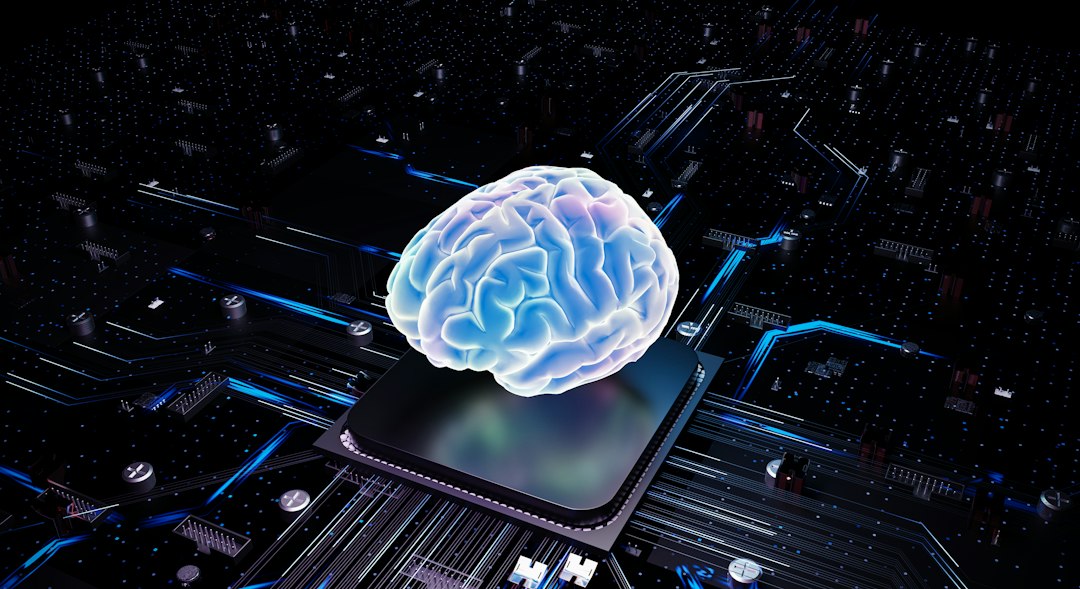
Neuromorphic computing can significantly cut down power use in Edge AI. Instead of traditional processors that separate memory and processing, neuromorphic chips mimic the brain’s structure, integrating computation and storage.
This fundamental shift reduces the constant data movement that drains power, especially crucial for AI tasks running on small, battery-powered devices at the “edge” of a network, like smart sensors or tiny robots.
The Power Problem at the Edge
Running artificial intelligence (AI) models isn’t a cheap date, especially when it comes to electricity. In a data center, you might have the luxury of abundant power, advanced cooling systems, and dedicated infrastructure. But take those same AI models and try to run them on a small device out in the wild – maybe a security camera perched on a pole, a drone monitoring crops, or a smart wearable tracking your health – and you hit a wall. This is the “edge” of the network, and power consumption here is a make-or-break factor.
Traditional computing architectures, often called Von Neumann architectures, are designed around a central processing unit (CPU) and a separate memory unit. When the CPU needs data, it has to fetch it from memory. When it processes it, it often writes it back. This constant back-and-forth movement of data, known as the “Von Neumann bottleneck,” consumes a surprising amount of energy. For simple tasks, it’s manageable. For complex AI models, which involve millions or even billions of calculations and data transfers, this bottleneck becomes a serious energy drain.
Consider an AI model doing real-time object detection on a security camera. It’s constantly analyzing video frames, identifying objects, and making decisions. Each frame means fetching data, processing it, and potentially storing intermediate results. If this camera is battery-powered, every milliampere counts. If it’s solar-powered, a cloudy day could mean reduced functionality. And if it’s connected via a low-power wireless link, excessive processing might even strain its communication capabilities. The power problem isn’t just about the electricity bill; it’s about enabling new applications, extending device lifetimes, and making AI truly pervasive and practical in environments where power is scarce.
Why Traditional Chips Struggle with Edge AI Power
Traditional chips are brilliant at general-purpose computing. Your laptop, your smartphone, even the servers in a data center all rely on variations of the Von Neumann architecture. They’re incredibly flexible, able to run a vast array of software. However, this flexibility comes at a cost, particularly when applied to the specific demands of AI workloads. AI, especially deep learning, often involves highly parallel operations, like multiplying large matrices or convolving images. While modern GPUs (Graphics Processing Units) are designed to handle this parallelism better than CPUs, they still operate within the Von Neumann framework. Data still needs to be moved from global memory to the processing units and back.
The issue isn’t just the movement itself, but also the sheer volume of data involved in many AI models. A single image or a short audio clip can contain thousands or millions of data points. Processing these points through multiple layers of a neural network means that each piece of data is fetched, manipulated, and stored many times over. Each of these operations, no matter how small, consumes power. This cumulative energy drain quickly adds up, making it difficult to deploy sophisticated AI models on power-constrained edge devices. The challenge is to find a way to perform these massive computations with drastically less energy, without sacrificing the accuracy or speed that AI applications demand.
Neuromorphic computing represents a significant advancement in the field of artificial intelligence, particularly in its ability to drastically reduce power consumption in edge AI workloads. For those interested in exploring related technological innovations, an insightful article on the best software for 3D printing can be found at this link. This resource delves into software solutions that enhance efficiency and performance in 3D printing, paralleling the goals of neuromorphic computing to optimize energy use and processing capabilities in AI applications.
Key Takeaways
- The training data includes information and events up to October 2023.
- Insights and knowledge are based on a wide range of sources available until the cutoff date.
- No updates or developments occurring after October 2023 are included in the training.
- Users should verify current information from reliable sources for the latest updates.
- The model’s responses reflect the context and knowledge available up to the specified date.
What is Neuromorphic Computing?
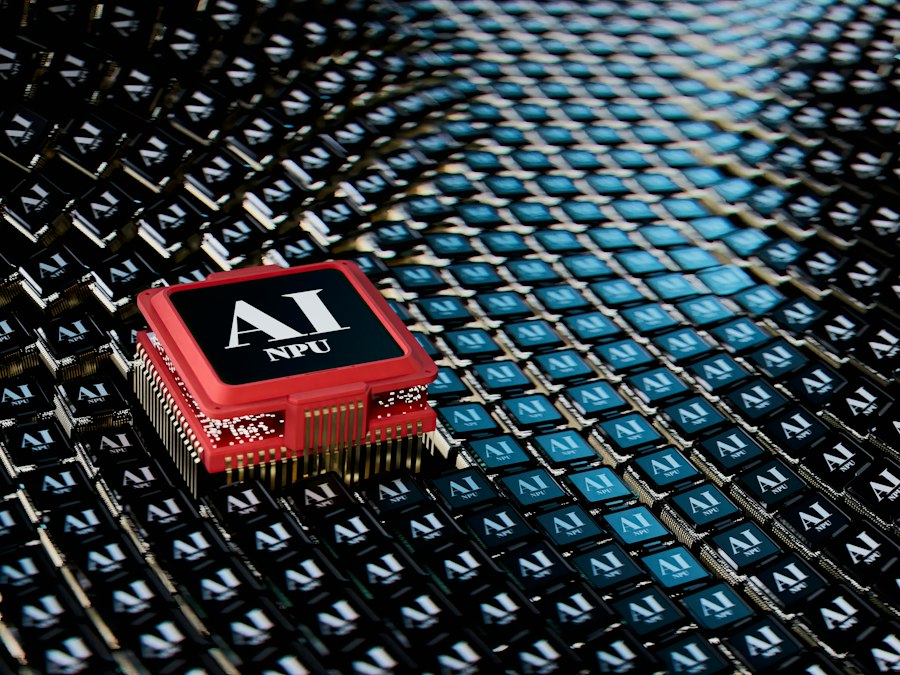
Neuromorphic computing is an entirely different way of thinking about computer architecture, directly inspired by the biological brain. Unlike conventional computers that separate processing and memory, neuromorphic systems integrate these functions, much like neurons in our brains simultaneously process and store information. The goal is to build chips that mimic the brain’s efficiency, parallel processing capabilities, and low power consumption, especially for tasks involving pattern recognition, learning, and event-driven data.
At its core, a neuromorphic chip consists of a vast network of “neurons” and “synapses.” These are not biological neurons and synapses, but rather electronic circuits designed to behave in a similar fashion. Neurons in this context are simple processing units that accumulate electrical signals. When the accumulated signal reaches a certain threshold, the neuron “fires” or generates a “spike” – a discrete electrical pulse. These spikes are then transmitted to other neurons through “synapses,” which are essentially memory elements that store the strength or weight of the connection between neurons.
The key difference from traditional computing is the way information is processed. In a standard computer, data is moved, processed by an arithmetic logic unit, and then moved back to memory. In a neuromorphic system, computation happens directly within the memory units (the synapses) or very close to them. When a spike arrives at a synapse, it immediately affects the “state” of the connected neuron. This “in-memory computing” or “compute-in-memory” approach dramatically reduces the need to move data around, which is the primary source of power consumption in Von Neumann machines for many AI workloads. Instead of constantly fetching data, the data “activates” the computation where it resides.
Furthermore, neuromorphic systems often operate asynchronously and in an event-driven manner. This means that neurons only “fire” or consume power when there’s an event (an input spike) that triggers them. In contrast, traditional processors are often clock-driven, meaning they are constantly active, performing operations or waiting, even if there’s no useful computation to be done. This event-driven nature further contributes to significant power savings, especially for sparse data or tasks where only a subset of information is active at any given time.
Brain-Inspired Architecture
The inspiration from the brain goes beyond just neurons and synapses. The brain is massively parallel, with billions of neurons operating concurrently. Neuromorphic chips aim for a similar level of parallelism, but on a silicon substrate. Each “core” on a neuromorphic chip might contain hundreds or thousands of digital neurons and millions of synapses, interconnected in a mesh-like fashion. This allows for distributed processing, where many small computations happen simultaneously across the chip, rather than being funneled through a single central processor.
Another critical aspect is the concept of “spiking neural networks” (SNNs). Unlike artificial neural networks (ANNs) commonly used in deep learning, which often use continuous values and backpropagation for training, SNNs communicate using discrete electrical pulses or “spikes.” This is a closer approximation to how biological neurons communicate. The timing of these spikes, not just their amplitude, can carry information. While training SNNs is still an active area of research, they hold significant promise for extremely low-power inference, especially for real-time, event-driven sensor data. Think of a sensor that only reports changes, rather than continuously streaming data. An SNN is inherently well-suited to process such sporadic, information-rich events efficiently.
Key Advantages for Power Efficiency
The design philosophy of neuromorphic computing inherently targets power efficiency. By minimizing data movement, utilizing event-driven computation, and leveraging massive parallelism, these systems can achieve orders of magnitude lower power consumption for specific AI workloads compared to their conventional counterparts.
The primary driver of this efficiency is the co-location of computation and memory. In a neuromorphic chip, the “memory” (synaptic weights) is intrinsically tied to the “processing” (neuron state updates). When a neuron receives inputs, the synaptic weights directly modulate how those inputs contribute to the neuron’s activation. There’s no separate bus or controller moving weights from a distant memory module to a computational unit. This locality reduces the energy spent on data transfer, which is a major bottleneck in traditional systems.
Secondly, the sparse and event-driven nature of spiking neural networks means that parts of the chip only consume power when they are actively processing information. If a neuron isn’t receiving enough input to fire, or if there’s no data to process in a particular part of the network, those components remain dormant, drawing minimal power. This contrasts sharply with synchronous, clock-driven processors that constantly consume power regardless of whether they are performing useful work. For many real-world edge AI tasks, data is often sparse – for example, a security camera might only detect motion intermittently, or an audio sensor might only pick up relevant sounds occasionally. Neuromorphic chips are uniquely positioned to take advantage of this sparsity to save power.
Practical Applications for Edge AI

The capabilities of neuromorphic computing translate into tangible benefits for a wide range of Edge AI applications, fundamentally changing what’s possible in power-constrained environments. The ability to perform complex AI tasks with minimal power opens doors for truly autonomous and pervasive intelligent devices.
Always-On Sensing and Monitoring
Imagine a smart sensor that needs to constantly monitor an environment for specific anomalies – a change in temperature, an unusual sound, or a particular visual pattern. Traditional systems would either consume significant power to continuously process data or rely on cloud processing, introducing latency and communication costs.
Neuromorphic chips can enable “always-on” sensing with extremely low power budgets. For instance, a vibration sensor could be continuously analyzed by an SNN to detect subtle changes indicative of machine wear, without draining its battery for months or even years.
This is critical for industrial predictive maintenance, infrastructure monitoring, or environmental sensing in remote areas.
Real-time Event Detection
For applications requiring immediate response to specific events, neuromorphic computing offers advantages in both speed and power. Consider a camera system designed to detect a specific gesture or a security drone identifying an unauthorized intruder.
Instead of processing full video frames continuously, a neuromorphic vision system could process only the “events” – changes in pixels – generated by a specialized event camera. This significantly reduces the data volume and processing required, leading to faster detection and much lower power consumption. This is particularly useful for applications like robotics, autonomous vehicles (for localized perception), and smart surveillance where rapid, power-efficient decision-making is paramount.
Resource-Constrained Robotics
Robots, especially small, agile ones, are highly constrained by power.
Every motor movement, every sensor reading, and every computational step drains the battery. Neuromorphic processors can power on-board AI for tasks like navigation, object recognition, and interaction with the environment with much greater efficiency. A small drone, for example, could use a neuromorphic chip to process visual input for obstacle avoidance or target tracking, extending its flight time significantly.
This also enables more sophisticated behaviors on smaller, less powerful robots, allowing them to operate more autonomously without constant human intervention or reliance on heavy, power-hungry computing units.
Wearable and Implantable Devices
The ultimate in power-constrained environments are wearable and implantable medical devices. A hearing aid that adapts to its environment, a continuous glucose monitor that learns a user’s patterns, or a prosthetic limb that responds naturally – these all benefit immensely from ultra-low-power, on-device AI. Neuromorphic chips could allow these devices to perform complex analysis and adaptation locally, reducing the need for constant communication with a smartphone or cloud service, thereby extending battery life and improving privacy and responsiveness.
For instance, an implantable neural interface might use neuromorphic processing to filter and interpret neural signals in real-time with minimal power, potentially unlocking new therapeutic applications.
Spoken Keyword Spotting and Audio Processing
Voice interfaces are becoming ubiquitous, but making them truly always-on and energy-efficient remains a challenge. A neuromorphic chip can listen for specific wake words (“Hey Google,” “Alexa”) with micro-watt power consumption. Instead of constantly sampling and processing audio with a conventional DSP, an SNN can be trained to recognize the acoustic patterns of a keyword, only “waking up” the main processor when the keyword is actually detected.
This extends to other audio processing tasks like anomaly detection in machinery sounds or identifying specific animal calls in ecological monitoring, allowing devices to operate for extended periods on small batteries.
Current State and Key Players
Neuromorphic computing is still a developing field, but it has moved well beyond purely academic research into the realm of tangible hardware and growing practical applications. Several major players, from large tech companies to specialized startups, are investing heavily in this technology, each with slightly different approaches and target markets.
Intel, with its Loihi platform, is perhaps one of the most prominent players. Loihi is a research chip designed to explore the potential of neuromorphic computing. It features 128 “neuromorphic cores,” each with 1,024 spiking neurons. The design emphasizes on-chip learning, allowing the chip to adapt and learn new patterns without constant external programming. Intel has made Loihi accessible to researchers through cloud platforms and development kits, fostering a community around SNN development. Their focus is on building a general-purpose neuromorphic processor that can be scaled and applied to various AI tasks.
IBM has also been a pioneer in this space with its TrueNorth chip, unveiled almost a decade ago. TrueNorth was a groundbreaking achievement, featuring one million programmable neurons and 256 million programmable synapses. Its design was highly optimized for power efficiency and parallel processing, demonstrating significant power savings for pattern recognition tasks. While TrueNorth wasn’t commercialized in the same way as a CPU or GPU, it laid much of the foundational work and proved the viability of large-scale neuromorphic architectures. IBM continues its research in neuromorphic computing, exploring new materials and architectures.
Beyond these tech giants, numerous startups are contributing to the field. SynSense, for example, focuses on neuromorphic processors and solutions for event-driven vision sensors, aiming for ultra-low-power edge AI. GrAI Matter Labs is another company developing neuromorphic processors that combine traditional dataflow processing with spiking neural networks, targeting real-time AI inference at the edge. BrainChip’s Akida processor is designed for edge AI inference and on-device learning, emphasizing event-based processing and efficient execution of neural networks.
The ecosystem for neuromorphic computing is also gradually expanding. This includes developing specialized software tools, compilers, and programming frameworks that allow AI developers to design and deploy spiking neural networks on neuromorphic hardware. Unlike traditional AI where TensorFlow or PyTorch are standard, SNNs often require different approaches to training and inference, as backpropagation – the workhorse of deep learning – doesn’t directly translate to spike-based systems. Research into “neuromorphic algorithms” and efficient ways to map traditional neural networks to SNNs is a critical area of ongoing development.
Research and Development Efforts
Current research is multifaceted, addressing both hardware and software challenges. On the hardware front, scientists are exploring new materials and fabrication techniques that could enable even denser and more power-efficient neuromorphic systems. This includes non-volatile memory technologies that can act as synapses, offering persistent storage of synaptic weights without constant power. Analog neuromorphic chips, which use continuous electrical signals rather than discrete spikes, are also being explored for certain applications, offering potentially even higher efficiency at the cost of precision.
From a software perspective, a major challenge is developing robust and scalable training methodologies for SNNs. While some SNNs can be trained using biologically inspired learning rules (like Spike-Timing-Dependent Plasticity, STDP), translating the efficiency and accuracy of deep learning’s backpropagation algorithm to the spiking domain is a complex task. Researchers are working on surrogate gradient methods, direct training of SNNs, and converting pre-trained ANNs into SNNs. The goal is to make neuromorphic programming more accessible to AI developers who are already familiar with traditional deep learning frameworks.
Another important area of research involves integrating neuromorphic components with traditional sensors and systems. For example, “event cameras” or “dynamic vision sensors” (DVS) are specialized cameras that only output information when individual pixels detect a change in brightness, naturally generating “spikes” of data. These sensors are a perfect match for neuromorphic processors, creating a highly efficient, end-to-end event-driven processing pipeline that further reduces power consumption from the very point of data acquisition.
Neuromorphic computing is gaining attention for its potential to drastically reduce power consumption in edge AI workloads, a topic that is increasingly relevant as the demand for efficient processing grows. For those interested in exploring the latest advancements in technology, you might find the article on the best Huawei laptop in 2023 particularly insightful, as it highlights innovations that could complement the development of neuromorphic systems. You can read more about it here.
The Road Ahead for Neuromorphic Edge AI
| Metric | Traditional Edge AI | Neuromorphic Computing | Improvement |
|---|---|---|---|
| Power Consumption (mW) | 500 | 50 | 90% Reduction |
| Latency (ms) | 20 | 5 | 75% Reduction |
| Energy per Inference (µJ) | 1000 | 100 | 90% Reduction |
| Model Size (MB) | 50 | 10 | 80% Reduction |
| Accuracy (%) | 92 | 90 | ~2% Decrease |
While the progress in neuromorphic computing is exciting, it’s important to recognize that it’s still an evolving technology. The road ahead involves overcoming several challenges to unlock its full potential for widespread adoption in Edge AI. However, the trajectory is clear: the demand for ultra-low-power, on-device intelligence will only grow, making neuromorphic solutions increasingly appealing.
One of the primary challenges lies in the software ecosystem and developer tools. Currently, developing applications for neuromorphic chips often requires specialized knowledge in spiking neural networks and low-level hardware interactions. Unlike the mature and user-friendly frameworks available for traditional deep learning (e.g., TensorFlow, PyTorch), the tools for neuromorphic computing are still nascent. For broad adoption, there’s a need for higher-level abstraction layers, standardized programming interfaces, and more intuitive methods for training and deploying SNNs. This includes developing effective techniques for converting conventional ANNs to SNNs without significant loss of accuracy, making it easier for existing AI models to leverage neuromorphic hardware.
Hardware scalability and cost-effectiveness are another critical area. While current neuromorphic chips demonstrate impressive power efficiency, scaling them to support even larger and more complex AI models, comparable to what can be run on powerful GPUs, is a continuous engineering challenge. Manufacturing processes need to become more mature, and the cost per unit of computational capability needs to decrease to compete with highly optimized conventional silicon. Furthermore, integrating neuromorphic accelerators seamlessly into existing edge computing platforms and device designs will be crucial.
Benchmarking and performance metrics also need to mature. Traditional metrics like FLOPs (floating point operations per second) or TOPS (tera operations per second) don’t fully capture the efficiency of spiking, event-driven systems. New metrics that account for power consumption per inference, latency for event-driven processing, and efficiency with sparse data are needed to properly evaluate and compare neuromorphic systems against conventional ones, and even against each other.
Despite these hurdles, the future looks promising. The increasing demand for pervasive AI at the edge, driven by IoT, autonomous systems, and advanced wearables, provides a strong incentive for continued investment in neuromorphic technology. As the world becomes more connected and intelligent, the ability to perform complex AI tasks without constantly drawing power or relying on cloud connectivity will become a strategic advantage.
We can expect to see hybrid architectures become more common, where neuromorphic accelerators are integrated alongside traditional CPUs and GPUs. This allows systems to leverage the strengths of each – using neuromorphic chips for ultra-low-power, always-on sensing and event detection, and conventional processors for tasks requiring high precision or complex symbolic reasoning. This blend offers a practical path for integrating neuromorphic capabilities into existing ecosystems.
Furthermore, continued research into novel materials and computational paradigms could lead to even more significant breakthroughs. Advances in memristors, photonic computing, and quantum computing, while distinct from current neuromorphic approaches, share a common goal of moving beyond the Von Neumann bottleneck. There could be convergence or inspiration drawn from these fields to create even more efficient computing architectures.
In essence, neuromorphic computing isn’t about replacing all traditional processors; it’s about providing a specialized, highly efficient tool for a specific class of problems, particularly those involving pattern recognition, event processing, and on-device learning in power-constrained environments. As these capabilities become more accessible and refined, they will undoubtedly play a pivotal role in shaping the next generation of intelligent edge devices, making AI truly ubiquitous and sustainable. The journey is ongoing, but the direction towards drastically reduced power consumption for Edge AI is clear and compelling.
FAQs
What is neuromorphic computing?
Neuromorphic computing is a design approach that mimics the neural structure and functioning of the human brain to process information. It utilizes specialized hardware and algorithms to perform computations in a way that is more efficient and parallelized, allowing for reduced power consumption and improved performance in tasks such as machine learning and artificial intelligence.
How does neuromorphic computing reduce power consumption in edge AI workloads?
Neuromorphic computing reduces power consumption by using event-driven architectures that only activate processing units when necessary, rather than continuously running. This approach minimizes energy usage by processing information in a more efficient manner, allowing for significant reductions in power requirements compared to traditional computing methods.
What are edge AI workloads?
Edge AI workloads refer to artificial intelligence tasks that are processed at the edge of the network, closer to the data source, rather than in centralized cloud servers. This includes applications such as real-time data analysis, image recognition, and sensor data processing, which benefit from reduced latency and improved efficiency when processed locally.
What are the potential applications of neuromorphic computing in edge AI?
Potential applications of neuromorphic computing in edge AI include autonomous vehicles, smart cameras, wearable health devices, and IoT sensors. These applications can leverage the low power consumption and high efficiency of neuromorphic systems to perform complex tasks in real-time, enhancing functionality while conserving energy.
What challenges does neuromorphic computing face?
Neuromorphic computing faces several challenges, including the need for specialized hardware that can effectively replicate neural processes, the development of compatible software and algorithms, and the integration of these systems into existing technology infrastructures. Additionally, there is ongoing research required to fully understand and optimize the capabilities of neuromorphic systems for various applications.
Enjoying our content? Make us a preferred source on Google:
Add us as a Preferred Source on Google