


Quantum computing represents a paradigm shift in computational capabilities, harnessing the principles of quantum mechanics to process information in ways that classical computers cannot. Unlike traditional computers, which use bits as the smallest unit of data, quantum computers utilize quantum bits, or qubits. These qubits can exist in multiple states simultaneously due to the phenomenon known as superposition.
This allows quantum computers to perform complex calculations at unprecedented speeds, making them particularly well-suited for tasks such as optimization, simulation, and cryptography. The implications of quantum computing extend far beyond mere computational speed. As researchers continue to explore the potential of quantum systems, they are uncovering new algorithms that could revolutionize various fields, including artificial intelligence, materials science, and drug discovery.
However, one of the most pressing concerns surrounding the advent of quantum computing is its impact on cryptography. The security protocols that underpin our digital communications and data storage are largely based on mathematical problems that are currently infeasible for classical computers to solve. Yet, with the rise of quantum computing, these problems may become trivial to solve, posing significant risks to data security and privacy.
Key Takeaways
- Quantum computing poses significant threats to traditional cryptographic methods.
- Current cryptographic systems are vulnerable to quantum attacks, risking data security.
- Developing quantum-resistant cryptography is crucial to safeguard future communications.
- The cybersecurity landscape must adapt to address challenges introduced by quantum technologies.
- Ongoing research and innovation are essential to ensure privacy in the quantum computing era.
The Basics of Traditional Cryptography
Traditional cryptography relies on mathematical algorithms to secure information by transforming it into an unreadable format, known as ciphertext. This process typically involves two main types of cryptographic systems: symmetric and asymmetric encryption. Symmetric encryption uses a single key for both encryption and decryption, meaning that both the sender and receiver must possess the same secret key.
Algorithms such as the Advanced Encryption Standard (AES) exemplify this approach, providing robust security for data transmission. Asymmetric encryption, on the other hand, employs a pair of keys: a public key, which can be shared openly, and a private key, which is kept secret. This method allows users to encrypt messages with the recipient’s public key, ensuring that only the holder of the corresponding private key can decrypt the message.
The RSA algorithm is one of the most widely used asymmetric encryption methods, relying on the mathematical difficulty of factoring large prime numbers. While traditional cryptographic systems have proven effective in securing communications for decades, their reliance on specific mathematical problems raises concerns about their long-term viability in the face of emerging technologies.
The Vulnerabilities of Traditional Cryptography to Quantum Computing

The vulnerabilities of traditional cryptography become apparent when considering the capabilities of quantum computers. Shor’s algorithm, developed by mathematician Peter Shor in 1994, demonstrates how a sufficiently powerful quantum computer could efficiently factor large integers and compute discrete logarithms—tasks that underpin the security of many widely used cryptographic systems. For instance, RSA encryption relies on the difficulty of factoring large composite numbers into their prime factors; however, Shor’s algorithm can solve this problem exponentially faster than any known classical algorithm.
In addition to Shor’s algorithm, Grover’s algorithm presents another threat to traditional cryptographic systems. Grover’s algorithm can search through an unsorted database or brute-force a symmetric key with a quadratic speedup compared to classical methods. This means that a symmetric key that is considered secure today may only provide half the effective security in a post-quantum world.
For example, while a 256-bit key is currently deemed secure against classical attacks, it would only offer equivalent security to a 128-bit key against a quantum adversary. As quantum computing technology continues to advance, these vulnerabilities pose significant risks to data integrity and confidentiality.
The Impact of Quantum Computing on Cryptographic Systems
The impact of quantum computing on cryptographic systems is profound and multifaceted. As quantum computers become more powerful and accessible, the foundational principles of security that have governed digital communications for decades will be called into question. The potential for quantum attacks necessitates a reevaluation of existing cryptographic protocols and standards.
Organizations that rely on traditional cryptographic methods must begin to assess their risk exposure and consider transitioning to quantum-resistant alternatives. Moreover, the implications extend beyond individual organizations; entire industries and sectors could be affected by the vulnerabilities introduced by quantum computing. Financial institutions, healthcare providers, and government agencies all depend on secure communications to protect sensitive information.
A successful quantum attack could lead to catastrophic breaches of data privacy and security, undermining public trust in digital systems.
Potential Solutions and Alternatives to Traditional Cryptography
| Metric | Traditional Cryptography | Quantum Computing Impact | Implications |
|---|---|---|---|
| Key Length | Typically 128-256 bits (e.g., AES-256) | Effective security reduced to roughly half (Grover’s algorithm) | Requires doubling key sizes or new algorithms to maintain security |
| Encryption Algorithms | RSA, ECC, DSA widely used | Shor’s algorithm can break RSA and ECC efficiently | Traditional public-key cryptography becomes vulnerable |
| Time to Break Encryption | Exponential time with classical computers | Polynomial time with quantum computers for certain algorithms | Significantly faster decryption threatens data confidentiality |
| Quantum-Resistant Algorithms | Not required currently | Development and adoption underway (e.g., lattice-based cryptography) | Transition needed to secure communications against quantum attacks |
| Data at Risk | Data encrypted with current public-key methods | Potentially all data encrypted with vulnerable algorithms | Urgent need for migration to quantum-safe encryption |
| Quantum Computer Qubits | Not applicable | Estimated 4000+ logical qubits needed to break RSA-2048 | Current quantum hardware is progressing towards this scale |
In response to the vulnerabilities posed by quantum computing, researchers are actively exploring potential solutions and alternatives to traditional cryptographic methods. One promising avenue is post-quantum cryptography (PQC), which encompasses cryptographic algorithms designed to be secure against both classical and quantum attacks. These algorithms are based on mathematical problems that are believed to be resistant to quantum algorithms, such as lattice-based problems, hash-based signatures, multivariate polynomial equations, and code-based cryptography.
Lattice-based cryptography is particularly noteworthy due to its strong security guarantees and efficiency in both encryption and decryption processes. Algorithms like NTRUEncrypt and Learning With Errors (LWE) have gained traction as viable candidates for post-quantum encryption schemes.
By leveraging these new mathematical foundations, organizations can begin transitioning away from traditional cryptographic systems toward more resilient solutions.
The Race to Develop Quantum-Resistant Cryptography
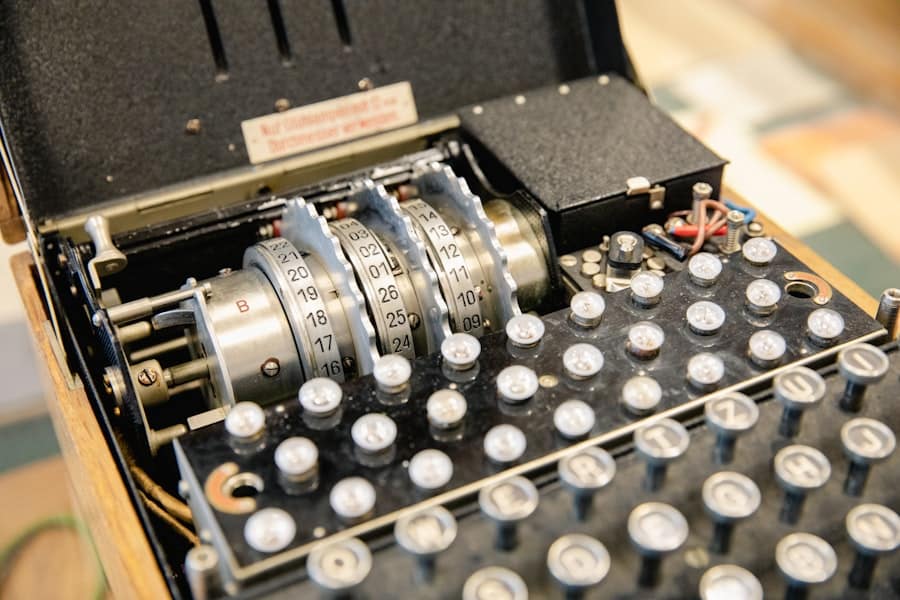
The race to develop quantum-resistant cryptography has intensified as researchers and organizations recognize the urgency of addressing the challenges posed by quantum computing. Initiatives such as the National Institute of Standards and Technology (NIST) Post-Quantum Cryptography Standardization Project aim to evaluate and standardize new cryptographic algorithms that can withstand quantum attacks. This multi-phase process involves rigorous testing and analysis of candidate algorithms from around the world.
As part of this effort, NIST has already selected several promising algorithms for further evaluation in various categories, including public-key encryption and digital signatures. The goal is not only to identify secure alternatives but also to ensure that these new algorithms can be implemented efficiently across diverse platforms and applications. The collaboration between academia, industry, and government entities is crucial in this race against time; as quantum computing technology advances rapidly, so too must our efforts to secure digital communications against its potential threats.
The Implications for Cybersecurity and Data Privacy
The implications of quantum computing for cybersecurity and data privacy are profound and far-reaching. As traditional cryptographic systems become increasingly vulnerable to quantum attacks, organizations must reassess their cybersecurity strategies and invest in new technologies that can withstand these emerging threats. This transition will require not only technical expertise but also a cultural shift within organizations toward prioritizing security in an era where data breaches could have catastrophic consequences.
Furthermore, the potential for widespread data decryption raises significant concerns about privacy rights and regulatory compliance. Sensitive information—such as personal identification details, financial records, and health data—could be exposed if organizations fail to adopt quantum-resistant measures in time. This situation underscores the importance of proactive planning and investment in cybersecurity infrastructure that anticipates future challenges rather than merely reacting to current threats.
The Future of Cryptography in the Age of Quantum Computing
As we stand on the brink of a new era defined by quantum computing, the future of cryptography is both exciting and uncertain. The vulnerabilities inherent in traditional cryptographic systems necessitate urgent action from researchers, policymakers, and industry leaders alike. By embracing innovative solutions such as post-quantum cryptography and fostering collaboration across sectors, we can work toward securing our digital landscape against the threats posed by quantum technology.
The journey toward a secure future will undoubtedly be complex; however, it also presents an opportunity for growth and advancement in cybersecurity practices. As we navigate this transition, it is essential to remain vigilant and adaptable in our approach to protecting sensitive information in an increasingly interconnected world. The evolution of cryptography will play a pivotal role in shaping our ability to safeguard data privacy and maintain trust in digital communications as we move forward into the age of quantum computing.
In the discussion of how quantum computing will disrupt traditional cryptography, it’s essential to consider the broader implications of technological advancements. A related article that explores the latest breakthroughs in consumer technology is available at
, are vulnerable to quantum attacks. Symmetric cryptography and hash functions are less affected but may require longer key lengths to maintain security.</p>
<h3>What is post-quantum cryptography?</h3>
<p>Post-quantum cryptography refers to cryptographic algorithms designed to be secure against both classical and quantum computer attacks. These algorithms are based on mathematical problems believed to be resistant to quantum algorithms.</p>
<h3>When is quantum computing expected to disrupt traditional cryptography?</h3>
<p>While large-scale, fault-tolerant quantum computers capable of breaking current cryptography do not yet exist, experts estimate they could emerge within the next decade or two, making it critical to develop and adopt quantum-resistant cryptographic methods soon.</p>
<h3>How can organizations prepare for the impact of quantum computing on cryptography?</h3>
<p>Organizations can prepare by staying informed about advancements in quantum computing, beginning to implement post-quantum cryptographic algorithms, and planning for cryptographic agility to quickly transition to new standards as they become available.</p>
<h3>Will quantum computing make all current encryption obsolete?</h3>
<p>Not all encryption will become obsolete. Symmetric encryption algorithms like AES remain relatively secure against quantum attacks if key sizes are increased. The main threat is to public-key cryptography, which underpins many secure communications and digital signatures.</p>
<h3>What role do governments and standards bodies play in addressing quantum threats?</h3>
<p>Governments and standards organizations, such as NIST, are actively researching and standardizing post-quantum cryptographic algorithms to ensure secure communication and data protection in a future with quantum computing capabilities.</p>
<div class="clear"></div> </div>
<footer class="entry-meta">
<div class="entry-tax"><span>Tags: No tags</span></div>
<div class="aux-single-post-share">
<div class="aux-tooltip-socials aux-tooltip-dark aux-socials aux-icon-left aux-medium aux-tooltip-social-no-text" >
<span class="aux-icon auxicon-share" ></span>
</div>
</div>
</footer>
</div>
<nav class="aux-next-prev-posts nav-skin-thumb-arrow">
<section class="np-prev-section has-nav-thumb" >
<a href="https://enicomp.com/why-ai-is-essential-for-predictive-maintenance-in-industry-2/">
<div class="np-arrow">
<div class="aux-hover-slide aux-arrow-nav aux-outline">
<span class="aux-svg-arrow aux-medium-left"></span>
<span class="aux-hover-arrow aux-svg-arrow aux-medium-left"></span>
</div>
<img width="80" height="80" src="https://enicomp.com/wp-content/uploads/2025/12/image-389-80x80.jpg" class="auxin-attachment auxin-featured-image attachment-80x80" alt="Photo Maintenance" /> </div>
<p class="np-nav-text">Previous Post</p>
<h4 class="np-title">Why AI Is Essential for Predictive Maintenance in Industry</h4>
</a>
</section>
<section class="np-next-section has-nav-thumb" >
<a href="https://enicomp.com/why-quantum-computing-will-disrupt-traditional-cryptography-2/">
<div class="np-arrow">
<div class="aux-arrow-nav aux-hover-slide aux-outline">
<span class="aux-svg-arrow aux-medium-right"></span>
<span class="aux-hover-arrow aux-svg-arrow aux-medium-right"></span>
</div>
<img width="80" height="80" src="https://enicomp.com/wp-content/uploads/2025/12/image-392-80x80.jpg" class="auxin-attachment auxin-featured-image attachment-80x80" alt="Photo Cryptography" /> </div>
<p class="np-nav-text">Next Post</p>
<h4 class="np-title">Why Quantum Computing Will Disrupt Traditional Cryptography</h4>
</a>
</section>
</nav>
</article>
</div><!-- end content -->
</div><!-- end primary -->
<aside class="aux-sidebar aux-sidebar-primary">
<div class="sidebar-inner">
<div class="sidebar-content">
<div class="aux-widget-area"><section id="block-4" class=" aux-open widget-container widget_block">
<h2 class="wp-block-heading">POPULAR</h2>
</section><section id="block-33" class=" aux-open widget-container widget_block">
<h2 class="wp-block-heading">CATEGORIES</h2>
</section><section id="categories-3" class=" aux-open widget-container widget_categories"><h3 class="widget-title">Categories</h3>
<ul>
<li class="cat-item cat-item-162"><a href="https://enicomp.com/category/5g-wireless-communication-technologies/">5G, Wireless & Communication Technologies</a> (177)
<ul class=)