

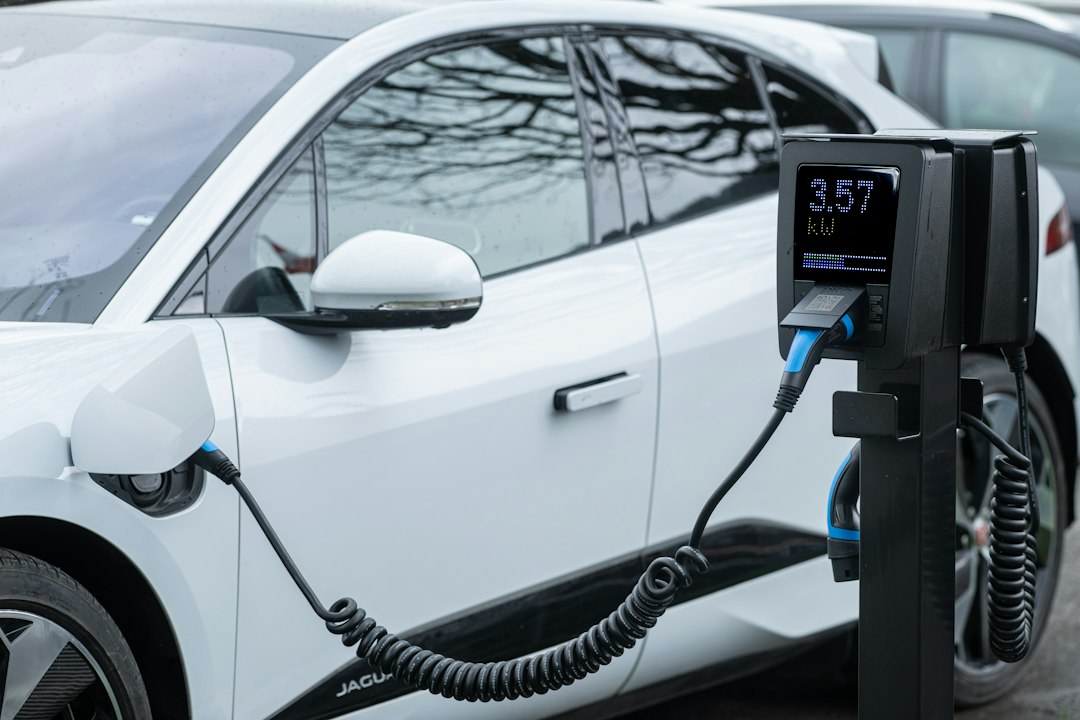
Vehicle-to-Grid (V2G) integration, put simply, is about getting your electric fleet vehicles to give power back to the grid when they’re not driving.
Instead of just being energy consumers, these vehicles become flexible, mobile batteries, offering valuable services and helping stabilize the electricity network.
This isn’t just a futuristic concept; it’s a rapidly developing reality that promises significant benefits for both fleet operators and the wider energy infrastructure.
The V2G Concept Explained
At its core, V2G allows for bi-directional energy flow. Think of traditional EV charging as a one-way street: electricity goes from the grid into your vehicle’s battery. V2G introduces a two-way street, enabling your vehicle to not only charge from the grid but also to discharge electricity back into it. This discharge can happen in a controlled manner, at specific times, and for specific purposes, turning your fleet into a distributed energy resource.
The technology relies on sophisticated charging infrastructure, often referred to as V2G chargers or bi-directional chargers, which are capable of managing this two-way flow. It also requires intelligent software platforms that can communicate with both the vehicles and the grid, optimizing when and how much power is drawn or supplied. This orchestration is crucial for maximizing benefits while ensuring vehicle readiness for their primary transportation duties.
How it Works: The Technical Foundation
The underlying technology for V2G involves several key components. Firstly, the electric vehicle itself must be V2G-compatible. This means its battery management system (BMS) and onboard charger must be designed to handle bi-directional power flow safely and efficiently. While older EV models might not be compatible, newer models, especially those designed for fleet use, are increasingly incorporating this capability.
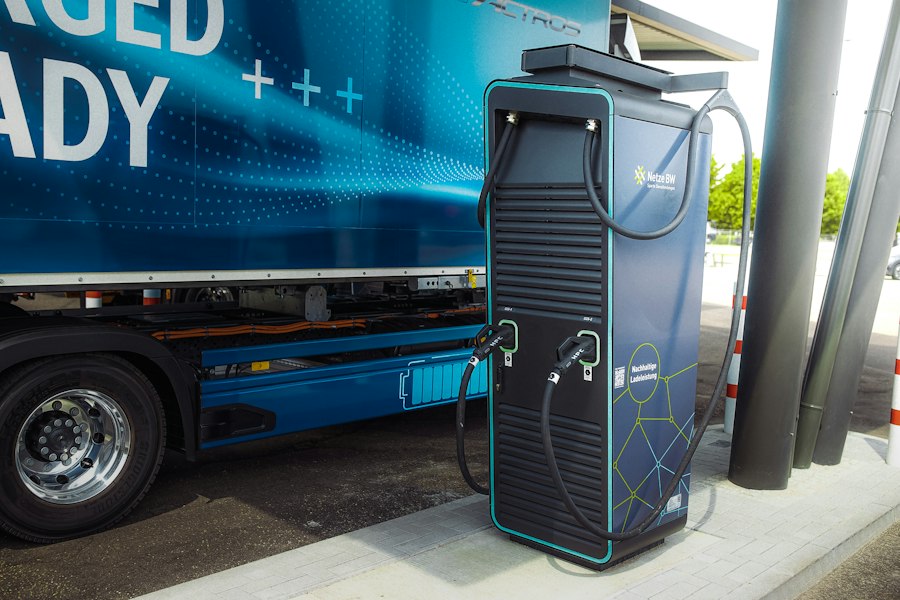
Secondly, a V2G-enabled charging station is essential. These stations are more complex than standard Level 2 or DC fast chargers. They incorporate power electronics that can convert AC power from the grid to DC for the vehicle battery, and crucially, convert DC power from the vehicle battery back to AC for export to the grid. These chargers also need robust communication protocols (like OCPP – Open Charge Point Protocol) to interact with a central management system.
Finally, a V2G aggregation platform or energy management system (EMS) ties everything together. This software acts as the brain, monitoring grid conditions, energy prices, fleet schedules, and vehicle battery states. It then sends commands to individual V2G chargers, instructing them to charge or discharge based on predetermined strategies and real-time needs. This aggregation is vital because individual vehicles typically don’t provide enough power to be significant on their own; their collective contribution, however, can be substantial.
Types of V2G Services
V2G fleets can offer a variety of services to the grid, each with different revenue potential and operational requirements. These services generally fall into categories that help balance supply and demand, improve grid stability, and support renewable energy integration.
One common service is peak shaving. During times of high electricity demand, utilities often have to fire up expensive and less efficient “peaker plants.” A V2G fleet can discharge power during these peak hours, reducing the strain on the grid and potentially avoiding the need for these costly generation sources. This often coincides with higher electricity prices, creating a financial incentive for the fleet operator.
Another crucial service is frequency regulation. The electricity grid operates at a very specific frequency (e.g., 50Hz or 60Hz). Any imbalance between generation and demand can cause this frequency to deviate, potentially leading to instability or even blackouts. V2G vehicles can rapidly inject or absorb power to help maintain this frequency, acting as a dynamic buffer. This requires very fast response times and precise control.
Renewable energy integration is another significant benefit. Solar and wind power are intermittent; their output fluctuates with weather conditions. V2G fleets can act as flexible storage, absorbing excess renewable energy when it’s abundant (e.g., sunny afternoons) and discharging it back to the grid when renewables are not generating (e.g., cloudy evenings). This helps smooth out the variability of renewables and makes the grid more resilient to their integration.
Finally, voltage support involves injecting or absorbing reactive power to help maintain stable voltage levels across the grid. While perhaps less intuitive than active power services, stable voltage is critical for efficient power transmission and distribution. V2G systems with advanced inverters can provide this reactive power support, further enhancing grid reliability.
Vehicle-to-Grid (V2G) integration is an innovative approach that allows electric vehicle fleets to serve as dynamic power reserves, enhancing grid stability and energy management. A related article that delves deeper into the implications of V2G technology and its potential to revolutionize energy systems can be found at this link. This resource provides valuable insights into how electric fleets can not only reduce emissions but also contribute to a more resilient and sustainable energy infrastructure.
Key Takeaways
- The training data includes information and events up to October 2023.
- Insights and knowledge are based on a wide range of sources available until the cutoff date.
- No updates or developments occurring after October 2023 are included in the training.
- Users should verify current information from reliable sources for the latest updates.
- The model’s responses reflect the context and knowledge available up to the specified date.
Benefits for Fleet Operators
Implementing V2G for an electric fleet isn’t just a philanthropic endeavor for the grid; it offers tangible and significant benefits for the fleet operators themselves. These advantages can range from direct revenue generation to operational efficiencies and enhanced sustainability profiles.
The primary benefit for many is revenue generation. By providing grid services, fleet operators can earn money from their idle vehicles. This revenue can help offset the operational costs of the fleet, including vehicle depreciation, charging infrastructure investments, and even electricity costs. The specific revenue potential depends on the services provided, the size of the fleet, and the local electricity market regulations. Some regions have established markets for ancillary services (like frequency regulation), offering attractive compensation rates.
V2G also offers opportunities for lower electricity bills. By intelligently discharging power during peak demand periods when electricity prices are high, and recharging during off-peak hours when prices are low, fleets can engage in “arbitrage.” This effectively reduces the net cost of the electricity consumed by the vehicles, contributing to significant operational savings over time. Furthermore, if a fleet has its own solar panels or other distributed energy resources, V2G can help optimize the use of this self-generated power, reducing reliance on grid imports.
Beyond direct financial gains, V2G can contribute to enhanced energy independence and resilience for the fleet’s depot.
In the event of a grid outage, a V2G-enabled fleet, particularly when combined with local renewable generation or stationary battery storage, could potentially provide backup power to critical depot operations.
This “islanding” capability ensures essential functions remain operational even when the main grid is down, improving business continuity.
Finally, integrating V2G positions fleet operators as leaders in sustainability and innovation. Demonstrating a commitment to smart energy management and grid support enhances a company’s environmental credentials and corporate social responsibility (CSR) profile. This can be a valuable differentiator in the market, attracting environmentally conscious customers and talent, and potentially unlocking access to various sustainability incentives or grants.
Overcoming Challenges and Maximizing Value
While the benefits are clear, fleet operators need to navigate several considerations to successfully implement V2G. One significant challenge is the initial investment in V2G-compatible charging infrastructure. These bi-directional chargers are generally more expensive than standard chargers. However, as the technology matures and adoption increases, costs are expected to decrease. Various government incentives and utility programs are also emerging to help subsidize these upfront costs.
Another critical factor is battery degradation. Repeated charging and discharging cycles can impact the lifespan of a vehicle’s battery. However, V2G systems are designed with sophisticated battery management algorithms that minimize detrimental effects. They typically operate within optimal State of Charge (SoC) windows and moderate discharge rates to prolong battery life. Furthermore, studies suggest that the thermal management systems in modern EVs are robust enough to handle the additional cycling associated with V2G without significantly accelerating degradation beyond normal driving use, especially when V2G cycling is carefully managed.
Operational complexity is also a consideration. Integrating V2G requires careful planning and coordination to ensure that vehicles are always ready for their primary transportation duties. The V2G aggregation platform plays a crucial role here, intelligently scheduling charging and discharging events around vehicle operational schedules. Clear communication between fleet managers, energy managers, and the V2G platform provider is essential to ensure seamless operation.
To maximize value, fleet operators should start with a clear understanding of their energy profile and vehicle usage patterns. Identifying periods of significant idle time and predictable routes can help pinpoint the best candidates for V2G integration. Engaging with local utilities early in the process is also crucial, as grid regulations and available V2G programs vary significantly by region. Partnering with experienced V2G technology providers can help navigate the technical and regulatory landscape, ensuring a smooth and profitable deployment.
Grid Resilience and Renewable Energy Integration
V2G technology isn’t just a niche application; it’s a powerful tool for transforming the entire electricity grid, particularly in its resilience and ability to integrate a higher share of renewable energy sources. As we move towards a cleaner energy future, these capabilities become increasingly vital.
The inherent flexibility of V2G vehicles makes them ideal for balancing intermittent renewable energy sources. Solar panels only generate electricity when the sun shines, and wind turbines only produce power when the wind blows.
This variability creates challenges for grid operators who need to ensure a constant balance between electricity supply and demand. When there’s excess solar or wind power, V2G fleets can act as a giant sponge, absorbing this surplus energy and storing it in their batteries. When renewables aren’t generating, or demand peaks, these same fleets can discharge that stored energy back into the grid, smoothing out the fluctuations.
This makes the grid more robust and allows for greater penetration of renewables without compromising stability.
V2G also significantly enhances grid resilience. In a traditional centralized grid, a fault at a major power plant or transmission line can have widespread cascading effects. V2G introduces a highly distributed network of flexible energy resources.
If a particular area experiences a localized power outage, V2G-enabled fleets in that vicinity could potentially be used to form “microgrids,” providing temporary power to critical loads until the main grid is restored. This distributed nature reduces single points of failure and increases the grid’s ability to withstand disturbances and recover more quickly.
Supporting a Decentralized Energy Future
V2G aligns perfectly with the broader trend towards a more decentralized, or “smart,” grid. Instead of relying solely on large, central power plants, the smart grid incorporates numerous smaller, distributed energy resources (DERs) like rooftop solar, battery storage, and now, V2G fleets.
These DERs can generate, store, and manage electricity locally, leading to a more efficient and responsive system.
By participating in V2G programs, fleets contribute to this decentralization. They effectively become “virtual power plants” (VPPs) – aggregated groups of DERs that can collectively provide grid services that rival traditional power plants. This shift from large, central generation to distributed, controllable resources makes the grid more adaptable, efficient, and less susceptible to large-scale disruptions.
It also empowers consumers and businesses (like fleet operators) to become active participants in energy management, rather than just passive consumers.
Furthermore, V2G can help defer costly grid upgrades. As electricity demand grows and more EVs come online, utilities often face the need to upgrade transformers, substations, and transmission lines. By enabling V2G vehicles to discharge power during peak times, and charge during off-peak times, the grid load can be smoothed out, reducing peak demand and potentially delaying or even avoiding the need for expensive infrastructure expansions. This represents a significant long-term saving for utilities and ultimately, for consumers.
The strategic placement of V2G fleets, particularly in areas with high EV penetration or where renewable energy sources are concentrated, can create localized energy hubs. These hubs can optimize energy flows, reduce transmission losses, and provide critical support to the local distribution network. This localized support is key to building a resilient and efficient future grid.
The Role of Smart Charging and Aggregation
While V2G is about bi-directional power flow, it’s intrinsically linked with the broader concept of smart charging. You can’t effectively manage power going out without intelligently managing power coming in. The aggregation of numerous V2G-enabled vehicles, managed by sophisticated software, is what truly unlocks their potential as a dynamic power reserve.
Smart charging refers to the ability to control when and how much power an EV draws from the grid. Instead of simply plugging in and charging at full power, smart charging systems can adjust charging rates and schedules based on factors like grid demand, electricity prices, and vehicle readiness requirements. For a V2G fleet, smart charging is the “yin” to V2G’s “yang.” It ensures that batteries are adequately charged for their next journey while also allowing for strategic charging during periods of low demand or high renewable generation. This combination optimizes both operational efficiency and revenue generation from grid services.
The true power of V2G for grid services doesn’t come from a single vehicle, but from the aggregation of many vehicles. An individual electric bus, for instance, might offer tens or hundreds of kilowatts of power. While useful, this isn’t enough to provide significant services to a large grid. However, a fleet of 50, 100, or even 1,000 such vehicles, collectively managed, can represent a multi-megawatt power resource – comparable to a small power plant.
The Aggregator’s Crucial Function
This is where the V2G aggregator or energy management system (EMS) comes into play. The aggregator acts as a central intelligence hub. It constantly monitors:
- Grid signals and market prices: Receiving real-time data from grid operators about demand, frequency, and electricity market prices.
- Fleet schedules and battery states: Knowing when each vehicle is available, its current State of Charge (SoC), and its required SoC for the next journey.
- Charging station status: Understanding the capabilities and availability of each V2G charger.
Based on this information, the aggregator makes real-time decisions, sending commands to individual V2G chargers. It might instruct a charger to begin discharging power to the grid to provide frequency regulation, or to pause charging a vehicle because electricity prices have suddenly spiked. The aggregator’s algorithms are designed to maximize financial returns for the fleet operator while adhering to battery health parameters and ensuring vehicle readiness.
Furthermore, the aggregator handles the complex administrative and contractual aspects of participating in grid service markets. It bundles the individual contributions of many vehicles into a single, larger bid that can be offered to grid operators. This simplifies participation for fleet operators, who might not have the expertise or resources to engage directly with complex energy markets.
The role of communication protocols, such as OCPP (Open Charge Point Protocol) and OpenADR (Open Automated Demand Response), is vital for this aggregation. These standardized protocols allow different V2G chargers, vehicles, and aggregation platforms to “speak” the same language, enabling seamless data exchange and control across a diverse ecosystem of technologies. Without robust and open communication, effective aggregation would be significantly more challenging.
Vehicle-to-Grid integration is revolutionizing the way electric fleets operate, allowing them to serve as dynamic power reserves that can support the energy grid during peak demand. This innovative approach not only enhances the efficiency of electric vehicles but also contributes to a more sustainable energy ecosystem. For those interested in exploring how technology can further enhance mobility solutions, a related article discusses the best tablet with SIM card slot, which can be a valuable tool for fleet management and real-time data analysis. You can read more about it here.
Future Outlook and Scalability
| Metric | Description | Value / Range | Unit |
|---|---|---|---|
| Average Vehicle Battery Capacity | Typical energy storage capacity of electric fleet vehicles | 40 – 100 | kWh |
| Grid Energy Storage Potential | Total energy capacity available from integrated electric fleets | 500 – 5000 | MWh |
| Peak Power Output per Vehicle | Maximum power a single vehicle can supply back to the grid | 3.3 – 10 | kW |
| Fleet Vehicle Count | Number of electric vehicles in the fleet | 100 – 10,000 | Vehicles |
| Average Daily Vehicle Availability for V2G | Average hours per day vehicles are connected and available for grid services | 8 – 16 | Hours |
| Grid Frequency Regulation Capacity | Power capacity dedicated to stabilizing grid frequency via V2G | 50 – 500 | MW |
| Reduction in Peak Grid Load | Percentage decrease in peak demand due to V2G integration | 10 – 30 | % |
| CO2 Emissions Reduction | Estimated decrease in emissions from optimized grid load balancing | 5,000 – 50,000 | Metric Tons/year |
| Average Charging/Discharging Cycle Efficiency | Energy efficiency of V2G charge and discharge cycles | 85 – 95 | % |
| Economic Benefit to Fleet Operators | Additional revenue or cost savings from V2G participation | Variable | Not specified |
The concept of V2G is no longer purely theoretical; pilot projects and commercial deployments are already underway globally. However, to truly transform electric fleets into dynamic power reserves, there are still hurdles to overcome and significant scalability to achieve. The future outlook for V2G is bright, driven by evolving technology, supportive policies, and the increasing electrification of transport.
One of the most significant trends that will drive V2G scalability is the increasing availability of V2G-compatible vehicles. As EV manufacturers integrate bi-directional charging capabilities as a standard feature, rather than a niche add-on, the pool of potential V2G assets will grow exponentially. This is particularly true for fleet vehicles, such as buses, delivery vans, and heavy-duty trucks, which typically have larger batteries and more predictable idle times.
Advancements in battery technology will also play a crucial role. Improvements in battery density, lifespan, and resistance to degradation will make V2G participation even more attractive, reducing concerns about accelerated battery wear. Solid-state batteries and other next-generation technologies promise to further enhance these characteristics.
Policy and Regulatory Landscape
For V2G to truly scale, a supportive policy and regulatory environment is essential. Governments and grid operators need to:
- Establish clear market mechanisms and compensation structures for V2G services. This means creating transparent rules for how fleet operators can participate in energy markets and how they will be compensated for providing services like frequency regulation or peak shaving.
- Provide incentives and subsidies for V2G charging infrastructure and vehicle procurement. Reducing the upfront cost barrier for V2G systems is critical for accelerating adoption.
- Standardize communication protocols and interoperability. Ensuring that different V2G systems can seamlessly communicate with each other and with the grid is vital for large-scale deployment.
- Address potential regulatory hurdles related to grid interconnection and ownership of energy assets. Streamlining these processes will make it easier for fleet operators to become active grid participants.
Many regions are already moving in this direction. Countries like the UK, Denmark, and the Netherlands have been early adopters of V2G pilots and are working on establishing favorable regulatory frameworks. In the US, states like California are exploring V2G programs as part of their broader decarbonization efforts.
The Path to Mass Adoption
The path to mass V2G adoption for fleets involves several key steps. Firstly, continued demonstration projects and data collection are crucial to prove the economic viability and technical reliability of V2G at scale. This data will help refine business models and build confidence among fleet operators and utilities.
Secondly, education and awareness are paramount. Many fleet managers are still unaware of the potential benefits of V2G or are hesitant due to perceived complexities. Clear communication about the technology, its benefits, and how to implement it will be vital.
Thirdly, the development of user-friendly V2G aggregation platforms that seamlessly integrate with existing fleet management systems will be critical. These platforms need to simplify the process for fleet operators, minimizing the operational burden and maximizing revenue generation.
Finally, collaboration between stakeholders – EV manufacturers, charging infrastructure providers, software developers, fleet operators, utilities, and regulators – is essential. This collaborative ecosystem will drive innovation, resolve challenges, and accelerate the transition towards a future where electric fleets are not just a mode of transport but an integral and dynamic component of a resilient, sustainable energy grid. The transformation of electric fleets into dynamic power reserves is not just an opportunity; it’s a necessary evolution for a decarbonized and robust energy future.
FAQs
What is Vehicle-to-Grid (V2G) integration?
Vehicle-to-Grid (V2G) integration refers to a technology that allows electric vehicles (EVs) to communicate with the power grid to send electricity back to the grid when needed. This process enables EVs to act as mobile energy storage units, helping to balance supply and demand on the grid while providing additional revenue streams for EV owners.
How does V2G technology benefit electric fleets?
V2G technology benefits electric fleets by allowing them to generate income through energy sales back to the grid during peak demand periods. Additionally, it enhances grid stability, reduces operational costs, and maximizes the utilization of renewable energy sources, ultimately contributing to a more sustainable energy ecosystem.
What infrastructure is required for V2G integration?
V2G integration requires specialized charging stations that can both charge EVs and discharge electricity back to the grid. Additionally, communication systems are needed to facilitate real-time data exchange between the vehicles, charging stations, and grid operators, ensuring efficient energy management and coordination.
Are there any regulatory challenges associated with V2G implementation?
Yes, regulatory challenges exist for V2G implementation, including the need for clear policies and standards governing energy transactions between EVs and the grid. Additionally, utilities and regulators must address issues related to grid reliability, compensation models for EV owners, and the integration of V2G systems into existing energy markets.
What impact does V2G have on renewable energy usage?
V2G technology can significantly enhance the usage of renewable energy by providing a flexible energy storage solution. It allows excess renewable energy generated during peak production times to be stored in EV batteries and released back to the grid during periods of high demand, thus facilitating a more efficient and reliable integration of renewable energy sources.
Enjoying our content? Make us a preferred source on Google:
Add us as a Preferred Source on Google