

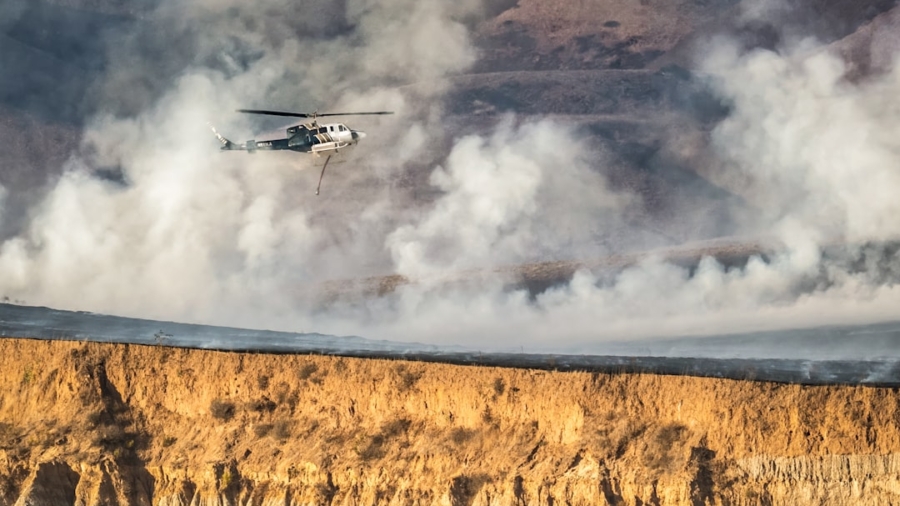
Drone swarms hold incredible promise for tackling wildfires, particularly in their early detection and continuous monitoring. Simply put, instead of one drone or a few, you’re deploying a group of them that work together, covering more ground faster and providing a richer, more detailed picture of what’s happening on the ground. This collaborative approach significantly improves our ability to spot fires before they rage out of control and keep a close eye on them as they evolve, offering a practical, real-time advantage in a critical situation.
Think of it like this: one person searching a massive forest for a tiny spark is tough. A whole team, each with a specific area to cover, is much more effective. That’s the core idea behind drone swarms for wildfire detection. Instead of relying on a single drone, which has limitations in coverage and endurance, a swarm offers several practical advantages that boost our chances of early detection.
Enhanced Coverage and Speed
A single drone can only be in one place at a time. A swarm, however, can spread out, covering a much larger geographical area simultaneously. This means they can scan vast tracts of land, like remote forests or rugged terrain, far more quickly than traditional methods or even single-drone deployments. The faster a potential fire is spotted, the more time responders have to act.
Persistent Monitoring and Reduced Gaps
Wildfires don’t stand still, and neither should our monitoring efforts. A swarm can maintain continuous surveillance over a suspect area. As one drone might need to return for battery replacement, another can seamlessly take its place, ensuring there are no gaps in monitoring. This persistent presence is crucial for tracking fire progression, identifying new ignitions, and understanding wind shifts that could alter fire behavior.
Redundancy and Reliability
Let’s face it, drones can run into issues – a sensor might fail, a bird strike could occur, or even unexpected weather. With a swarm, if one drone goes down, the others can pick up the slack. This built-in redundancy makes the overall system far more reliable than a single, critical asset. You’re not putting all your eggs in one basket.
In exploring innovative technologies for environmental monitoring, the article on the best Apple tablets of 2023 highlights how advanced devices can complement drone swarm technology in the early detection and monitoring of wildfires. By utilizing high-performance tablets equipped with the latest applications, researchers and firefighters can analyze data collected by drones in real-time, enhancing their ability to respond quickly to emerging threats. This synergy between drones and mobile technology represents a significant advancement in wildfire management strategies.
Key Takeaways
- Clear communication is essential for effective teamwork
- Active listening is crucial for understanding team members’ perspectives
- Setting clear goals and expectations helps to keep the team focused
- Regular feedback and open communication can help address any issues early on
- Celebrating achievements and milestones can boost team morale and motivation
How Drone Swarms Detect Fires
It’s not just about flying around; it’s about what the drones are carrying and how they’re processing the information. The magic of early detection lies in the sophisticated sensors and smart algorithms that analyze the data in real-time.
Thermal Imaging and Infrared Sensors
This is where the real heat-seeking action happens. Standard cameras might not see a small ember hidden by foliage, but thermal cameras detect heat signatures. Even a tiny rise in temperature, invisible to the naked eye or regular cameras, can be picked up by these sensors. This is especially vital in dense forests or during night-time operations when visibility is low.
- Detecting hotspots: Thermal cameras excel at identifying subtle temperature anomalies that could indicate smoldering fires or lingering hotspots after a controlled burn.
- Seeing through smoke: While dense smoke can obscure visual cameras, infrared can often penetrate it, offering a clearer picture of the fire’s core and spread.
Visual Cameras and AI Analysis
High-resolution visual cameras are still crucial. They provide context and allow for visual confirmation of what thermal sensors might be indicating. But it’s not just about looking at pictures. Artificial intelligence plays a massive role here.
- Smoke plume detection: AI algorithms can be trained to recognize the distinct patterns of smoke plumes, even small ones, differentiating them from clouds or dust.
- Flame recognition: Similar to smoke, AI can identify the visual characteristics of flames, confirming a fire’s presence.
- Geographical referencing: Visual data helps pinpoint the exact location of the fire, aiding ground crews in reaching the site quickly.
Gas Sensors for Chemical Signatures
Beyond heat and visual cues, early-stage fires emit specific gases. Drone swarms equipped with miniature gas sensors can detect these chemical signatures, providing another layer of verification.
- Carbon monoxide and dioxide: Elevated levels of these gases can indicate combustion, even before visible smoke or significant heat is detected.
- Volatile organic compounds (VOCs): Some wildfires, particularly those involving certain types of vegetation, release unique VOCs that can be identified by specialized sensors.
The Power of Collaboration: How Swarms Operate

A swarm isn’t just a bunch of drones flying independently; it’s a coordinated effort. The real strength comes from their ability to communicate with each other and with a central command, sharing data and adapting their behavior on the fly.
Decentralized Decision-Making
While a central command monitors the overall mission, individual drones within a swarm can often make localized decisions. For example, if one drone detects a potential hotspot, it might autonomously direct a nearby drone to investigate further, or adjust its flight path to get a better view.
This reduces the burden on human operators and allows for quicker responses to evolving situations.
- Dynamic path planning: If a fire is detected, the swarm can dynamically re-route itself to prioritize monitoring that specific area, without needing constant human input.
- Resource allocation: Drones can be assigned different tasks – some for broad-area scanning, others for detailed inspection of identified anomalies.
Real-time Data Fusion and Mapping
All the data collected by individual drones – thermal, visual, gas sensor readings – is sent back to a central hub. Here, it’s not just displayed as separate feeds. Advanced software fuses this data together to create a comprehensive, real-time map of the wildfire situation.
- Overlaying sensor data: Thermal hotspots can be overlaid onto visual maps, showing exactly where the heat is in relation to landmarks or vegetation.
- 3D mapping: By combining data from multiple drones, sophisticated algorithms can create 3D models of the terrain and fire spread, providing an invaluable tool for understanding the fire’s behavior.
- Predictive analytics: With enough data, AI can start to predict fire behavior based on current conditions, wind patterns, and fuel types, helping firefighters anticipate future spread.
Communication Networks
For a swarm to work effectively, robust communication is essential.
Drones need to talk to each other and to ground control, even in remote areas where traditional networks might be spotty.
- Mesh networking: Drones can form a mesh network, where each drone acts as a relay for data, extending the communication range and creating a more resilient network.
- Satellite communication: For truly remote operations, some drones may be equipped with satellite communication capabilities to ensure data can always reach command centers.
- Secure data transmission: Given the critical nature of the information, data transmission must be secure to prevent interception or manipulation.
Challenges and Considerations

While drone swarms offer a game-changing approach, it’s not without its hurdles. Implementing these systems effectively requires addressing several practical and technical challenges.
Regulatory Hurdles and Airspace Management
Flying drones, especially in a swarm, involves navigating complex aviation regulations.
Airspace is not empty, and avoiding collisions with other aircraft, manned or unmanned, is paramount.
- FAA and international regulations: Compliance with aviation authorities’ rules on drone operations, beyond visual line of sight (BVLOS) flights, and swarm operations is critical.
- Deconfliction: Developing robust systems to prevent drones from colliding with each other or with manned firefighting aircraft is a top priority.
- Temporary flight restrictions (TFRs): Coordinating with incident commanders to operate within TFRs around active fires requires seamless communication and pre-planning.
Power Management and Endurance
Drones run on batteries, and battery life is a significant limitation. While swarms offer redundancy, the cumulative power needs can be substantial.
- Battery swapping stations: Developing autonomous or semi-autonomous battery swapping stations in remote locations could significantly extend operational times.
- Solar power integration: Integrating small solar panels could trickle-charge batteries during daylight hours, enhancing endurance for longer missions.
- Fuel cell technology: As fuel cell technology for drones matures, it could offer a significant leap in flight duration compared to traditional batteries.
System Complexity and Artificial Intelligence Development
Managing a swarm of drones, each collecting different data, is complex. The AI that processes this data and enables autonomous behavior needs to be highly sophisticated and reliable.
- Robust AI algorithms: Developing AI that can accurately distinguish smoke from clouds, identify fire behaviors, and adapt to unpredictable environments is an ongoing challenge.
- Human-machine teaming: Ensuring that human operators can effectively oversee and intervene in autonomous swarm operations is crucial for safety and effectiveness.
- Cybersecurity: Protecting the swarm’s communication and control systems from cyber threats is essential to maintain operational integrity.
Cost and Accessibility
Developing and deploying these sophisticated drone swarm systems isn’t cheap. Making them accessible to various fire agencies, especially those with limited budgets, is an important consideration.
- Initial investment: The cost of drones, sensors, AI software, and ground infrastructure can be substantial.
- Maintenance and training: Regular maintenance, software updates, and training for operators and analysts add to the ongoing operational costs.
- Scalability: Developing modular and scalable systems that can be adapted to different fire sizes and budgets will be key to broader adoption.
In exploring innovative technologies for environmental protection, the article on best software to clone HDD to SSD highlights the importance of efficient data management systems that can support the analysis of data collected by drone swarms. These systems are crucial for processing the vast amounts of information gathered during wildfire monitoring, enabling quicker response times and more effective resource allocation. By integrating advanced software solutions, researchers can enhance the capabilities of drone technology in combating wildfires and preserving natural ecosystems.
The Future: Integrating Swarms into Wildfire Management
| Metrics | Data |
|---|---|
| Area Covered | 1000 acres |
| Response Time | 30 minutes |
| Accuracy | 95% |
| Cost Savings | 30% compared to traditional methods |
Looking ahead, drone swarms are set to become an indispensable tool in our wildfire fighting arsenal. Their integration will go beyond just detection and monitoring, becoming a comprehensive part of incident management.
Proactive Fire Prevention
It’s not just about fighting fires; it’s about preventing them. Swarms can play a crucial role in identifying potential ignition sources before they become a problem.
- Fuel load mapping: Drones can map vegetation density and dry fuel loads, highlighting high-risk areas for prescribed burns or fuel reduction efforts.
- Infrastructure inspection: They can inspect power lines, railway tracks, and other infrastructure for faults or hazards that could spark a fire.
- Illegal campfires: Swarms can patrol remote areas to detect illegal campfires or human activity that could lead to ignitions.
Supporting Firefighting Operations
Once a fire is underway, swarms can provide invaluable support to ground crews, improving their safety and effectiveness.
- Real-time fire perimeter mapping: Continuously updating maps of the fire’s edge helps commanders make informed decisions about deployment and containment strategies.
- Hotspot identification for mop-up: After the main fire is contained, swarms can efficiently identify lingering hotspots that could rekindle, guiding mop-up crews to critical areas.
- Safety monitoring for firefighters: They can monitor the movement of firefighters, identify potential hazards, and provide early warning of dangerous fire behavior changes.
Post-Fire Assessment and Restoration
The role of drone swarms doesn’t end when the flames are extinguished. They can contribute significantly to the recovery and restoration efforts.
- Burn severity mapping: Detailed maps of burn severity help assess environmental impact and guide reforestation efforts.
- Erosion risk assessment: By analyzing post-fire landscapes, swarms can identify areas prone to erosion and suggest mitigation strategies.
- Wildlife monitoring: They can assist in tracking wildlife populations affected by the fire and monitoring their recovery in the damaged ecosystem.
In summary, drone swarms represent a powerful shift in how we approach wildfires. While challenges remain, the clear advantages in early detection, persistent monitoring, and real-time data collection position them as a critical component in building more resilient and effective wildfire management strategies for the future. It’s about working smarter, faster, and with more eyes in the sky.
FAQs
What are drone swarms?
Drone swarms are a group of drones that work together in a coordinated manner to achieve a common goal. They can be programmed to fly in formation and communicate with each other to cover a larger area and gather more data than a single drone could on its own.
How can drone swarms be used for early detection of wildfires?
Drone swarms can be equipped with various sensors, including infrared cameras and gas detectors, to detect signs of wildfires such as heat, smoke, or gas emissions. They can cover large areas quickly and provide real-time data to fire departments, allowing for early detection and rapid response to potential wildfires.
What are the benefits of using drone swarms for monitoring wildfires?
Using drone swarms for monitoring wildfires offers several benefits, including the ability to cover large and inaccessible areas, gather real-time data, and reduce the risk to human firefighters. They can also be deployed quickly and at a lower cost compared to traditional methods such as manned aircraft.
What are the challenges of using drone swarms for wildfire detection?
Challenges of using drone swarms for wildfire detection include the need for advanced programming and coordination to ensure the drones work together effectively, as well as the potential for interference from other drones or communication systems in the area. Additionally, regulations and airspace restrictions may limit the use of drone swarms in certain areas.
Are there any current initiatives or projects using drone swarms for wildfire detection?
Yes, there are several initiatives and projects around the world that are exploring the use of drone swarms for early detection and monitoring of wildfires. These projects often involve collaboration between government agencies, research institutions, and technology companies to develop and test the use of drone swarms in wildfire management.
Enjoying our content? Make us a preferred source on Google:
Add us as a Preferred Source on Google