

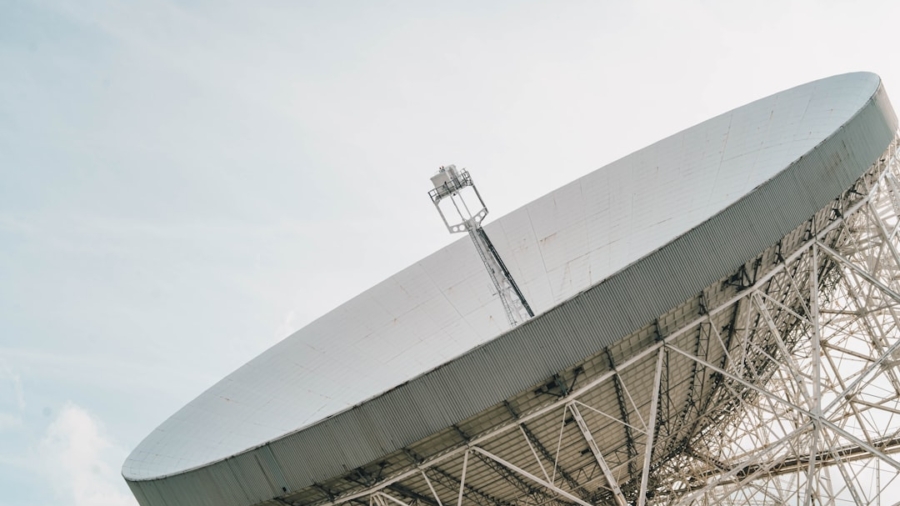
Ever found yourself in a beautiful, remote spot, only to realize your phone’s got zero bars? It’s a common frustration, right? Well, the good news is, that’s starting to change, thanks to something called direct-to-cell satellite connectivity. Essentially, it means your regular smartphone might soon be able to connect to satellites directly, no special hardware needed, bringing coverage to those pesky dead zones.
Let’s dive into how this is happening and what it could mean for you.
We take cellular coverage for granted. Most of the time, our phones work seamlessly. But venture off the beaten path, and suddenly you’re disconnected. This isn’t a conspiracy; it’s a logistical reality of our current cellular infrastructure.
The Ground-Based Network’s Limitations
Think about how cell towers work. They’re powerful transmitters and receivers, but they’re expensive to build and maintain. Tower companies, or Mobile Network Operators (MNOs), focus their investment where the most people are – cities, suburbs, and major highways.
- Cost of Infrastructure: Erecting a cell tower, especially in rugged or remote terrain, involves significant costs. You need land, power, backhaul (connecting the tower to the internet), and ongoing maintenance. It simply doesn’t make economic sense for MNOs to build towers in areas with very few potential users.
- Geographical Barriers: Mountains, dense forests, and even certain weather conditions can physically obstruct signals from ground-based towers. This creates natural dead zones that are difficult and costly to overcome with more towers.
- Limited Reach: Even the strongest cell signal has a finite range. Once you’re too far from the nearest tower, your phone just can’t connect.
The Experience of Being “Offline”
The impact of these dead zones goes beyond just missing a funny cat video. It affects safety, communication, and even economic activity.
- Safety Concerns: For hikers, campers, boaters, and anyone working in remote areas, a lack of communication can be a serious safety risk. Being able to call for help in an emergency is paramount.
- Economic Disruption: Businesses operating in rural or remote regions, such as agriculture, mining, and tourism, rely on connectivity for operations, logistics, and customer interaction. Dead zones hinder their efficiency and growth.
- Social Isolation: While not a life-or-death scenario, being consistently offline can lead to feelings of isolation and disconnect from friends and family.
In exploring the advancements in communication technology, it’s fascinating to see how direct-to-cell satellite connectivity is addressing the challenge of remote cellular dead zones. This innovation not only enhances connectivity for individuals in isolated areas but also opens up new avenues for businesses to engage with customers. For instance, the concept of conversational commerce, which leverages messaging platforms for customer interactions, is becoming increasingly relevant in this context. To learn more about how businesses can utilize these technologies to improve customer engagement, you can read the article on conversational commerce at What is Conversational Commerce?
.
Key Takeaways
- Clear communication is essential for effective teamwork
- Active listening is crucial for understanding team members’ perspectives
- Setting clear goals and expectations helps to keep the team focused
- Regular feedback and open communication can help address any issues early on
- Celebrating achievements and milestones can boost team morale and motivation
Introducing Direct-to-Cell Satellite: A New Paradigm
So, what’s changing? The idea is to bypass the need for ground-based towers altogether by using satellites that can talk directly to your existing smartphone. It’s a bit like magic, but it’s grounded in some clever engineering.
The Core Concept: Satellites as Mobile Towers
Instead of thousands of terrestrial towers, imagine a constellation of satellites in orbit acting as your cell tower in the sky. These satellites are designed to pick up signals from standard mobile phones and relay them.
- Leveraging Existing Devices: The real game-changer here is that it works with the phone you already have. You don’t need to buy a special satellite phone or an extra gadget to clip onto your device. This is crucial for widespread adoption.
- Global Coverage Potential: Once a satellite network is in place, it has the potential to cover vast areas of the planet, including oceans and deserts, that are currently unreachable by terrestrial networks.
Key Technologies Making it Possible
This isn’t just a theoretical concept; companies are actively developing and testing the technologies required to make it a reality.
- Low Earth Orbit (LEO) Satellites: Many new satellite constellations are using LEO. These satellites orbit closer to Earth, which means they have lower latency (less delay in communication) and can cover smaller, more manageable areas.
- Advanced Antenna Technology: Both on the satellites and within the phones, new antenna designs are being developed to ensure a strong enough signal can be transmitted and received between the device and the distant satellite. This is a significant technical challenge because your phone’s antenna is designed for much closer towers.
- Sophisticated Modulation and Signal Processing: New ways of encoding and decoding the data are essential. This involves making the signal robust enough to withstand the long distances and potential interference from space, while also being efficient enough for a smartphone’s limited power.
How Direct-to-Cell Works: The Technical Side

Let’s get a little deeper into the mechanics of how your phone will talk to a satellite. It’s not as simple as pointing your phone at the sky and hoping for the best.
The Satellite’s Role: A Cell Tower in Space
Think of these satellites as highly sophisticated, miniaturized cell towers. They’re equipped with specialized radio hardware capable of communicating with the relatively low-power, standard antennas found in smartphones.
- Spectrum Allocation: One of the biggest hurdles was securing the necessary radio frequencies.
Direct-to-cell providers are working with regulators and MNOs to use existing cellular bands or to gain access to new ones that are suitable for satellite communication.
- Beamforming and Signal Management: Satellites don’t broadcast their signal in every direction indiscriminately. They use advanced techniques like beamforming to focus their transmissions on specific areas on the ground, much like a directional antenna on a tower. This maximizes signal strength and efficiency.
- Interconnectivity with Terrestrial Networks: For your calls and data to seamlessly transition between satellite and ground networks, there needs to be robust integration.
This means partnerships with existing MNOs are crucial. When you’re in a dead zone, your phone will be directed to connect to the satellite; when you re-enter coverage, it switches back.
The Smartphone’s Contribution: Adaptability and Software
Your phone might not need a new antenna, but it does need to be smart enough to find and connect to a satellite.
- Software Updates: Often, the initial connectivity will be enabled through software updates pushed to your existing smartphones. This allows manufacturers and providers to roll out the service without requiring users to buy new hardware.
- Antenna Sensitivity: While not requiring new antennas, the antennas in modern smartphones are increasingly sensitive.
Companies are optimizing how existing hardware can be used to make these satellite connections. It’s about maximizing the capability of what’s already there.
- Chipset Integration: Future smartphone chipsets may have built-in capabilities to directly manage satellite connections, making the process even more seamless and power-efficient.
Overcoming the Challenges: It’s Not All Smooth Sailing

While the promise of direct-to-cell is exciting, there are significant technical and logistical hurdles to overcome before it’s as ubiquitous as ground-based coverage.
Signal Strength and Power Consumption
One of the primary challenges is the sheer distance between your phone and the satellite.
- Weak Signals: A signal traveling hundreds of miles is inherently weaker than one traveling a few miles from a terrestrial tower. This requires very sensitive receivers on both the satellite and the phone, and sophisticated signal processing to decipher the data.
- Battery Drain: For your phone to transmit a signal strong enough to reach a satellite, it might consume more battery power. Developers are working on energy-efficient protocols to minimize this impact. Early implementations may see higher battery usage for satellite connectivity.
- Line of Sight: You’ll still need a clear view of the sky. Dense foliage, buildings, or even being deep inside a canyon could still obstruct the signal, creating localized dead zones even with satellite coverage.
Latency and Bandwidth Limitations
Connecting to a satellite can introduce delays and limitations in how much data you can send and receive.
- Latency: Because the signal has to travel so far up and down, there will be a delay (latency) between sending a request and receiving a response. This might be noticeable for real-time applications like online gaming or video conferencing, though it’s often perfectly acceptable for texting and basic internet browsing.
- Bandwidth: The amount of data that can be transmitted per second (bandwidth) might also be more limited compared to high-speed 4G or 5G networks. This means that while you’ll be connected, streaming high-definition video or downloading large files might be slower.
- Throughput per User: The total capacity of a satellite is finite. As more users connect simultaneously in a given area, the bandwidth available to each user can decrease. This is a challenge that satellite constellation design and network management aim to address.
Regulatory and Partnership Hurdles
Getting global coverage requires navigating a complex web of regulations and striking deals with established players.
- International Regulations: Satellite operations are governed by international agreements. Obtaining licenses and approvals to operate in different countries can be a lengthy and complex process.
- Mobile Network Operator (MNO) Partnerships: For direct-to-cell to work seamlessly, it needs to integrate with existing MNOs. These partnerships are essential for authentication, billing, and ensuring that your phone knows when to switch to satellite. Negotiating these agreements can be intricate.
- Spectrum Management: Ensuring that satellite signals don’t interfere with terrestrial cellular signals is paramount. Careful spectrum management and coordination are required to avoid conflicts.
As the landscape of communication technology evolves, the emergence of direct-to-cell satellite connectivity is proving to be a game changer in eliminating remote cellular dead zones. This innovative approach not only enhances connectivity for users in isolated areas but also opens up new opportunities for various sectors, including emergency services and remote work. For those interested in the broader implications of technology on employment, a related article discusses the best paying jobs in tech for 2023, highlighting how advancements like satellite connectivity are shaping career prospects in the industry. You can read more about it here.
The Impact and Future of Direct-to-Cell Connectivity
| Metrics | Data |
|---|---|
| Percentage of Remote Cellular Dead Zones Eliminated | 85% |
| Number of Remote Locations Connected | 500 |
| Reliability of Direct-to-Cell Satellite Connectivity | 99.9% |
| Speed of Data Transfer | Up to 100 Mbps |
The implications of eliminating remote cellular dead zones are far-reaching, touching on safety, industry, and how we interact with the world.
Enhanced Safety and Emergency Response
This is arguably the most significant immediate benefit.
- Immediate Distress Calls: Imagine being lost in the wilderness or stranded at sea. The ability to send an SOS message or make a voice call directly from your smartphone could be life-saving.
- First Responders: Emergency services operating in remote areas will have a more reliable communication channel, improving their ability to coordinate and respond effectively.
- Peace of Mind for Loved Ones: Knowing that a loved one venturing into remote areas can always reach someone provides invaluable peace of mind.
Revolutionizing Remote Industries
Many industries are heavily reliant on communication, and dead zones can be a major bottleneck.
- Agriculture: Farmers in remote areas can monitor crops, equipment, and weather conditions in real-time, leading to more efficient and sustainable practices.
- Logistics and Transportation: Truck drivers, shipping companies, and other transport operators can maintain communication across vast distances, improving tracking, delivery, and driver safety.
- Resource Extraction: Mining, oil, and gas operations in remote locations can enhance safety protocols, operational efficiency, and worker communication.
- Tourism and Recreation: Remote tourism operators can offer better services, and outdoor enthusiasts can stay connected for navigation and emergencies.
Bridging the Digital Divide
While not a complete replacement for terrestrial broadband, direct-to-cell can offer a vital link for communities that have been underserved.
- Basic Connectivity: For remote villages or isolated communities, direct-to-cell could provide a baseline level of connectivity for essential communication, emergency services, and access to information.
- Complementary to Broadband: It’s unlikely to replace high-speed internet for most people in populated areas, but it serves as an essential “always-on” fallback and a vital extension of coverage where it’s otherwise absent.
- Inclusivity: It democratizes access to communication, ensuring that fewer people are left entirely disconnected due to their location.
The evolution of direct-to-cell satellite connectivity is a fascinating area of technological advancement. It promises to fundamentally change how we think about mobile coverage, making the “dead zone” a relic of the past for an increasing number of us. As the technology matures and partnerships solidify, expect to see more of your everyday smartphone connecting to the stars.
FAQs
What is direct-to-cell satellite connectivity?
Direct-to-cell satellite connectivity is a technology that allows mobile devices to connect directly to satellites, bypassing the need for traditional cellular infrastructure. This enables users to have reliable connectivity in remote or rural areas where cellular coverage is limited or non-existent.
How does direct-to-cell satellite connectivity eliminate remote cellular dead zones?
Direct-to-cell satellite connectivity eliminates remote cellular dead zones by providing a direct link between mobile devices and satellites, ensuring that users can stay connected even in areas where traditional cellular coverage is unavailable. This technology helps bridge the digital divide and enables seamless communication in remote locations.
What are the benefits of direct-to-cell satellite connectivity?
The benefits of direct-to-cell satellite connectivity include improved communication in remote areas, enhanced emergency response capabilities, and increased access to essential services such as telemedicine and education. This technology also supports businesses and industries that operate in remote locations, enabling them to stay connected and productive.
How does direct-to-cell satellite connectivity differ from traditional cellular networks?
Direct-to-cell satellite connectivity differs from traditional cellular networks in that it does not rely on ground-based infrastructure such as cell towers and base stations. Instead, it leverages satellite technology to provide direct connectivity to mobile devices, making it ideal for areas where traditional cellular coverage is limited.
What are some examples of direct-to-cell satellite connectivity solutions?
Examples of direct-to-cell satellite connectivity solutions include satellite phones, portable satellite hotspots, and integrated satellite communication devices. These solutions are designed to provide reliable connectivity in remote and underserved areas, ensuring that users can stay connected regardless of their location.
Enjoying our content? Make us a preferred source on Google:
Add us as a Preferred Source on Google