

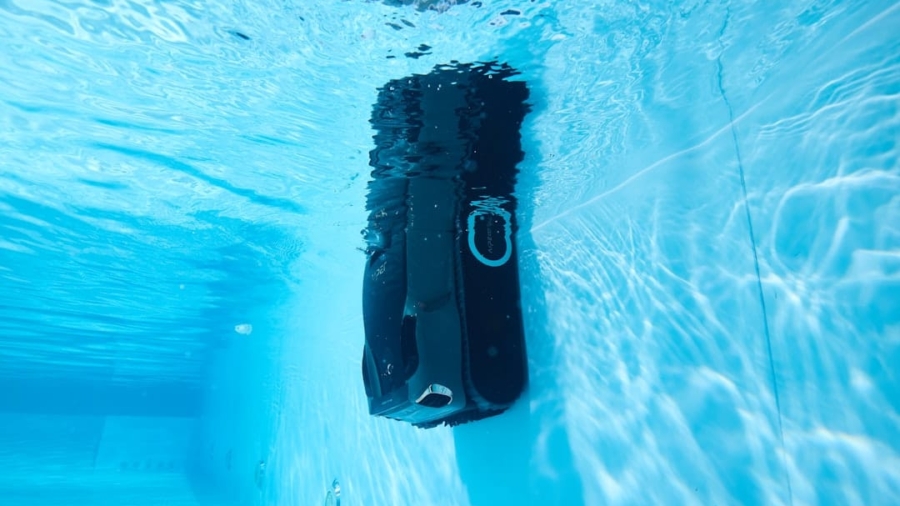
There’s a growing buzz around using underwater drones for marine conservation research, and for good reason: they offer a significantly safer, more efficient, and often less intrusive way to gather vital data from our oceans. Forget the days of always needing a diver or a massive, expensive remotely operated vehicle (ROV) tethered to a ship; these smaller, more agile units are democratizing underwater exploration and providing researchers with unprecedented access to marine environments. They’re quickly becoming indispensable tools in the fight to understand and protect our fragile marine ecosystems.
Traditional methods for marine research, while still valuable, come with inherent limitations. Underwater drones, also known as autonomous underwater vehicles (AUVs) or remotely operated vehicles (ROVs), are actively addressing many of these challenges, offering a range of benefits that directly impact the effectiveness and scope of conservation efforts.
Enhanced Safety for Researchers
One of the most obvious and significant advantages is the removal of humans from potentially dangerous situations. Exploring deep-sea environments, navigating strong currents, or inspecting hazardous wrecks are all scenarios where human divers face considerable risks. Underwater drones can operate in these conditions without putting lives in jeopardy.
- Hazardous Environments: Drones can access areas with unpredictable currents, low visibility, or potential contaminants without risking human exposure.
- Deep-Sea Exploration: The physiological limitations of human divers mean that many deep-sea environments are inaccessible. Drones, on the other hand, can be designed to withstand extreme pressures and explore depths far beyond human reach.
Cost-Effectiveness and Efficiency
While the initial investment in a sophisticated drone might seem high, it often pales in comparison to the long-term costs associated with traditional research methods, especially those involving manned submersibles or continuous diver deployments.
- Reduced Crew and Ship Time: Drones can be deployed from smaller vessels or even directly from shore, significantly reducing the need for large, expensive research ships and their associated crew.
- Extended Mission Durations: Unlike human divers who have limited bottom time, drones can operate for hours, days, or even weeks on end, depending on their battery life and mission parameters, allowing for more extensive data collection.
- Automated Data Collection: Many drones can be programmed for autonomous missions, following pre-determined paths and collecting data without constant human intervention, freeing up researchers for analysis.
Minimizing Environmental Impact
The presence of humans and large research vessels can, inadvertently, disturb marine life and environments. Underwater drones, particularly the smaller, quieter models, are often far less intrusive.
- Reduced Disturbance to Marine Life: D Drones can observe marine animals from a distance without altering their natural behavior, providing more accurate insights into their habits and interactions. Their quiet propulsion systems are less likely to scare off sensitive species.
- Smaller Physical Footprint: Compared to large research vessels or traditional ROVs requiring heavy deployment equipment, smaller drones have a minimal physical impact on the environment during deployment and retrieval.
Underwater drones have emerged as a revolutionary tool in marine conservation research, enabling scientists to explore and monitor aquatic ecosystems with unprecedented precision.
A related article discusses the advancements in technology that enhance the capabilities of these drones, providing insights into their applications for environmental protection.
For more information on the latest innovations in tech, you can read about the Samsung S22 Ultra’s features and how they relate to modern technological advancements in various fields at this link.
Key Takeaways
- Clear communication is essential for effective teamwork
- Active listening is crucial for understanding team members’ perspectives
- Setting clear goals and expectations helps to keep the team focused
- Regular feedback and open communication can help address any issues early on
- Celebrating achievements and milestones can boost team morale and motivation
How Underwater Drones are Being Used in Marine Conservation
The applications of underwater drones in marine conservation research are incredibly diverse and continue to expand as technology advances. From mapping vast underwater landscapes to monitoring the health of individual species, their utility is proving invaluable.
Habitat Mapping and Monitoring
Understanding the structure and health of marine habitats is fundamental to conservation. Drones are excelling at providing detailed visual and environmental data that helps paint a clear picture of these ecosystems.
- Coral Reef Health Assessments: Drones equipped with high-resolution cameras can capture stunning 3D models of coral reefs, allowing researchers to monitor coral growth, bleaching events, disease outbreaks, and the impact of climate change over time. These models can also be used to track changes in reef complexity and biodiversity.
- Seagrass Bed Surveys: Seagrass meadows are critical nursery grounds and carbon sinks. Drones can efficiently map their distribution, density, and health, aiding in their protection and restoration efforts.
- Deep-Sea Vent and Seamount Exploration: While challenging, advanced heavy-duty AUVs are designed to explore areas like deep-sea vents, which host unique ecosystems, and seamounts, which act as biodiversity hotspots. They can collect imagery, environmental data (temperature, chemical composition), and even samples at extreme depths.
- Wreck Inventory and Impact Studies: Sunken ships, while sometimes historic, can also be environmental hazards. Drones can map wrecks, assess their structural integrity, identify potential pollutants, and monitor their impact on surrounding ecosystems without putting divers at risk.
Biodiversity Surveys and Species Tracking
Documenting the variety of life in the ocean and understanding species movements are key aspects of conservation. Drones offer new ways to achieve this without direct intervention.
- Fish Stock Assessment: Drones can conduct visual surveys of fish populations, count individuals, and even estimate their sizes, providing valuable data for sustainable fisheries management. Some advanced systems are even exploring acoustic capabilities for fish stock assessment.
- Marine Mammal Observation: While less common for direct tracking due to the complex acoustics, drones can observe marine mammals from a distance, capturing behavioral data and identifying individuals through unique markings, reducing the stress that boats and manned observations can cause.
- Invasive Species Detection: Early detection of invasive species is crucial for preventing widespread ecological damage. Drones can systematically scan areas for the presence of non-native species, allowing for rapid intervention.
- Microbial Sampling: Some drones are equipped with specialized samplers to collect water or sediment for microbial analysis, which can be crucial for studying ecosystem health and nutrient cycling.
Pollution Detection and Monitoring
The pervasive issue of marine pollution requires constant vigilance. Drones are proving to be effective tools in identifying and tracking various forms of oceanic contamination.
- Microplastic and Macroplastic Detection: Drones can be equipped with sensors and cameras to detect and map the distribution of both microplastics and larger plastic debris on the ocean surface and even below, helping to identify pollution hotspots and sources.
- Oil Spill Mapping: In the unfortunate event of an oil spill, drones can quickly map the extent of the slick, monitor its movement, and assess its environmental impact, aiding in cleanup efforts and damage assessment.
- Water Quality Assessment: Equipped with various sensors, drones can measure parameters like temperature, salinity, oxygen levels, pH, and turbidity, providing real-time data on water quality changes and potential pollution events such as harmful algal blooms.
Types of Underwater Drones Used in Research

The term “underwater drone” is broad, encompassing a range of vehicles with different capabilities and operational modes. Understanding these distinctions is crucial for appreciating their diverse applications.
Remotely Operated Vehicles (ROVs)
ROVs are tethered to a surface vessel or a control station via a cable, through which power and data are transmitted. This allows for real-time control and high-bandwidth data transfer, making them ideal for precise manipulation and observation.
- Tethered Operation: The tether provides continuous power and communication, allowing for extended missions and immediate feedback to the operator.
- Real-time Control and Observation: An operator can actively pilot the ROV, control its manipulators, and view live video feeds, making it suitable for intricate tasks like sample collection or deploying instruments.
- Payload Capacity: Many ROVs can carry a significant array of sensors, cameras, and even robotic arms, enabling them to perform complex scientific tasks.
- Applications: Ideal for detailed inspections, manipulative tasks, sample collection, and high-resolution video capture.
Examples include examining coral up close, deploying small instruments, or taking specific water samples.
Autonomous Underwater Vehicles (AUVs)
AUVs operate independently, following pre-programmed missions without real-time human control. They are untethered, allowing them to cover vast areas and conduct long-duration missions without direct human intervention.
- Untethered Operation: Their autonomy allows for extensive range and endurance, making them suitable for mapping large areas or long-term monitoring.
- Pre-programmed Missions: Researchers program the AUV with a specific route and a set of tasks to perform. The vehicle then executes these instructions, often using advanced navigation systems.
- Sensor Suites: AUVs are typically equipped with a range of sensors for measuring oceanographic parameters (e.g., CTD for conductivity, temperature, depth), acoustic imaging (e.g., side-scan sonar for seafloor mapping), and sometimes cameras for opportunistic imaging.
- Applications: Best for large-scale surveys, mapping expeditions (e.g., bathymetry, pipeline inspection), tracking ocean currents, and long-term data collection in remote areas.
Hybrid Systems
Some manufacturers are developing hybrid underwater drone systems that combine the best features of both ROVs and AUVs. These systems can operate autonomously for surveys and then be converted to ROV mode for detailed inspection or manipulation as needed, offering increased flexibility.
- Operational Flexibility: Can switch between autonomous exploration and tethered, human-controlled operations, optimizing for different mission requirements.
- Emergency Retrieval: Some hybrids feature a tether that can be deployed if the drone encounters issues during autonomous operations, providing a backup for retrieval.
Challenges and Future Directions for Underwater Drones

While the current capabilities of underwater drones are impressive, the technology is still evolving, and several challenges need to be addressed to unlock their full potential in marine conservation.
Technological Limitations
The underwater environment is notoriously challenging, and designing equipment to withstand its rigors while remaining functional is a constant battle.
- Battery Life and Endurance: A significant limitation for many AUVs is the power source. Extending battery life is crucial for longer and more extensive missions, especially in remote areas. Research into more efficient batteries and alternative power sources (e.g., fuel cells, energy harvesting) is ongoing.
- Navigation and Communication: GPS signals don’t penetrate water, making accurate underwater navigation a complex task. Acoustic communication is slow and range-limited. Improvements in inertial navigation systems, acoustic modems, and potentially optical communication are essential.
- Payload Capacity vs. Efficiency: There’s a constant trade-off between carrying multiple heavy sensors for comprehensive data and maintaining a sleek, energy-efficient design for extended missions. Miniaturization of sensors is key.
- Autonomy and “Intelligent” Decision Making: While AUVs are autonomous, their “intelligence” is still limited. Developing drones that can adapt to unforeseen circumstances, identify significant events (e.g., a new species, a pollution source), and make real-time decisions with minimal human intervention is a major research goal.
Data Management and Analysis
The sheer volume of data collected by these devices can be overwhelming. Developing efficient systems for processing, storing, and analyzing this information is critical.
- Big Data Challenges: High-resolution cameras and multiple sensors generate terabytes of data. Effective techniques for data compression, cloud storage, and robust processing pipelines are essential.
- Artificial Intelligence and Machine Learning: AI and ML algorithms are rapidly being developed to sift through vast datasets, identify patterns, classify species, detect anomalies (e.g., disease, pollution), and even create automated reports, significantly reducing the manual effort required from researchers.
- Interoperability and Standardization: With various manufacturers and research institutions using different drone platforms and data formats, establishing standards for data collection, storage, and sharing will enhance collaboration and data utility.
Regulatory and Ethical Considerations
As drones become more prevalent, the need for clear guidelines for their use in marine environments, particularly in protected areas, becomes paramount.
- Operational Regulations in Protected Areas: Establishing clear guidelines on where and how drones can be operated in marine protected areas (MPAs) is crucial to prevent accidental disturbance or misuse.
- Potential for Misuse: While designed for conservation, the technology could potentially be used for less desirable purposes, raising ethical questions about surveillance and data privacy in the marine domain.
- Wildlife Interaction Protocols: Developing protocols to ensure that drone operations do not inadvertently stress or harm marine wildlife is a significant ethical consideration. This includes guidelines on approach distances, noise levels, and emergency procedures.
Underwater drones are revolutionizing marine conservation research by providing scientists with the ability to explore and monitor underwater ecosystems with unprecedented precision. A related article discusses the various technologies and considerations involved in selecting the right tools for educational purposes, which can also be applied to marine research settings. For more insights on choosing the right technology for effective learning, you can read the article here: how to choose a tablet for students. This intersection of technology and conservation highlights the importance of equipping researchers with the best tools available to protect our oceans.
Integrating Drones into a Broader Conservation Strategy
| Drone Model | Max Depth | Battery Life | Camera Resolution |
|---|---|---|---|
| BlueROV2 | 100 meters | 3 hours | 1080p |
| Gladius Mini | 100 meters | 2 hours | 4K |
| PowerRay Wizard | 30 meters | 4 hours | 4K |
Underwater drones are not a standalone solution but powerful components within a larger, integrated conservation strategy. Their effectiveness is maximized when combined with other technologies and traditional research methods.
Complementing Traditional Methods
Instead of replacing divers or manned submersibles, drones often enhance their capabilities or fill gaps where traditional methods fall short.
- Pre-Dive Reconnaissance: Drones can scout an area before divers enter, identifying points of interest, potential hazards, and providing an overall lay of the land, making dives safer and more efficient.
- Long-Term Baseline Data Collection: AUVs can establish baseline environmental conditions over large areas, providing context for more detailed, localized studies conducted by divers.
- Reaching Inaccessible Areas: Drones allow researchers to gather data from areas that are too deep, dangerous, or remote for human divers, expanding the scope of conservation research dramatically.
Community Engagement and Citizen Science
The visually engaging nature of drone footage can be a powerful tool for public outreach and education, fostering greater community involvement in marine conservation.
- Educational Outreach: High-quality videos and images captured by drones can be used to educate the public about marine ecosystems, the threats they face, and the importance of conservation, often having a more powerful impact than abstract data.
- Citizen Science Opportunities: While operating complex drones requires specialized skills, there’s potential for citizen scientists to contribute to data analysis (e.g., image tagging, species identification from drone footage) or even assist with simpler drone deployments in the future.
- Policy and Decision Making: The compelling evidence gathered by drones can be instrumental in informing policymakers and driving regulatory action to protect marine environments. Visual proof of degradation or biodiversity can be far more persuasive than reams of written reports.
Collaboration Across Disciplines
The complexity of marine conservation and the multi-faceted data collected by drones require collaboration between marine biologists, engineers, data scientists, and policy experts.
- Interdisciplinary Research Teams: Successful drone-based conservation projects increasingly involve teams with diverse expertise, fostering innovative solutions to complex environmental problems.
- International Partnerships: Given the global nature of ocean ecosystems, international collaboration in drone research is vital for understanding transboundary issues like pollution and species migration.
- Open-Source Development and Data Sharing: Encouraging open-source development of drone technology and promoting sharing of data and methodologies can accelerate progress and maximize the impact of research efforts worldwide.
In summation, underwater drones are rapidly solidifying their role as indispensable tools in marine conservation research. They are enhancing safety, improving efficiency, and providing access to previously unreachable parts of our oceans. While challenges remain in battery life, navigation, and data management, ongoing technological advancements, coupled with thoughtful integration into broader conservation strategies, promise an even more impactful future for these fascinating machines in our ongoing efforts to understand and protect marine life.
FAQs
What are underwater drones used for in marine conservation research?
Underwater drones are used in marine conservation research to gather data on marine ecosystems, monitor marine life, and assess the health of coral reefs and other underwater habitats. They can also be used to track and study marine species, such as whales, sharks, and sea turtles.
How do underwater drones contribute to marine conservation efforts?
Underwater drones contribute to marine conservation efforts by providing researchers with a non-invasive way to study marine environments and species. They can collect data on water quality, temperature, and salinity, as well as monitor the impact of human activities on marine ecosystems.
What are the advantages of using underwater drones for marine conservation research?
The advantages of using underwater drones for marine conservation research include their ability to access hard-to-reach or dangerous underwater environments, their non-invasive nature, and their capacity to collect high-resolution data over large areas. They also reduce the need for human divers to conduct research in challenging conditions.
What are some examples of marine conservation research projects that have used underwater drones?
Marine conservation research projects have used underwater drones to study coral bleaching, monitor marine protected areas, track the movements of marine species, and assess the impact of climate change on marine ecosystems. They have also been used to survey and map underwater habitats.
What are the limitations of using underwater drones for marine conservation research?
Limitations of using underwater drones for marine conservation research include their cost, the need for specialized training to operate them, and limitations in battery life and data transmission. Additionally, underwater drones may have limited maneuverability in complex underwater environments.
Enjoying our content? Make us a preferred source on Google:
Add us as a Preferred Source on Google