

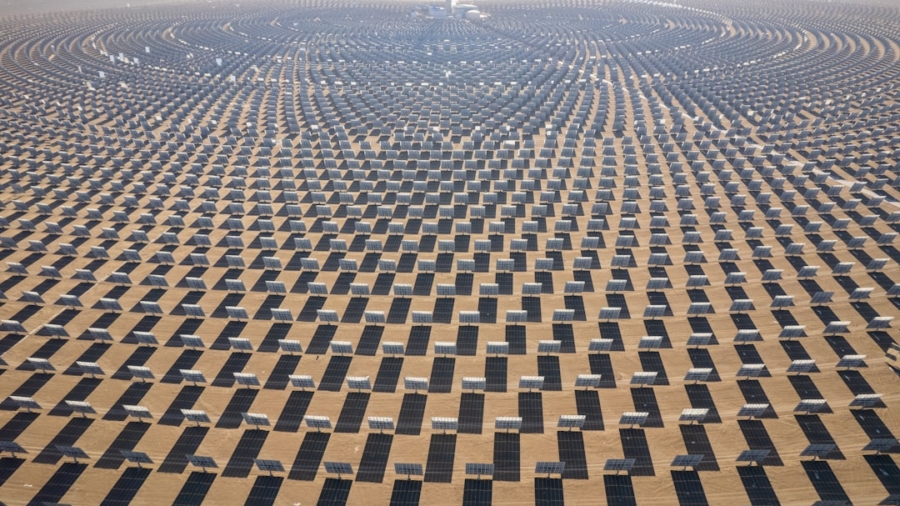
Perovskite solar cells are poised to revolutionize how we integrate solar energy into our cities. They offer a compelling alternative to traditional silicon panels, primarily due to their flexibility, transparency, and high efficiency even in low light. This makes them ideal for applications that silicon simply can’t touch, opening up entirely new possibilities for urban architecture and infrastructure.
Think beyond clunky rooftop panels – imagine windows that generate electricity, building facades that are power plants, and roads that light themselves.
Perovskite solar cells aren’t just another incremental improvement in solar technology; they represent a fundamental shift in how we can think about energy generation within urban environments. Their unique properties address many of the limitations that have traditionally held back widespread solar adoption in densely populated areas.
Flexibility and Form Factor
One of the most significant advantages of perovskites is their inherent flexibility. Unlike rigid silicon panels, perovskite thin films can be deposited on a variety of substrates, including plastics and even fabrics.
Conforming to Complex Shapes
This flexibility means they can conform to curved surfaces, wrap around irregular architectural features, and be integrated into building elements that aren’t perfectly flat. Imagine curved glass facades that double as power generators, or solar shading devices that are both functional and aesthetic. This opens up a world of design possibilities that were previously impossible with conventional solar technology.
Lightweight Solutions
The thin-film nature of perovskites also makes them incredibly lightweight. This is crucial for urban infrastructure where structural integrity and weight limits are often a concern. Rooftops not designed for heavy silicon arrays can still host perovskite installations, and even existing facades can be retrofitted without significant structural modifications.
Transparency and Aesthetics
Traditional solar panels are opaque and often considered aesthetically unpleasing, making architects hesitant to incorporate them prominently into building designs. Perovskites, however, can be engineered to be semi-transparent or even highly transparent.
Power-Generating Windows
This transparency is perhaps one of the most exciting prospects for urban architecture. Imagine windows that generate electricity without significantly impeding natural light or views. This moves solar integration from an add-on to an intrinsic part of the building envelope. Such “smart windows” could contribute significantly to a building’s energy needs while maintaining its aesthetic appeal.
Integrated Facades
Beyond windows, semi-transparent perovskites can be integrated into building facades as a design element. Instead of being hidden away, the solar technology becomes part of the architectural expression, potentially offering dynamic light and shadow play while generating power. This seamless integration could transform buildings into active energy contributors rather than passive energy consumers.
Efficiency in Diverse Lighting Conditions
While silicon performs best in direct sunlight, perovskite cells demonstrate excellent efficiency even in low-light and diffuse light conditions, which are common in urban settings.
Harnessing Indirect Light
Cities are full of shadows, reflections, and indirect sunlight. Perovskites’ ability to capture energy effectively from these less-than-ideal conditions makes them uniquely suited for urban environments. This means buildings can generate power even on cloudy days, in shaded areas, or from light reflected off surrounding structures.
Indoor Applications
Their low-light performance also opens up possibilities for indoor solar applications, such as powering sensors or small devices within a building, further reducing reliance on grid electricity.
In exploring the transformative potential of perovskite solar cells in urban architecture and infrastructure, it is interesting to consider how innovative technologies are reshaping various aspects of modern life.
A related article discusses the latest trends on social media platforms, highlighting how these trends influence public perception and engagement with sustainable technologies. For more insights, you can read the article here: related article. This connection highlights the growing importance of renewable technologies in modern infrastructure.
Rooftop and Vertical Gardens
Urban green spaces are increasingly important. Perovskites can be integrated into these areas, enhancing their energy-generating potential.
Flexible Solar Canopies
For rooftop gardens or public green spaces, flexible perovskite solar canopies can provide shade and generate electricity without being obtrusive. Their lightweight nature also makes them suitable for structures not designed to bear heavy loads.
Vertical Farm Integration
Vertical farms require significant energy for lighting and environmental control. Perovskites can be integrated into the structure of these farms, providing on-site renewable energy to offset their operational costs, making them more sustainable.
Transforming Urban Infrastructure

Beyond individual buildings, perovskites have the potential to integrate solar energy into the very fabric of urban infrastructure, creating a more distributed and resilient energy system.
Smart Street Furniture
Urban street furniture can be transformed from passive objects into active power generators.
Solar Benches and Bus Stops
Imagine bus stops and park benches that not only provide shelter but also generate electricity to power LED lighting, USB charging ports, or digital displays. Perovskite films can be seamlessly integrated into the design, making them unobtrusive and functional.
Integrated Public Lighting
Streetlights and pathway lights can incorporate perovskite solar cells directly into their poles or luminaires, making them self-sufficient. This reduces the need for extensive underground cabling and grid connections, simplifying installation and reducing maintenance.
Roads and Transportation Hubs
While still in early stages, the concept of solar roads is gaining traction, and perovskites offer some unique advantages here.
Photovoltaic Road Surfaces (Future Potential)
Perovskites’ flexibility and potential for high durability could make them suitable for integration into road surfaces, generating power from vehicle traffic areas. This is a complex engineering challenge, but the properties of perovskites make it a more viable long-term prospect than rigid silicon.
Charging Stations for Electric Vehicles
Solar canopies using perovskites can be deployed at electric vehicle (EV) charging stations, providing clean, on-site energy to power the charging infrastructure.
This can help alleviate grid strain and promote truly renewable EV charging.
Noise Barriers and Sound Walls
Cities often employ noise barriers along highways and railways to mitigate sound pollution. These large, often unsightly structures represent a significant surface area that could be leveraged for energy generation.
Dual-Function Noise Barriers
Perovskite solar cells can be integrated directly into the panels of noise barriers, transforming them into energy-generating assets. Their thin-film nature means they won’t add significant bulk or compromise the acoustic properties of the barrier.
This turns a necessary infrastructure element into a productive one.
Challenges and Future Outlook

While the potential of perovskites is immense, it’s important to acknowledge that the technology is still maturing and faces certain challenges before widespread adoption.
Stability and Durability
One of the primary concerns with perovskite solar cells has been their long-term stability, particularly in the face of moisture, heat, and UV radiation. Significant progress has been made in encapsulation techniques and material formulations to address these issues, with research demonstrating stability comparable to silicon in controlled environments. However, real-world outdoor performance over decades is still being rigorously tested.
Encapsulation Technologies
Advanced encapsulation layers are crucial for protecting the perovskite material from environmental degradation. Researchers are developing highly effective barriers that are both transparent and robust.
Material Engineering
Ongoing research is focused on engineering more inherently stable perovskite compositions that can withstand harsh conditions for extended periods without degradation in performance.
Scalability and Manufacturing
While laboratory efficiencies are impressive, scaling up production to industrial levels is a critical step. Manufacturing processes need to be cost-effective and capable of producing large areas of consistent quality.
Roll-to-Roll Production
The solution-processable nature of perovskites makes them amenable to “roll-to-roll” manufacturing, a high-throughput, low-cost method similar to printing newspapers. This has the potential to significantly drive down production costs compared to traditional silicon wafer processing.
Sustainable Materials
Ensuring the sourcing of materials and the manufacturing processes are environmentally sustainable is also key. Research is ongoing to replace lead, a component in many high-performing perovskites, with less toxic alternatives where possible, or to ensure its safe encapsulation.
Regulatory and Economic Considerations
Integrating new technologies into urban infrastructure often involves navigating complex regulatory frameworks and economic incentives.
Building Codes and Standards
New building codes and standards will need to be developed or adapted to accommodate BIPV solutions based on perovskites, ensuring safety, performance, and longevity.
Cost-Effectiveness
While manufacturing costs are projected to be lower than silicon, initial deployment costs and economic incentives will play a crucial role in encouraging adoption. Demonstrating a clear return on investment will be vital.
The role of perovskite solar cells in transforming urban architecture and infrastructure is not a distant dream but a rapidly approaching reality. Their unique combination of flexibility, transparency, and efficiency in varied lighting conditions positions them as a key technology for creating truly sustainable, energy-positive cities. While challenges remain, the pace of innovation in perovskite research suggests that these hurdles will be overcome, leading to a future where every surface in our cities has the potential to be a power generator. This shift will move us away from centralized power generation towards a more distributed, resilient, and aesthetically integrated urban energy landscape.
FAQs
What are perovskite solar cells?
Perovskite solar cells are a type of solar cell that use a perovskite-structured compound as the light-harvesting active layer. They are known for their high efficiency and low production costs, making them a promising technology for solar energy generation.
How do perovskite solar cells transform urban architecture and infrastructure?
Perovskite solar cells can be integrated into building materials such as windows, facades, and rooftops, allowing for the seamless incorporation of solar energy generation into urban architecture. This integration can help reduce the reliance on traditional energy sources and contribute to sustainable urban development.
What are the advantages of using perovskite solar cells in urban architecture?
Perovskite solar cells offer several advantages for urban architecture, including high efficiency, flexibility, and the ability to be customized to fit various design requirements. Additionally, their low production costs make them a cost-effective option for integrating renewable energy generation into urban infrastructure.
What are the challenges associated with the use of perovskite solar cells in urban architecture?
Despite their potential, perovskite solar cells face challenges such as stability issues, environmental concerns related to the use of lead in some perovskite formulations, and the need for further research and development to scale up production and ensure long-term performance.
What is the future outlook for perovskite solar cells in urban architecture and infrastructure?
The future outlook for perovskite solar cells in urban architecture and infrastructure is promising, with ongoing research and development efforts focused on addressing their challenges and improving their performance and stability. As the technology continues to advance, perovskite solar cells are expected to play a significant role in transforming urban architecture and infrastructure towards sustainability and renewable energy integration.
Enjoying our content? Make us a preferred source on Google:
Add us as a Preferred Source on Google