

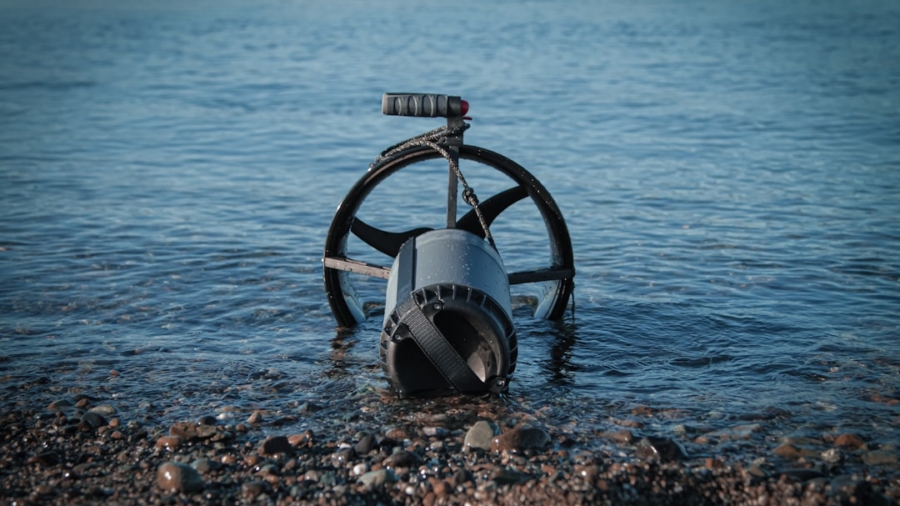
Autonomous Underwater Vehicles (AUVs) are rapidly becoming indispensable for inspecting offshore wind farms. Simply put, these self-propelled underwater robots are transforming how we monitor the structural integrity and operational health of these vital energy assets. They offer a safer, more efficient, and often more cost-effective alternative to traditional inspection methods, moving beyond the reliance on divers or remotely operated vehicles (ROVs) tethered to surface vessels.
Let’s face it, offshore wind farms are built in challenging environments. Rough seas, deep waters, strong currents, and low visibility make traditional inspections difficult and risky. AUVs are designed to operate independently in these conditions, offering several key advantages.
Safer Inspections, Reduced Risk
Human divers face significant hazards when inspecting underwater structures.
Decompression sickness, entanglement, harsh weather, and strong currents are constant threats.
AUVs eliminate the need for human divers in dangerous areas, significantly enhancing safety.
- No Human Exposure: This is the most straightforward benefit. No diver means no diver safety protocols, no decompression chambers, and no risk of injury or fatality.
- Reduced Vessel Requirements: While AUVs need a mother vessel for deployment and recovery, the vessel can often remain at a safe distance or even perform other tasks while the AUV operates. This reduces the number of personnel and specialized equipment needed on-site, indirectly contributing to overall safety.
Enhanced Efficiency and Data Quality
Time is money, and AUVs are built for speed and precision. They can cover large areas quickly and systematically, collecting high-quality data that human observation simply can’t match.
- Faster Data Acquisition: AUVs can pre-programmed survey patterns, ensuring comprehensive coverage and minimizing missed spots. They aren’t limited by human endurance or air supply, allowing for extended missions.
- Consistent Data Collection: Unlike human divers whose observations can be subjective, AUVs collect data through standardized sensors (cameras, sonar, laser scanners) ensuring consistency and comparability over time. This is crucial for long-term monitoring and detecting subtle changes.
- High-Resolution Imaging and Sonar: Modern AUVs are equipped with advanced sensors that can capture detailed images, 3D models, and high-resolution sonar data of the wind turbine foundations, cables, and scour protection. This provides a much clearer picture of the asset’s condition.
Cost Savings and Operational Flexibility
While the initial investment in AUV technology can be substantial, the long-term operational savings and flexibility often make them a very attractive option.
- Reduced Operational Costs: Fewer personnel, less specialized equipment (like saturation diving systems), and shorter vessel time all translate to significant cost reductions over the lifespan of a wind farm.
- Weather Independence (to an extent): While deployment and recovery are still weather-dependent, AUVs can operate in rougher sea states than divers, extending the operational window and reducing downtime.
- 24/7 Operation: AUVs aren’t limited by daylight hours or human shift patterns. They can operate around the clock, further accelerating inspection schedules.
In exploring the advancements in technology that enhance offshore operations, one might find it interesting to read about the latest innovations in business tools, such as tablets that can streamline various processes. For instance, the article on the best tablets for business in 2023 highlights devices that can be utilized for data collection and analysis during inspections of offshore wind farms, complementing the role of Autonomous Underwater Vehicles (AUVs) in ensuring efficient and effective monitoring of these renewable energy installations.
Key Takeaways
- Clear communication is essential for effective teamwork
- Active listening is crucial for understanding team members’ perspectives
- Setting clear goals and expectations helps to keep the team focused
- Regular feedback and open communication can help address any issues early on
- Celebrating achievements and milestones can boost team morale and motivation
Key Inspection Tasks Performed by AUVs
AUVs are versatile tools, capable of tackling a range of inspection tasks critical for maintaining offshore wind farm integrity. From the foundation to the power cables, they provide comprehensive insights.
Foundation and Substructure Integrity
The foundation is literally the bedrock of an offshore wind turbine. Any issues here can have catastrophic consequences. AUVs are ideal for detailed inspections of these crucial components.
- Corrosion and Biofouling Assessment: AUVs can systematically image the foundation structures to detect corrosion, paint degradation, and the extent of marine growth (biofouling), which can increase drag and stress on the structure.
- Structural Damage Detection: High-resolution cameras and acoustic sensors can identify cracks, fatigue damage, welding defects, and other structural anomalies that might compromise the integrity of the monopile, jacket, or gravity-based foundation.
- Scour Monitoring: Scour, the erosion of seabed material around the foundation, is a major concern. AUVs equipped with multibeam sonar or laser scanners can create detailed 3D maps of the seabed around the foundation, allowing engineers to track scour development and plan remediation efforts.
The increasing reliance on technology in various sectors has led to significant advancements in the field of offshore wind farm inspection, particularly through the use of autonomous underwater vehicles (AUVs). These innovative tools not only enhance the efficiency of inspections but also reduce operational costs, making them an essential asset in the renewable energy sector. For those interested in exploring the broader implications of technology in the job market, a related article discusses the best-paying jobs in tech for 2023, which can be found here. This intersection of technology and employment highlights the growing importance of skilled professionals in fields that support sustainable energy solutions.
Subsea Cable Inspection
The inter-array and export cables are the arteries of an offshore wind farm, transporting the generated power to shore. Damage to these cables can lead to significant power losses and costly repairs.
- Cable Burial and Protection Monitoring: AUVs can survey the seabed to ensure cables remain adequately buried or protected by rock dumping or mattressing. They can detect areas where cables have become exposed due to seabed mobility.
- Damage Detection (External): While internal cable faults require specialized tools, AUVs can identify external damage such as abrasion, anchor strikes, or fishing gear entanglement that could compromise the cable’s integrity.
- Route Surveying: For new cable installations, AUVs can perform detailed pre-lay surveys to identify potential hazards and optimize cable routing.
Environmental Monitoring
Offshore wind farms exist within sensitive marine ecosystems. AUVs can play a role in monitoring the environmental impact and ensuring compliance.
- Seabed Habitat Mapping: AUVs can map seabed habitats before and after construction to assess any changes and monitor the recovery of marine ecosystems.
- Marine Life Observation: While not their primary role, AUVs can capture incidental observations of marine life around the wind farm, contributing to broader ecological studies.
- Debris Detection: AUVs can identify and map debris on the seabed, which can be a navigational hazard or an environmental concern.
The Technology Behind AUVs for Wind Farm Inspection

AUVs aren’t just fancy remote-control submarines. They are sophisticated platforms packed with advanced sensors and intelligent navigation systems.
Advanced Sensor Payloads
The “eyes and ears” of the AUV are its sensors, which dictate the type and quality of data it can collect.
- High-Resolution Cameras: These are essential for visual inspections, identifying surface corrosion, marine growth, cracks, and other visible defects. Some AUVs employ stereo cameras for 3D reconstruction.
- Multibeam Echosounders (MBES): Critical for creating detailed 3D bathymetric maps of the seabed, essential for scour monitoring and cable tracking.
- Side-Scan Sonar: Used for broad-area mapping of the seabed, detecting objects, changes in sediment type, and identifying exposed cables.
- Sub-Bottom Profilers (SBP): These penetrate the seabed to map shallow geological layers, useful for assessing cable burial depth and sediment characteristics.
- Laser Scanners: Offer extremely precise 3D measurements and models of structures, valuable for detailed deformation analysis or volumetric calculations (e.g., of scour pits).
- Magnetometers: Used to detect ferrous objects on or beneath the seabed, which can be useful for locating unexploded ordnance (UXO) or buried cables.
Navigation and Autonomy
For an AUV to operate effectively without a human at the controls, robust navigation and autonomous decision-making are paramount.
- Inertial Navigation Systems (INS): The core of AUV navigation, providing continuous position, velocity, and attitude estimates based on accelerometers and gyroscopes.
- Doppler Velocity Logs (DVL): Measures the AUV’s speed relative to the seabed or water column, feeding crucial data into the INS for accurate positioning.
- Acoustic Positioning Systems (USBL/LBL): Used to track the AUV’s position relative to a surface vessel (USBL) or fixed seabed transponders (LBL), providing corrections to the INS drift.
- Obstacle Avoidance Sonar: Helps the AUV detect and avoid collisions with structures, the seabed, or other submerged objects, enhancing safety and mission success.
- Mission Planning Software: Operators pre-program complex survey patterns, waypoints, and behaviors into the AUV, which it then executes autonomously.
Advanced AUVs can even adapt their mission plans based on real-time sensor data.
Challenges and Future Directions for AUVs

While AUVs offer immense potential, they’re not without their hurdles. Overcoming these challenges will further solidify their role in offshore wind.
Data Management and Processing
AUVs collect vast amounts of data. Turning raw sensor readings into actionable insights requires sophisticated processing and analysis.
- Volume of Data: A single AUV mission can generate terabytes of data. Storing, transferring, and processing this efficiently is a significant challenge.
- Automated Data Analysis: Developing AI and machine learning algorithms to automatically detect anomalies, classify defects, and quantify changes from this data is crucial for scalability and reducing human workload.
- Integration with Digital Twins: Seamlessly integrating AUV inspection data into digital twins of wind farms will enable predictive maintenance and more informed asset management decisions.
Endurance and Power
Longer missions mean less deployment and recovery time, increasing efficiency.
Power sources are key.
- Battery Technology: Current battery technology limits mission duration. Advances in energy density and charging speed are continually sought after.
- Hybrid Systems: Future AUVs might incorporate hybrid power sources, perhaps combining batteries with fuel cells or even small nuclear sources for extremely long endurance missions.
- Wireless Charging and Docking Stations: Imagine AUVs autonomously docking at subsea charging stations or even directly at turbine foundations, eliminating the need for frequent surface vessel intervention.
Autonomy and Intelligence
Moving beyond pre-programmed missions to truly intelligent, adaptive AUVs is the next frontier.
- Real-time Decision Making: AUVs that can autonomously identify an anomaly and then decide to perform a more detailed inspection of that specific area, rather than simply following a pre-defined grid.
- Swarm Robotics: Deploying multiple AUVs that communicate and cooperate to cover larger areas more quickly or perform simultaneous, complementary inspections.
- Human-Robot Interaction: Intuitive interfaces that allow operators to easily monitor, intervene, and reprogram AUVs in real-time, even from remote locations.
In conclusion, AUVs are already making a significant impact on offshore wind farm inspection, offering a compelling blend of safety, efficiency, and data quality. As the technology continues to mature, we can expect them to become an even more integral part of the operational lifecycle of these crucial renewable energy assets, driving down costs, improving reliability, and helping us harness the power of the wind more effectively.
FAQs
What are Autonomous Underwater Vehicles (AUVs)?
Autonomous Underwater Vehicles (AUVs) are unmanned, self-propelled vehicles that are able to operate underwater without direct human control. They are equipped with sensors and navigation systems to carry out various tasks such as inspection, mapping, and data collection.
How are AUVs used in offshore wind farm inspection?
AUVs are used in offshore wind farm inspection to conduct visual inspections of subsea infrastructure, such as the turbine foundations and cables. They are also used to collect data on environmental conditions, marine life, and the overall condition of the underwater structures.
What are the advantages of using AUVs for offshore wind farm inspection?
Using AUVs for offshore wind farm inspection offers several advantages, including cost-effectiveness, reduced risk to human divers, and the ability to collect high-quality data in challenging underwater environments. AUVs can also operate for extended periods of time without the need for frequent maintenance.
What are the limitations of AUVs in offshore wind farm inspection?
Some limitations of AUVs in offshore wind farm inspection include limited payload capacity, restricted maneuverability in complex underwater environments, and the need for advanced technical expertise to operate and maintain the vehicles. Additionally, AUVs may have limitations in terms of real-time data transmission.
What is the future outlook for the use of AUVs in offshore wind farm inspection?
The future outlook for the use of AUVs in offshore wind farm inspection is promising, with ongoing advancements in AUV technology, such as improved sensors, navigation systems, and autonomous capabilities. As the offshore wind industry continues to grow, AUVs are expected to play an increasingly important role in ensuring the safety and efficiency of wind farm operations.
Enjoying our content? Make us a preferred source on Google:
Add us as a Preferred Source on Google