

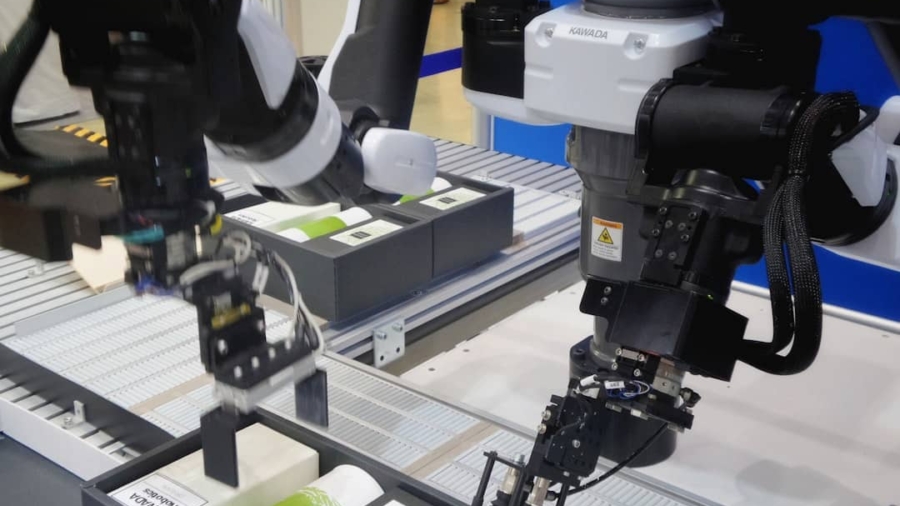
So, you’re wondering how advanced robotics are fitting into sustainable agriculture?
In a nutshell, they’re stepping in to help farmers work smarter, not just harder, by making farming practices more precise, less impactful environmentally, and often, more economically viable in the long run.
We’re talking about everything from tiny autonomous vehicles weeding fields to drones monitoring crop health, all with an eye toward reducing waste, conserving resources, and improving yields sustainably.
It might seem like high-tech robots are at odds with the down-to-earth ideal of sustainable farming, but they actually complement each other remarkably well. The core of sustainable agriculture is about meeting current needs without compromising the ability of future generations to meet their own. Robotics offers tools to achieve this balance.
Precision as a Core Principle
Traditional farming often involves broad-stroke applications of water, fertilizer, and pesticides. This can lead to runoff, soil degradation, and wasted resources. Robots, however, excel at precision.
Targeted Application of Resources
Imagine a robot that can identify a single weed among hundreds of crop plants and apply a tiny drop of herbicide only to that weed, or a system that waters individual plants based on their specific moisture needs. This dramatically reduces the overall use of chemicals and water, lessening environmental impact and saving money.
Minimizing Soil Disturbance
Plowing and tilling, while sometimes necessary, can disrupt soil structure, release carbon, and contribute to erosion. Robots are being developed that can perform tasks like planting and weeding with minimal soil disturbance, promoting healthier soil ecosystems.
Environmental Impact Reduction
The agricultural sector faces significant pressure to reduce its environmental footprint. Robotics provides practical solutions for this.
Lessened Chemical Use
By precisely identifying and addressing pest or disease issues, robots can drastically cut down on the volume of pesticides and herbicides used. This is a huge win for biodiversity, water quality, and human health.
Optimized Water Management
Water scarcity is a growing global concern. Robotic systems equipped with sensors can monitor soil moisture levels and plant health in real-time, delivering exactly the right amount of water only where and when it’s needed, preventing overwatering and runoff.
Reduced Carbon Footprint
Less reliance on heavy, fuel-guzzling machinery, coupled with more efficient resource use, translates to lower carbon emissions. Electric and solar-powered robots further reduce the carbon footprint of farming operations.
In exploring the intersection of technology and sustainability, a related article discusses the transformative impact of advanced robotics in various sectors, including agriculture. The integration of robotics not only enhances efficiency but also promotes environmentally friendly practices that align with sustainable development goals. For more insights on how cutting-edge technology is reshaping industries, you can read the article here: The iPhone 14 Pro: Experience the Power of Pro.
Key Takeaways
- Clear communication is essential for effective teamwork
- Active listening is crucial for understanding team members’ perspectives
- Setting clear goals and expectations helps keep the team focused
- Regular feedback and open communication foster a positive team environment
- Celebrating achievements and milestones boosts team morale and motivation
Key Robotic Technologies Making a Difference
The term ‘robotics’ covers a broad range of technologies. In sustainable agriculture, several types are proving particularly impactful.
Autonomous Ground Vehicles (AGVs)
These are essentially self-driving tractors or smaller, specialized robots that can navigate fields without human intervention. They are the workhorses of many robotic farming solutions.
Automated Weeding and Planting
Smaller, lighter AGVs are being developed for delicate tasks like precise planting and mechanical weeding. These robots can differentiate between crops and weeds, removing the latter without chemicals or damaging the desirable plants. This is especially beneficial for organic farms looking to scale up.
Crop Monitoring and Data Collection
AGVs can be equipped with various sensors (visual, thermal, hyperspectral) to collect detailed data on crop health, soil conditions, and pest infestations. This data can then be used to inform targeted interventions.
Unmanned Aerial Vehicles (UAVs) or Drones
Drones offer a bird’s-eye view, making them invaluable for large-scale monitoring and data collection.
Pest and Disease Detection
Drones can quickly survey vast areas, identifying tell-tale signs of pest outbreaks or disease early on. This allows farmers to address problems in specific areas before they spread, rather than blanket-treating entire fields.
Irrigation Management
By analyzing thermal and multispectral imagery, drones can identify areas of water stress, guiding irrigation systems to focus water where it’s most needed. This prevents both under and overwatering.
Crop Health Assessment
Beyond pests and water, drones can assess general crop vigor, nutrient deficiencies, and growth patterns, providing insights that help optimize fertilization and other management practices.
Robotic Arms and Manipulators
These are more delicate robots, often used for tasks requiring fine motor skills and careful handling.
Automated Harvesting
For delicate crops like strawberries or tomatoes, robotic arms equipped with vision systems can identify ripe produce and carefully pick it, reducing labor costs, increasing efficiency, and minimizing damage. This can also extend the harvest window and reduce food waste.
Precision Pruning and Thinning
Robots can be trained to prune fruit trees or thin crops to optimize growth and yield, tasks that traditionally require significant skilled labor and time.
Seedling Transplantation
In horticulture, robotic arms are mastering the delicate art of transplanting seedlings, ensuring uniform spacing and healthy starts for plants, often at a faster rate than human workers.
The Economic and Social Impact on Farmers

While the environmental benefits are clear, the adoption of robotics in agriculture also has significant implications for farmers’ livelihoods and the structure of the agricultural workforce.
Increased Efficiency and Productivity
Robots can work around the clock, don’t get tired, and can perform repetitive tasks with incredible consistency. This directly translates to higher efficiency and, often, increased yields.
Reduced Labor Costs
One of the most immediate benefits for many farmers is the reduction in manual labor required for certain tasks. In regions facing labor shortages or rising labor costs, this can be a critical factor in maintaining profitability.
Optimized Resource Utilization
By optimizing the use of water, fertilizer, and pesticides, farmers not only reduce their environmental impact but also cut down on significant operational expenses.
Data-Driven Decision Making
Robots are fundamentally data collectors.
The insights they provide empower farmers to make more informed decisions.
Predictive Analytics
By continuously monitoring fields and crops, robotic systems can feed data into predictive models that forecast potential problems like disease outbreaks or nutrient deficiencies, allowing for proactive intervention.
Tailored Interventions
Instead of relying on generalized recommendations, farmers can use robotic data to apply precise, tailored interventions to specific areas or even individual plants, maximizing efficacy and minimizing waste.
Evolving Skillsets for Farmers
The rise of agricultural robotics means that farmers will need to adapt and acquire new skills. While some manual labor roles may diminish, new opportunities will emerge.
Robot Operators and Technicians
Farmers will increasingly need to manage and maintain complex robotic systems, requiring technical skills in operation, calibration, and troubleshooting.
Data Analysts
Understanding and interpreting the vast amounts of data generated by robotic systems will become crucial, leading to a need for data analysis skills among agricultural professionals.
Strategic Planning and Integration
Farmers will need to integrate these technologies into their overall farm management strategies, requiring a higher level of strategic thinking and technological literacy.
Challenges and Considerations for Adoption

Despite the many advantages, rolling out advanced robotics in agriculture isn’t without its hurdles. These need to be addressed thoughtfully for widespread, equitable adoption.
High Initial Investment
Robotic systems can be expensive, putting them out of reach for many small and medium-sized farms.
Cost-Benefit Analysis for Farmers
Farmers need clear and compelling evidence that the long-term savings and increased productivity will outweigh the upfront costs. Demonstrating a clear return on investment is key.
Access to Financing and Subsidies
Governments and financial institutions can play a role by offering subsidies, grants, or favorable loan terms to make these technologies more accessible to a broader range of farmers.
Technical Expertise and Training
Operating sophisticated robotics requires a different skillset than traditional farming.
Bridging the Knowledge Gap
Educational institutions, agricultural extension services, and robot manufacturers need to collaborate to provide comprehensive training programs for farmers and agricultural workers. This includes not just operation but also maintenance and data interpretation.
User-Friendly Interfaces
Designing robots with intuitive and easy-to-use interfaces can significantly lower the barrier to entry for farmers who may not have extensive technical backgrounds.
Connectivity and Infrastructure
Many advanced robotic systems rely on reliable internet connectivity and sometimes, specialized infrastructure.
Rural Broadband Access
In many rural agricultural areas, robust broadband internet is still lacking. This needs to be addressed for effective data transfer and remote machine management.
Robust and Resilient Hardware
Agricultural environments can be harsh. Robots need to be built to withstand dirt, dust, varying weather conditions, and the occasional bump or fall. Reliability is paramount.
Ethical and Social Implications
As with any transformative technology, there are broader ethical and social questions to consider.
Impact on Rural Employment
While robots create new jobs, they also displace others. Thoughtful transition programs and retraining initiatives are essential to support rural communities.
Data Privacy and Ownership
Who owns the vast amounts of data collected by agricultural robots? How is it used, and how is farmers’ privacy protected? Clear policies and regulations are needed here.
Equitable Access to Technology
Ensuring that these advanced tools don’t just benefit large, well-capitalized farms is crucial for maintaining a diverse and resilient agricultural sector. Efforts must be made to make robotics accessible to producers of all scales.
The integration of advanced robotics in sustainable agricultural practices is becoming increasingly important as the industry seeks innovative solutions to enhance productivity while minimizing environmental impact. A related article discusses the challenges faced by startups in the tech sector and emphasizes the need to rethink engineering processes to foster innovation and sustainability. This perspective can be particularly relevant for agricultural robotics, where efficiency and adaptability are crucial. For more insights on this topic, you can read the article here: to buy time for a failing startup.
The Future Landscape: Smarter, Greener Farms
| Metrics | 2018 | 2019 | 2020 |
|---|---|---|---|
| Number of farms using advanced robotics | 100 | 150 | 200 |
| Reduction in pesticide use (%) | 10% | 15% | 20% |
| Increase in crop yield (%) | 5% | 7% | 10% |
| Reduction in water usage (%) | 8% | 12% | 15% |
The integration of advanced robotics into sustainable agricultural practices is not just a passing trend; it’s a fundamental shift in how we approach food production. As these technologies mature and become more accessible, we can expect to see farms that are more efficient, less resource-intensive, and more resilient to environmental challenges.
Swarms of Collaborative Robots
Imagine not just one robot, but dozens or hundreds of smaller, specialized robots working together in a field, each performing a specific task. This “swarm robotics” approach promises even greater efficiency and adaptability.
AI-Powered Decision Making
The data collected by robots, combined with advanced artificial intelligence, will lead to even more sophisticated decision-making. AI can identify patterns, predict outcomes, and recommend optimal interventions with a precision that far surpasses human capabilities.
Fully Autonomous Farms
While still some way off, the vision of fully autonomous farms, where robots manage every aspect of crop production from planting to harvest with minimal human intervention, is becoming increasingly tangible.
This wouldn’t eliminate humans from agriculture but would shift roles towards oversight, strategic planning, and technological management.
In conclusion, advanced robotics offers a powerful set of tools to address many of the challenges facing modern agriculture, particularly in the realm of sustainability. By enabling precision, reducing waste, and improving efficiency, these technologies are paving the way for a more environmentally responsible and economically viable food system. While challenges remain, the potential benefits for both farmers and the planet are too significant to ignore. The future of farming is undoubtedly intertwined with the evolution of robotics.
FAQs
What are advanced robotics in sustainable agricultural practices?
Advanced robotics in sustainable agricultural practices refer to the use of cutting-edge robotic technology to improve efficiency, productivity, and sustainability in farming. This includes the use of autonomous vehicles, drones, robotic arms, and other advanced machinery to perform tasks such as planting, harvesting, and monitoring crops.
How do advanced robotics benefit sustainable agriculture?
Advanced robotics benefit sustainable agriculture by reducing the need for manual labor, optimizing resource usage, and minimizing environmental impact. Robots can perform tasks with precision and consistency, leading to higher crop yields and reduced waste. Additionally, they can help farmers make data-driven decisions to improve overall sustainability.
What are some examples of advanced robotics used in sustainable agriculture?
Examples of advanced robotics used in sustainable agriculture include autonomous tractors for planting and harvesting, drones for crop monitoring and spraying, robotic arms for sorting and packing produce, and automated systems for irrigation and fertilization. These technologies help streamline farming operations and reduce the reliance on traditional, labor-intensive methods.
What are the challenges of integrating advanced robotics in sustainable agriculture?
Challenges of integrating advanced robotics in sustainable agriculture include high initial costs, the need for specialized training and maintenance, and potential job displacement for traditional farm workers. Additionally, ensuring compatibility and interoperability between different robotic systems and existing farm infrastructure can be a challenge.
What is the future outlook for advanced robotics in sustainable agriculture?
The future outlook for advanced robotics in sustainable agriculture is promising, with continued advancements in technology and increasing adoption by farmers. As robotics become more affordable and user-friendly, they are expected to play a significant role in addressing the challenges of feeding a growing global population while minimizing environmental impact.
Enjoying our content? Make us a preferred source on Google:
Add us as a Preferred Source on Google