

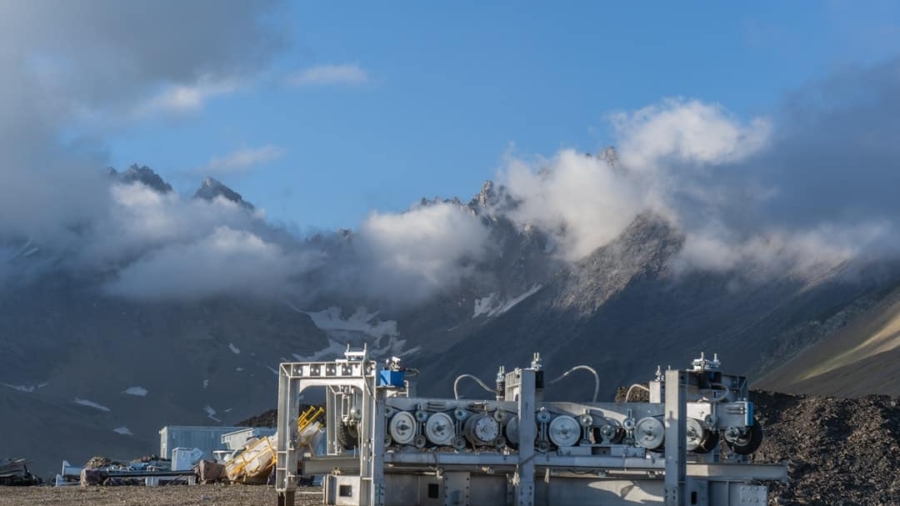
So, you’re curious about carbon capture and storage (CCS) technology and whether it’s actually gaining ground? The short answer is yes, it is.
While it’s not a magic bullet that will solve climate change overnight, CCS is definitely moving from the experimental stages into more real-world applications, and its importance is becoming clearer as we grapple with emissions reduction.
You’re probably seeing it mentioned more often, and there’s a good reason for that: it’s a piece of the puzzle that can help us tackle hard-to-abate emissions from industries that are crucial to our economy.
Let’s get down to brass tacks. Why is CCS technology suddenly becoming such a hot topic? Well, it’s all about tackling emissions that are really tricky to get rid of through other means. Think about heavy industries like cement production, steel making, or even certain chemical processes. These aren’t like switching off a light bulb; the emissions are inherent to the way these materials are made. CCS offers a way to capture those carbon dioxide (CO2) emissions at the source – before they even enter the atmosphere – and then store them safely underground.
The “Hard-to-Abate” Sectors
A lot of the focus on CCS comes from the need to decarbonize what are known as the “hard-to-abate” sectors. These are industries where reducing emissions is particularly challenging due to their processes, high temperatures, or reliance on fossil fuels.
Cement and Steel: Big Emitters, Big Challenge
Producing cement, for instance, involves a chemical reaction that releases CO2 regardless of the energy source used. Similarly, making steel often requires very high temperatures and specific chemical reactions that produce carbon emissions. Conventional renewable energy solutions or efficiency improvements alone often can’t eliminate these process emissions entirely.
Other Industrial Processes
Beyond cement and steel, other industries like petrochemicals, manufacturing of fertilizers, and even certain parts of the aviation fuel production chain also generate CO2 that’s difficult to avoid. CCS provides a potential pathway to continue these essential activities while significantly reducing their environmental footprint.
The growth of carbon capture and storage technology is a crucial development in the fight against climate change, as it offers innovative solutions to reduce greenhouse gas emissions. For those interested in exploring how technology is transforming various sectors, a related article on the advancements in portable computing can be found here: New World of Possibilities with the Samsung Galaxy Chromebook 4. This article highlights how advancements in technology, including computing devices, can play a role in supporting sustainable practices and enhancing efficiency in various industries.
Key Takeaways
- Clear communication is essential for effective teamwork
- Active listening is crucial for understanding team members’ perspectives
- Setting clear goals and expectations helps to keep the team focused
- Regular feedback and open communication can help address any issues early on
- Celebrating achievements and milestones can boost team morale and motivation
How Does This Tech Actually Work?
This might sound like science fiction, but the basic principles of carbon capture and storage are relatively straightforward. It generally involves three main steps: capturing the CO2, transporting it, and then storing it. Each step has its own set of technologies and challenges, and that’s where a lot of the innovation is happening.
Capturing the CO2
This is the first and often most energy-intensive part of the process. There are a few main ways to do it.
Post-Combustion Capture
This is perhaps the most common method being deployed today. It works by separating CO2 from other gases that are produced when fossil fuels are burned in power plants or industrial facilities. Imagine a chemical sponge that selectively soaks up the CO2.
Solvents and Scrubbers
The most prevalent approach here involves using chemical solvents that absorb CO2. The flue gas is brought into contact with the solvent, which binds to the CO2. Then, the solvent is heated to release the captured CO2 in a concentrated form, which can then be compressed for transport.
Pre-Combustion Capture
This method is applied before fuel is burned. The fuel is first converted into a mixture of hydrogen and CO2. The CO2 is then separated from the hydrogen, and the hydrogen is used as a clean fuel. This is particularly relevant for new industrial plants or for retrofitting existing ones.
Oxy-Fuel Combustion
In this method, fuel is burned in an atmosphere of pure oxygen instead of air. This produces a flue gas that is primarily CO2 and water vapor, making it much easier and cheaper to separate the CO2. The water vapor is condensed out, leaving a concentrated CO2 stream.
Transporting the Captured CO2
Once you’ve captured the CO2, you need to move it. This is typically done through pipelines, similar to how natural gas is transported. For shorter distances or smaller volumes, it can also be transported by ships or trucks, much like liquefied petroleum gas (LPG).
Pipeline Networks
The development of dedicated CO2 pipeline infrastructure is a key enabler for widespread CCS deployment. This is especially true for industrial clusters where multiple facilities can share the same transport network, leading to economies of scale.
Shipping and Trucking
When pipeline infrastructure isn’t feasible, or for initial pilot projects, CO2 can be compressed and liquefied for transport via specialized ships or trucks. This is a more flexible but generally more expensive option for large-scale transport.
Storing the CO2
This is the “storage” part of CCS, and it’s crucial for ensuring the captured CO2 doesn’t re-enter the atmosphere. The goal is to find long-term, secure geological formations underground.
Geological Sequestration
This is the most common and well-researched storage method. It involves injecting CO2 deep underground into porous rock formations that are capped by impermeable layers, preventing the CO2 from escaping.
Saline Aquifers
These are porous rock layers filled with brine (salty water). They are abundant and have a huge potential storage capacity, making them a prime target for CO2 storage. The CO2 is injected below a caprock.
Depleted Oil and Gas Reservoirs
These formations have already held oil and gas for millions of years, proving their ability to contain fluids. Injecting CO2 into them can also have the added benefit of enhancing oil recovery (known as EOR), which can help offset some of the costs of CCS.
Other Storage Options
While geological sequestration is the primary focus, other options are being explored, though they are generally less mature or have more limited applicability.
Enhanced Coal Bed Methane Recovery
Injecting CO2 into coal seams can displace methane, which can then be produced and used as a fuel. This is another form of EOR that also stores CO2.
Mineral Carbonation
This process involves reacting CO2 with certain minerals to form stable carbonate rocks, effectively locking the carbon away permanently. This is a slower process and often more energy-intensive, but it offers very secure, permanent storage.
The Current State of Play: Projects and Investment

It’s easy to talk about the technology, but what’s actually happening on the ground? The good news is that there’s a growing number of CCS projects around the globe, and significant investments are being made. However, it’s also important to note that it’s still a developing field.
Global Project Pipeline
The number of CCS projects, both operational and in development, has seen a significant uptick in recent years.
Organizations like the Global CCS Institute provide regular updates on this pipeline, showing a clear trend towards expansion.
Operational Facilities
There are a number of large-scale CCS facilities already operational, primarily in North America and Europe. These are often linked to industrial facilities or gas processing plants.
Projects Under Development
The pipeline of projects under development is where the real growth is. This includes projects that are in the planning, feasibility, or construction phases.
Many of these are aiming to capture emissions from multiple industrial sources.
Investment Trends
Governments and private companies are increasingly directing capital towards CCS. This is driven by a mix of climate targets, the potential for industrial decarbonization, and the development of supportive policies.
Government Incentives
Many governments are implementing policies to support CCS. These can include tax credits, grants, subsidies, and mandates for emissions reductions.
These incentives are crucial for bridging the economic gap, as CCS can be expensive.
Corporate Investment
Major industrial players, energy companies, and even some technology startups are investing in CCS. This investment ranges from funding research and development to directly financing and building CCS facilities.
Challenges and Hurdles for Wider Adoption

While the growth is encouraging, it’s essential to be realistic about the challenges CCS still faces. It’s not a simple plug-and-play solution, and there are significant hurdles to overcome before it becomes a widespread, cost-effective technology.
Cost and Economics
This is arguably the biggest elephant in the room. CCS can be expensive, both in terms of capital expenditure for building the facilities and operational costs for running them.
High Capital Costs
Building capture plants, pipelines, and injection wells requires significant upfront investment. These costs can be a major barrier, especially for industries operating on tight margins.
Operating Costs and Energy Penalty
The capture process itself often requires a substantial amount of energy, leading to what’s known as an “energy penalty.” This means a power plant or industrial facility has to burn more fuel to achieve the same output after capturing CO2, increasing operating costs.
Infrastructure Requirements
For CCS to be effective at scale, robust infrastructure for transporting and storing CO2 is needed. This often means building extensive pipeline networks, which can be complex and face public perception issues.
Need for Pipeline Networks
Connecting multiple emission sources to storage sites often requires new, dedicated CO2 pipeline infrastructure. This involves significant planning, permitting, and land acquisition.
Storage Site Availability and Permitting
While there’s a lot of potential geological storage capacity, identifying suitable sites, conducting thorough geological surveys, and obtaining the necessary permits can be a lengthy and complex process.
Public Perception and Social License
Like many large infrastructure projects involving underground storage, CCS can face public skepticism. Concerns about safety, environmental impacts, and the perception of prolonging fossil fuel use need to be addressed.
Safety Concerns
Ensuring the safe and permanent storage of CO2 is paramount. Public trust is crucial, and demonstrating rigorous safety protocols and monitoring is essential.
The “Moral Hazard” Argument
Some critics argue that focusing on CCS could create a “moral hazard” by allowing continued reliance on fossil fuels, potentially slowing down the transition to fully renewable energy sources. Proponents argue it’s a necessary tool for industries that can’t otherwise decarbonize.
Regulatory Frameworks
Clear and consistent regulatory frameworks are needed to govern CCS projects. This includes regulations around permitting, monitoring, reporting, verification, and long-term liability for storage sites.
The growth of carbon capture and storage technology is becoming increasingly vital in the fight against climate change, as it offers a promising solution to reduce greenhouse gas emissions.
For those interested in enhancing their understanding of related topics, an insightful article on optimizing content for better visibility can be found
5G Innovations (13) Wireless Communication Trends (13) Article (343) Augmented Reality & Virtual Reality (905)
- Metaverse (268)
- Virtual Workplaces (35)
- VR & AR Games (34)
Cybersecurity & Tech Ethics (810)
- Cyber Threats & Solutions (3)
- Ethics in AI (33)
- Privacy Protection (32)
Drones, Robotics & Automation (490)
- Automation in Industry (33)
- Consumer Drones (33)
- Industrial Robotics (33)
EdTech & Educational Innovations (348)
- EdTech Tools (18)
- Online Learning Platforms (4)
- Virtual Classrooms (34)
Emerging Technologies (2,003) FinTech & Digital Finance (452) Frontpage Article (1) Gaming & Interactive Entertainment (386) Health & Biotech Innovations (719)
- AI in Healthcare (3)
- Biotech Trends (4)
- Wearable Health Devices (510)
News (97) Reviews (129) Smart Home & IoT (451)
- Connected Devices (3)
- Home Automation (4)
- Robotics for Home (33)
- SmartPhone (48)
Space & Aerospace Technologies (348)
- Aerospace Innovations (4)
- Commercial Spaceflight (3)
- Space Exploration (62)
Sustainable Technology (789) Tech Careers & Jobs (343) Tech Guides & Tutorials (1,155)
- DIY Tech Projects (3)
- Getting Started with Tech (60)
- Laptop & PC (58)
- Productivity & Everyday Tech Tips (328)
- Social Media (64)
- Software (326)
- Software How-to (3)
Uncategorized (146)