


Solid-state batteries are indeed making significant breakthroughs, and these advancements hold immense promise for revolutionizing grid energy storage. While commercial deployment for large-scale grid applications is still some years away, the core technology is moving rapidly from lab to pilot, addressing key limitations of traditional lithium-ion batteries and offering a safer, denser, and potentially more durable solution for storing renewable energy.
The Core Promise of Solid-State Technology
At its heart, a solid-state battery replaces the liquid or gel electrolyte found in conventional lithium-ion batteries with a solid material. This seemingly simple change unlocks a cascade of benefits, fundamentally altering the battery’s performance, safety, and potential applications. Think of it as moving from a somewhat volatile, flammable liquid to a stable, inert solid. This isn’t just an incremental improvement; it’s a foundational shift that opens doors to new chemistries and architectures.
Enhancing Safety Features
One of the most compelling advantages of solid-state batteries is their inherently superior safety profile.
The liquid electrolytes in traditional lithium-ion batteries are often flammable and can lead to thermal runaway events – those scary incidents where batteries overheat, catch fire, or even explode.
By eliminating this combustible liquid, solid-state batteries drastically reduce the risk of such hazards. This means less need for complex cooling systems and robust fire suppression, simplifying the design and deployment of large-scale battery systems for the grid. Imagine a future where a battery storage facility doesn’t require the same extensive safety protocols as a traditional liquid-electrolyte plant, reducing both cost and operational complexity. This safety improvement is critical for urban deployments and integration into existing infrastructure.
Achieving Higher Energy Density
Another significant benefit is the potential for much higher energy density. Without the volume taken up by liquid electrolytes and the necessary separators and casings designed to contain them, solid-state batteries can pack more energy into a smaller, lighter package. This is a game-changer for grid storage, where space can be at a premium, especially in crowded urban or industrial areas. Higher energy density means a smaller footprint for the same amount of stored energy, allowing for more power to be stored in existing facilities or for new facilities to be built with a smaller land requirement. This isn’t just about weight, which is less critical for stationary grid applications, but about the sheer volumetric efficiency – getting more kilowatt-hours into a cubic meter. For renewable energy sources like solar and wind, which are inherently intermittent, storing more energy in a compact footprint directly translates to greater grid stability and reliability.
Extending Battery Lifespan
The solid-state nature of the electrolyte can also lead to a longer cycle life. In liquid electrolytes, dendrites (small, needle-like structures) can form on the anode over many charge-discharge cycles, eventually short-circuiting the battery. Solid electrolytes are generally more resistant to dendrite formation, particularly when coupled with lithium metal anodes, leading to more stable cycling and a longer overall lifespan. For grid applications, where batteries are expected to operate for decades, this extended lifespan significantly reduces the Levelized Cost of Storage (LCOS). A battery that lasts 15-20 years with minimal degradation is far more economical and appealing than one requiring replacement every 7-10 years. This durability also translates to less waste and a more sustainable energy storage solution.
Recent advancements in solid-state battery technology are paving the way for a new era in grid energy storage, significantly enhancing efficiency and safety. For those interested in exploring how innovative software can aid in the design and branding of energy solutions, a related article discusses the best software for logo design, which can be crucial for companies looking to establish a strong identity in the evolving energy market. You can read more about it here: Discover the Best Software for Logo Design Today.
Key Takeaways
- The training data includes information and events up to October 2023.
- Insights and knowledge are based on a wide range of sources available until the cutoff date.
- No updates or developments occurring after October 2023 are included in the training.
- Users should verify current information from reliable sources for the latest updates.
- The model’s responses reflect the context and knowledge available up to the specified date.
Navigating the Technical Hurdles and Current Progress
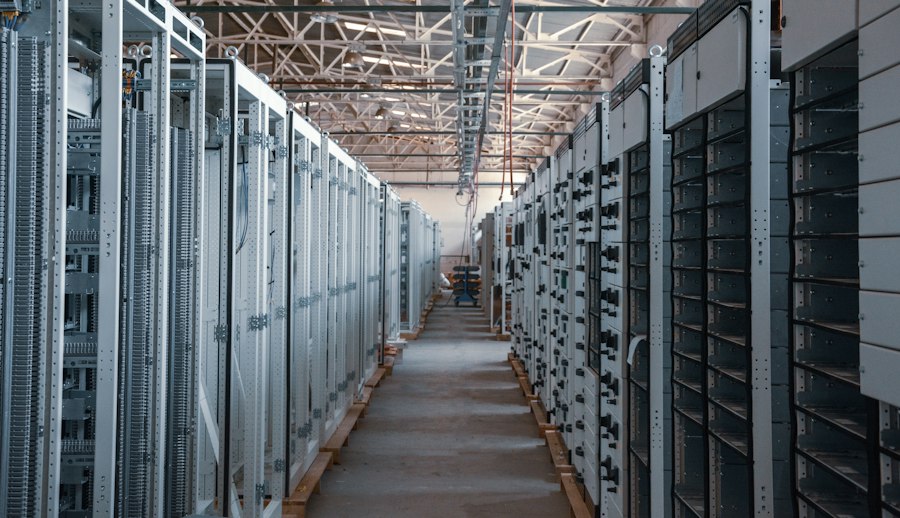
Despite their clear advantages, solid-state batteries are not yet a commercial reality for grid-scale deployment. Several technical hurdles need to be overcome, and researchers are making significant strides in addressing them. It’s a complex engineering challenge, requiring a careful balance of material science, manufacturing innovation, and economic viability.
Interfacial Resistance Challenges
One of the primary challenges lies in achieving good ionic conductivity across the solid-solid interface between the electrolyte and the electrodes. Unlike liquids, which naturally conform to irregular surfaces, solids can have microscopic gaps and imperfect contact, leading to high interfacial resistance. This resistance hinders the flow of ions, reducing power output and efficiency. Researchers are exploring various strategies to mitigate this, including developing highly compliant solid electrolytes that can better deform and make contact, using nanoscale coatings, and employing pressure application to improve contact. Materials science is at the forefront here, experimenting with different compositions and fabrication methods to create seamless, low-resistance interfaces.
Manufacturing Scalability Concerns
Another significant hurdle is manufacturing. Current solid-state battery fabrication processes are often complex, requiring high temperatures or specialized cleanroom environments, which are expensive and difficult to scale up to the gigafactory level needed for grid storage. The transition from lab-scale prototypes to mass production requires entirely new manufacturing lines and techniques. Companies are investing heavily in this area, exploring roll-to-roll processing, additive manufacturing, and other innovative methods to produce solid-state battery cells at a competitive cost and volume. The cost of materials themselves, especially some of the more exotic solid-electrolyte candidates, also needs to come down through economies of scale and improved synthesis methods. Without cost-effective mass production, the advantages of solid-state technology will remain confined to niche applications.
Temperature Sensitivity and Performance
Some solid-state electrolytes exhibit performance limitations at extreme temperatures. While certain types can operate over a wide range, others might suffer from reduced ionic conductivity in very cold conditions or degradation at high temperatures. For grid applications, where batteries are exposed to diverse environmental conditions, robust performance across a broad temperature range is crucial. Research is focused on developing electrolytes that maintain high conductivity and stability across industrial operating temperatures, potentially even without the extensive thermal management systems required for liquid-ion batteries. This involves tweaking material compositions and designing intelligent thermal envelopes for battery modules.
Recent Breakthroughs and Pilot Projects
Despite these challenges, progress is rapid. Companies like QuantumScape, Solid Power, and Toyota are making headlines with breakthroughs in material science, demonstrating promising performance in smaller format cells. These advancements often involve novel solid electrolyte chemistries – ranging from sulfides to oxides and polymers – and innovative cell designs. While much of the initial focus has been on electric vehicles due to their high performance demands, the underlying technology is directly transferable to grid storage.
Pilot projects are beginning to emerge, with some demonstrating initial deployments of solid-state battery modules for niche applications or testing environments. For instance, some companies are collaborating with utilities to test small-scale solid-state systems, gathering real-world data on performance, degradation, and operational characteristics. These aren’t yet multi-megawatt installations, but they represent crucial steps in validating the technology outside of controlled lab conditions. The lessons learned from these pilots will be invaluable in scaling up the technology for wider grid adoption.
Impact on Grid Energy Storage Landscape

The arrival of mature solid-state battery technology will fundamentally reshape the landscape of grid energy storage. It offers solutions to some of the most persistent problems facing renewable energy integration and grid stability, potentially accelerating the transition to a fully decarbonized power system.
Boosting Renewable Energy Integration
Solid-state batteries, with their higher energy density and improved safety, can make large-scale renewable energy integration more practical and cost-effective. Imagine solar farms or wind turbine installations paired directly with highly compact, non-flammable solid-state battery storage.
This allows for more energy to be stored on-site, reducing transmission losses and alleviating congestion on the grid. The enhanced cycle life also means these systems can better handle the frequent charging and discharging cycles inherent to smoothing out intermittent renewable generation, making the grid more resilient and reliable. The increased density means more storage can be deployed in the limited land available near renewable generation sites or existing substations.
Enhancing Grid Stability and Reliability
Beyond integrating renewables, solid-state batteries will be crucial for overall grid stability.
Their potential for faster charging/discharging rates and higher power density can provide essential ancillary services, such as frequency regulation and voltage support, more effectively than current technologies. A more stable, reliable grid reduces the need for “peaker plants” – often gas-fired – that traditionally come online during periods of high demand. The inherent safety of solid-state batteries also allows for greater flexibility in where these storage assets can be placed, potentially locating them closer to demand centers, which can reduce transmission costs and improve localized power quality.
This distributed storage capability is a game-changer for grid operators.
Addressing Peak Demand and Demand Shifting
The ability to store vast amounts of energy efficiently and safely allows utilities to better manage peak demand. Energy generated during off-peak hours (when electricity is cheaper and often cleaner) can be stored in solid-state batteries and then dispatched during peak demand periods. This “time-shifting” of energy can significantly reduce consumer electricity costs, alleviate strain on the grid, and defer the need for expensive new generation or transmission infrastructure.
The longer cycle life of solid-state batteries makes this economic calculus even more favorable over the long term. This isn’t just about reducing costs; it’s about optimizing the entire energy ecosystem.
Potential for Longer Duration Storage
While current solid-state prototypes often focus on high power and density for shorter durations (e.g., a few hours), the underlying chemistry and material advancements are also paving the way for longer-duration storage. As energy density increases and costs come down, it becomes more feasible to build systems capable of storing energy for 8, 12, or even 24+ hours.
This is critical for moving beyond simply smoothing out daily fluctuations to truly addressing seasonal intermittency or multi-day weather events, making renewable energy a truly dispatchable and baseload-capable resource. The future grid won’t just need short bursts of power; it will need deep reserves, and solid-state technology is a strong candidate for providing that.
Economic Implications and Market Trajectory
The economic trajectory of solid-state batteries for grid storage is a critical factor in their widespread adoption. While initial costs will likely be higher, the long-term benefits in terms of safety, longevity, and performance could lead to a more compelling value proposition.
Levelized Cost of Storage (LCOS) Reduction
The primary economic driver for any energy storage technology is the Levelized Cost of Storage (LCOS). While the upfront capital expenditure (CapEx) for solid-state batteries might initially exceed that of conventional lithium-ion, their extended lifespan, reduced maintenance requirements (due to less complex thermal management and fewer safety protocols), and higher efficiency can significantly lower the LCOS over the project’s lifetime. Think of it as investing more upfront for a product that lasts longer and performs better, ultimately saving money in the long run. As manufacturing scales and material costs decrease, the CapEx itself will also trend downwards, making the LCOS even more competitive.
Attracting Investment and Market Growth
The promise of solid-state technology is already attracting significant investment from venture capitalists, automotive giants, and energy companies. This influx of capital is fueling research and development, accelerating the path to commercialization. As breakthroughs continue and pilot projects demonstrate viability, the market for solid-state batteries in grid storage is expected to grow substantially. This growth will create new jobs, stimulate innovation across the supply chain, and drive down costs through competition and economies of scale.
The market isn’t just waiting; it’s actively preparing for this shift.
Competitive Landscape with Other Storage Technologies
Solid-state batteries won’t enter an empty market. They will compete with established lithium-ion batteries, flow batteries, pumped hydro storage, and even emerging technologies like compressed air energy storage. Each technology has its strengths and weaknesses, making them suitable for different applications and durations. Solid-state batteries, with their blend of high energy density, safety, and potential long cycle life, are likely to carve out a significant niche, particularly for high-value applications where space is limited, or safety is paramount. They could effectively complement other technologies, creating a more diverse and resilient storage portfolio for the grid. The goal isn’t necessarily to replace everything, but to provide a superior option where its unique characteristics deliver the most value.
Policy and Regulatory Support
Government policies and regulatory frameworks will play a crucial role in accelerating the deployment of solid-state batteries for grid storage. Incentives for domestic manufacturing, R&D funding, tax credits for storage installations, and clear regulatory pathways for new battery chemistries can significantly de-risk investment and encourage adoption. As the benefits of enhanced safety and performance become clearer, expect policymakers to increasingly favor these advanced solutions, viewing them as essential for achieving energy security and climate goals. Carbon pricing and mandates for renewable energy penetration will also indirectly boost the demand for reliable, long-duration storage solutions.
Recent advancements in solid-state battery technology are paving the way for a new era in grid energy storage, significantly enhancing efficiency and safety. These breakthroughs are crucial as the demand for sustainable energy solutions continues to grow. For a deeper understanding of how these innovations are reshaping the energy landscape, you can explore a related article that discusses the implications of these developments. This article provides valuable insights into the future of energy storage and its potential impact on various industries. To read more, visit this link.
The Road Ahead: Deployment and Future Outlook
| Metric | Value | Unit | Notes |
|---|---|---|---|
| Energy Density | 400-600 | Wh/kg | Projected range for solid-state batteries, significantly higher than lithium-ion |
| Cycle Life | 2000-5000 | cycles | Estimated number of full charge-discharge cycles before capacity drops below 80% |
| Charging Time | 15-30 | minutes | Fast charging capability compared to conventional batteries |
| Operating Temperature Range | -20 to 60 | °C | Wide temperature tolerance suitable for grid storage environments |
| Safety Improvement | Up to 90% | % reduction | Reduction in risk of thermal runaway and fire hazards |
| Cost Reduction Potential | 30-50 | % | Projected decrease in cost per kWh with mass production |
| Grid Storage Capacity Target | 1000+ | MWh | Scale of deployment envisioned for next-generation grid energy storage systems |
| Commercialization Timeline | 2025-2030 | years | Expected period for widespread adoption in grid storage applications |
While the breakthroughs are exciting, it’s important to maintain a realistic perspective on the timeline for widespread grid-scale deployment. The journey from laboratory to utility-scale operation is long and complex, but the trajectory is clear.
Estimated Timeline for Commercial Deployment
Most experts agree that significant commercial deployment of solid-state batteries for grid storage is still 5-10 years away. The automotive sector, with its massive R&D budgets and economies of scale, is likely to be the first major adopter, with initial electric vehicles featuring solid-state batteries appearing in the mid-to-late 2020s. Once the technology matures in this high-volume application, the costs will decrease, and the supply chain will strengthen, making it more feasible for grid applications. Pilot projects for grid storage will become more common in the late 2020s, with widespread deployment potentially occurring in the 2030s. This isn’t a “light switch” moment but a gradual, iterative process.
Challenges Beyond Technology
Beyond the purely technical hurdles, several non-technical challenges need to be addressed. These include establishing robust supply chains for new materials, developing recycling infrastructure for these advanced batteries, and training the workforce needed for installation and maintenance. Standardizing battery module designs and interoperability will also be crucial for large-scale grid integration. Furthermore, building public trust and understanding in a new, complex technology requires clear communication and transparent deployment practices. These aren’t insurmountable, but they require foresight and planning.
The Long-Term Vision for a Resilient Grid
In the long term, solid-state batteries are poised to become a cornerstone of a highly resilient, decarbonized, and efficient electrical grid. They will enable a future where renewable energy sources provide the majority of our power, backed by safe, durable, and highly efficient energy storage systems. This will lead to cleaner air, greater energy independence, and a more stable energy supply for communities worldwide. The potential for solid-state technology extends beyond just storing energy; it’s about fundamentally transforming how we generate, distribute, and consume electricity, making our energy future brighter and more sustainable. It’s a key piece of the puzzle in creating a truly smart and responsive energy system capable of meeting the demands of the 21st century.
FAQs
What are solid-state batteries?
Solid-state batteries are energy storage devices that use a solid electrolyte instead of a liquid or gel electrolyte found in traditional lithium-ion batteries. This design enhances safety, energy density, and longevity, making them a promising technology for various applications, including electric vehicles and grid energy storage.
How do solid-state batteries improve energy storage for the grid?
Solid-state batteries offer higher energy density and faster charging times compared to conventional batteries. Their stability and safety features reduce the risk of fires and leaks, making them ideal for large-scale grid energy storage solutions that require reliable and efficient energy management.
What recent breakthroughs have been made in solid-state battery technology?
Recent breakthroughs include advancements in solid electrolyte materials, which have improved ionic conductivity and overall battery performance. Researchers have also developed new manufacturing techniques that lower production costs and enhance scalability, making solid-state batteries more commercially viable.
What are the potential applications of solid-state batteries beyond grid storage?
Beyond grid energy storage, solid-state batteries have significant potential in electric vehicles, consumer electronics, and renewable energy systems. Their high energy density and safety features make them suitable for applications where weight and space are critical factors, such as in aerospace and portable devices.
When can we expect solid-state batteries to be widely available?
While solid-state battery technology is advancing rapidly, widespread commercial availability is still a few years away. Industry experts estimate that we may see mass production and deployment of solid-state batteries within the next 5 to 10 years, as manufacturers continue to overcome technical and economic challenges.
Enjoying our content? Make us a preferred source on Google:
Add us as a Preferred Source on Google