

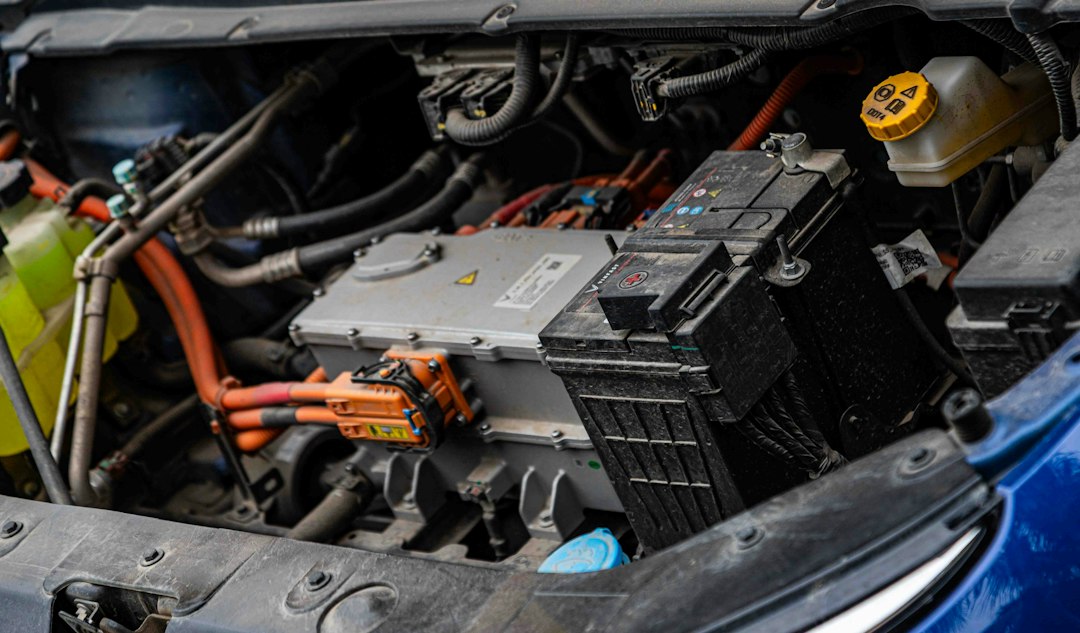
Solid-state batteries hold significant promise for electric vehicles (EVs), primarily due to their potential to offer a noticeable boost in real-world range and inherently safer operation compared to current lithium-ion chemistries. While the hype can sometimes overshadow the practicalities, the core idea is simple: replacing the volatile liquid electrolyte with a solid one removes a major safety concern and opens doors for denser energy storage. This article will dive into the various architectural approaches, examining how they influence both the ultimate driving range and the crucial safety considerations for EVs.
The Core Concept: Why Solid-State?
At its heart, a solid-state battery (SSB) replaces the flammable liquid or gel electrolyte found in traditional lithium-ion batteries with a solid material. This seemingly simple substitution has profound implications. The liquid electrolyte is not just a medium for ion transport; it’s also the component most prone to thermal runaway if damaged or overcharged. Its replacement with a non-flammable solid removes a significant fire risk. Beyond safety, a solid electrolyte allows for the use of a lithium metal anode, which is incredibly energy-dense. Unlike graphite anodes, lithium metal doesn’t need to “host” lithium ions; it is the lithium source. This dramatically increases the theoretical energy density, leading to the potential for smaller, lighter, and longer-range battery packs.
Dispelling Common Misconceptions
It’s easy to get caught up in the marketing, so let’s clarify a few things. Solid-state doesn’t automatically mean “infinite range” or “indestructible.” There are still engineering challenges, and the gains, while significant, will be incremental and depend heavily on the specific architecture. Also, “solid-state” isn’t a single technology; it encompasses a variety of solid electrolyte materials (polymers, sulfides, oxides) and cell designs, each with its own set of advantages and hurdles. The goal isn’t just to make a solid-state battery work, but to make one that can withstand the rigors of automotive use – thousands of charge cycles, extreme temperatures, and mechanical stress – while being cost-effective to produce at scale.
Key Performance Metrics for EVs
When we talk about EVs, “range” is often the first thing people consider, but it’s more nuanced than just a number. It’s about usable range across varying conditions. Safety, however, is non-negotiable. A battery can have impressive energy density, but if it’s prone to thermal events, it’s a non-starter for passenger vehicles. Other critical metrics include power density (how quickly it can deliver energy for acceleration and regenerative braking), cycle life (how many charge/discharge cycles it can endure before significant capacity degradation), and operating temperature range. SSBs are being evaluated against all these criteria, not just energy density.
In the pursuit of advancing electric vehicle (EV) technology, the article on Solid-State Battery Architectures: Evaluating Real-World EV Range and Safety Trade-Offs provides a comprehensive analysis of how these innovative battery designs can enhance performance and safety. For those interested in the broader implications of technology on user experience, a related article discussing the best software for UX can be found at this link. This resource delves into how software solutions can improve the interaction between users and electric vehicles, ultimately contributing to a more efficient and enjoyable driving experience.
Key Takeaways
- The training data includes information and events up to October 2023.
- Insights and knowledge are based on a wide range of sources available until the cutoff date.
- No updates or developments occurring after October 2023 are included in the training.
- Users should verify current information from reliable sources for the latest updates.
- The model’s responses reflect the context and knowledge available up to the specified date.
Diverse Solid Electrolyte Chemistries and Architectures

The “solid-state” umbrella covers a fascinating array of materials, each bringing its own strengths and weaknesses to the table. These choices fundamentally influence the battery’s performance and how it interacts with the rest of the cell components.
Polymer-Based Solid Electrolytes
Polymer electrolytes, often based on polyethylene oxide (PEO), have been explored for decades. They offer good mechanical flexibility, which is beneficial for manufacturing and accommodating volume changes during cycling. They are generally non-flammable and less prone to short circuits than liquid electrolytes.
Trade-offs with Polymer Electrolytes
The primary drawback of polymer electrolytes is their relatively low ionic conductivity at room temperature. For practical EV applications, they often require elevated operating temperatures (typically 60-80°C) to achieve sufficient power delivery. This necessitates an active thermal management system, which adds complexity, weight, and energy consumption to heat the battery pack, somewhat offsetting the gains in energy density. Furthermore, the interface between the polymer and the lithium metal anode can still be problematic, leading to dendrite formation over many cycles, albeit less aggressively than with liquid electrolytes. While promising for certain applications, their temperature dependence makes them a trickier proposition for widespread EV adoption without significant material science breakthroughs.
Sulfide-Based Solid Electrolytes
Sulfide solid electrolytes, such as Li₆PS₅Cl (argyrodite), are among the most exciting contenders. They boast high ionic conductivity, often comparable to or even exceeding liquid electrolytes at room temperature. This eliminates the need for high operating temperatures, simplifying thermal management and improving overall efficiency.
Challenges of Sulfide Electrolytes
Despite their impressive conductivity, sulfide electrolytes come with their own set of challenges. They are generally less stable in ambient air, reacting with moisture to produce hydrogen sulfide gas, which is toxic and has an unpleasant odor. This requires very careful manufacturing processes in dry environments. Mechanically, they are brittle, making it difficult to maintain good contact at the electrode interfaces, especially during volume changes. Furthermore, chemical compatibility with high-voltage cathode materials can be an issue, leading to interfacial resistance and degradation over time. Developers are actively working on surface coatings and composite structures to address these interfacial and stability issues.
Oxide-Based Solid Electrolytes
Oxide solid electrolytes, including garnet-type (e.g., LLZO – Li₇La₃Zr₂O₁₂) and NASICON-type materials, also exhibit high ionic conductivity and excellent chemical stability. They are non-flammable and generally more stable in air than sulfides, simplifying manufacturing somewhat.
Limitations of Oxide Electrolytes
While chemically robust, oxide electrolytes are typically very rigid and brittle, making it challenging to form thin, dense layers crucial for high-energy-density cells. The interface with the lithium metal anode can be particularly problematic due to high interfacial resistance and poor wetting, which hinders efficient lithium ion transfer. High pressures are often required during cell assembly to ensure good contact, which complicates manufacturing. Despite these challenges, their stability makes them attractive, and research is focusing on composite electrolytes that combine the best properties of oxides with more compliant materials.
Impact on Real-World EV Range

The theoretical energy density of solid-state batteries, particularly those enabling lithium metal anodes, is undeniably higher than current graphite-based lithium-ion cells. However, translating this theoretical potential into tangible improvements in real-world EV range involves more than just a higher kWh rating.
Higher Energy Density and Lighter Packs
The most direct impact is the ability to store more energy in a given volume or mass. A lithium metal anode paired with a high-nickel cathode can achieve gravimetric energy densities well over 400 Wh/kg at the cell level, compared to 250-300 Wh/kg for current best-in-class lithium-ion cells.
This means for the same battery pack weight, an EV could travel significantly further. Alternatively, manufacturers could opt for a smaller, lighter pack while maintaining the same range, which benefits vehicle dynamics, efficiency, and potentially cost. A lighter vehicle requires less energy to move, creating a virtuous cycle for range.
Simplified Cooling Systems
For solid-state chemistries that don’t require elevated operating temperatures (e.g., high-conductivity sulfides or oxides), the thermal management system could be simplified.
Liquid cooling loops, pumps, and associated plumbing add weight and complexity. If the battery can operate efficiently at ambient temperatures, passive cooling or simpler air-based systems might suffice. This reduction in parasitic load (energy used to cool the battery) and system weight further contributes to overall vehicle efficiency and range.
However, this is highly dependent on the specific electrolyte and its temperature-dependent conductivity. Polymer-based SSBs, for instance, would require more sophisticated heating systems.
Fast Charging Potential and Range Anxiety
Beyond just maximum range, the ability to charge quickly is crucial for long-distance travel. Solid-state electrolytes, with their potentially higher ionic conductivity and stable interfaces, could theoretically enable faster charging rates without the risk of dendrite formation or thermal runaway that plagues liquid electrolytes at high C-rates.
Rapid charging minimizes downtime, making EVs more convenient and directly addressing a major source of range anxiety. If an EV can gain hundreds of miles of range in a 10-15 minute stop, the perception of “range” fundamentally changes for consumers. This capability is a significant driver for adoption.
Durability and Cycle Life Considerations
A higher initial range is great, but it means little if the battery degrades rapidly.
For solid-state batteries, ensuring robust cycle life (thousands of charge/discharge cycles) is paramount. Interface stability, mechanical integrity of the solid electrolyte, and prevention of dendrite formation over repeated cycling are critical. If an SSB can maintain 80% of its initial capacity after 1,000 cycles, it supports the long lifespan expected of an EV.
Early degradation would necessitate more frequent battery replacements, negating the range benefits and increasing total cost of ownership. This is an active area of research, with material scientists working on interlayers and novel electrode designs to improve long-term performance.
Inherent Safety Advantages and Remaining Challenges
One of the most compelling arguments for solid-state batteries is their promise of enhanced safety. Eliminating the flammable liquid electrolyte directly addresses a primary cause of thermal runaway in current lithium-ion batteries.
Removing the Flammable Component
The primary safety advantage is the replacement of the volatile organic liquid electrolyte with a non-flammable solid. This fundamentally changes the failure mode. In traditional lithium-ion batteries, damage (e.g., from a car accident) or electrical abuse (overcharging, rapid discharge) can rupture the separator, leading to an internal short circuit. The short circuit causes localized heating, which can ignite the liquid electrolyte, leading to a cascading thermal runaway and potentially a battery fire. With a solid electrolyte, even if a short circuit occurs, there is no combustible liquid to fuel a fire, significantly reducing the risk of a catastrophic event.
Dendrite Mitigation and Stability
Lithium dendrite formation is a major safety concern with lithium metal anodes in liquid electrolytes. These needle-like structures can grow during charging, pierce the separator, and create an internal short circuit, often leading to thermal runaway. While solid electrolytes are often touted as a barrier to dendrite growth, the reality is more complex. While some rigid solid electrolytes can indeed suppress dendrite growth more effectively than liquid ones, especially at lower current densities, they are not impervious. Under high current densities or repeated cycling, dendrites can still propagate through grain boundaries or defects in some solid electrolytes. The key is to design solid electrolytes that are sufficiently dense and mechanically robust to resist dendrite penetration over the lifetime of the battery, or to incorporate interlayers that “guide” lithium deposition more uniformly.
Mechanical Integrity in Crash Scenarios
EV batteries are exposed to significant mechanical stress, particularly in crash scenarios. A liquid electrolyte battery pack can leak, and damaged cells can short circuit. Solid-state battery packs, while eliminating the leak risk, still need to maintain their integrity. The brittleness of some solid electrolytes (e.g., oxides) could be a concern. If a rigid solid electrolyte cracks during impact, it could compromise ionic conductivity or create new pathways for dendrite growth. Therefore, pack-level engineering becomes critical: designing structural elements that protect the individual cells from physical damage while allowing for some flexibility to absorb impact energy. The mechanical properties of the chosen solid electrolyte and how it’s integrated into the cell and module design are crucial for real-world safety.
Thermal Runaway – A Different Beast
While solid-state batteries are less prone to flaming thermal runaway, they are not entirely immune to thermal events. If an internal short circuit occurs, localized heating can still happen. The difference is that without a flammable liquid, the event is likely to be self-limiting, or at least less energetic and not propagate to adjacent cells as explosively. Instead of a fire, one might see localized melting, gassing (from decomposition of electrode materials), or simply a loss of function in the affected cell. The aim is to achieve a “graceful failure” where the battery system can be safely shut down without causing harm to occupants or surrounding property. This shift in failure mode is a huge safety advantage, even if some form of thermal event is still possible.
In the quest for enhancing electric vehicle performance, the exploration of solid-state battery architectures has become increasingly relevant, particularly in understanding the real-world trade-offs between range and safety. A related article discusses the marketing technologies shaping the automotive industry in 2023, highlighting how advancements in battery technology are influencing consumer preferences and driving innovation. For more insights on this topic, you can read the article on marketing technologies for 2023. This connection underscores the importance of integrating cutting-edge technology in the evolving landscape of electric vehicles.
Manufacturing and Scalability Hurdles
| Battery Architecture | Energy Density (Wh/kg) | Estimated EV Range (miles) | Charge Time (minutes) | Thermal Stability | Safety Rating | Cycle Life (cycles) |
|---|---|---|---|---|---|---|
| Thin-Film Solid-State | 350 | 320 | 30 | High | Excellent | 2000 |
| Bulk Ceramic Solid-State | 300 | 280 | 45 | Very High | Excellent | 2500 |
| Polymer-Based Solid-State | 250 | 230 | 40 | Moderate | Good | 1500 |
| Hybrid Solid-State | 320 | 300 | 35 | High | Very Good | 2200 |
Even with promising lab-scale results, the transition of solid-state battery technology to mass production for EVs presents significant manufacturing and scalability challenges. These practical considerations heavily influence how quickly and effectively SSBs can reach the market.
Cost-Effective Production Methods
Current lithium-ion battery manufacturing is highly optimized and operates on enormous scales, driving down costs. Solid-state battery production often requires different, and sometimes more complex, processes. For example, sulfide electrolytes often demand highly controlled dry room environments to prevent reaction with moisture, which adds expense. Oxide electrolytes may require high-temperature sintering steps, and the precise assembly of highly fragile ceramic layers needs specialized equipment. Developing manufacturing techniques that are both high-throughput and cost-effective is a major hurdle. The industry needs to move beyond laboratory-scale fabrication methods to processes that can produce millions of cells annually at a competitive price point.
Interface Engineering and Quality Control
Ensuring good, stable, and low-resistance interfaces between the solid electrolyte and both the anode and cathode is critical for performance and cycle life. Achieving these pristine interfaces consistently across millions of cells is incredibly difficult. Any imperfections, voids, or delaminations can lead to increased resistance, hot spots, and accelerated degradation. Quality control at every step of the manufacturing process – from material synthesis to cell assembly – needs to be exceptionally stringent. This often requires advanced in-situ monitoring and characterization techniques that are not typically employed in conventional lithium-ion battery factories.
Material Availability and Supply Chain
The materials required for solid-state batteries are often different from those used in current lithium-ion chemistries. For instance, specific high-purity sulfide or oxide powders, or specialty polymers, may be needed.
Establishing a robust and scalable supply chain for these new materials, from raw material extraction to final component fabrication, is a massive undertaking.
Relying on exotic or scarce materials could limit scalability and drive up costs. Therefore, researchers are also focusing on solid electrolyte compositions that utilize more readily available and environmentally sustainable elements.
Integration with Existing EV Platforms
EV platforms are designed around the size, weight, and thermal characteristics of current lithium-ion battery packs. Integrating solid-state batteries, which may have different voltage characteristics, thermal requirements (or lack thereof), and physical dimensions, requires significant re-engineering of the vehicle architecture. While a smaller, lighter pack is desirable, it needs to fit within existing vehicle designs or necessitate new ones. The balance between optimizing the battery for its specific characteristics and ensuring it can be seamlessly integrated into a mass-produced vehicle is a critical consideration for manufacturers. This includes considerations for crash safety, repairability, and serviceability.
In exploring the advancements in solid-state battery architectures, it is essential to consider their implications on electric vehicle performance, particularly regarding range and safety trade-offs. A related article discusses how innovative software solutions can streamline workflows for professionals in various industries, including those involved in EV technology. By enhancing accuracy and efficiency, these tools can support the development of safer and more reliable battery systems. For more insights on optimizing processes in the tech field, you can read about the best software for tax preparers here.
The Road Ahead: Real-World Adoption and Timeframes
The trajectory for solid-state battery adoption in EVs is not a simple switch; it will likely be a gradual integration, starting with specific applications or higher-end vehicles before widespread rollout.
Phased Introduction and Niche Applications
It’s probable that solid-state batteries will first appear in niche applications or premium EV models where the added cost can be justified by superior performance. This allows manufacturers to gain real-world experience, collect data, and refine their designs before scaling up. Examples might include long-range luxury EVs, high-performance sports cars, or perhaps even commercial vehicles where uptime and payload capacity are paramount. A phased introduction also provides time to optimize manufacturing processes and slowly bring down costs.
Hybrid Approaches and Incremental Improvements
Before fully solid-state batteries become mainstream, we might see “hybrid” approaches. This could involve solid-state elements within otherwise conventional liquid electrolyte cells, or semi-solid-state designs that use a minimal amount of liquid or gel electrolyte to improve interfacial contact and ion transport. These incremental steps could serve as bridges, allowing manufacturers to integrate parts of the technology while mitigating the full risks and costs of a completely new battery architecture. For instance, a solid electrolyte coating on a conventional cathode could improve stability and energy density without requiring a full solid anode.
The Role of Regulatory Standards
As solid-state battery technology matures, regulatory bodies will play a crucial role in establishing safety standards and testing protocols. While the inherent safety advantages are clear, new failure modes or unique characteristics of solid-state cells will need to be understood and accounted for in certification processes. This collaborative effort between industry and regulators is essential to ensure that new battery technologies meet the highest safety benchmarks before they are widely adopted by consumers.
Long-Term Vision for EV Mobility
Ultimately, solid-state batteries represent a significant step towards the long-term vision of sustainable and convenient EV mobility. Higher energy density means less frequent charging and the potential for smaller battery packs, reducing the environmental footprint of production. Enhanced safety means greater consumer confidence. Faster charging capabilities will make EVs even more practical for long-distance travel, effectively eliminating range anxiety for many. While the timeline is still being refined, with various manufacturers targeting commercialization in the mid to late 2020s, the eventual widespread adoption of solid-state batteries promises to revolutionize the EV landscape, making electric vehicles a truly compelling and accessible option for everyone. The journey from lab to road is complex, but the destination of safer, longer-range, and more practical EVs is well worth the effort.
FAQs
What are solid-state batteries?
Solid-state batteries are a type of battery technology that uses a solid electrolyte instead of a liquid or gel electrolyte found in traditional lithium-ion batteries. This design can potentially offer higher energy density, improved safety, and longer life cycles, making them an attractive option for electric vehicles (EVs).
How do solid-state batteries impact EV range?
Solid-state batteries can significantly enhance the range of electric vehicles due to their higher energy density. This means they can store more energy in the same amount of space compared to conventional batteries, allowing EVs to travel further on a single charge.
What safety advantages do solid-state batteries offer?
Solid-state batteries are generally considered safer than traditional lithium-ion batteries because they are less prone to overheating and do not contain flammable liquid electrolytes. This reduces the risk of fires and explosions, making them a safer option for electric vehicles.
What are the trade-offs associated with solid-state battery technology?
While solid-state batteries offer many advantages, there are trade-offs, including higher manufacturing costs and challenges in scalability. Additionally, the technology is still in development, and achieving mass production while maintaining performance and safety standards remains a hurdle.
When can we expect solid-state batteries to be widely used in electric vehicles?
Although solid-state battery technology shows great promise, widespread adoption in electric vehicles is still a few years away. Many manufacturers are conducting research and development, with some aiming for commercial production by the mid-2020s, but full integration into the market will depend on overcoming current technical and economic challenges.
Enjoying our content? Make us a preferred source on Google:
Add us as a Preferred Source on Google