

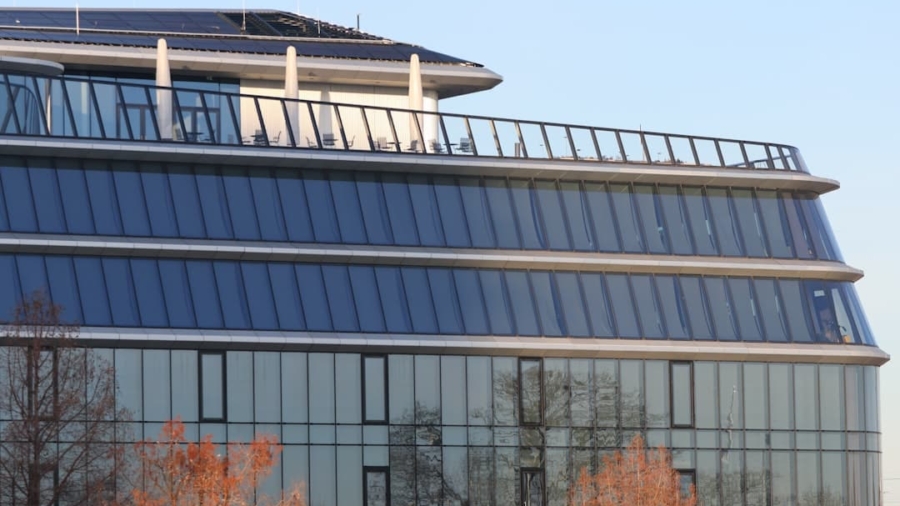
Thinking about how sleek, modern skyscrapers are not only looking good but also powering themselves? You’ve probably noticed those buildings with tinted windows that don’t look quite like regular glass. That’s often solar glass, and it’s quietly revolutionizing how we build and power our cities. Basically, solar glass is glass that can generate electricity, kind of like a solar panel, but it’s integrated right into the building’s facade. This means buildings can produce their own clean energy without needing separate, bulky solar arrays. It’s a smart way to make skyscrapers more sustainable and energy-efficient, blending function with form in a really neat way.
It feels like just yesterday that solar panels were these big, clunky things bolted onto roofs. Now, we’re seeing them integrated into the very skin of buildings. This shift isn’t just about looking different; it’s about solving some pretty big challenges for urban environments. High-rises, by their nature, have a huge surface area. Imagine covering all that glass with tiny solar cells – that’s a massive potential for energy generation right in the heart of a city.
Why Now? A Convergence of Technology and Need
There’s a perfect storm of factors driving the adoption of solar glass. For starters, the technology has gotten a lot better and more affordable. What used to be a niche, expensive option is now becoming a viable and competitive choice for developers. Plus, the global push for sustainability and reducing carbon footprints is no longer a fringe idea; it’s a mainstream demand. Cities are looking for ways to lighten their environmental impact, and powering a massive skyscraper for its entire lifespan is a significant undertaking. Solar glass offers a way for these structures to contribute positively to the energy grid.
Beyond the Rooftop: Maximizing Surface Area
Skyscrapers are tall. Really tall. This verticality is both an architectural challenge and an immense opportunity. While rooftop solar has its place, it’s only one piece of the puzzle. The sides of a building, often spread out over hundreds of thousands of square feet, offer a much larger canvas for energy capture. Solar glass allows us to tap into this vast, underutilized resource on a massive scale.
Energy Independence and Grid Stability
What happens when a city relies heavily on traditional power sources? There are vulnerabilities. By decentralizing energy generation and allowing individual buildings to produce their own power, solar glass contributes to grid resilience. It can reduce the strain on central power grids, especially during peak demand times, and potentially offer a more stable energy supply in the long run.
In the context of Solar Glass Integration in Modern High Rises, it’s fascinating to explore how advancements in technology are shaping sustainable architecture. A related article that delves into the innovative software tools used in the design and construction of such structures can be found here: Best Software for 3D Printing. This resource highlights the importance of integrating cutting-edge software solutions that facilitate the creation of energy-efficient buildings, ultimately contributing to a greener urban landscape.
Key Takeaways
- Clear communication is essential for effective teamwork
- Active listening is crucial for understanding team members’ perspectives
- Setting clear goals and expectations helps to keep the team focused
- Encouraging open and honest feedback fosters a culture of continuous improvement
- Celebrating successes and milestones boosts team morale and motivation
How Does This “Smart” Glass Actually Work?
It’s not magic, though it might seem like it. The core principle is similar to regular solar panels, but the execution is much more subtle. Instead of thick, dark silicon cells, solar glass typically uses thin-film photovoltaic (PV) technology. These technologies are designed to be more transparent or colored, allowing them to be integrated seamlessly into window systems.
Thin-Film Photovoltaics: The Key Ingredient
This is where the innovation really lies. Instead of relying on thick wafers of silicon, thin-film PV uses layers of light-sensitive materials deposited onto a substrate, which in this case, is glass. Common materials include:
- Cadmium Telluride (CdTe): One of the most established thin-film technologies, known for its good efficiency and relatively low manufacturing cost.
- Copper Indium Gallium Selenide (CIGS): Another popular choice, offering good efficiency and flexibility.
- Amorphous Silicon (a-Si): Older technology but still relevant, often used in smaller applications.
- Perovskites: A newer, rapidly developing technology with immense potential for high efficiency and low cost, though long-term durability is still being rigorously tested for building integration.
Transparency and Aesthetics: The Balancing Act
This is the million-dollar question for architects and developers: how do you generate power without turning your building into a giant, opaque box? Solar glass achieves this through several approaches:
- Selective Light Absorption: Some solar glass technologies are designed to absorb specific wavelengths of light that are best for generating electricity, while allowing other wavelengths (like visible light) to pass through for illumination.
- Semi-Transparency: By not covering the entire glass surface with PV material, or by using intermittent patterns of PV cells, a degree of transparency can be maintained. This often results in a tinted or patterned appearance.
- Color Manipulation: The PV materials or coatings can be tweaked to produce different colors, allowing for aesthetic design integration. Think of a building with a subtle bronze or blue hue that also happens to be generating power.
Glazing Systems: More Than Just Glass
It’s important to remember that solar glass isn’t just the glass pane itself. It’s usually integrated into sophisticated glazing systems. This means it’s part of a double or triple-glazed window unit, complete with seals, frames, and often integrated wiring for energy collection.
These systems are engineered for structural integrity, weather resistance, and thermal performance, just like conventional windows.
Benefits Beyond Buzzwords: Real-World Advantages

When we talk about solar glass, it’s easy to get caught up in the “green” aspect. And that’s fantastic, but there are also practical, economic benefits that are driving its adoption. It’s not just about saving the planet; it’s about smart business and building management.
Reduced Energy Bills: The Bottom Line
This is the most immediate and tangible benefit. By generating a portion of their own electricity, buildings can significantly reduce their reliance on the grid.
This translates directly into lower electricity bills for building owners and, in some cases, tenants. Over the lifespan of a building, these savings can be substantial, making the initial investment in solar glass well worth it.
Enhanced Building Value and Marketability
In today’s market, sustainability is a major selling point. Buildings with integrated solar technology are seen as more forward-thinking, efficient, and desirable.
This can lead to higher rental rates, increased property values, and a competitive edge in attracting tenants and investors. It signals a commitment to innovation and environmental responsibility.
Contributing to Net-Zero Goals
Many cities and corporations have set ambitious net-zero emissions targets. Solar glass is a critical tool in achieving these goals.
By enabling buildings to produce clean energy on-site, it drastically reduces their carbon footprint, making it easier to meet or exceed regulatory requirements and sustainability pledges.
Aesthetic Appeal and Architectural Freedom
Contrary to what some might think, solar glass doesn’t have to compromise on design. In fact, it can enhance it. The ability to integrate color and texture into the PV material opens up new architectural possibilities.
Developers can achieve unique visual aesthetics while simultaneously harvesting energy, creating buildings that are both visually striking and functionally advanced.
Challenges and Considerations: What to Watch Out For

As with any emerging technology, there are hurdles to overcome. Understanding these challenges is crucial for anyone considering solar glass for their next project. It’s not a perfect, plug-and-play solution yet, but the progress is rapid.
Cost of Integration: The Initial Hurdle
Let’s be honest: initial costs for solar glass can be higher than traditional glazing. The advanced manufacturing processes, specialized materials, and integration into complex façade systems contribute to this. However, as production scales up and technology matures, these costs are expected to decrease, making it more competitive.
Efficiency Limitations: Not Quite Solar Panels Yet
While improving, the energy conversion efficiency of most solar glass is still generally lower than that of dedicated rooftop solar panels. This means a larger surface area might be needed to generate the same amount of power. However, for high-rises with vast facades, this often isn’t a deal-breaker.
Durability and Maintenance: Long-Term Performance
Ensuring the long-term durability of thin-film PV materials integrated into a building’s exterior is vital. Exposure to weather, UV radiation, and temperature fluctuations needs to be accounted for. Manufacturers are continually working to improve the lifespan and resilience of these systems, and warranties are becoming more robust. Maintenance also needs to be considered, though the cleaning requirements are often similar to standard windows, with potential considerations for electrical connections.
Regulatory and Permitting Hurdles
Integrating a new technology like solar glass can sometimes involve navigating complex building codes and permitting processes. Ensuring compliance with electrical safety standards, fire regulations, and structural integrity requirements is essential. Early consultation with local authorities and experienced design teams is recommended.
Sizing and Load Matching: Strategic Placement
| Building Name | Location | Solar Glass Area (sq ft) | Energy Generation (kWh/year) |
|---|---|---|---|
| One Central Park | Sydney, Australia | 15,000 | 200,000 |
| Shanghai Tower | Shanghai, China | 21,000 | 280,000 |
| One World Trade Center | New York City, USA | 14,000 | 190,000 |
Deciding where and how much solar glass to incorporate requires careful planning. It’s not a one-size-fits-all approach. The building’s orientation, available sunlight, energy consumption patterns, and desired energy output all need to be factored into the design. The goal is to maximize generation while meeting the aesthetic and structural needs of the building.
In the realm of sustainable architecture, the integration of solar glass in modern high rises has gained significant attention for its potential to enhance energy efficiency while maintaining aesthetic appeal.
A related article discusses innovative technologies that can further optimize energy consumption in urban environments, showcasing various advancements in building materials.
For those interested in exploring more about energy-efficient solutions, you can read about the best laptops for kids in 2023, which highlights how technology can support educational initiatives in sustainable design. To learn more, visit best laptops for kids 2023.
The Future is Bright: What’s Next for Solar Glass?
The trajectory for solar glass is overwhelmingly positive. The technology is evolving, costs are coming down, and the demand for sustainable buildings is only increasing. We’re likely to see even more sophisticated and integrated solutions in the years to come.
Increasing Efficiency and Lower Costs
Research and development in thin-film PV and perovskite technologies are constantly pushing the boundaries of efficiency. As these advancements mature and are scaled up for manufacturing, the cost per watt will continue to fall, making solar glass a more accessible and attractive option for a wider range of projects.
Seamless Integration and Aesthetic Versatility
Expect to see solar glass becoming even more indistinguishable from conventional glass. Future iterations will likely offer a wider range of colors, textures, and transparency levels, allowing architects even greater creative freedom. Imagine buildings that are not only energy-generating but also visually dynamic and adaptable.
Smart Building Synergy: Powering More Than Just Electrons
Solar glass is just one piece of the smart building puzzle. As buildings become more intelligent and connected, the energy generated by solar glass can be seamlessly integrated with other systems. This includes smart lighting, HVAC control, and energy storage solutions, leading to more optimized and responsive building performance.
Beyond Facades: New Applications Emerge
While building facades are the most prominent application, the principles of solar glass could extend to other architectural elements, such as canopies, skylights, and even interior partitions, further diversifying urban energy generation.
Ultimately, solar glass represents a significant step forward in how we conceive and construct our urban environments. It’s about making buildings work harder, smarter, and more sustainably, turning our skylines into not just places to live and work, but also active participants in a cleaner energy future.
FAQs
What is solar glass integration in modern high rises?
Solar glass integration in modern high rises refers to the incorporation of solar panels directly into the building’s glass facade. This allows the building to generate renewable energy while also serving as a functional architectural element.
How does solar glass integration work?
Solar glass integration works by embedding photovoltaic cells within the glass panels of the building. These cells are able to capture sunlight and convert it into electricity, which can then be used to power the building’s electrical systems.
What are the benefits of solar glass integration in high rises?
The benefits of solar glass integration in high rises include the generation of renewable energy, reduced reliance on traditional power sources, lower energy costs for the building, and a reduced carbon footprint. Additionally, it can enhance the building’s aesthetic appeal and increase its overall value.
Are there any challenges associated with solar glass integration?
Challenges associated with solar glass integration include the initial cost of installation, potential issues with maintenance and cleaning of the glass panels, and the need for proper orientation and sunlight exposure to maximize energy generation.
What are some examples of high rises with solar glass integration?
Several high rises around the world have incorporated solar glass integration, including the Bahrain World Trade Center, One Central Park in Sydney, and the Pearl River Tower in Guangzhou, China. These buildings showcase the potential for solar glass integration in modern architecture.
Enjoying our content? Make us a preferred source on Google:
Add us as a Preferred Source on Google