

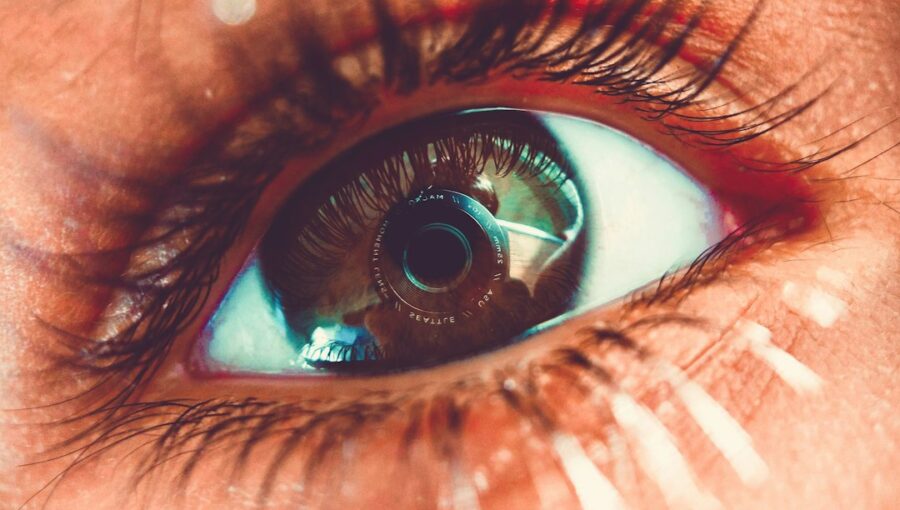
Smart contact lenses are an exciting development, offering a non-invasive way to continuously monitor vital health metrics like intraocular pressure (IOP) and glucose levels in real-time. This means less guessing and more precise data for managing conditions like glaucoma and diabetes, ultimately leading to better health outcomes.
What Are Smart Contact Lenses?
Imagine a contact lens that does more than correct your vision. Smart contact lenses are essentially miniature wearable devices, embedding tiny sensors, microprocessors, and communication components directly into the lens material. These aren’t your typical soft lenses; they’re engineered with sophisticated technology to gather specific biological data from the eye’s surface.
Beyond Vision Correction
While some smart lenses might still offer vision correction, their primary function is often diagnostic or monitoring. They’re designed to sit comfortably on the eye, just like a regular contact lens, but they’re constantly at work, collecting information that can be wirelessly transmitted to a linked device, like a smartphone or tablet. This continuous, passive monitoring is a game-changer compared to traditional, often intermittent, testing methods.
How They Differ from Traditional Lenses
Traditional contact lenses are passive devices, simply refracting light to correct vision.
Smart lenses, on the other hand, are active.
They contain conductive pathways, miniature batteries (often powered by radiofrequency or tear fluid), and tiny antennas. The materials used are also more complex, needing to be biocompatible and optically clear while also integrating these electronic components without compromising comfort or safety. It’s a delicate balance of engineering and biology.
Smart contact lenses represent a groundbreaking innovation in healthcare, particularly in the realm of monitoring intraocular pressure and glucose levels in real time. These advanced lenses have the potential to revolutionize the management of conditions such as diabetes and glaucoma by providing continuous data to both patients and healthcare providers. For those interested in exploring more about the technological advancements that support data analysis in healthcare, a related article can be found at Best Software for Working with Piles of Numbers, which discusses various software solutions that can enhance data management and interpretation in medical applications.
Key Takeaways
- The training data includes information and events up to October 2023.
- Insights and knowledge are based on a wide range of sources available until the cutoff date.
- No updates or developments occurring after October 2023 are included in the training.
- Users should verify current information from reliable sources for the latest updates.
- The model’s responses reflect the context and knowledge available up to the specified date.
Monitoring Intraocular Pressure (IOP)

For those managing glaucoma or at risk of it, intraocular pressure is a critical metric. High IOP is the main risk factor for optic nerve damage and vision loss. Traditional IOP measurement usually involves a visit to the ophthalmologist, often just once or twice a year, providing only a snapshot of pressure at that moment.
The Need for Continuous IOP Monitoring
IOP fluctuates significantly throughout the day and night. A single measurement in a doctor’s office might miss important peaks, especially those occurring outside clinic hours or during sleep. This “snapshot” approach can lead to underdiagnosis or inadequate treatment. Continuous monitoring offers a far more complete picture, allowing doctors to tailor treatment plans with greater precision and intervene before significant damage occurs.
How Smart Lenses Measure IOP
One of the most developed smart contact lens technologies for IOP monitoring relies on strain gauges. These tiny sensors are embedded within the lens. As the pressure inside the eye changes, it subtly alters the curvature of the cornea, which in turn slightly deforms the contact lens. The strain gauge detects these minute changes in lens curvature and translates them into an electrical signal proportional to the IOP.
Sensing Mechanism Explained
Specifically, the “Triggerfish” lens (developed by Sensimed AG and now marketed by Novartis/Alcon under other names) is a prominent example. It contains a circumferential strain gauge made of gold, which is placed within the lens. This gauge measures changes in the corneal circumference. These changes are then converted into electrical signals and transmitted wirelessly to a portable recorder worn by the patient, usually around their neck. The recorder then sends the data to a computer for analysis, providing a 24-hour IOP profile.
Data Transmission and Analysis
The collected data from the smart lens is typically transmitted via a small antenna in the lens to an external device. This device might be a small receiver worn on the body, which then stores the data or relays it to a smartphone app. The app can then display the IOP trends, alert patients or caregivers to significant changes, and share the information securely with healthcare providers. This allows for a comprehensive understanding of a patient’s IOP fluctuations, leading to more informed treatment decisions.
Glucose Monitoring via Smart Lenses

Diabetes management is heavily reliant on accurate and frequent glucose measurements. The traditional finger-prick method, while effective, is invasive, painful, and often performed only a few times a day, providing limited data points. Continuous glucose monitoring (CGM) systems are a significant improvement, but they typically involve a small sensor inserted under the skin.
Smart contact lenses aim to offer a completely non-invasive alternative.
The Limitations of Current Glucose Monitoring
Even with CGM systems, many individuals still rely on finger-prick tests, which are inconvenient and can deter consistent monitoring. CGM systems, while continuous, still involve a subcutaneous sensor that needs to be replaced periodically. A truly non-invasive, continuous, and convenient method for glucose monitoring remains a significant unmet need.
The Promise of Tear Fluid Analysis
The tear fluid, or tears, that bathe the eye contains various biomarkers, including glucose.
The concentration of glucose in tear fluid is known to correlate with blood glucose levels, although the exact relationship and time lag are subjects of ongoing research. Smart contact lenses for glucose monitoring aim to exploit this relationship by sampling and analyzing tear fluid.
How Glucose Sensors Work in Lenses
One common approach involves integrating an electrochemical sensor into the lens. This sensor typically uses an enzyme, like glucose oxidase, which reacts with glucose present in the tear fluid.
This reaction produces a detectable electrical signal proportional to the glucose concentration.
Enzymatic Sensors
These sensors are designed to be highly specific to glucose. When glucose comes into contact with the enzyme, a chemical reaction occurs, generating a small electrical current. The magnitude of this current directly correlates with the amount of glucose present in the tears.
The challenge lies in ensuring the enzyme remains stable and active over the lifespan of the lens, as well as making the sensor tiny enough to be comfortable and safe.
Non-Enzymatic Approaches
Researchers are also exploring non-enzymatic methods, which could offer greater stability and a longer shelf life. These might involve optical sensors that detect changes in light absorption or refraction caused by glucose, or even microfluidic channels that direct tear fluid to a detection site. These approaches are often more complex to integrate but could bypass some of the stability issues associated with enzymes.
Challenges in Glucose Monitoring
While promising, developing a reliable glucose-monitoring contact lens faces significant hurdles.
The correlation between tear glucose and blood glucose isn’t always straightforward. Factors like tear production rate, evaporation, and individual variations can influence the tear glucose concentration. The lag time between changes in blood glucose and corresponding changes in tear glucose also needs to be precisely understood and accounted for.
Furthermore, maintaining the sensitivity and accuracy of the sensor in the harsh environment of the eye, with its constant blinking and tear film dynamics, is a major engineering challenge.
The Technology Behind the Lenses
Developing smart contact lenses requires cutting-edge advancements in materials science, microelectronics, and power management. These aren’t just scaled-down versions of larger devices; they are meticulously designed systems optimized for the unique environment of the eye.
Miniaturization and Integration
The sheer scale of miniaturization required is astounding. Sensors, circuits, and antennas must be embedded within a transparent, flexible, and biocompatible material that is just millimeters in diameter and fractions of a millimeter thick. This involves advanced microfabrication techniques, similar to those used in semiconductor manufacturing, but adapted for flexible substrates.
Micro-LEDs and Displays
Some smart lens concepts even incorporate micro-LEDs to display information directly onto the wearer’s retina, or to provide visual cues (e.g., a green light for normal glucose, red for high). These LEDs are incredibly small, often just a few micrometers in size, and consume minimal power. Integrating them into the optical pathway of the lens without impairing vision or comfort is a significant engineering feat.
Wireless Communication
Data transmission from the lens is typically achieved wirelessly, often using near-field communication (NFC) or low-power Bluetooth. The tiny antenna embedded in the lens needs to be efficient enough to transmit data reliably to an external receiver without requiring a large power source. This involves careful design of the antenna geometry and material selection.
Powering the Tiny Tech
Powering these minute electronic components is one of the biggest challenges. Traditional batteries are too bulky and pose safety risks in a contact lens. Researchers are exploring several innovative solutions.
Inductive Power Transfer
Many current prototypes use inductive power transfer. This involves a coil embedded in the contact lens that receives energy from an external coil (often located in a pair of glasses or a handheld device) via electromagnetic induction. This allows the lens to be continuously powered without needing a physical battery on board.
Tear-Based Biofuel Cells
Another exciting avenue is the development of tear-based biofuel cells. These cells harness the chemical energy present in tear components, like glucose or lactate, to generate electricity. While still largely in the research phase, this approach could offer a self-sustaining power source for the lens, eliminating the need for external charging or power transfer.
Photovoltaic Cells
Some concepts integrate tiny, transparent photovoltaic cells into the lens. These cells would convert ambient light into electrical energy, potentially charging a miniature supercapacitor or directly powering the sensors. The challenge here is ensuring sufficient power generation without compromising optical clarity or comfort.
Biocompatibility and Safety
Above all, smart contact lenses must be safe and comfortable for prolonged wear. The materials used must be completely biocompatible, meaning they don’t provoke an immune response or irritate the eye.
Material Selection
The base material for the lens is often a hydrogel, similar to those used in conventional soft contact lenses, but adapted to allow for the integration of electronic components. These materials need to have high oxygen permeability, good wettability, and mechanical stability.
Regulatory Approval
Before these devices can reach widespread clinical use, they must undergo rigorous testing and secure regulatory approval from bodies like the FDA. This involves extensive clinical trials to demonstrate safety, efficacy, and long-term reliability. The unique nature of these devices, combining medical device technology with pharmaceuticals (e.g., if drug delivery is also integrated), adds layers of complexity to the approval process.
Smart contact lenses are revolutionizing the way we monitor health conditions such as intraocular pressure and glucose levels in real time. These innovative devices offer a non-invasive solution for individuals managing diabetes and glaucoma, providing crucial data directly to users and healthcare providers. For those interested in exploring more about health technology, a related article discusses the best Android health management watches that can complement these advancements in wearable health monitoring. You can read more about it in this article.
Future Outlook and Challenges
| Metric | Value | Unit | Description |
|---|---|---|---|
| Intraocular Pressure Range | 10 – 21 | mmHg | Normal range of eye pressure monitored by the lens |
| Glucose Detection Range | 0.1 – 30 | mM | Concentration range of glucose detected in tear fluid |
| Response Time | 5 | seconds | Time taken to detect and report changes in metrics |
| Battery Life | 24 | hours | Duration the lens can operate continuously |
| Data Transmission Range | 1 | meter | Maximum wireless communication distance |
| Sensor Accuracy (Intraocular Pressure) | ±0.5 | mmHg | Precision of pressure measurement |
| Sensor Accuracy (Glucose) | ±0.2 | mM | Precision of glucose concentration measurement |
| Operating Temperature | 10 – 40 | °C | Temperature range for optimal sensor performance |
While the potential of smart contact lenses is immense, there are still significant hurdles to overcome before they become a routine part of healthcare. However, the pace of research and development is rapid.
Current Status and Market Availability
As of now, the most advanced smart contact lens for IOP monitoring, the Triggerfish system, is available in some regions for clinical use, primarily for monitoring glaucoma patients in a hospital setting rather than for routine home use.
Glucose-monitoring lenses are still largely in the research and development phase, with no commercially available products yet.
Companies like Google’s Verily Life Sciences had a significant project in this area, though it faced challenges and was reportedly scaled back.
Technical Hurdles to Overcome
Accuracy and Reliability
Ensuring consistent accuracy and reliability in dynamic biological environments is paramount. For IOP, issues like patient movement or blinking affecting readings need to be addressed. For glucose, the tear-to-blood glucose correlation and lag time remain critical research areas.
Power and Battery Life
As discussed, power management is a continuous challenge. Achieving self-sustaining power or extremely long battery life for a device this small and discreet is crucial for practical use.
Miniaturization and Comfort
While significant progress has been made, further miniaturization of components without sacrificing performance is always a goal to maximize comfort and minimize any potential sensation of the lens.
Data Interpretation and Clinical Integration
Once the data is collected, interpreting it effectively and integrating it into clinical practice is key. Developing user-friendly interfaces for patients and actionable insights for clinicians will be essential.
Potential Applications Beyond IOP and Glucose
The technology developed for smart contact lenses has broader implications.
Drug Delivery
Imagine a contact lens that slowly releases medication directly onto the eye for conditions like dry eye, allergies, or even glaucoma. This could offer a more consistent and effective drug delivery method compared to eye drops.
Vision Enhancement
Beyond simple vision correction, smart lenses could potentially offer “augmented reality” overlays, displaying information like navigation directions or notifications directly in the wearer’s field of view. While very futuristic, the underlying display and power technologies are being explored.
Other Biomarker Monitoring
Tears contain a wealth of other biomarkers beyond glucose. Researchers are exploring the possibility of monitoring lactate, cortisol, or even proteins indicative of various diseases, potentially turning the eye into a diagnostic window for systemic health.
Ethical Considerations
As with any powerful new technology that collects personal health data, ethical considerations are paramount.
Data Privacy and Security
Safeguarding sensitive health data collected by smart lenses from breaches and misuse is critical. Robust encryption and secure data management protocols will be essential.
Patient Autonomy and Data Ownership
Patients must have clear understanding and control over their data. Who owns the data collected by these lenses, and how will it be used? These questions need to be addressed transparently.
Equity of Access
Ensuring that these potentially life-saving technologies are accessible to all who need them, regardless of socioeconomic status, will be an important societal challenge.
The journey of smart contact lenses from concept to widespread clinical adoption is ongoing, filled with both immense promise and significant challenges. However, the potential for non-invasive, continuous, and real-time health monitoring is a powerful motivator, driving innovation towards a future where managing chronic conditions is smarter, less intrusive, and ultimately, more effective.
FAQs
How do smart contact lenses monitor intraocular pressure?
Smart contact lenses are equipped with tiny sensors that can measure the pressure inside the eye. These sensors can detect changes in intraocular pressure and transmit the data wirelessly to a connected device for real-time monitoring.
Can smart contact lenses measure glucose levels in tears?
Yes, smart contact lenses can measure glucose levels in tears by utilizing miniature sensors that can detect glucose concentration. This technology allows for continuous monitoring of glucose levels in real time, providing valuable data for individuals with diabetes.
Are smart contact lenses comfortable to wear?
Smart contact lenses are designed to be comfortable for the wearer. They are made from soft, breathable materials similar to traditional contact lenses, ensuring a comfortable fit for extended wear. However, individual comfort levels may vary.
How are the data collected by smart contact lenses displayed to the user?
The data collected by smart contact lenses, such as intraocular pressure or glucose levels, can be displayed to the user through a connected device, such as a smartphone or tablet. Users can access real-time data through a dedicated app or software that interprets and presents the information in an easy-to-understand format.
Are smart contact lenses widely available for purchase?
Smart contact lenses are still in the development and testing phase, with some prototypes showing promising results. However, they are not yet widely available for purchase as they undergo further research, clinical trials, and regulatory approvals before becoming commercially available to the public.
Enjoying our content? Make us a preferred source on Google:
Add us as a Preferred Source on Google