

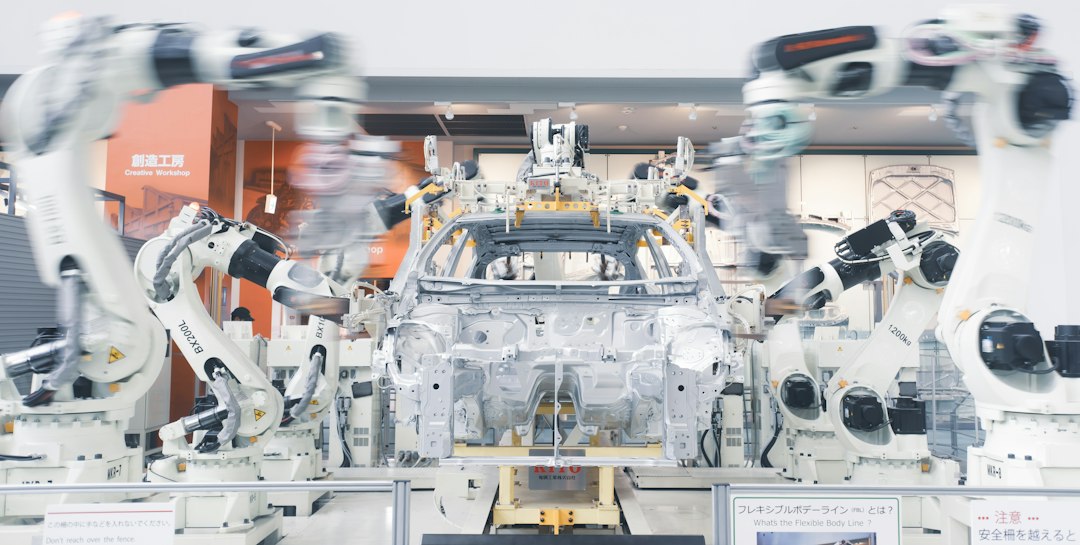
Sim-to-Real Reinforcement Learning (RL) is essentially a smart way to teach robots complex tasks much faster by first letting them learn in a virtual world and then transferring that knowledge to the real physical robot. This approach significantly speeds up the development and deployment of industrial robot applications, particularly those requiring intricate manipulation or dynamic interactions that are difficult to program traditionally. Instead of months of painstaking real-world trial and error, robots can acquire foundational skills in a simulated environment, drastically cutting down the time and resources needed to get them production-ready.
Why Sim-to-Real is a Game Changer for Industrial Robots
Traditionally, training industrial robots for new tasks often involves extensive manual programming, tedious parameter tuning, or costly real-world experimentation. Think about teaching a robot to pick up irregularly shaped objects from a bin, assemble delicate components with varying tolerances, or perform dynamic tasks like polishing complex surfaces. Each scenario presents a myriad of variations and uncertainties that are incredibly challenging to account for entirely through explicit programming. Reinforcement Learning offers a data-driven alternative where the robot learns optimal behaviors through trial and error, guided by a reward signal.
However, applying RL directly to physical robots in an industrial setting faces significant hurdles. Real-world training is inherently slow due to physical constraints, wear and tear on equipment, and the risk of damage during exploratory phases. Furthermore, safety considerations are paramount; an improperly trained robot could pose a danger to human operators or damage valuable assets. This is where the “Sim-to-Real” paradigm becomes indispensable. By leveraging high-fidelity simulations, we can bypass many of these real-world limitations, accelerating the learning process by orders of magnitude and reducing risks.
The Cost and Time Bottlenecks of Real-World Training
Imagine a new product line requiring a robot to perform a novel assembly operation. If you were to train this robot solely in the physical world using RL, you’d encounter several issues. First, the robot might need to perform thousands, if not millions, of interactions to learn the optimal policy. Each interaction takes real physical time. Second, every failed attempt could lead to minor collisions, component damage, or even a system halt, requiring human intervention. This translates to significant operational downtime, increased material waste, and a slow return on investment.
Consider the cost of specialized tooling, end-effectors, and the robot itself. Repeated, uncontrolled exploratory movements during early learning phases could lead to premature wear or accidental damage, escalating maintenance costs. Furthermore, the presence of human experts to supervise and reset experiments adds another layer of operational expense. Sim-to-Real mitigates these issues by allowing the bulk of the learning to occur in a safe, parallelizable, and cost-effective virtual environment.
Safety and Reproducibility in a Virtual Environment
One of the most compelling reasons for Sim-to-Real adoption in industry is the inherent safety of simulation. In a virtual world, a robot can crash repeatedly without any real-world consequences. This allows for aggressive exploration of the action space, which is crucial for discovering novel and effective policies that might be too risky to attempt on a physical robot. Furthermore, simulations provide perfect reproducibility. Every experiment can be run with identical initial conditions, making debugging and hyperparameter tuning much more systematic and efficient.
This reproducibility is vital for both research and industrial deployment. When developing a new robot skill, being able to consistently replicate issues and test solutions accelerates the development cycle. In deployment, it means learned policies can be rigorously validated in a controlled environment before being transferred to the factory floor, ensuring predictable performance and compliance with safety standards. The ability to pause, rewind, and fast-forward time in a simulation also offers invaluable debugging tools that are simply unavailable in the real world.
In the realm of robotics and artificial intelligence, the concept of Sim-to-Real Reinforcement Learning has gained significant traction, particularly in accelerating industrial robot training pipelines. A related article that explores the intersection of technology and practical applications can be found at Discover the Best Laptops for Blender in 2023: Top Picks and Reviews, which discusses the hardware requirements necessary for effective simulation and training of complex algorithms. This resource can provide insights into the computational power needed to support advanced robotic training systems.
Key Takeaways
- The training data includes information and events up to October 2023.
- Insights and knowledge are based on a wide range of sources available until the cutoff date.
- No updates or developments occurring after October 2023 are included in the training.
- Users should verify current information from reliable sources for the latest updates.
- The model’s responses reflect the context and knowledge available up to the specified date.
Bridging the Reality Gap: Core Challenges
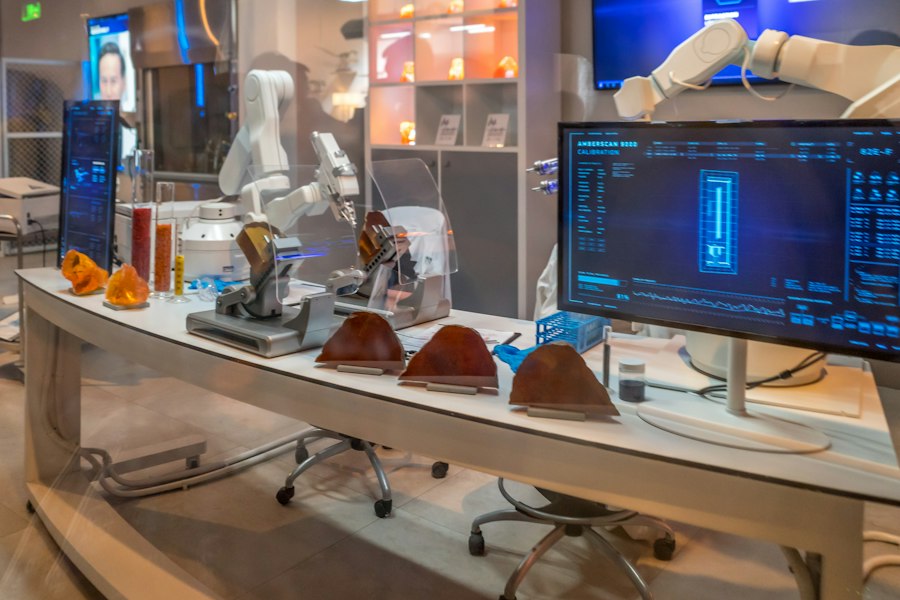
The biggest hurdle in Sim-to-Real is what’s known as the “reality gap.” This refers to the discrepancy between the simulated environment and the real physical world. Even the most sophisticated simulators are approximations; they can’t perfectly capture every nuance of physics, sensor noise, material properties, or actuator dynamics. When a policy learned in simulation performs poorly or unpredictably on the real robot, it’s usually because of this gap. Effectively bridging this gap is the cornerstone of successful Sim-to-Real deployment.
Domain Randomization
Domain Randomization (DR) is a widely adopted technique to combat the reality gap. The core idea is to train the RL agent in a simulator where various environmental parameters are randomly sampled within a predefined range for each training episode. This forces the agent to learn a policy that is robust to variations, making it less sensitive to the specific parameters of the real world, which might differ from any single simulation configuration.
Think of it like training a human driver not just on a perfectly paved, sunny road, but also on roads with varying grip levels, different lighting conditions, and unpredictable obstacles. For a robot, this could mean randomizing:
- Physics parameters: Friction coefficients, mass properties, gravity (slightly varied), damping, spring stiffness of joints.
- Visual parameters: Textures of objects and the environment, lighting conditions, camera positions and intrinsic parameters, background details.
- Object properties: Size, shape, material properties (e.g., shininess, roughness) of manipulated objects.
- Actuator noise and sensor noise: Adding realistic noise profiles to joint commands and sensor readings (e.g., vision, force-torque, proprioception).
The goal isn’t to perfectly model the real world, but to create such a diverse set of simulated environments that the real world effectively becomes just another instance within that distribution. This “over-randomization” can make the policy generalize better, even to unforeseen real-world variations.
Domain Adaptation Techniques
While domain randomization focuses on training a robust policy within the simulator, domain adaptation (DA) techniques aim to directly reduce the reality gap between the simulator and the real world. These methods typically involve using a small amount of real-world data to refine or align the learned policy or the simulation itself.
Sim-to-Real Transfer with Fine-Tuning
One straightforward approach is to use the policy trained in simulation as an initialization point for further training on the real robot. This “fine-tuning” phase uses a limited amount of real-world interaction to adapt the policy to the specifics of the physical system. Since the policy already has a good foundational understanding from simulation, the real-world training can be much shorter and safer than training from scratch. However, this still requires real-world data collection, which can be slow and expensive.
Adversarial Domain Adaptation
More advanced DA techniques involve using adversarial networks to learn a transformation or alignment between simulated and real-world data. For instance, a Generative Adversarial Network (GAN) can be used to generate synthetic images that look more realistic, or to map real sensor data into a “simulated” domain. The discriminator network tries to distinguish between real and simulated data, while the generator tries to fool it, effectively learning to bridge the visual or sensory gap.
System Identification
System identification is another crucial aspect, particularly for accurate robot dynamics. This involves using real-world data to estimate or tune the physical parameters of the robot (e.g., joint friction, motor constants, link masses) within the simulator. By making the simulator’s physics model more closely match the real robot’s behavior, the reality gap for dynamic tasks can be significantly reduced. This often involves collecting trajectory data from the real robot and optimizing simulator parameters to minimize the error between simulated and real trajectories.
In the realm of robotics, the concept of Sim-to-Real Reinforcement Learning is gaining traction, particularly for enhancing the efficiency of industrial robot training pipelines. A related article discusses various technologies that can optimize health management, which can be crucial for maintaining the performance of robotic systems. For more insights on this topic, you can explore the article on health management technologies that may indirectly influence the development and training of robots in industrial settings.
The Role of High-Fidelity Simulators
While domain randomization helps in generalizing, the underlying fidelity of the simulator still matters. A simulator that can accurately model rigid body dynamics, contact physics, fluid interactions (if applicable), and sensor behavior provides a better foundation. Modern physics engines like NVIDIA PhysX, Isaac Sim, MuJoCo, and ODE are constantly improving their realism, offering more accurate representations of real-world interactions.
Beyond basic physics, advanced simulators are incorporating:
- Accurate sensor models: Simulating camera noise, lens distortion, depth sensor inaccuracies, and even force-torque sensor drift.
- Realistic rendering: Using ray tracing and physically based rendering (PBR) to create visually plausible environments, which is crucial for vision-based tasks.
- Deformable object simulation: For tasks involving soft gripping or manipulation of deformable materials, which is a growing area in industrial automation.
- Robot-specific models: Including precise kinematic and dynamic models of specific industrial robot arms, often provided by manufacturers.
The combination of high-fidelity simulation capabilities with robust domain randomization and adaptation techniques forms a powerful toolkit for successful Sim-to-Real transfer.
Practical Implementation: A Step-by-Step Approach
Implementing Sim-to-Real for industrial robot training involves a structured process, moving from initial setup to real-world deployment. It’s not a “set it and forget it” solution but rather an iterative refinement process.
Setting Up the Simulation Environment
The first step is to create a digital twin of your robot and its workspace. This involves:
- Robot Model: Importing accurate URDF (Unified Robot Description Format) or MJCF (MuJoCo XML Format) models of your specific industrial robot arm, including its kinematics, dynamics, and any end-effectors.
- Workspace Elements: Modeling the environment, including workbenches, fixtures, bins, and any parts the robot will interact with.
Accuracy here is important, especially for collision avoidance and task constraints.
- Sensor Models: Integrating virtual sensors that mimic the real robot’s sensors (e.g., RGB-D cameras, force-torque sensors, encoders). Adding realistic noise to these sensor readings is crucial for robust policies.
- Physics Engine Configuration: Selecting and configuring a suitable physics engine (e.g., PhysX, MuJoCo) that can accurately simulate the contact dynamics and robot motion relevant to your task.
- RL Framework Integration: Connecting the simulation environment to an RL framework (e.g., Stable Baselines3, Ray RLib, custom PyTorch/TensorFlow implementations). This typically involves defining the observation space (what the robot sees/feels), the action space (what the robot can do), and the reward function.
Designing Effective Reward Functions
The reward function is the guiding light for the RL agent; it tells the robot what constitutes good and bad behavior.
Designing an effective reward function is arguably the most critical and often most challenging aspect of RL. For industrial tasks, rewards are usually sparse (e.g., a large positive reward only upon successful task completion) or shaped (providing smaller intermediate rewards for progress towards the goal).
Consider an assembly task where a robot needs to insert a peg into a hole:
- Sparse Reward: A large positive reward (+1000) only when the peg is fully inserted. A small negative reward (-1) for each timestep to encourage efficiency.
- Shaped Reward:
- Proximity reward: A small positive reward inversely proportional to the distance between the peg’s tip and the hole’s center.
- Alignment reward: A small positive reward for correct orientation of the peg relative to the hole.
- Contact reward: A small positive reward for stable contact during insertion, potentially with a penalty for excessive force.
- Success reward: A large positive reward upon successful insertion.
- Penalty for collisions with other objects, dropping the peg, or exceeding time limits.
Well-designed reward functions guide the agent towards efficient and robust solutions without hand-holding every step.
They should be simple enough to compute quickly in simulation but comprehensive enough to capture the nuances of the task.
Training the RL Agent in Simulation
Once the simulation and reward function are ready, the RL training begins. This phase can take anywhere from hours to days, or even weeks, depending on the complexity of the task, the chosen RL algorithm (e.g., PPO, SAC, DDPG), and the computational resources available.
Key considerations during simulation training:
- Parallelization: Modern RL training often leverages multiple parallel instances of the simulator to collect data more efficiently. This can be done on a single powerful GPU server or across a cluster.
- Hyperparameter Tuning: RL algorithms have numerous hyperparameters (e.g., learning rate, discount factor, entropy coefficient, batch size) that significantly impact performance.
This often requires systematic tuning or automated methods.
- Domain Randomization Scheduling: Instead of randomizing everything from the start, a common strategy is to gradually increase the randomization over time, often called “curriculum learning for randomization.” This allows the agent to learn basic skills first in simpler environments before being exposed to more diverse conditions.
- Monitoring and Visualization: Tools to visualize the robot’s behavior, track reward curves, and monitor key performance indicators are essential for understanding the learning process and debugging issues.
Transferring the Policy to the Real Robot
After satisfactory performance in simulation, the trained policy is ready for transfer. This involves:
- Calibration: Ensuring that the real robot’s coordinate frames, sensor placements, and object locations are accurately calibrated relative to the simulated environment. Discrepancies here can lead to significant problems.
- Hardware Interface: Establishing robust communication between the computer running the RL policy and the real robot’s controller.
This involves sending joint commands, end-effector actions, and receiving sensor feedback in real-time. Low-latency communication is critical for dynamic tasks.
- Safety Protocols: Implementing strict safety measures. This includes setting joint limits, force limits, emergency stop procedures, and potentially operating the robot in a guarded area or at reduced speeds during initial real-world trials.
- Initial Trials and Refinement: Performing initial trials at slow speeds and with human supervision.
If the policy struggles, this is where fine-tuning (if planned), further domain randomization adjustments, or even minor changes to the reward function might be necessary.
- Performance Evaluation: Rigorously evaluating the policy’s performance on the real robot against defined metrics (e.g., success rate, cycle time, grip stability, assembly accuracy).
Advanced Techniques and Future Outlook
The field of Sim-to-Real RL is rapidly evolving, with researchers and industrial practitioners constantly developing new techniques to enhance robustness, accelerate transfer, and expand the range of solvable tasks.
Reality Gap Reduction: More Sophisticated Approaches
Beyond basic domain randomization and system identification, more advanced methods are emerging to shrink the reality gap:
Sim2Real Transfer with Vision
For vision-based tasks, the visual reality gap is particularly challenging. Techniques like “CycleGAN” or other image-to-image translation models can be used to convert simulated images to look more like real images, or vice versa, during training or inference.
This helps the vision-based policy generalize better by making the visual input more consistent across domains.
Another approach is to render simulated images with synthetic imperfections (e.g., lens flare, motion blur, varying lighting) that mimic real-world camera artifacts, directly enhancing the robustness of visual features.
Learning Residual Policies
Instead of directly transferring the entire simulated policy, a “residual policy” approach learns a small corrective policy on the real robot that compensates for the discrepancies not captured by the simulation. The main policy is learned in simulation, and then a lightweight, real-world learned policy adds small adjustments to the simulated policy’s actions. This can be more efficient than fine-tuning the entire policy and can be safer as the base policy is already functional.
Meta-Learning for Sim-to-Real
Meta-learning, or “learning to learn,” can be applied to Sim-to-Real.
The idea is to train an RL agent not just to solve a specific task, but to quickly adapt to new environments, including the real world.
This involves training the agent on a distribution of simulated tasks/environments such that it learns a meta-policy that can quickly fine-tune itself with very little real-world data. This is particularly promising for industrial settings where robots might encounter slight variations in setup or new product batches.
The Role of Synthetic Data Generation
High-quality synthetic data is becoming a critical asset. Advanced rendering pipelines, often leveraging gaming industry technologies, can generate vast amounts of photorealistic training data for vision systems. This data, coupled with automatic labeling (e.g., bounding boxes, segmentation masks, depth maps), can train robust perception models without the need for manual annotation of real-world images, which is extremely expensive and time-consuming. This synthetic data can be used to pre-train perception components before integrating them into an end-to-end Sim-to-Real RL pipeline.
Integration with Traditional Industrial Robot Programming
While Sim-to-Real RL offers significant advantages, it’s not always about completely replacing traditional programming. Often, a hybrid approach is most effective. For instance, basic movements, path planning, and safety logic can still be programmed using traditional methods (e.g., teach pendants, G-code, PLC logic). RL can then be used to handle the “hard bits” – the dexterous manipulation, compliant interaction, or adaptation to uncertainty that are difficult to program explicitly. This allows engineers to leverage the strengths of both paradigms.
Looking Ahead: Towards Autonomous and Adaptive Factories
The long-term vision for Sim-to-Real RL in industrial settings is to enable truly autonomous and adaptive factories. Robots will be able to learn new skills rapidly, adapt to changes in product designs or production lines with minimal human intervention, and handle a wider variety of tasks that currently require significant human dexterity or problem-solving. As computational power increases, simulation fidelity improves, and RL algorithms become more sample-efficient and robust, Sim-to-Real will become an increasingly standard tool in the industrial automation toolkit.
By empowering robots to learn complex behaviors in the virtual world and seamlessly transfer that knowledge to the real, Sim-to-Real Reinforcement Learning is accelerating the pace of innovation in industrial robotics, making automation more flexible, cost-effective, and powerful than ever before.
FAQs
What is Sim-to-Real Reinforcement Learning?
Sim-to-Real Reinforcement Learning refers to a methodology where reinforcement learning algorithms are trained in simulated environments before being deployed in real-world scenarios. This approach helps in reducing the time and cost associated with training robots in physical settings, allowing for faster iterations and safer experimentation.
How does Sim-to-Real improve industrial robot training?
Sim-to-Real improves industrial robot training by enabling the use of high-fidelity simulations that mimic real-world conditions. This allows robots to learn complex tasks in a controlled environment, minimizing the risks of damage or failure during training. Additionally, it accelerates the learning process by allowing for rapid testing and adjustments without the need for physical prototypes.
What are the key benefits of using Sim-to-Real in industrial applications?
The key benefits of using Sim-to-Real in industrial applications include reduced training time, lower costs associated with physical trials, enhanced safety during the learning process, and the ability to test a wider range of scenarios. This leads to more robust and adaptable robotic systems that can perform effectively in dynamic industrial environments.
What challenges are associated with Sim-to-Real Reinforcement Learning?
Challenges associated with Sim-to-Real Reinforcement Learning include the “reality gap,” where the differences between the simulated and real environments can lead to performance issues when transferring learned behaviors. Additionally, creating accurate and realistic simulations can be resource-intensive, and ensuring that the learned policies generalize well to real-world conditions remains a significant hurdle.
How is Sim-to-Real Reinforcement Learning being applied in industry today?
Sim-to-Real Reinforcement Learning is being applied in various industrial sectors, including manufacturing, logistics, and autonomous vehicles. Companies are using this technology to train robots for tasks such as assembly, material handling, and navigation in warehouses, allowing for increased efficiency and productivity while minimizing downtime and operational risks.
Enjoying our content? Make us a preferred source on Google:
Add us as a Preferred Source on Google