


When we talk about achieving sub-millisecond jitter in smart factories, especially over wireless bridges, we’re really talking about making sure that critical data arrives exactly when it’s expected, almost perfectly on time, every single time. This is a big deal for advanced manufacturing operations where even tiny delays or variations can throw off entire production lines or compromise precision. Wireless bridges, while offering flexibility, traditionally introduce variability that’s a headache for deterministic systems. However, with the right technologies and approaches, it’s absolutely possible to overcome these challenges and unlock truly reliable, low-jitter wireless communication for the factory floor.
Why Determinism Matters in Smart Factories
Let’s cut to the chase: smart factories thrive on precision and synchronization. Imagine a robot arm needing to pick and place a component with micron-level accuracy, or a series of machines needing to coordinate their actions across a vast production line. If the control signals arrive even a fraction of a millisecond late, or if the delay varies unpredictably, the entire operation can be compromised. This isn’t just about speed; it’s about predictability. Deterministic networking ensures that data packets don’t just get to their destination quickly, but they get there within a guaranteed, tight timeframe, with minimal variation in that arrival time – that variation being “jitter.”
The Challenges of Traditional Wireless
Traditional Wi-Fi, while great for office environments and general data transfer, wasn’t built for the rigorous demands of industrial determinism. It’s designed for “best effort” delivery, meaning it tries its best to get data through, but doesn’t offer guarantees on latency or jitter. This is because it uses contention-based access, where devices essentially “listen before they talk.” If two devices try to talk at the same time, a collision occurs, and they both have to wait and try again. This introduces unpredictable delays – exactly what we want to avoid in a deterministic system.
The Need for Sub-Millisecond Jitter
Why “sub-millisecond”? Many advanced manufacturing applications, particularly those involving motion control, robotics, real-time quality inspection, and machine-to-machine (M2M) synchronization, have very strict timing requirements. For instance, some motion control loops operate at cycle times of 1 millisecond or even faster. If the network introduces jitter greater than this, the control loop can become unstable, leading to errors, decreased precision, or even safety issues. Achieving jitter in the hundreds of microseconds (sub-millisecond) range ensures that the network doesn’t become the bottleneck for these time-critical processes. It’s about enabling the most demanding industrial applications to operate flawlessly over a wireless infrastructure.
In the realm of advanced networking solutions, the article on Deterministic Networking over Wireless Bridges: Achieving Sub-Millisecond Jitter in Smart Factories highlights the critical role of reliable communication in industrial environments. For those interested in exploring the latest technological innovations that complement such networking advancements, a related article can be found at The Best Tech Products of 2023, which showcases cutting-edge products that enhance operational efficiency and connectivity in modern factories.
Key Takeaways
- The training data includes information and events up to October 2023.
- Insights and knowledge are based on a wide range of sources available until the cutoff date.
- No updates or developments occurring after October 2023 are included in the training.
- Users should verify current information from reliable sources for the latest updates.
- The model’s responses reflect the context and knowledge available up to the specified date.
Key Technologies for Deterministic Wireless Bridges
To achieve deterministic networking over wireless bridges, we need to move beyond standard Wi-Fi and embrace technologies specifically designed for real-time performance. This isn’t a single silver bullet, but rather a combination of advanced protocols and hardware capabilities.
Time-Sensitive Networking (TSN) over Wireless (TSN-W)
TSN is a set of IEEE 802.1 standards that enhance standard Ethernet to provide deterministic capabilities. While originally designed for wired networks, the principles of TSN are now being extended to wireless environments, often referred to as TSN-W. The core idea behind TSN is to schedule network traffic precisely, ensuring that time-critical data always gets priority and a guaranteed transmission slot.
IEEE 802.1Qbv: Scheduled Traffic
This standard, also known as Time-Aware Shaper, is foundational to TSN. It segments time into fixed cycles, and within each cycle, specific time slots are allocated for different traffic classes. Critical, time-sensitive traffic is assigned its own protected time slots, preventing it from being delayed by less critical “best-effort” traffic. When applied to wireless bridges, this means the airtime itself is meticulously scheduled, minimizing contention and providing predictable transmission windows for deterministic data.
IEEE 802.1Qbu/Qbr: Frame Preemption and Ingress Policing
These standards work together to further enhance determinism. Qbu allows for the preemption of lower-priority, longer frames by higher-priority, time-critical frames. Imagine a large file transfer happening; if a crucial control command needs to go through immediately, Qbu allows the control command to interrupt the file transfer, send its data, and then resume the file transfer. Qbr extends this with port-based queuing and forwarding, ensuring that time-critical traffic entering the network is immediately processed and prioritized. For wireless bridges, this translates to ensuring that once a deterministic packet is received, it’s immediately queued for its scheduled airtime, even if other traffic is in the middle of being buffered.
IEEE 802.1AS: Time Synchronization
Accurate time synchronization across all devices in a network is absolutely critical for TSN to function effectively. 802.1AS (and its successor, 802.1AS-rev) provides precise time synchronization using a profile of the Precision Time Protocol (PTP). Every device on the network, including the wireless bridges, needs to have a common understanding of “now.” This allows for the synchronized opening and closing of time gates defined by 802.1Qbv. Without highly accurate time synchronization, scheduled traffic would fall apart, as devices wouldn’t know when their designated time slots begin or end.
5G Private Networks with URLLC
While TSN focuses on the data link layer, 5G private networks, particularly with their Ultra-Reliable Low-Latency Communication (URLLC) capabilities, offer another powerful approach to deterministic wireless. URLLC is a core feature of 5G designed to meet extremely stringent requirements for latency (as low as 1ms) and reliability (up to 99.9999%).
Slicing and Dedicated Resources
One of the key advantages of 5G private networks is the ability to create “network slices.” This means dedicating specific network resources (radio spectrum, processing power, backhaul capacity) purely for industrial applications.
By isolating industrial traffic from other types of traffic, the network can guarantee performance, avoiding the congestion and contention that plague shared wireless environments.
For wireless bridges, this means the wireless link itself can be configured as a dedicated, high-priority channel, less susceptible to interference or bandwidth contention from other devices.
Enhanced Grant-Based Access
Unlike traditional contention-based Wi-Fi, URLLC in 5G leverages advanced scheduling mechanisms. Instead of devices competing for airtime, the base station (or gNB) actively grants specific devices permission to transmit at specific times. This coordinated access eliminates collisions and provides a much more predictable and deterministic wireless link. This is a fundamental shift that is crucial for achieving sub-millisecond jitter over a wireless bridge, as it directly addresses the unpredictable nature of shared wireless mediums.
In exploring the advancements in Deterministic Networking over Wireless Bridges, particularly in achieving sub-millisecond jitter in smart factories, it is interesting to consider how these technologies can be complemented by high-performance computing devices. For instance, the selection of the right hardware can significantly impact the efficiency of such networks. A related article discusses the best laptops for gaming, which often feature powerful processors and low-latency capabilities, making them suitable for demanding applications in industrial settings. You can read more about this in the article on best laptops for gaming.
Wi-Fi 6E/7 and Advanced Capabilities
While 5G and TSN are highly specialized, even advancements in Wi-Fi, particularly Wi-Fi 6E and the upcoming Wi-Fi 7 (802.11be), are making strides in supporting more deterministic communication.
Orthogonal Frequency-Division Multiple Access (OFDMA)
OFDMA, introduced with Wi-Fi 6, allows a single transmission to be divided into multiple subcarriers, enabling multiple users to transmit concurrently in smaller portions of the available bandwidth.
This reduces latency by allowing more efficient use of the spectrum and minimizing queuing delays.
For wireless bridges, OFDMA helps in managing multiple concurrent data streams more efficiently, contributing to lower average latency, though not necessarily the strict determinism of TSN.
Multi-Link Operation (MLO) (Wi-Fi 7)
Wi-Fi 7’s MLO allows devices to simultaneously send and receive data over multiple frequency bands (e.g., 2.4 GHz, 5 GHz, and 6 GHz). This can increase throughput and, more importantly for determinism, improve reliability by allowing redundant paths or faster switching between bands if one becomes congested or experiences interference. For a wireless bridge, MLO could provide a more robust and resilient connection, reducing the likelihood of sudden latency spikes due to environmental factors.
Implementing Deterministic Wireless Bridges
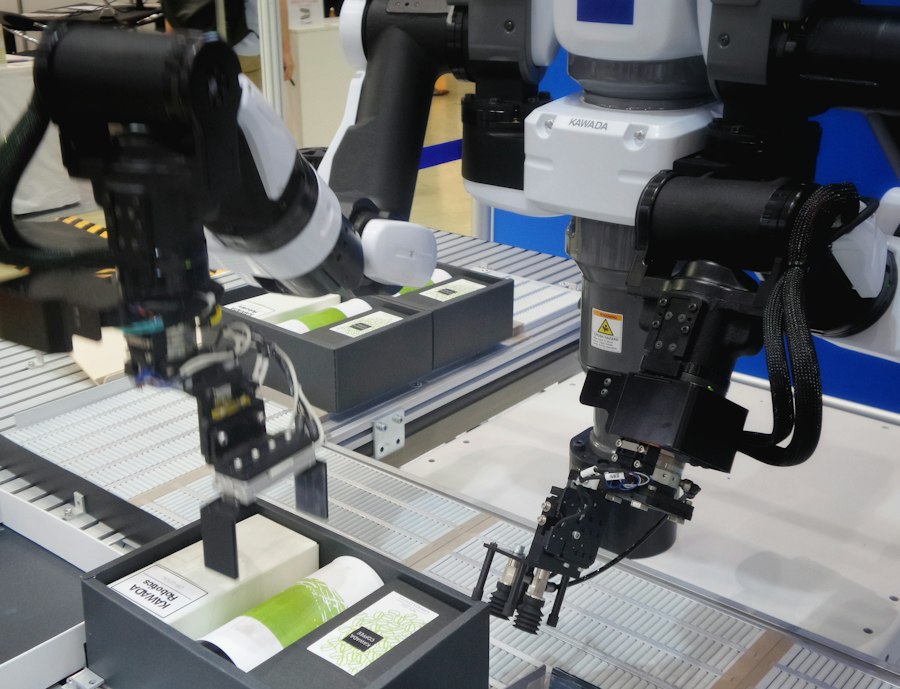
Putting these technologies into practice involves careful planning, selecting the right hardware, and meticulous configuration. It’s not a plug-and-play scenario for sub-millisecond jitter.
Network Architecture Considerations
The physical layout and logical design of your wireless network are paramount. This isn’t just about throwing up access points; it’s about creating a backbone that supports the stringent timing requirements.
Mesh vs.
Point-to-Point/Multi-Point
For deterministic applications, point-to-point (PTP) or point-to-multipoint (PTMP) wireless bridge configurations are generally preferred over mesh networks. Mesh networks, while flexible, introduce additional hops and routing complexity that can increase latency and jitter. A dedicated PTP link provides the most direct and predictable path between two points.
In a smart factory, this might mean dedicated bridges connecting a remote robotic cell to the central control system, or linking mobile automated guided vehicles (AGVs) to their docking and charging stations with minimal latency.
Backhaul Integration
The wireless bridge isn’t an island. It needs to integrate seamlessly with the wired factory network, which itself should ideally be TSN-enabled. This means ensuring that the TSN domains extend across the wireless link, with the wireless bridge acting as a TSN-aware endpoint or bridge.
This ensures end-to-end determinism, from the sensor or actuator, across the wireless hop, and into the core factory network.
Interference Mitigation
Wireless environments are inherently susceptible to interference. In a factory, this could come from other Wi-Fi networks, Bluetooth devices, industrial machinery, or even microwave ovens. Careful site surveys are essential to identify potential interference sources.
Strategies like using licensed or less-congested spectrum (e.g., the 6GHz band for Wi-Fi 6E), directional antennas, spectrum analysis tools, and robust channel planning are crucial. In a 5G private network, interference can be managed more effectively due to dedicated spectrum and advanced radio resource management.
Hardware and Software Selection
The choice of equipment is critical. Generic consumer-grade wireless gear simply won’t cut it.
You need industrial-grade hardware designed for reliability and performance in harsh factory environments.
Industrial Wireless Bridges
Look for wireless bridge solutions specifically designed for industrial applications. These often feature rugged enclosures, extended temperature ranges, and support for industrial protocols. Crucially, they should explicitly state support for deterministic features like TSN extensions or URLLC capabilities if using 5G.
These bridges will have the necessary processing power and specialized firmware to implement scheduling and synchronization protocols.
TSN-Enabled Switches and Endpoints
For an end-to-end deterministic solution, all components in the network path, including switches, programmable logic controllers (PLCs), human-machine interfaces (HMIs), and robotic controllers, should be TSN-enabled. This ensures that the deterministic traffic classes are correctly identified, prioritized, and managed throughout the entire data journey, not just over the wireless segment.
Network Management and Monitoring Tools
To maintain sub-millisecond jitter, continuous monitoring is non-negotiable. Specialized network management systems are required that can visualize TSN schedules, monitor packet loss, latency, and jitter in real time, and alert operators to any deviations.
These tools are essential for diagnostics, troubleshooting, and ensuring ongoing compliance with the strict timing requirements.
Real-World Impact and Future Outlook
The ability to deploy deterministic networking over wireless bridges is a game-changer for smart factories, unlocking new levels of flexibility and efficiency.
Enhanced Agility and Reconfigurability
One of the biggest benefits is the newfound flexibility. Imagine reconfiguring a production line without having to pull new Ethernet cables for every robot or sensor. Wireless bridges allow for rapid deployment and re-deployment of machinery, making factories more agile and responsive to changing production demands. This is particularly valuable for mobile robotics (AGVs, AMRs) that need continuous, reliable, and low-latency communication as they move throughout the facility.
New Applications and Use Cases
Achieving sub-millisecond jitter over wireless bridges opens the door to applications previously thought impossible over wireless:
- Real-time Machine Control: Direct control of motors, actuators, and robotic arms without noticeable lag, even when they are physically distant or mobile.
- High-Precision Synchronization: Synchronizing multiple machines or processes across a large factory floor with sub-millisecond accuracy, crucial for complex assembly or continuous processes.
- Augmented Reality (AR) for Operators: Providing highly responsive AR overlays for maintenance or operational guidance, where even slight lag can break immersion or hinder usability.
- Edge Computing Integration: Enabling real-time data processing closer to the source (at the “edge” of the network), with deterministic communication back to central systems.
The Path Forward
Looking ahead, the convergence of TSN and 5G URLLC is particularly promising. We’re seeing efforts to bridge these two technologies, with 5G networks acting as a wireless transport layer for TSN traffic. This “TSN over 5G” approach aims to combine the strengths of both: the precise scheduling of TSN with the wide area coverage, mobility, and capacity of 5G.
Standardization bodies continue to refine these technologies, and as the ecosystem matures, we can expect more off-the-shelf solutions that simplify deployment. However, it will remain crucial for factory operators and network engineers to deeply understand the underlying principles and carefully design their systems to truly leverage the benefits of deterministic wireless networking for sub-millisecond jitter in smart factories. It’s an exciting time to be building the factory floors of tomorrow, with wireless finally stepping up to meet the most demanding industrial needs.
FAQs
What is deterministic networking?
Deterministic networking refers to a network design that ensures predictable and consistent data transmission times, minimizing latency and jitter. This is particularly important in environments like smart factories, where real-time communication is critical for automation and control systems.
How does deterministic networking achieve sub-millisecond jitter?
Deterministic networking achieves sub-millisecond jitter through various techniques such as time-sensitive networking (TSN), traffic shaping, and prioritization of critical data packets. These methods ensure that time-sensitive data is transmitted with minimal delay and interference from other network traffic.
What role do wireless bridges play in deterministic networking?
Wireless bridges serve as a connection point between wired and wireless networks, facilitating the transmission of data across different segments. In the context of deterministic networking, they help maintain low latency and jitter by optimizing the wireless communication protocols and ensuring reliable data delivery.
Why is sub-millisecond jitter important in smart factories?
Sub-millisecond jitter is crucial in smart factories because it enables real-time communication between machines, sensors, and control systems. This level of precision is necessary for coordinating automated processes, ensuring safety, and improving overall operational efficiency.
What challenges are associated with implementing deterministic networking over wireless bridges?
Challenges include maintaining signal integrity in noisy environments, managing interference from other wireless devices, and ensuring robust security measures. Additionally, achieving the required performance levels while accommodating varying network loads can be complex and may require advanced configuration and monitoring tools.
Enjoying our content? Make us a preferred source on Google:
Add us as a Preferred Source on Google