

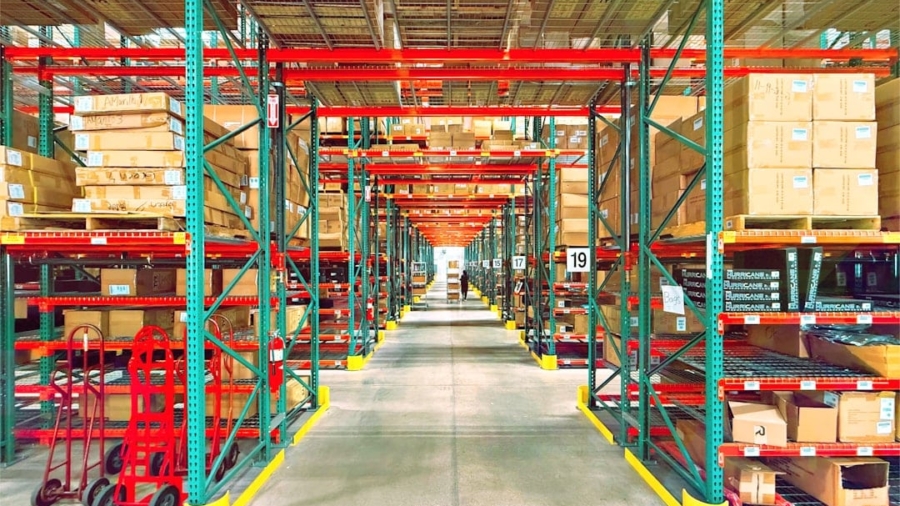
Let’s talk about boosting your inventory management. If you’re wondering how to get it right without constantly guessing or drowning in spreadsheets, the answer lies in automating your replenishment with Machine Learning (ML). This isn’t some futuristic concept; it’s a practical way to ensure you have the right stock, at the right time, and at the right cost.
Where Traditional Replenishment Falls Short
You’ve probably experienced the headaches of traditional inventory management. It often relies on manual calculations, historical averages, and gut feelings. While there’s a place for human insight, these methods can lead to some pretty costly problems.
The Data Overload Problem
We often have a ton of data, but it’s scattered and hard to make sense of. Sales figures from last year, supplier lead times, seasonal trends, promotional impacts – it all comes at you fast. Trying to crunch all this manually is a recipe for burnout and missed opportunities.
- Spreadsheet Nightmares: We’ve all been there, staring at endless rows and columns. A misplaced formula or a forgotten update can ripple through your entire system.
- Stale Data: Information ages quickly in business. What worked last month might not work today. Relying on outdated data means you’re always a step behind.
The Inherent Human Factor
Let’s be honest, humans are great at creativity and problem-solving, but consistent, large-scale data analysis isn’t our strong suit. When we try to manage inventory on a large scale, biases and errors can creep in.
- Subjective Forecasting: When you’re looking at sales trends, it’s easy to let a recent spike or dip unduly influence your predictions, even if it’s an anomaly.
- Limited Processing Power: A human can only process so much information at once. Trying to account for dozens or even hundreds of variables is simply beyond our capacity.
The Costly Consequences
These limitations in traditional methods aren’t just minor inconveniences; they have a direct impact on your bottom line.
- Stockouts: When you run out of a popular item, you lose sales, disappoint customers, and can even damage your brand’s reputation.
- Overstocking: Conversely, having too much of something ties up capital, incurs storage costs, and increases the risk of obsolescence or spoilage.
- Inefficient Labor: Your team spends valuable time on repetitive calculation tasks rather than strategic work.
In the quest to enhance operational efficiency, the article on Boost Your Content with NeuronWriter: SEO & NLP Optimization provides valuable insights into leveraging advanced technologies for content optimization, which can be paralleled with the advancements in inventory management through Automated ML Replenishment. Both approaches emphasize the importance of utilizing machine learning to streamline processes, reduce human error, and ultimately drive better decision-making in their respective fields.
Enter Automated ML Replenishment: The Game Changer
This is where Machine Learning steps in, not to replace human judgment entirely, but to augment it with powerful, data-driven capabilities. Automated ML replenishment essentially means using algorithms to predict demand, calculate optimal reorder points, and even place orders automatically.
What Exactly is Machine Learning in This Context?
Think of ML as sophisticated software that learns from patterns in your data over time. Instead of being explicitly programmed for every rule, it identifies relationships and makes predictions based on what it has “seen” before.
- Pattern Recognition: ML algorithms can uncover subtle patterns in your sales data that a human might miss – like the impact of local events on demand for certain products, or how specific marketing campaigns influence purchasing.
- Predictive Power: Based on these patterns, ML can forecast future demand with a much higher degree of accuracy than traditional methods, considering factors like seasonality, promotions, and even external economic indicators.
- Continuous Improvement: The beauty of ML is that it keeps learning. As more data comes in, its predictions get better and its replenishment recommendations become more refined.
Why “Automated”? The Efficiency Boost
The “automated” part is key. Once the ML model is set up and trained, it can perform replenishment calculations and even trigger orders with minimal human intervention. This frees up your team to focus on more strategic tasks.
- Reduced Manual Effort: Say goodbye to hours spent wading through spreadsheets. The system handles the heavy lifting.
- Real-Time Adjustments: ML can react to changes in demand or supply much faster than manual processes, ensuring your inventory levels are always optimized.
- Scalability: Whether you’re managing ten SKUs or ten thousand, automated ML replenishment can scale with your business without a proportional increase in manual workload.
The Core Components of an ML Replenishment System
To understand how this revolution happens, let’s break down the essential pieces that make up an automated ML replenishment system. It’s not just about “installing software”; it’s about building an intelligent process.
Data is Your Foundation
Like any good recipe, ML needs quality ingredients. In this case, your data is that ingredient. The more comprehensive and accurate your data, the better your ML model will perform.
- Sales History: Detailed records of what sold, when, and how much. This is the bedrock of demand forecasting.
- Product Master Data: Information about each SKU, including unit cost, selling price, shelf life, and any bundling or kitting relationships.
- Supplier Information: Lead times for each supplier, minimum order quantities (MOQs), and shipping costs.
- Inventory Levels: Real-time data on what you currently have on hand, including in-transit stock.
- Promotional Calendars: Details of past and planned marketing campaigns, as these significantly influence sales volume.
- External Factors (Optional but Powerful): Weather data, local event calendars, economic indicators, or even social media trends can sometimes be incorporated to improve forecast accuracy, especially for specific product categories.
The Machine Learning Engine
This is where the magic happens. The ML engine uses algorithms to analyze your data and generate insights and predictions.
- Demand Forecasting Models: These are the heart of the system. They can range from basic time-series models to more complex ones that incorporate seasonality, trend, and external factors.
- ARIMA/SARIMA: Good for capturing trends and seasonal patterns.
- Prophet: Developed by Facebook, it’s designed to handle time series data with strong seasonality and holiday effects, often with good default parameters.
- Gradient Boosting Machines (e.g., XGBoost, LightGBM): These can incorporate a wide array of features (promotions, day of week, etc.) for more nuanced predictions.
- Deep Learning Models (e.g., LSTMs): For very complex patterns and large, rich datasets, these can offer even higher accuracy.
- Optimization Algorithms: Once demand is forecasted, these algorithms calculate the optimal reorder points and quantities. They balance the costs of holding inventory against the risks of stockouts.
- Economic Order Quantity (EOQ) variations: While traditional EOQ has limitations, ML can adapt its principles with dynamic inputs.
- Safety Stock Calculation: ML can dynamically adjust safety stock levels based on forecast variability and desired service levels.
- Service Level Optimization: Ensuring you meet a specific percentage of demand from existing stock.
The Automation Layer
This is the bridge between the ML engine’s recommendations and your actual operations. It takes the calculations and turns them into actionable steps.
- Automated Order Placement: Based on pre-defined thresholds and rules, the system can automatically generate purchase orders.
- Replenishment Alerts: For items that require human review before ordering, the system can generate timely alerts with all the necessary data.
- Integration with ERP/WMS: Seamless communication with your existing Enterprise Resource Planning (ERP) or Warehouse Management System (WMS) is crucial for real-time data flow and order processing.
Building a Smarter Replenishment Strategy
Implementing an automated ML replenishment system isn’t a one-off project; it’s a strategic shift. Here’s how to approach it effectively.
Start with a Clear Objective
Before diving into technology, know what you want to achieve. Are you trying to reduce stockouts by X%, cut inventory holding costs by Y%, or improve order fulfillment speed? Clear goals will guide your implementation and help measure success.
- Identify Your Biggest Pain Points: Where are you losing the most money or facing the most operational friction due to inventory management? Focus your initial efforts there.
- Define Key Performance Indicators (KPIs): What metrics will you use to track progress towards your objectives? Examples include:
- Inventory Turnover Ratio
- Stockout Rate (by SKU and overall)
- Inventory Carrying Cost as a Percentage of Sales
- Order Fill Rate
- Forecast Accuracy (e.g., Mean Absolute Percentage Error – MAPE)
Select the Right Technology and Partners
The market offers various solutions, from off-the-shelf software to custom-built systems. The best choice depends on your resources, complexity, and desired level of customization.
- Cloud-Based ML Platforms: Many services offer pre-built ML tools that can be adapted for inventory forecasting and optimization.
- Specialized Inventory Management Software with ML Features: Some modern WMS/ERP systems have integrated AI and ML capabilities.
- Consulting Partners: If you’re building a more custom solution, experienced data scientists and inventory consultants can be invaluable.
- Don’t Over-Engineer: For many businesses, a well-implemented solution using existing tools and proven algorithms will be sufficient. It’s about getting the job done effectively, not necessarily having the absolute cutting-edge technology.
Data Preparation is Paramount
Garbage in, garbage out. The ML model’s performance is directly tied to the quality of your data. Dedicate significant effort to cleaning, validating, and integrating your data sources.
- Data Audits: Regularly check for inconsistencies, missing values, and duplicate entries.
- Establish Data Governance: Define clear processes for data entry, updates, and ownership to maintain data integrity going forward.
- Integrate Disparate Systems: Ensure your sales, inventory, and procurement systems can talk to each other seamlessly.
Phased Implementation and Iteration
Don’t try to boil the ocean. Start with a pilot program on a subset of your SKUs or a specific product category. This allows you to refine the system and gain confidence before a full rollout.
- Proof of Concept (POC): Test the system on a limited scale to validate its effectiveness and identify any unforeseen issues.
- Gradual Rollout: Expand the system to more SKUs or locations incrementally, learning and adapting at each stage.
- Continuous Monitoring and Refinement: ML models need ongoing monitoring. Regularly review performance metrics and retrain models as needed to adapt to changing market conditions.
In the quest for efficiency, businesses are increasingly turning to innovative solutions like automated machine learning for inventory management, as discussed in the article on Revolutionizing Inventory Management with Automated ML Replenishment. For those interested in enhancing their operational security alongside inventory practices, a relevant read is available on the best antivirus software in 2023, which provides insights into protecting your digital assets. You can explore this further by visiting the best antivirus software in 2023.
Practical Applications and Benefits Beyond Forecasting
Automated ML replenishment isn’t just about predicting demand; it has ripple effects that can transform your entire operation.
Optimizing Stock Levels for Profitability
The primary goal, of course, is to have the right amount of stock. ML can achieve this with a precision that manual methods can only dream of.
- Reduced Carrying Costs: By minimizing overstock, you free up working capital and reduce expenses related to warehousing, insurance, and potential spoilage or obsolescence.
- Minimized Stockout Fines: Preventing stockouts directly translates to capturing lost sales and avoiding the indirect costs associated with customer dissatisfaction.
- Dynamic Safety Stock: Instead of a static safety stock number, ML can adjust it based on the current variability of demand for each item, leading to more efficient inventory holding.
Driving Operational Efficiency
Beyond the direct financial impact, the operational improvements are significant.
- Streamlined Procurement: Automated order generation and supplier communication significantly reduce the manual workload for procurement teams.
- Improved Warehouse Operations: Knowing more precisely when and what to expect reduces last-minute scrambling and allows for better resource allocation in the warehouse.
- Enhanced Supplier Relationships: Consistent, predictable ordering based on data can lead to better relationships with your suppliers, potentially securing better terms and lead times.
Empowering Better Decision-Making
With reliable data and automated processes, your team can shift from reactive troubleshooting to proactive strategic planning.
- Informed Merchandising Decisions: Accurate demand forecasts can inform buying decisions, product assortment, and promotional planning.
- Strategic Inventory Placement: For multi-location businesses, ML can help decide where to stock specific items for optimal delivery times and cost-effectiveness.
- Scenario Planning: With accurate forecasting models, you can more readily run “what-if” scenarios for promotions, market shifts, or supply chain disruptions.
Overcoming Challenges and Ensuring Long-Term Success
While the benefits are clear, implementing and maintaining an automated ML replenishment system isn’t always a walk in the park. Anticipating and addressing potential challenges is key.
Data Quality and Integration Issues
As mentioned, this is foundational. If your data is a mess, your ML model will be too.
- Dirty Data: Inaccurate, incomplete, or inconsistent data will lead to flawed forecasts and replenishment recommendations.
- Siloed Systems: If your sales data is in one system, inventory in another, and procurement in a third, it’s hard to get a unified view. Effective integration is crucial.
- Lack of Historical Data: New businesses or those with limited historical sales records might struggle to train robust ML models initially.
Change Management and Skill Gaps
Introducing new technology and processes requires buy-in from your team and potentially new skills.
- Resistance to Change: Employees who are comfortable with existing manual processes might be hesitant to adopt new automated systems. Proper training and clear communication about the benefits are essential.
- Skill Deficiencies: Your team might lack the data analysis or ML interpretation skills needed to fully leverage the system. Investing in training or hiring individuals with these skills can bridge the gap.
- Trusting the Algorithm: It can take time for people to build trust in the predictions and recommendations generated by an ML system, especially if past experiences have been negative due to poor data or implementation.
Technical Complexity and Maintenance
ML systems require ongoing attention to remain effective.
- Model Drift: The conditions under which an ML model was trained can change over time (e.g., new competitors, shifts in consumer behavior), causing its accuracy to degrade. Regular monitoring and retraining are vital.
- Integration Maintenance: As your other business systems evolve, ensuring that the ML system remains seamlessly integrated requires ongoing effort.
- Scalability Concerns: As your business grows, your data volume will increase. The chosen ML solution needs to be able to scale effectively without performance degradation.
Continuous Improvement and Adaptation
The ML replenishment process isn’t “set it and forget it.”
- Regular Performance Reviews: Don’t just set up the system and walk away. Regularly review the KPIs you established and compare them to the system’s output.
- Feedback Loops: Create mechanisms for your operations team to provide feedback on the system’s recommendations. Are there specific instances where the ML got it wrong, and why? This qualitative feedback is invaluable.
- Adapting to New Data Sources: As your business evolves, new data sources might become available (e.g., IoT sensor data from your supply chain, richer customer behavior data). Consider how these can be integrated to further enhance your ML models.
By proactively addressing these challenges and fostering a culture of continuous improvement, you can ensure that your automated ML replenishment system remains a powerful asset for your business, driving efficiency and profitability for years to come.
FAQs
What is Automated ML Replenishment?
Automated ML Replenishment is a technology that uses machine learning algorithms to automatically manage and optimize inventory levels. It analyzes historical data, demand forecasts, and other relevant factors to make accurate and timely replenishment decisions.
How does Automated ML Replenishment revolutionize inventory management?
Automated ML Replenishment revolutionizes inventory management by reducing human error, optimizing inventory levels, and improving forecasting accuracy. It enables businesses to streamline their supply chain operations and minimize stockouts or overstock situations.
What are the benefits of using Automated ML Replenishment?
The benefits of using Automated ML Replenishment include improved inventory accuracy, reduced carrying costs, increased sales and customer satisfaction, and enhanced operational efficiency. It also allows businesses to adapt quickly to changing market conditions and demand patterns.
How does Automated ML Replenishment work?
Automated ML Replenishment works by analyzing historical sales data, demand forecasts, lead times, and other relevant variables to generate accurate replenishment recommendations. It continuously learns and adapts to changing demand patterns, making it a powerful tool for inventory optimization.
What industries can benefit from Automated ML Replenishment?
Various industries such as retail, e-commerce, manufacturing, distribution, and logistics can benefit from Automated ML Replenishment. Any business that manages inventory and aims to improve its supply chain efficiency can leverage this technology to streamline their operations and drive better business outcomes.
Enjoying our content? Make us a preferred source on Google:
Add us as a Preferred Source on Google