


Smart glasses are getting smarter, and one of the coolest new tricks they’re learning for businesses is real-time contextual translation overlays. This means that when someone is wearing these glasses, they can see text or even hear audio translated directly in their field of vision, or through integrated earphones, as they’re looking at something or listening to someone. Imagine a technician in a factory instantly understanding a foreign language instruction manual or a customer service rep helping a visitor who speaks a different language without fumbling with a phone app. It’s about bridging language barriers in real-time, right where the action is happening. This isn’t just about simple word-for-word translation; it’s about understanding the surrounding environment and presenting translations that make sense in that specific context.
The Foundation of Real-Time Translation Overlays
Breaking down language barriers in real-time within enterprise settings is a game-changer. The core technology enabling this relies on a sophisticated blend of hardware and software, working in concert to deliver a seamless experience. It’s more than just a dictionary on your face; it’s about intelligent interpretation and presentation.
How the Technology Works
At its heart, real-time contextual translation for smart glasses involves several interconnected components. First, there’s the input. This typically comes from either an integrated camera, capturing text from physical objects like labels, signs, or documents, or microphones picking up spoken language. For visual translation, powerful optical character recognition (OCR) algorithms are crucial. They identify and extract text from the camera feed, often in challenging conditions like varying lighting or unusual fonts. Once the source language is identified and the text extracted (or audio transcribed), it’s sent to a translation engine. These engines, often cloud-based due to the computational demands of neural machine translation (NMT), are the brains of the operation. They translate the content into the user’s preferred language. Finally, the translated output needs to be displayed. For visual overlays, this means rendering the translated text directly onto the smart glasses’ display, precisely positioned over the original content. For audio, it’s converted to speech and played through the integrated speakers or headphones. The “contextual” part comes from integrating with other data sources, like location services, object recognition, or enterprise databases, to provide more accurate and relevant translations. For instance, if the glasses recognize a specific machine part, the translation engine can pull up jargon specific to that part from a company’s internal glossary, rather than a generic translation.
Key Technological Components
The successful implementation of this technology hinges on several distinct yet interdependent components. The smart glasses themselves are the primary interface, featuring high-resolution displays, integrated cameras, and microphones. The processing power within the glasses or a connected companion device is vital for handling image recognition, audio processing, and initial data crunching. Then there’s the connectivity – usually Wi-Fi or cellular – which allows the glasses to communicate with cloud-based translation services and enterprise data systems. The translation engine itself is a critical piece, often leveraging advanced deep learning models for NMT. These models are constantly improving and can be trained on specific industry terminology to enhance accuracy. Another key component is the overlay rendering engine. This software is responsible for intelligently placing the translated text on the display, ensuring it’s readable, unobtrusive, and correctly aligned with the original content. This involves understanding depth and perspective to ensure the overlay appears to “stick” to the object being viewed. Finally, robust security protocols are essential, especially when dealing with sensitive enterprise data or communications, to protect the integrity and privacy of the translated information.
In the realm of innovative technology, the integration of real-time contextual translation overlays in modern enterprise smart glasses is revolutionizing the way businesses operate. A related article that explores the compatibility of smart devices with rooted phones can provide valuable insights into the broader implications of smart technology in enterprise settings. For more information, you can read about the functionality of Samsung smartwatches with rooted phones in this article: Do Samsung Smartwatches Work with Rooted Phones?.
Key Takeaways
- The training data includes information and events up to October 2023.
- Insights and knowledge are based on a wide range of sources available until the cutoff date.
- No updates or developments occurring after October 2023 are included in the training.
- Users should verify current information from reliable sources for the latest updates.
- The model’s responses reflect the context and knowledge available up to the specified date.
Driving Business Value Across Industries

The practical applications of real-time contextual translation overlays are incredibly diverse, offering tangible benefits across a multitude of business sectors. This isn’t just a niche gadget; it’s a tool poised to reshape how multinational teams collaborate and how global businesses operate.
Enhancing Manufacturing and Field Service
In manufacturing and field service, the benefits are immediate and impactful. Imagine a technician, fluent only in English, needing to perform maintenance on a piece of machinery manufactured in Germany. Without translation overlays, they might struggle with instruction manuals written in German, leading to delays, errors, or the need for a human translator. With smart glasses, the technician can look at the German manual, and the translated English instructions appear directly on the display, overlaid onto the original text. This reduces downtime, improves accuracy, and empowers workers to operate more independently. For complex equipment with physical labels or diagnostic screens in a foreign language, the glasses can translate these too, ensuring every detail is understood. This also extends to training new employees from diverse linguistic backgrounds, allowing them to follow procedures and understand warnings regardless of their native tongue. In field service, engineers dispatched to international locations can quickly understand local signage, interact with local teams, and decipher equipment labels without a language barrier slowing them down. This translates directly to faster problem resolution and higher customer satisfaction.
Streamlining Logistics and Supply Chain Operations
Logistics and supply chain operations are inherently global, involving goods and personnel from numerous countries. Language barriers are a constant challenge, from understanding shipping manifests in different languages to communicating with foreign port authorities or delivery personnel. Real-time translation overlays can significantly streamline these processes. Warehouse workers can scan packages with labels in various languages and instantly see the contents and destination translated into their preferred language. This speeds up sorting, reduces errors in inventory management, and improves efficiency in cross-docking operations. For drivers or cargo handlers operating internationally, understanding road signs, customs declarations, or instructions from local officials becomes effortless. This not only improves operational efficiency but also enhances safety by ensuring all instructions and warnings are fully understood. The ability to instantly translate documentation and labels on the fly eliminates bottlenecks and accelerates the flow of goods across borders, leading to more resilient and responsive supply chains.
Improving Healthcare and Medical Support
In healthcare, clear communication is literally a matter of life and death. Real-time translation overlays offer immense potential to improve patient care, especially in diverse communities or international medical settings. A doctor wearing smart glasses could communicate with a patient who speaks a different language, with the patient’s spoken words translated into the doctor’s ear and the doctor’s response translated back to the patient. This maintains eye contact and a more natural interaction than relying on a separate tablet or human interpreter, which can be expensive and not always available. For medical professionals working with equipment from different manufacturers, technical manuals and display readouts in various languages can be instantly translated, ensuring correct operation and reducing the risk of error. Paramedics responding to emergencies can quickly understand critical information from non-English speaking witnesses or patients.
Furthermore, for medical training in multicultural environments, overlays can translate complex anatomical diagrams or procedural instructions, fostering a more inclusive and effective learning experience.
Enhancing Education and Training
The education and training sectors can greatly benefit from these translation capabilities, particularly in vocational training, international academic collaborations, or corporate onboarding. Imagine an engineering student from Japan attending a lecture in English. While some lectures might have subtitles, smart glasses could provide real-time translation of the spoken words directly into their vision, allowing them to focus on the content rather than struggling to keep up with the language. For hands-on vocational training, where instructions might be provided in multiple languages or equipment manuals are localized, overlays ensure all trainees understand the procedures, regardless of their native language. This is particularly valuable in manufacturing or highly specialized fields where precise understanding is critical. Corporate training for global teams can become more standardized and effective. Instead of creating separate training modules for each language, a single module can be used, with the smart glasses providing the necessary translation in real-time, reducing development costs and ensuring consistency of information across the organization.
Empowering Customer Service and Retail
Customer service and retail environments often face immediate language barriers. A tourist in a foreign country trying to ask for directions or understand product information can struggle. Smart glasses worn by a retail associate or customer service representative can bridge this gap instantly. When a customer speaks in their native language, the representative hears a real-time translation in their ear, and their spoken response is translated back to the customer. This enables smoother, more personalized interactions, reducing frustration for both parties. In retail, this can mean a sales associate can read product labels or descriptions in a foreign language and have them translated instantly, providing accurate information to an international shopper. For complex product support, a customer service agent can use the smart glasses to view and translate technical documents or even communicate with a foreign-speaking customer through a video call, where subtitles appear in real-time. This elevates the customer experience and expands the potential customer base for businesses operating in diverse or tourist-heavy locations.
Design Considerations for Effective Overlays
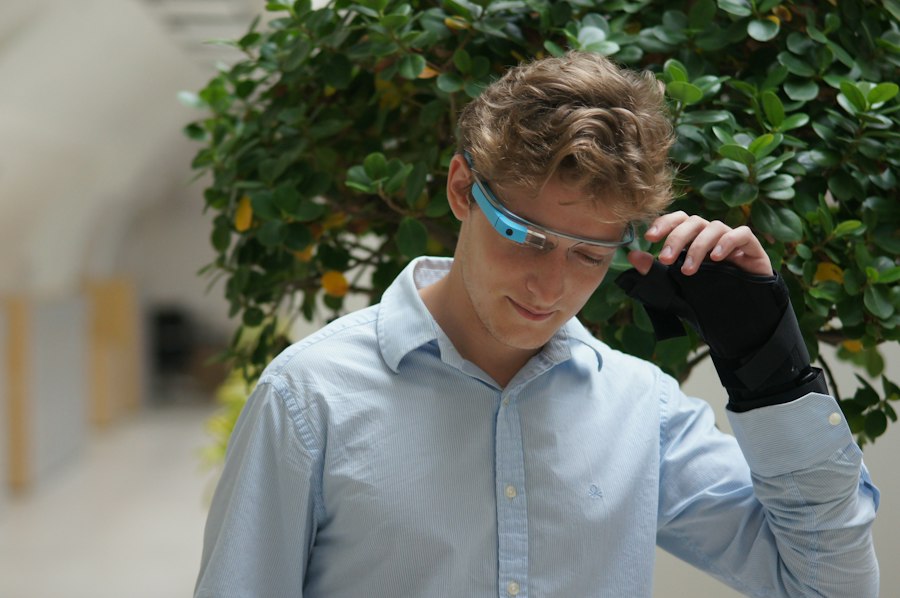
Getting the technology to work is one thing; making it usable and truly helpful is another. The design of these overlays isn’t just about throwing translated text onto a screen; it’s about thoughtful integration that enhances, rather than distracts from, the user’s primary task.
Readability and Visual Integration
One of the biggest challenges is ensuring readability without obstructing the user’s view of the real world. The translated text needs to be clear, sufficiently large, and in a contrasting color, but not so dominant that it becomes a distraction.
This involves careful consideration of font choice, text size, and background opacity. Designers often use semi-transparent backgrounds or outlines around text to ensure legibility against varying real-world backdrops. The placement of the overlay is also critical.
Should it appear directly over the original text, beneath it, or in a dedicated section of the display? This depends on the context and the amount of text. For short labels, an overlay directly on top might work.
For longer passages, a scrollable text box in a corner of the display might be more appropriate. The goal is to provide the information exactly where and when it’s needed, without forcing the user to constantly shift their gaze or struggle to parse the information. Dynamic sizing and positioning, adapting to the user’s head movements and the distance to the object, are also important for maintaining a natural viewing experience.
Minimizing Latency and Processing Delays
Real-time means real-time.
Any noticeable delay between the capture of the source language and the display of the translated output severely degrades the user experience. High latency can lead to confusion, frustration, and render the system unusable for dynamic conversations or fast-paced tasks. Minimizing latency is a multi-faceted challenge.
It requires optimized hardware with fast image and audio processing capabilities, efficient algorithms for OCR and speech-to-text, and robust, low-latency network connectivity to the cloud-based translation engines. Edge computing, where some translation or pre-processing happens directly on the glasses or a nearby device, can help reduce reliance on cloud round-trips for critical operations. Companies are constantly working on more efficient neural network models for translation that can run faster without sacrificing accuracy.
Furthermore, predictive text algorithms can anticipate what a speaker might say next, allowing for pre-translation and faster rendering of the final output. The goal is to make the translation feel as instantaneous and natural as possible, much like hearing your own language spoken.
Contextual Awareness and Accuracy
The “contextual” aspect is what truly elevates these overlays beyond simple dictionary lookups. This involves understanding not just the words, but the environment, the task at hand, and the user’s intent.
For example, if a technician is looking at a machine, the system should ideally prioritize technical jargon relevant to that specific machine model, pulling from enterprise-specific glossaries or databases. This requires integration with object recognition capabilities (identifying the machine, its parts) and potentially internal knowledge bases. Location awareness can also play a role, tailoring translations to regional dialects or local terms.
The accuracy of the translation itself is paramount. A mistranslation, especially in critical situations like medical procedures or safety instructions, can have serious consequences. This necessitates highly sophisticated NMT models, continuous training with domain-specific data, and potentially a feedback loop where users can correct or improve translations over time.
The system should also be able to handle colloquialisms, idioms, and nuances of language, which are notoriously difficult for machine translation. The better the system understands the context, the more accurate and useful its translations will be.
Overcoming Challenges and Future Prospects
While the technology is incredibly promising, rolling out real-time contextual translation overlays at an enterprise scale isn’t without its hurdles. Addressing these challenges is key to widespread adoption and unlocking the full potential of smart glasses.
Data Security and Privacy Concerns
Enterprise data, especially in sectors like healthcare, finance, or defense, is highly sensitive. The real-time translation process often involves capturing visual or audio data and transmitting it to cloud-based services for processing. This raises significant data security and privacy concerns. Companies need to ensure that data is encrypted both in transit and at rest, that only authorized personnel have access to the translated information, and that the translation providers adhere to strict data protection regulations (like GDPR or HIPAA). Anonymization techniques might be necessary for certain types of data. There’s also the question of where the data is stored and processed – local servers versus international cloud providers – and the implications for data sovereignty. Establishing clear data governance policies and ensuring compliance is crucial for building trust and avoiding legal complications. Enterprises need to carefully vet their smart glass and translation service providers for their security posture and commitment to privacy.
Integration with Existing Enterprise Systems
For these translation overlays to be truly valuable, they can’t operate in a vacuum. They need to seamlessly integrate with existing enterprise systems, such as manufacturing execution systems (MES), enterprise resource planning (ERP) platforms, customer relationship management (CRM) software, and knowledge bases. This integration allows the translation engine to pull contextual information (e.g., product specifications, customer history, task instructions) and push translated data back into the system. For instance, if a technician uses the glasses to translate a fault code, that translation could be logged directly into a maintenance management system. This level of integration requires open APIs, robust middleware, and careful planning to ensure data flow is efficient and secure. The challenge lies in the diversity of legacy systems within many enterprises and the potential complexity of creating custom integrations for each. Standardized protocols and platforms will be key to simplifying this process.
User Acceptance and Training
Any new technology, no matter how powerful, will fail if users don’t adopt it. User acceptance for smart glasses and their translation features hinges on several factors. First, the glasses themselves need to be comfortable, lightweight, and durable enough for extended use in various environments. A clunky, heavy device that causes eye strain will quickly be abandoned. Second, the interface needs to be intuitive. Users shouldn’t have to navigate complex menus or gestures to initiate a translation. Simple voice commands or gaze-based interaction are preferable. Third, there’s the learning curve. Proper training is essential to help users understand how to best utilize the translation features, interpret overlays, and troubleshoot minor issues. Addressing potential discomfort or privacy concerns users might have about wearing a camera-equipped device is also important. Pilot programs with engaged users, gathering feedback and iterating on the design, are crucial for ensuring the technology meets real-world needs and is embraced by the workforce.
Advancements in AI and Hardware
The future of real-time contextual translation overlays is intrinsically linked to ongoing advancements in artificial intelligence and hardware. On the AI front, we can expect even more sophisticated neural machine translation models that offer higher accuracy, better handling of idioms and cultural nuances, and improved performance in low-resource languages. The integration of large language models (LLMs) could provide even deeper contextual understanding, allowing the glasses to not just translate words but interpret intent and provide more intelligent responses or summaries. For hardware, we’ll likely see smaller, lighter, and more aesthetically pleasing smart glasses with longer battery life. Displays will become even higher resolution and more seamlessly integrated into the wearer’s vision. On-device processing power will continue to increase, enabling more real-time processing at the edge, reducing reliance on cloud connectivity and improving latency. New sensor technologies could enhance contextual awareness, such as environmental sensors for better noise cancellation in audio translation, or improved depth sensors for more precise overlay placement. The convergence of these advancements promises an even more capable and seamless translation experience for enterprise users.
In exploring the innovative applications of technology in modern enterprises, the concept of Real-Time Contextual Translation Overlays in Smart Glasses stands out as a transformative tool for enhancing communication and collaboration. This technology not only streamlines workflows but also bridges language barriers in diverse work environments. For a deeper understanding of how visionary leaders can influence the tech landscape, you might find insights in this article about the return of Instagram’s founders to the social media scene, which highlights the importance of adaptability and innovation in today’s fast-paced digital world. You can read more about it here.
Ethical Considerations and Societal Impact
| Metric | Description | Typical Value / Range | Impact on User Experience |
|---|---|---|---|
| Translation Latency | Time taken from speech/text input to translated overlay display | 100 ms – 500 ms | Lower latency improves real-time communication and reduces user frustration |
| Accuracy Rate | Percentage of correctly translated words/phrases in context | 85% – 95% | Higher accuracy ensures reliable communication and reduces misunderstandings |
| Supported Languages | Number of languages the system can translate between | 20 – 50+ | Broader language support increases usability across global enterprises |
| Overlay Display Size | Physical size of the translation text overlay on smart glasses | 10 mm – 30 mm height | Optimal size balances readability without obstructing vision |
| Battery Impact | Additional battery consumption due to translation processing | 5% – 15% per hour | Lower impact extends device usage time during work shifts |
| Connectivity Requirement | Network bandwidth needed for cloud-based translation services | 1 Mbps – 5 Mbps | Stable connectivity ensures uninterrupted translation overlays |
| Contextual Understanding | Ability to interpret idioms, jargon, and domain-specific terms | Medium to High (varies by system) | Improves relevance and clarity of translations in enterprise settings |
| User Customization | Options for font size, color, and overlay positioning | Available in most modern systems | Enhances comfort and accessibility for diverse users |
Beyond the technical and business aspects, real-time translation overlays raise important ethical questions and could have a profound societal impact, especially as they become more ubiquitous. It’s important to consider these broader implications as the technology evolves.
Bias in Machine Translation
Machine translation, while powerful, is not perfect and can inherit biases present in the training data. This means that translations might inadvertently perpetuate gender stereotypes, cultural biases, or even offensive language.
For example, if a language is gender-neutral but the English translation defaults to masculine pronouns due to biased training data, it can misrepresent the original intent.
In an enterprise context, biased translations could lead to misunderstandings, misinterpretations of instructions, or even contribute to discrimination in communication. Developers and enterprises need to be acutely aware of these potential biases and work towards actively mitigating them. This involves curating diverse and representative training datasets, implementing bias detection algorithms, and regularly auditing translation outputs for fairness and accuracy. Transparency about the limitations of machine translation and providing mechanisms for users to report errors or biased translations will be crucial.
Data Ownership and Intellectual Property
When enterprise-specific documents, internal communications, or proprietary information are passed through a cloud-based translation service, questions of data ownership and intellectual property (IP) arise. Who owns the translated output? Does the translation service provider gain any rights to the data that passes through their system? This is especially critical for sensitive R&D information, trade secrets, or client-specific data. Enterprises must establish clear legal agreements with their translation service providers regarding data usage, storage, and deletion policies. They need assurance that their proprietary information will not be used to train public translation models or shared with third parties. Furthermore, the act of translation itself can sometimes create new IP. Clarifying who owns this new IP, particularly in collaborative international projects where smart glasses are used for translation, will be important to avoid future disputes. Robust legal frameworks and stringent contractual agreements are essential to protect enterprise assets.
Cultural Nuance and Human Connection
While real-time translation overlays are incredibly effective at bridging linguistic gaps, they can’t fully replicate the richness of human-to-human communication, especially when it comes to cultural nuance, tone, and empathy. Language is deeply intertwined with culture, and direct, word-for-word translation can sometimes miss implied meanings, humor, sarcasm, or cultural specificities that are vital for genuine connection. There’s a risk that over-reliance on automated translation might reduce the incentive for individuals to learn other languages or might create a superficial understanding that prevents deeper cross-cultural appreciation. For complex negotiations, sensitive discussions, or relationship building, a human interpreter or a speaker fluent in both languages still often provides a richer and more nuanced interaction. The technology should be viewed as an enabler and a facilitator, not a complete replacement for human linguistic and cultural understanding. It can help initiate connections and overcome initial barriers, but the deeper human element still requires effort and understanding beyond just translated words.
FAQs
What are real-time contextual translation overlays in modern enterprise smart glasses?
Real-time contextual translation overlays in modern enterprise smart glasses refer to the technology that allows users to view translated text or information overlaid on their field of vision in real-time through smart glasses, enabling seamless communication in different languages.
How do real-time contextual translation overlays work in smart glasses?
Real-time contextual translation overlays in smart glasses work by using advanced software algorithms to analyze and translate text or speech captured by the glasses’ camera or microphone. The translated information is then displayed as an overlay on the user’s field of vision, providing instant language translation.
What are the benefits of using real-time contextual translation overlays in enterprise settings?
The benefits of using real-time contextual translation overlays in enterprise settings include improved communication and collaboration among multilingual teams, increased efficiency in international business dealings, enhanced customer service for non-native speakers, and the ability to access real-time translated information without the need for external devices.
Are there any limitations to real-time contextual translation overlays in modern smart glasses?
Some limitations of real-time contextual translation overlays in modern smart glasses include potential inaccuracies in translation, especially with complex or specialized terminology, reliance on a stable internet connection for real-time functionality, and the need for users to adapt to wearing and using smart glasses for extended periods.
How can businesses integrate real-time contextual translation overlays into their operations?
Businesses can integrate real-time contextual translation overlays into their operations by investing in smart glasses equipped with translation software, providing training to employees on how to use the technology effectively, and incorporating the use of translation overlays into their communication and collaboration processes for seamless multilingual interactions.
Enjoying our content? Make us a preferred source on Google:
Add us as a Preferred Source on Google