

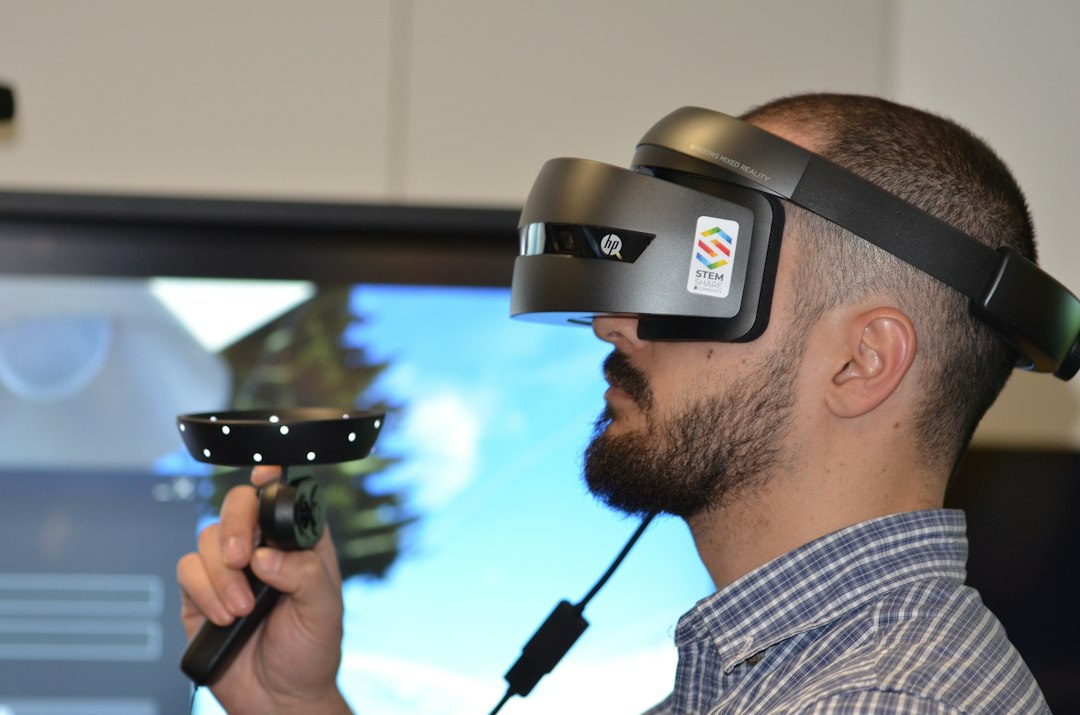
So, you’re diving into mixed reality (MR) – pretty cool, right? But as you explore these immersive digital worlds layered over your real one, there’s a crucial privacy aspect you might not have considered: your spatial mapping data and biometric gaze telemetry. In short, these technologies capture detailed information about your physical environment and exactly where your eyes are looking.
Protecting this data is absolutely vital because it’s incredibly personal and can reveal a lot about you and your home.
Understanding Spatial Mapping: Your Home in Digital Form
When you use a mixed reality device, it’s not just showing you digital objects; it’s actively scanning and understanding your physical space. This process is called spatial mapping. Think of it like creating a detailed 3D blueprint of your room, your office, or wherever you happen to be.
What is Spatial Mapping Data Exactly?
Spatial mapping data is a digital representation of your physical environment. This isn’t just a flat picture; it’s a dynamic, 3D model that captures the geometry, dimensions, and even the semantics of your surroundings. For instance, the device learns where your walls are, the size of your coffee table, the height of your ceiling, and might even recognize that a certain object is a couch or a bookshelf.
This data is essential for MR experiences to work seamlessly. It allows virtual objects to “understand” and interact realistically with your physical space. A virtual character can walk behind your real couch, or a digital notification can appear to stick to your actual wall. Without spatial mapping, MR would just be floating digital images with no sense of context.
The Sensitivity of Your Home’s Digital Twin
Now, here’s where the privacy bell should start ringing. This spatial mapping data is essentially a digital twin of your personal environment. It can reveal a remarkable amount of information:
- Layout of your home: This includes floor plans, room dimensions, and the arrangement of furniture. Anyone with access to this data could potentially reconstruct a detailed map of your living space.
- Presence of specific objects: Is there a large TV? A piano? How many doors and windows are there? This could infer your lifestyle, hobbies, or even security vulnerabilities.
- Clutter and cleanliness: While not explicitly recorded as “clutter,” the detailed geometry could implicitly reveal aspects of how you maintain your home.
- Occupancy patterns: Over time, if spatial mapping is continuously active, it could potentially infer when people are home based on changes in the environment or even acoustic data combined with spatial information.
Consider the implications if this data falls into the wrong hands. It could be used for targeted advertising (“We see you have an empty wall, here’s a great painting!”), burglary planning, or even for simply inferring your wealth or social status based on the size and contents of your home. It’s a digital blueprint of your most private space, and that needs serious protection.
In the ever-evolving landscape of mixed reality, the importance of privacy and data protection cannot be overstated, particularly concerning spatial mapping data and biometric gaze telemetry. A related article that explores the implications of technology on personal privacy is available at Discover the Best Laptop for Remote Work Today. This piece delves into how advancements in technology, including remote work tools, can impact user privacy and the necessity for robust safeguards in our increasingly digital lives.
Key Takeaways
- The training data includes information and events up to October 2023.
- Insights and knowledge are based on a wide range of sources available until the cutoff date.
- No updates or developments occurring after October 2023 are included in the training.
- Users should verify current information from reliable sources for the latest updates.
- The model’s responses reflect the context and knowledge available up to the specified date.
Gaze Telemetry: What Your Eyes Give Away
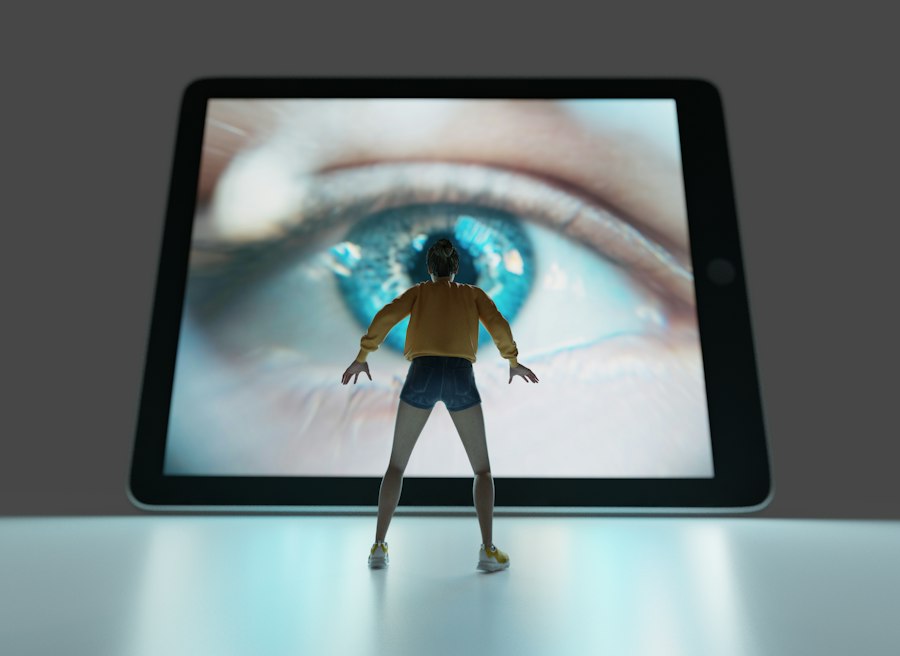
Beyond understanding your environment, mixed reality devices often employ another powerful and incredibly sensitive data collection method: gaze telemetry. This isn’t just about knowing where you’re looking; it’s about understanding how you look, what you look at, and for how long.
How Gaze Tracking Works
Gaze tracking technology uses infrared sensors and cameras embedded in the MR headset to monitor the movement of your eyes. These sensors can precisely determine where your pupils are directed, calculating your “point of gaze” in real-time. This information is then used by the MR system for various purposes.
For instance, gaze tracking can serve as an input method, allowing you to select or interact with virtual objects simply by looking at them. It also helps with rendering optimization, ensuring that the highest resolution graphics are displayed where you are actively focusing, which saves computational power. It’s also vital for social presence, enabling your avatar to make virtual eye contact with other users in collaborative MR experiences.
The Deep Dive into Your Attention and Intent
While useful for interaction and performance, gaze telemetry is a goldmine of highly personal information. It reveals an astounding amount about your cognitive processes and interests:
- Attention and Focus: What captures your attention? How long do you dwell on certain objects, people, or digital content? This can reveal your interests, preferences, and even emotional responses.
- Cognitive Load: Eye movements can be indicators of cognitive load or confusion. Rapid shifts, dilated pupils, or extended fixations might suggest you’re struggling to understand something or are deeply engrossed.
- Intent and Desire: If you consistently gaze at a particular virtual product in an MR shopping experience, it’s a strong indicator of interest or intent to purchase. This is far more powerful than a mouse click or a tap.
- Biometric Signatures: Over time, individual gaze patterns, pupil dilation responses, and saccadic eye movements can become unique biometric identifiers, potentially linking you to your data even if other identifiers are removed.
- Health Indicators: In some advanced applications, gaze patterns can even be used to detect early signs of neurological conditions, cognitive decline, or stress levels. While potentially beneficial for health, this is an extremely sensitive category of data.
Imagine this data being collected and analyzed without your full awareness or consent. Advertisers could know precisely which parts of an ad you looked at, how long, and your emotional reaction based on pupil dilation. Political campaigns could tailor messaging based on what headlines grab your attention. It’s a direct window into your mental processes, making it one of the most intimate forms of data collection in computing today.
Current Industry Practices and Regulatory Gaps
Given the sensitivity of spatial mapping and gaze telemetry, you might expect robust protections and clear regulations. The reality, however, is a bit more complex and, frankly, a bit behind the curve.
Fragmented Approaches to Data Handling
Currently, how this data is handled largely depends on the specific MR device manufacturer and the application developer. There isn’t a universally adopted standard for data collection, storage, processing, or deletion.
- Manufacturer Policies: Device makers like Meta (Quest), Microsoft (HoloLens), and Apple (Vision Pro) have their own privacy policies.
These usually state that spatial data is processed locally on the device to improve performance and security, but often include caveats for opt-in features that might send anonymized or aggregated data to the cloud for product improvement. Gaze data is similarly treated, with promises of local processing for interaction and optional cloud upload for analytics.
- Developer Practices: Application developers often integrate their own data collection mechanisms, sometimes with less transparency than the device manufacturers. They might collect data on how you interact with their specific virtual objects, which could implicitly include gaze data or interactions with the spatial map, often framed as “improving user experience.”
- Lack of Uniformity: The critical issue is this fragmentation.
What’s acceptable for one company might not be for another, and users are left navigating a maze of different terms of service and privacy settings for each device and app they use.
The Slow Pace of Regulation
Existing privacy regulations, such as GDPR in Europe or CCPA in California, provide a foundational framework for personal data protection. However, they weren’t specifically designed with the unique challenges of spatial mapping and gaze telemetry in mind.
- Defining “Personal Data”: While it’s clear that spatial maps of someone’s home and their gaze patterns are highly personal, some companies might try to argue that “anonymized” or “aggregated” versions of this data fall outside strict definitions of personal data, even if re-identification is theoretically possible.
- Consent Mechanisms: Current consent models often rely on broad “agree to all” checkboxes, which aren’t adequate for the granular control needed for such sensitive data. Users need clear, easy-to-understand choices about what specific data is collected, for what purpose, and for how long.
- Lack of Specific Guidance: Regulatory bodies are still catching up.
There isn’t yet specific, widely adopted legal guidance on how MR device manufacturers and developers must handle spatial and gaze data. This creates a gray area where companies can operate without explicit constraints, leading to inconsistent practices.
- International Discrepancies: What’s permissible in one country might not be in another, complicating global deployments of MR technologies and making it harder for users to understand their rights based on their location.
The regulatory environment needs to evolve rapidly to address these emerging data types. Without clear rules, the potential for misuse or exploitation of this deeply personal information remains high, placing the onus largely on individual users to understand and manage their own privacy.
Empowering Users: Practical Steps for Data Control
While the industry and regulators catch up, you, as a user, aren’t powerless. There are practical steps you can take right now to better protect your spatial mapping and gaze telemetry data. It requires a bit of vigilance, but it’s well worth the effort.
Scrutinizing Device and App Settings
Your first line of defense is the settings within your MR device and individual applications. Don’t just blindly accept defaults.
- Review Privacy Policies Carefully: Yes, they’re long and often full of legalese, but try to skim for keywords like “spatial data,” “gaze tracking,” “biometrics,” “environmental data,” and “cloud upload.” Understand what the manufacturer says they collect and why.
- Deep Dive into Device Settings:
- Spatial Mapping Permissions: Look for options to clear or reset your spatial maps. Many devices allow you to delete stored environment data. You might also find settings that control whether the device continuously scans your environment or if it only does so during specific applications.
- Gaze Tracking Permissions: Check if gaze tracking can be toggled off or if its usage can be limited to specific applications or interaction types. Some devices offer granular control over this.
- Data Upload Preferences: Crucially, look for settings that control whether any data (spatial, gaze, or otherwise) is uploaded to the cloud for “analytics,” “product improvement,” or “personalized experiences.” Opt out of these whenever possible if you’re concerned about your data leaving your device.
- Microphone and Camera Access: While not directly spatial or gaze, these are often linked. Ensure you understand which apps have access to your microphone and camera, as they can also contribute to environmental understanding and potential privacy breaches.
- App-Specific Permissions: Just like on your smartphone, MR apps often request specific permissions. Be selective. Does a simple game really need access to your full spatial map or constant gaze telemetry? Grant only the permissions absolutely necessary for the app’s core functionality. If an app seems to demand excessive permissions, consider an alternative.
Understanding Data Retention and Deletion
Knowing what data is collected is one thing; knowing how long it’s kept and if you can delete it is another.
- Device-Local Storage: Ideally, spatial mapping data is processed and stored locally on your device and only used for immediate environmental understanding. If the device offers an option to delete this data, use it periodically, especially if you’ve mapped sensitive areas.
- Cloud Storage and Anonymization: If you’ve opted into cloud services for analytics or “product improvement,” understand that this data might be stored remotely. While companies often promise anonymization, it’s increasingly difficult to guarantee true anonymity with highly detailed data like spatial maps or unique biometric gaze patterns. Seek out information on how long this data is retained and if you have the right to request its deletion from their servers.
- Developer Data Policies: For third-party apps, you might need to consult the developer’s privacy policy directly to understand their data retention practices. Some might store interaction logs that implicitly include gaze data.
Remember, your digital privacy is an ongoing effort. Regularly reviewing your settings and staying informed about updates to your device’s software and app policies will go a long way in safeguarding your highly personal MR data.
In exploring the intricate balance between user experience and data protection in mixed reality environments, the article on Privacy in Mixed Reality: Safeguarding Spatial Mapping Data and Biometric Gaze Telemetry highlights critical concerns regarding the handling of sensitive information. For those interested in a broader discussion on privacy implications in emerging technologies, a related article can be found at Enicomp, which delves into the evolving landscape of digital privacy and the measures necessary to protect user data in various contexts. This connection underscores the importance of safeguarding personal information in an increasingly immersive digital world.
The Future Landscape: Privacy-Enhancing Technologies and Standards
| Metric | Description | Typical Value / Range | Privacy Concern | Mitigation Strategy |
|---|---|---|---|---|
| Spatial Mapping Data Size | Amount of data generated by 3D environment scans | 50 MB – 500 MB per session | Exposure of private environments and sensitive locations | Data encryption and selective data retention |
| Biometric Gaze Sampling Rate | Frequency of gaze data collection | 30 Hz – 120 Hz | Potential for inferring user intent and emotional state | On-device processing and anonymization |
| Data Retention Period | Duration spatial and gaze data is stored | 1 day – 1 year | Risk of unauthorized access over time | Automatic deletion policies and user control |
| Access Control Level | Number of entities authorized to access data | 1 – 5 (e.g., user, app, cloud service) | Data leakage through excessive permissions | Role-based access and strict authentication |
| Data Transmission Security | Encryption standard used during data transfer | TLS 1.2 or higher | Interception of sensitive spatial and biometric data | End-to-end encryption and secure channels |
| User Consent Rate | Percentage of users providing informed consent | Varies widely; target >90% | Legal and ethical compliance | Clear privacy notices and opt-in mechanisms |
Looking ahead, there’s a strong push within the MR industry and privacy advocate communities to develop more robust solutions. The goal is to enable incredible MR experiences without sacrificing user privacy.
Local-First Processing and Edge AI
One of the most promising avenues for protecting spatial and gaze data is to prioritize local-first processing. This means that sensitive information is processed and stored exclusively on the device itself, rather than being uploaded to remote servers.
- On-Device AI: Advances in embedded processors and specialized AI chips within MR headsets are making this more feasible. These “edge AI” capabilities allow complex tasks like spatial mapping and gaze analysis to happen entirely on the device, significantly reducing the need to send raw data to the cloud.
- Ephemeral Data: For certain tasks, data can be processed and then immediately discarded or transformed into a less sensitive form. For instance, a spatial map might be used to understand the geometry of a room, but then only generalized “room type” or “object presence” metadata is retained, not the raw 3D model.
- Federated Learning: This approach allows AI models to be trained on data located on individual devices without the raw data ever leaving those devices. Instead, only the learned model updates (which are less identifiable) are aggregated from many devices to improve a central model, while your personal data stays with you.
These technologies aim to provide the benefits of data processing (like better interaction and personalized experiences) while keeping the most sensitive information under the user’s direct control.
Granular Consent and Transparency Tools
Future privacy frameworks need to move beyond simple “accept all” agreements. Users need more nuanced control and clearer understanding of what’s happening with their data.
- Just-in-Time Consent: Instead of a blanket agreement, consent could be requested at the moment specific data collection is needed. For example, an app might ask “Do you allow us to use your spatial map for this specific furniture placement feature?” rather than assuming consent from the outset.
- Layered Privacy Dashboards: Devices and platforms should offer comprehensive, easy-to-understand privacy dashboards. These dashboards would allow users to see exactly which apps have access to which types of data (spatial, gaze, audio, camera) and provide clear toggles for each.
- Data Minimization by Design: MR systems should be designed from the ground up with privacy in mind. This means collecting only the absolute minimum amount of data necessary for a given feature and ensuring that data is retained for the shortest possible period.
- Standardized Icons and Explanations: Imagine a universal set of icons or short, clear explanations that immediately tell you what kind of data an app is requesting and why. This would make it much easier for users to make informed decisions without wading through pages of legal text.
Industry Collaboration and Standards Bodies
For these protections to be truly effective, the industry needs to work together. Individual company efforts are a good start, but common standards are essential.
- Open Standards for Data Interoperability and Privacy: Organizations like the OpenXR consortium could play a role in defining not just API standards but also privacy standards for how spatial and gaze data are managed across different hardware and software platforms.
- Ethical AI Guidelines: As AI increasingly powers MR experiences, ethical guidelines for how AI models are trained and used – particularly concerning sensitive data like biometrics – will become critical. These guidelines should emphasize fairness, transparency, and accountability.
- Independent Auditing: Trust could be significantly enhanced if MR platforms and applications undergo independent privacy audits to verify that they adhere to stated policies and best practices.
The journey towards truly private mixed reality experiences is ongoing. It requires a combination of technological innovation, proactive regulatory frameworks, and a commitment from both hardware manufacturers and software developers to prioritize user privacy.
As users, staying informed and demanding better controls will help drive this essential evolution forward.
FAQs
What is spatial mapping data in mixed reality?
Spatial mapping data refers to the information collected by mixed reality devices to understand and represent the physical environment around the user. This data includes the geometry of surfaces, the layout of objects, and the spatial relationships within a given space, allowing virtual elements to interact seamlessly with the real world.
Why is biometric gaze telemetry important in mixed reality?
Biometric gaze telemetry tracks where a user is looking within a mixed reality environment. This information is crucial for enhancing user experience, enabling more intuitive interactions, and improving the accuracy of virtual overlays. However, it also raises privacy concerns as it can reveal personal preferences and behaviors.
What are the privacy risks associated with spatial mapping data?
The privacy risks associated with spatial mapping data include unauthorized access to sensitive information about a user’s environment, potential misuse of data for surveillance, and the possibility of revealing personal habits or routines. If not properly safeguarded, this data can be exploited by malicious actors.
How can users protect their privacy in mixed reality environments?
Users can protect their privacy in mixed reality environments by adjusting privacy settings on their devices, being selective about the applications they use, and understanding the data collection policies of the platforms. Additionally, using encryption and anonymization techniques can help safeguard personal data.
What regulations exist to protect privacy in mixed reality technologies?
Various regulations, such as the General Data Protection Regulation (GDPR) in Europe and the California Consumer Privacy Act (CCPA) in the United States, aim to protect user privacy in digital environments, including mixed reality. These laws require companies to obtain consent for data collection, provide transparency about data usage, and allow users to access and delete their personal information.
Enjoying our content? Make us a preferred source on Google:
Add us as a Preferred Source on Google