

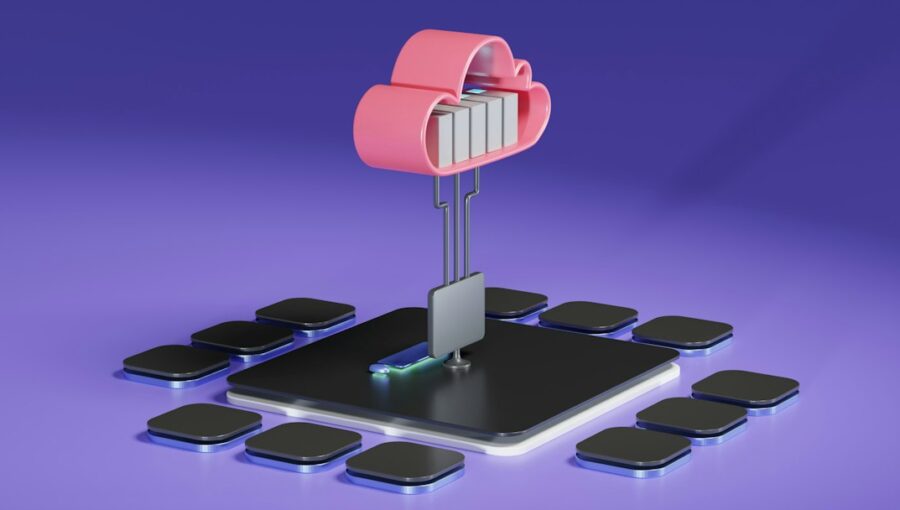
Quantum computing is still in its early stages, but the potential it holds for solving problems currently intractable for classical computers is immense. As this technology matures, we’re going to see a growing need to integrate quantum capabilities into existing IT infrastructures. The most practical way this will happen, especially for complex enterprise workloads, is through offloading specific, computationally intensive parts of an application to quantum processors. This article will walk you through the practical considerations and steps involved in preparing your hybrid multi-cloud architecture for this kind of quantum algorithm offloading.
Understanding the “Why” of Quantum Offloading
Before diving into the “how,” it’s helpful to solidify the “why.” Quantum computers aren’t going to replace classical ones; they’re designed to complement them. Think of it like a specialized co-processor. Certain types of problems, like complex optimizations, drug discovery simulations, or advanced materials science, involve calculations that scale exponentially on classical machines. Quantum algorithms, for these specific problems, can offer polynomial or even exponential speedups.
The idea of offloading is to identify these quantum-amenable parts of your application, send the relevant data to a quantum processing unit (QPU), receive the quantum computation’s output, and then integrate that result back into your classical workflow. This approach allows you to leverage the best of both worlds: the robust, scalable, and well-understood classical infrastructure for most of your application, and the specialized power of quantum for those bottleneck computations. Hybrid multi-cloud environments are particularly well-suited for this because they already deal with distributed workloads, diverse computing resources, and complex data flows, making the addition of a quantum component a logical, albeit challenging, extension.
The Role of Hybrid Multi-Cloud
Your existing hybrid multi-cloud setup already handles a lot of complexity: data residency requirements, varying compute needs across different departments or projects, and the strategic use of on-premises resources alongside public cloud providers. Introducing quantum capabilities fits neatly into this distributed paradigm. You might have sensitive data that needs to stay on-premises, while the quantum computation itself might be performed on a remote QPU offered by a cloud provider like AWS Braket, Azure Quantum, or IBM Quantum. The multi-cloud aspect gives you flexibility – you’re not locked into a single quantum vendor, and you can pick the QPU or quantum service that best suits a particular algorithm or performance requirement. It’s about optimizing resource utilization and maintaining vendor independence, just as you do with your classical workloads.
In the context of advancing technology and cloud computing, a related article that explores the intersection of social media and identity is available at Instagram Adds a Dedicated Spot for Your Pronouns. This piece highlights how platforms are evolving to accommodate personal identity, paralleling the way hybrid multi-cloud architectures are adapting to support emerging technologies like quantum algorithm offloading. Both topics emphasize the importance of flexibility and inclusivity in modern digital environments.
Key Takeaways
- The training data includes information and events up to October 2023.
- Insights and knowledge are based on a wide range of sources available until the cutoff date.
- No updates or developments occurring after October 2023 are included in the training.
- Users should verify current information from reliable sources for the latest updates.
- The model’s responses reflect the context and knowledge available up to the specified date.
Identifying Quantum-Ready Workloads

This is perhaps the most crucial initial step. Not every problem benefits from quantum computing, and shoehorning a classical problem onto a QPU will likely result in worse performance than sticking with your current approach. The goal here is to find the “sweet spot” where quantum algorithms offer a genuine advantage.
Characteristics of Quantum-Suitable Problems
Look for problems that exhibit certain characteristics. These often involve large search spaces, complex interactions between many variables, or the need to simulate quantum mechanical systems directly. Examples include:
- Optimization Problems: Think logistics, financial portfolio optimization, supply chain management, or scheduling. Many real-world optimization problems are NP-hard, meaning the time to find an exact solution grows exponentially with the problem size. Quantum algorithms like Quantum Approximate Optimization Algorithm (QAOA) or Variational Quantum Eigensolver (VQE) can offer approximate solutions with potential speedups.
- Simulation of Quantum Systems: This is a natural fit. Simulating molecular structures for drug discovery, material science, or catalyst design can be extremely computationally intensive on classical computers. Quantum computers can directly model these systems.
- Machine Learning: Certain machine learning tasks, especially those involving high-dimensional data or complex pattern recognition, might benefit from quantum approaches. Quantum machine learning (QML) is a rapidly developing field.
- Cryptography: Shor’s algorithm, for instance, can break commonly used public-key encryption schemes. While this is more of a threat than a direct offloading opportunity for most businesses, it highlights the distinct computational power of quantum systems.
Starting Small and Iterating
Don’t aim for a complete overhaul initially. Identify a specific, well-defined problem or a bottleneck within an existing application that might be suitable for quantum offloading. This could be a small optimization routine, a specific simulation step, or a data transformation that currently takes too long. Begin with proof-of-concept projects. The quantum hardware is still evolving, and the algorithms are still being refined. Starting small allows you to learn, build internal expertise, and assess the real-world performance benefits without committing significant resources to a large-scale deployment. Think of it as a progressive enhancement strategy for your compute capabilities.
Architectural Considerations for Integration

Integrating quantum offloading into a hybrid multi-cloud environment requires careful thought about how data flows, how tasks are managed, and how results are consumed. It’s not just about plugging in a new device; it’s about designing a resilient and efficient communication pipeline.
Data Flow and Data Preparation
Quantum computers are sensitive to input data. You can’t just send raw sensor data to a QPU.
The data needs to be pre-processed, encoded into a quantum-readable format (like qubits), and often reduced in complexity. This pre-processing typically happens on your classical infrastructure, potentially leveraging existing data pipelines in your multi-cloud setup.
- Data Ingress: How does the data that will be fed to the quantum algorithm arrive at the classical component responsible for preparing it? This might involve pulling from a data lake, a specific database, or a streaming service.
- Classical Pre-processing: This is where you transform your classical data into a format suitable for quantum encoding.
This could involve feature engineering, dimensionality reduction, or converting continuous values into discrete ones that can be mapped to qubit states.
- Quantum Encoding: This is the step where the prepared classical data is mapped onto qubits. This is highly algorithm-dependent and often involves specific quantum circuits.
- Result Decoding: Once the quantum computation is complete, the results (often probabilistic measurements) need to be decoded back into a classical, interpretable format. This might involve statistical analysis or aggregation.
Consider data sovereignty and compliance.
If your input data is sensitive, ensure that the classical pre-processing and the communication channels to the QPU adhere to your regulatory requirements. Data encryption both in transit and at rest is paramount.
Orchestration and Workflow Management
Managing a hybrid classical-quantum workflow is complex. You need a system that can intelligently decide when to invoke a quantum subroutine, monitor its execution, handle potential failures, and integrate the results seamlessly.
- Decision Logic: Your application needs to be able to determine if a specific computation should be offloaded to a QPU.
This might be based on problem size, expected computational cost, or the availability of quantum resources.
- Job Submission: How do you submit a quantum job to the chosen QPU backend? This typically involves APIs provided by quantum cloud platforms. You’ll need to manage API keys, authentication, and job queuing.
- Monitoring and Error Handling: Quantum computations can fail, just like classical ones.
You need mechanisms to monitor job status, detect errors (e.g., QPU not available, circuit error), and implement retry logic or fallbacks to classical algorithms.
- Resource Management: Quantum resources are still scarce and expensive. Your orchestration layer should ideally manage quotas, select the most appropriate QPU for a given task (e.g., based on qubit count, connectivity, noise levels, cost), and schedule jobs efficiently.
- Workflow Engines: Existing workflow orchestration tools (like Apache Airflow, Kubeflow, or custom solutions) can be adapted to include quantum job submission and monitoring steps. This helps in integrating quantum offloading into existing CI/CD pipelines and operational processes.
Network and Connectivity
The communication between your classical environment and the remote QPU is critical.
Latency, bandwidth, and security are key considerations.
- Latency: While quantum computations themselves can be fast for certain problems, the round-trip time (data preparation, sending to QPU, execution, receiving results, decoding) can add significant latency. For real-time applications, this might be a constraint. Batch processing or asynchronous offloading might be more suitable initially.
- Bandwidth: The amount of data you send to and receive from the QPU will vary.
Quantum encoding typically involves a significant reduction in data volume compared to classical representations, but the initial data preparation might involve large datasets.
- Security: All communications with external quantum cloud providers must be encrypted (TLS/SSL). Consider private links or VPNs if available and if your security posture demands it. Authentication and authorization mechanisms for accessing quantum services are also crucial. Ensure your multi-cloud network policies extend to these new endpoints.
Tooling and Platforms
The quantum ecosystem is rapidly evolving, with various software development kits (SDKs), frameworks, and cloud platforms emerging.
Choosing the right tools is essential for effective development and deployment.
Quantum SDKs and Frameworks
These provide the programming interfaces to build, simulate, and execute quantum circuits.
- Qiskit (IBM): A popular open-source SDK for working with quantum computers at the level of pulses, circuits, and application modules. It has a strong community and extensive documentation.
- Cirq (Google): Google’s open-source framework for programming quantum computers. It focuses on specifying quantum circuits that run on near-term quantum processors.
- PennyLane (Xanadu): An open-source library for quantum machine learning, quantum chemistry, and quantum computing with native support for quantum differentiable programming. It integrates with various quantum hardware and simulators.
- Azure Quantum Development Kit (QDK): Microsoft’s SDK, which includes the Q# quantum programming language, simulators, and tools for integrating with Azure Quantum.
- Braket SDK (AWS): AWS’s SDK for interacting with its Braket service, allowing users to build quantum algorithms, test them on simulators, and run them on different quantum hardware.
When choosing, consider your existing programming language preferences (most SDKs have Python bindings), the specific quantum algorithms you’re interested in, and the target quantum hardware you plan to use. Some frameworks offer higher-level abstractions, while others allow for more fine-grained control over the quantum circuits.
Quantum Cloud Platforms
These platforms provide access to QPUs and simulators, along with services for job management, resource allocation, and sometimes even higher-level quantum services.
- IBM Quantum: Offers access to IBM’s superconducting quantum processors and simulators. It has a comprehensive ecosystem including Qiskit.
- AWS Braket: Provides a fully managed quantum computing service that allows you to experiment with quantum algorithms on a variety of quantum hardware from different providers (e.g., Rigetti, IonQ, QuEra) and powerful simulators.
- Azure Quantum: A cloud ecosystem that brings together quantum software and hardware from partners like Quantinuum, IonQ, and Pasqal, accessible through a unified platform. It integrates well with other Azure services.
- Google Cloud Quantum AI: Google’s efforts in quantum computing, including its Sycamore processor, accessible through its Quantum AI platform, often via specific research programs or partnerships initially.
Leveraging these cloud platforms is key for a hybrid multi-cloud strategy. They abstract away much of the complexity of managing physical quantum hardware and allow you to consume quantum compute as a service, much like you consume classical compute. Evaluate them based on the types of QPUs offered, pricing models, developer tools, and integration capabilities with your existing cloud environments.
In the evolving landscape of cloud computing, the integration of quantum algorithms presents unique challenges and opportunities.
A related article that delves into innovative tools for optimizing digital strategies is available at
5G Innovations (13) Wireless Communication Trends (13) Article (343) Augmented Reality & Virtual Reality (904)
- Metaverse (267)
- Virtual Workplaces (35)
- VR & AR Games (34)
Cybersecurity & Tech Ethics (809)
- Cyber Threats & Solutions (3)
- Ethics in AI (33)
- Privacy Protection (32)
Drones, Robotics & Automation (490)
- Automation in Industry (33)
- Consumer Drones (33)
- Industrial Robotics (33)
EdTech & Educational Innovations (348)
- EdTech Tools (18)
- Online Learning Platforms (4)
- Virtual Classrooms (34)
Emerging Technologies (2,001) FinTech & Digital Finance (452) Frontpage Article (1) Gaming & Interactive Entertainment (386) Health & Biotech Innovations (719)
- AI in Healthcare (3)
- Biotech Trends (4)
- Wearable Health Devices (510)
News (97) Reviews (129) Smart Home & IoT (450)
- Connected Devices (3)
- Home Automation (4)
- Robotics for Home (33)
- SmartPhone (48)
Space & Aerospace Technologies (348)
- Aerospace Innovations (4)
- Commercial Spaceflight (3)
- Space Exploration (62)
Sustainable Technology (788) Tech Careers & Jobs (343) Tech Guides & Tutorials (1,153)
- DIY Tech Projects (3)
- Getting Started with Tech (60)
- Laptop & PC (58)
- Productivity & Everyday Tech Tips (328)
- Social Media (64)
- Software (325)
- Software How-to (3)
Uncategorized (146)