

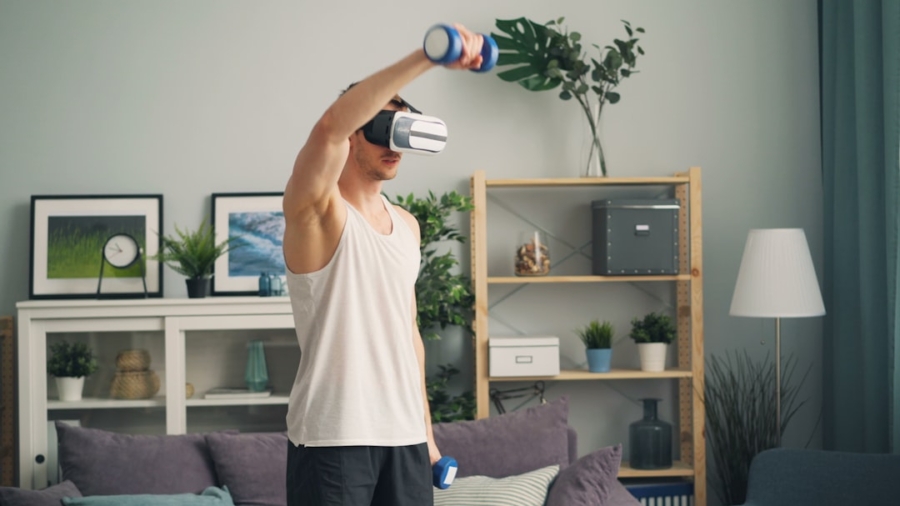
VR fitness is getting smarter, and a big part of that evolution is biometric integration. Forget just playing a game; we’re talking about using your body’s actual data to make your workouts in virtual reality more effective, safer, and even more engaging. It’s about moving beyond simply tracking calories to understanding your performance on a deeper, more personalized level. This isn’t just a gimmick; it’s a practical step towards making VR a truly powerful tool for health and wellness.
Traditional VR fitness, while fun and active, often treats all users the same. You swing your arms, you duck, you burn calories – but without knowing more about you. Biometric integration changes this by bringing real-world physiological data into the virtual gym.
Moving Beyond Guesswork
Currently, many VR fitness apps rely on algorithms and estimations for calorie burn and workout intensity. These are decent starting points, but they lack the precision of direct biometric feedback. Imagine a game telling you “good job” when your heart rate is barely elevated, or conversely, pushing you harder when you’re already in your peak zone. Biometrics bridge this gap.
Personalized Workouts: The Holy Grail
Every body is different. What’s an intense workout for one person might be a warm-up for another. Biometric data – heart rate, heart rate variability, even muscle oxygenation – allows VR fitness platforms to tailor the experience to your unique physiology, ensuring you’re working out effectively and safely.
In exploring the innovative landscape of virtual reality fitness platforms, the integration of biometric data stands out as a transformative element that enhances user experience and engagement. For those interested in the broader implications of technology in enhancing digital experiences, a related article titled “The Ultimate Guide to the Best Screen Recording Software in 2023” provides valuable insights into how screen recording tools can complement VR fitness by allowing users to track their progress and share their workouts. You can read more about it here: The Ultimate Guide to the Best Screen Recording Software in 2023.
Key Takeaways
- Clear communication is essential for effective teamwork
- Active listening is crucial for understanding team members’ perspectives
- Setting clear goals and expectations helps to keep the team focused
- Regular feedback and open communication can help address any issues early on
- Celebrating achievements and milestones can boost team morale and motivation
Key Biometric Data Points and Their Impact
So, what exactly are we talking about when we say “biometric data,” and how does it actually make a difference? It’s more than just a number on a screen.
Heart Rate (HR) and Heart Rate Zones
This is probably the most common and accessible biometric. Knowing your heart rate allows platforms to understand your exertion levels in real-time.
- Real-time Intensity Adjustment: If your heart rate is too low for your target zone, the game could dynamically increase the difficulty, speed up the tempo, or introduce more challenging movements. If it’s too high, it could prompt you to slow down or offer a cool-down segment.
- Targeted Training: Platforms can guide you through specific heart rate zones – fat-burning, cardio, or peak performance – making your workouts more goal-oriented. This is crucial for users with specific fitness objectives like improving endurance or weight loss.
- Safety Monitoring: For users with underlying health conditions, monitoring heart rate can act as an important safety mechanism, preventing overexertion.
Heart Rate Variability (HRV) for Recovery and Stress
HRV measures the variation in time between your heartbeats. It’s a key indicator of your autonomic nervous system activity and your body’s recovery state and stress levels.
- Guiding Recovery: A low HRV might indicate fatigue or overtraining. A VR platform integrating HRV could suggest lighter workouts, active recovery sessions, or even prompt you to take a rest day, preventing burnout.
- Optimizing Performance: Conversely, a high HRV suggests readiness for intense effort. This could trigger more challenging virtual environments or competitive scenarios.
- Stress Management: Some VR experiences are designed for mindfulness and relaxation. HRV feedback could help users quantify the physiological impact of these sessions, demonstrating their effectiveness in reducing stress.
Muscle Oxygenation (SmO2) for Endurance Training
This advanced metric, typically measured by devices worn on the muscle, indicates how much oxygen your muscles are consuming and delivering. It’s particularly valuable for endurance athletes.
- Preventing Muscle Fatigue: As SmO2 drops, it signals muscle fatigue. VR platforms could use this to intelligently adjust resistance, speed, or repetition counts in virtual strength or cardio exercises, optimizing muscle recruitment without over-fatigue.
- Identifying Training Plateaus: Consistent low SmO2 readings at similar effort levels might indicate a plateau, prompting the system to suggest different training modalities or volume adjustments.
- Improving Pacing: For long-duration VR cardio, SmO2 can help users maintain an optimal pace, ensuring they don’t “redline” too early or underperform.
Electromyography (EMG) for Form and Muscle Activation
EMG measures the electrical activity produced by skeletal muscles. While less common in consumer-grade VR fitness, its potential is significant for advanced applications.
- Form Correction: Imagine a VR trainer that not only sees your virtual avatar move but also detects if your bicep isn’t firing correctly during a virtual lift. EMG could provide real-time feedback on muscle activation, correcting form before injuries occur.
- Targeted Muscle Groups: For rehabilitation or highly specialized training, EMG could ensure specific muscle groups are being adequately engaged, preventing compensatory movements.
- Progressive Overload Enhancement: By seeing which muscles are truly being challenged, platforms could offer more precise resistance adjustments, moving beyond generic strength scores.
How Biometric Integration Enhances VR Fitness Platforms

It’s not just about collecting data; it’s about what the platform does with that data. The true power lies in how these insights are leveraged to create a superior user experience.
Dynamic Difficulty and Adaptive Workouts
This is perhaps the most immediate and impactful benefit. No more one-size-fits-all.
- Real-Time Adjustments: If your heart rate is soaring, the game might slow down the pace of incoming targets or reduce the number of enemies.
If you’re barely breaking a sweat, it might ramp up the challenge.
- Progressive Overload: As your fitness improves, reflected in your sustained heart rate zones at higher efforts, the platform can gradually increase the overall difficulty of your recurring workouts, ensuring you continue to be challenged.
- Varied Training Modalities: A platform could suggest different exercise types based on your biometric readiness. For example, a high HRV might suggest a high-intensity boxing session, while a low HRV might prompt a more restorative virtual yoga flow.
Enhanced Engagement and Motivation
Knowing your efforts are being precisely tracked and responded to can be incredibly motivating.
- Meaningful Feedback: Instead of generic praise, you get feedback directly tied to your physiology: “Great job maintaining Zone 3!” or “Let’s push a bit harder, your heart rate can handle it.”
- Personalized Goals: Platforms can set realistic, biometric-informed goals. Instead of “burn X calories,” it could be “spend 20 minutes in your aerobic zone” or “improve your average power output by 5% while maintaining optimal SmO2.”
- Gamified Biometric Challenges: Imagine competing with your past self based on heart rate recovery, or earning badges for maintaining consistent zone training.
Smarter Recovery and Injury Prevention
This is a critical, yet often overlooked, aspect of fitness where biometrics shine.
- Overtraining Detection: Consistent low HRV or elevated resting heart rate could trigger warnings, prompting users to reconsider their next workout or suggesting active recovery.
- Optimized Rest Periods: In strength-focused VR, the platform could recommend rest intervals between sets based on heart rate recovery, ensuring you’re adequately recovered for the next effort.
- Form Correction Prompts: While full EMG is advanced, even basic body tracking with biometric overlays (e.g., increased heart rate during an inefficient movement) could eventually hint at form issues before advanced sensors are pervasive.
Technologies Enabling Biometric VR Fitness

How does all this data get from your body into the virtual world? It’s a combination of existing and emerging technologies.
Wearable Sensors
These are the most common entry point for biometric data.
- Heart Rate Monitors: Chest straps (most accurate),腕帯 (forearm/bicep), and smartwatches (convenient, improving accuracy) are all viable options. Integration usually happens via Bluetooth or ANT+.
- Smartwatches and Rings: Devices like Apple Watch, Garmin, Whoop, and Oura Ring already collect a wealth of data (HR, HRV, sleep, skin temperature). VR platforms are increasingly looking to integrate with these existing ecosystems rather than requiring proprietary sensors.
- Specialized Sensors: More niche devices for SmO2, EMG, or even gait analysis could become more common as the demand for advanced metrics grows.
VR Headsets with Integrated Sensors
The future might see more biometrics collected directly by the headset.
- Eye Tracking for Cognitive Load: While not a direct physiological metric in the fitness sense, eye-tracking in headsets can indicate focus, fatigue, or cognitive load during complex VR workouts, which has implications for mental endurance.
- Forehead/Temple Sensors: Some headsets are experimenting with photodetection or EEG sensors on the forehead or temples to measure heart rate, brain activity, or stress levels directly. This eliminates the need for an external device for basic HR.
- Facial Tracking for Effort: While primarily for social VR, detecting facial expressions of exertion (e.g., brow furrowing, jaw clenching) could offer a complementary, albeit less precise, indicator of effort.
Software and AI-Powered Analysis
Raw data is just numbers. The real magic happens with the algorithms.
- Data Fusion: Combining data from multiple sensors (e.g., heart rate from a chest strap, movement from your VR controllers, and posture from headset tracking) to build a holistic picture.
- Machine Learning for Personalization: AI can learn your individual physiological responses over time, making workout recommendations and difficulty adjustments increasingly accurate and personalized.
- Predictive Analytics: AI can potentially predict fatigue, injury risk, or optimal training windows based on long-term biometric data trends.
As the world of virtual reality fitness continues to evolve, the integration of biometric data is becoming increasingly important for enhancing user experience and performance. A related article discusses the best laptops for video and photo editing, which can also play a crucial role in developing and refining VR fitness platforms.
For those interested in the technical aspects of creating immersive environments, this resource can provide valuable insights into the hardware needed to support advanced graphics and processing requirements.
You can read more about it in this article on the best laptops for video and photo editing.
The Road Ahead: Challenges and Opportunities
| Metrics | Value |
|---|---|
| Number of active users | 10,000 |
| Calories burned per session | 300-500 |
| Heart rate monitoring accuracy | 95% |
| Number of available workouts | 50 |
| Integration with fitness trackers | Yes |
While exciting, biometric VR fitness isn’t without its hurdles. However, the potential far outweighs the difficulties.
Data Privacy and Security Concerns
Collecting sensitive health data demands robust privacy protocols.
- Secure Storage and Transmission: Platforms must ensure that user biometric data is encrypted and handled with the utmost care, in compliance with regulations like GDPR and HIPAA where applicable.
- User Control: Users need clear control over their data – what’s collected, how it’s used, and with whom it’s shared. Opt-in consent and transparent data policies are crucial for building trust.
- Anonymization for Research: While individual data is private, anonymized and aggregated data could be invaluable for research into exercise physiology and VR’s impact on health.
Accuracy and Reliability of Sensors
Not all sensors are created equal, and calibration is key.
- Consumer vs. Medical Grade: Many consumer wearables offer “good enough” accuracy for general fitness, but for precise physiological insights, users might need to invest in higher-quality sensors.
- Environmental Factors: Sweat, movement artifacts, and sensor placement can all affect data accuracy. Platforms need to account for these variables and potentially offer guidance on optimal sensor use.
- Standardization: A lack of universal standards for data collection and interpretation across different devices can complicate integration and comparative analysis.
User Adoption and Education
The benefits need to be clearly communicated to drive adoption.
- Simplicity of Integration: Connecting external biometric devices to VR apps should be as seamless as possible. Complex pairing processes will deter users.
- Understanding the Data: Users shouldn’t need a physiology degree to understand their workout feedback. Insights should be presented clearly, concisely, and actionably within the VR experience.
- Proof of Efficacy: While intuitive, demonstrating the concrete benefits of biometric VR fitness through studies and user testimonials will be vital for widespread adoption.
The integration of biometrics isn’t just an add-on; it’s a fundamental shift in how we approach VR fitness.
It transforms a fun activity into a sophisticated, personalized training tool.
As sensors become more accurate, ubiquitous, and seamlessly integrated, and as AI improves its ability to interpret this data, VR fitness will move from a niche hobby to a mainstream, scientifically-backed pathway for improving health, performance, and overall well-being. We’re on the cusp of an era where your virtual trainer truly understands your body, dynamically adapting to help you achieve your unique fitness goals in ways traditional exercise simply can’t match.
FAQs
What is VR fitness?
VR fitness refers to the use of virtual reality technology to engage in physical exercise and fitness activities. It typically involves using VR headsets and motion-tracking controllers to simulate various fitness activities and workouts in a virtual environment.
What are biometric integrations in VR fitness platforms?
Biometric integrations in VR fitness platforms involve the use of biometric sensors and technology to track and monitor users’ physical and physiological data during their VR fitness activities. This can include heart rate, calories burned, movement patterns, and other relevant biometric data.
How do VR fitness platforms with biometric integration work?
VR fitness platforms with biometric integration use sensors and technology embedded in VR headsets, controllers, and other wearable devices to capture and analyze users’ biometric data in real-time. This data is then used to provide feedback, customize workouts, track progress, and enhance the overall fitness experience.
What are the benefits of using biometric integration in VR fitness platforms?
The benefits of using biometric integration in VR fitness platforms include personalized workout experiences, real-time performance tracking, accurate calorie and activity monitoring, enhanced motivation and engagement, and the ability to tailor fitness programs to individual users’ needs and goals.
What are some examples of VR fitness platforms with biometric integration?
Some examples of VR fitness platforms with biometric integration include systems that use VR headsets with built-in biometric sensors, wearable devices with biometric tracking capabilities, and software applications that analyze and utilize biometric data to enhance the VR fitness experience.
Enjoying our content? Make us a preferred source on Google:
Add us as a Preferred Source on Google