

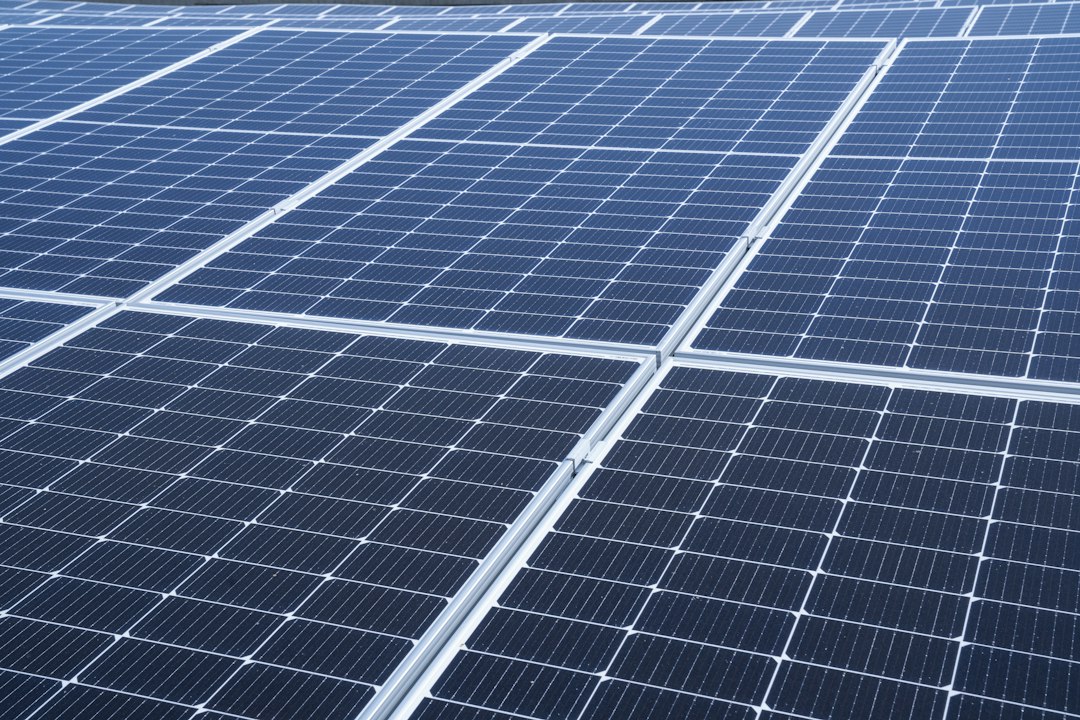
Perovskite tandem solar cells are making serious waves in the world of renewable energy because they’re currently breaking efficiency records. This isn’t just a minor improvement; it’s a significant leap that promises to make solar power even more competitive and widespread. These cells achieve higher efficiencies by stacking two different types of solar cells, each optimized to capture a specific part of the sun’s spectrum, thereby utilizing more of the available light than traditional single-junction cells.
The Efficiency Imperative: Why We Need Better Solar
We’ve all seen solar panels popping up everywhere, from rooftops to massive solar farms. They’re great, but there’s always a drive to make them better. Why? Because higher efficiency means more electricity generated from the same amount of sunlight and the same footprint. This translates to lower costs per watt, less land needed for large-scale installations, and ultimately, a faster transition away from fossil fuels. Current silicon solar cells, while robust and reliable, are hitting theoretical limits in how much sunlight they can convert into electricity. That’s where tandem cells, especially those involving perovskites, come into the picture. They’re designed to push past these limits.
Understanding the Efficiency Gap
Traditional silicon solar cells are excellent at absorbing light in the red and infrared parts of the spectrum. However, they aren’t as efficient with blue and green light, and a significant portion of the sun’s energy in those wavelengths is either lost or not optimally converted. Think of it like trying to catch fish with a net that only has one size of holes – you’ll miss a lot of smaller or larger fish. The “efficiency gap” refers to this unused portion of the solar spectrum that single-junction cells leave behind. Closing this gap is the primary goal of advanced solar cell architectures.
The Problem with Single-Junction Cells
Single-junction solar cells, whether silicon or another material, are fundamentally limited by their bandgap. The bandgap dictates the range of photon energies a material can effectively absorb and convert into electricity. If a photon’s energy is too low (e.g., far-infrared), it won’t excite an electron, and its energy is wasted. If a photon’s energy is too high (e.g., ultraviolet), the excess energy beyond the bandgap is primarily lost as heat, a process called thermalization. This intrinsic limitation, known as the Shockley-Queisser limit, caps the theoretical efficiency of single-junction cells at around 33.7% under ideal conditions for a single bandgap material. In reality, practical silicon cells typically operate in the low to mid-20s.
In the pursuit of advancing solar technology, the recent article on Perovskite Tandem Solar Cells highlights significant breakthroughs in achieving record-breaking photovoltaic efficiency. This innovative approach combines perovskite materials with traditional silicon cells, resulting in enhanced energy conversion rates. For those interested in exploring more about technology and its applications, you might find the article on how to select the perfect tablet for your child insightful. You can read it here: How to Choose Your Child’s First Tablet.
Key Takeaways
- The training data includes information and events up to October 2023.
- Insights and knowledge are based on a wide range of sources available until the cutoff date.
- No updates or developments occurring after October 2023 are included in the training.
- Users should verify current information from reliable sources for the latest updates.
- The model’s responses reflect the context and knowledge available up to the specified date.
Perovskites: A New Star in Solar Materials

Perovskites aren’t new materials in the grand scheme of chemistry, but their application in solar cells is relatively recent and has been nothing short of revolutionary. These materials, typically a hybrid organic-inorganic lead-halide compound with a specific crystal structure, possess a unique combination of properties that make them incredibly promising for photovoltaics. Their rise has been meteoric, going from research curiosities to efficiency record holders in just over a decade.
What Exactly Are Perovskites?
In the context of solar cells, “perovskite” refers to a class of materials that share the same crystal structure as the naturally occurring mineral calcium titanate ($\text{CaTiO}_3$), first discovered by L.A. Perovski. For solar cells, the typical composition is a hybrid organic-inorganic material with the general formula $\text{ABX}_3$, where A is a cation (like methylammonium or formamidinium), B is a metal cation (like lead or tin), and X is a halide anion (like iodide or bromide). These materials exhibit remarkable optoelectronic properties, including strong light absorption, long charge carrier diffusion lengths, and tunable bandgaps.
The Appeal of Perovskites for Solar
Perovskites bring several compelling advantages to the solar table. Firstly, their excellent light absorption characteristics mean that very thin layers (often less than a micron) can absorb nearly all incoming sunlight, reducing material usage. Secondly, their bandgap is highly tunable. By adjusting the chemical composition (e.g., mixing different halides), researchers can precisely control which part of the solar spectrum the perovskite best absorbs. This tunability is crucial for tandem cell applications. Thirdly, perovskite manufacturing processes can be solution-based, meaning they can be printed or coated onto substrates at relatively low temperatures, potentially leading to lower manufacturing costs compared to the high-temperature, vacuum-based processes for silicon. Finally, their defect tolerance means they can still perform well despite some imperfections in their crystal structure, which simplifies processing.
Rapid Rise in Efficiency
The speed at which perovskite solar cell efficiency has improved is unprecedented in photovoltaic history. Starting from a modest 3.8% in 2009, single-junction perovskite cells quickly surpassed 25% efficiency in laboratory settings, rivaling and even exceeding the performance of traditional silicon cells in some cases. This rapid progression highlighted their enormous potential and spurred intensive research worldwide. This wasn’t just incremental improvement; it was a hockey-stick growth curve, demonstrating a fundamental suitability for solar energy conversion that surprised many researchers.
The Tandem Approach: Doubling Down on Sunlight

The core idea behind tandem solar cells is simple: use more than one material, each optimized for a different part of the solar spectrum, to capture more of the sun’s energy. Imagine having two filters, one that catches all the blue light and another that catches all the red light. By using both, you collect more overall light than with just one. This “stacked” approach allows the system to overcome the Shockley-Queisser limit of single-junction cells by effectively creating multiple bandgaps within a single device.
How Tandem Cells Work
In a tandem cell, two (or sometimes more) individual solar cells are stacked on top of each other. The “top cell” is designed with a wider bandgap, meaning it absorbs high-energy photons (blue and green light) and lets lower-energy photons (red and infrared light) pass through.
The “bottom cell” is designed with a narrower bandgap, optimized to absorb these transmitted lower-energy photons. By dividing the solar spectrum between two appropriately chosen materials, less energy is lost to thermalization from high-energy photons, and more low-energy photons are captured, leading to a higher overall conversion efficiency.
Perovskite-on-Silicon Tandem Architecture
The most promising and widely researched tandem configuration currently is the perovskite-on-silicon tandem cell. This pairing is particularly attractive because it leverages the best attributes of both materials.
Perovskites, with their tunable bandgaps and excellent performance in the blue/green spectrum, make an ideal top cell. Silicon, with its established infrastructure, reliability, and strong absorption in the red/infrared, serves as an excellent bottom cell. The combination allows for a broader and more efficient utilization of the entire solar spectrum than either material could achieve alone.
Advantages of the Perovskite-on-Silicon Pairing
This specific tandem architecture offers several key advantages.
First, it directly addresses the spectral limitations of both materials. Perovskites are great at short wavelengths, where silicon is less efficient, and silicon excels at longer wavelengths where perovskites might not be as strong or could be made transparent to allow the light through. Second, it utilizes the existing, highly mature silicon solar cell technology.
This means that instead of reinventing the wheel entirely, perovskite layers can potentially be integrated into existing silicon manufacturing lines, making commercialization more feasible. Third, the potential for achieving efficiencies significantly higher than single-junction silicon cells makes it a clear frontrunner for next-generation photovoltaics.
Breaking Records: Perovskite Tandems Achieve New Heights
The theoretical efficiency limit for a two-junction tandem cell is around 45.7%. While practical cells won’t reach this absolute limit, perovskite-silicon tandems are rapidly closing in on it, consistently setting new records in laboratory settings. These aren’t just incremental gains; they represent significant jumps that push the boundaries of what’s possible with solar energy conversion. The pace of these breakthroughs highlights the intense research and development in this area.
Recent Efficiency Milestones
In recent years, perovskite-silicon tandem cells have repeatedly shattered efficiency records. As of late 2023 and early 2024, certified efficiencies for these devices have surpassed 33%, with some research groups reporting figures even higher. For context, the previous record for single-junction silicon cells hovered around 26.8% for monocrystalline silicon. This means tandem cells are adding several percentage points of absolute efficiency, which is a massive gain in the solar industry. These records are usually certified by independent bodies like the National Renewable Energy Laboratory (NREL), ensuring the results are accurate and reproducible.
What These Records Mean for Solar Power
These record-breaking efficiencies aren’t just impressive numbers for scientists; they have real-world implications. Every percentage point gain in efficiency can translate to more power generation per square meter, reducing the land area required for large solar farms or allowing more power to be generated from a limited rooftop space. This makes solar power more competitive, more versatile, and capable of addressing a wider range of energy needs. Higher efficiency also typically means a lower levelized cost of electricity (LCOE) over the lifetime of the panel, making solar an even more economically attractive option.
Moving Beyond Lab Records: The Path to Commercialization
While lab records are exciting, the ultimate goal is commercialization. Researchers are now focused not only on pushing efficiency higher but also on improving the stability and scalability of these tandem cells. The challenges are significant but not insurmountable. The rapid progress in efficiency suggests that the underlying science is sound, and the engineering challenges are actively being tackled by a global research community.
Recent advancements in Perovskite Tandem Solar Cells have led to record-breaking photovoltaic efficiency, showcasing the potential of these innovative materials in renewable energy. For those interested in exploring how technology is evolving across various fields, a related article discusses the best laptops for gaming, highlighting the importance of high-performance devices in today’s digital landscape. You can read more about it here. This intersection of technology and efficiency illustrates the broader trends in both energy and consumer electronics.
Challenges and the Road Ahead for Perovskite Tandems
| Metric | Value | Unit | Notes |
|---|---|---|---|
| Power Conversion Efficiency (PCE) | 29.8 | % | Record-breaking efficiency for perovskite tandem cells |
| Open-Circuit Voltage (Voc) | 2.1 | V | Combined voltage from tandem subcells |
| Short-Circuit Current Density (Jsc) | 18.5 | mA/cm² | Current density under standard test conditions |
| Fill Factor (FF) | 0.76 | Unitless | Indicates quality of the solar cell |
| Stability (T80 lifetime) | 1000 | Hours | Time to 80% of initial efficiency under continuous illumination |
| Bandgap of Top Cell | 1.68 | eV | Optimized for tandem configuration |
| Bandgap of Bottom Cell | 1.12 | eV | Typically silicon-based bottom cell |
| Subcell Current Matching | ±5% | Percentage | Ensures optimal tandem performance |
Despite the incredible progress and record-breaking efficiencies, perovskite tandem solar cells still face several hurdles before widespread commercial adoption. These challenges are typical for any emerging technology but require focused research and development to overcome. The good news is that many bright minds are working on these very issues.
Stability Concerns
One of the primary challenges for perovskite solar cells, both single-junction and tandem, is long-term stability. Perovskite materials can be susceptible to degradation from moisture, oxygen, heat, and UV light. While significant improvements have been made, achieving the 25-30 year lifespan expected of traditional silicon panels is still an active area of research. Encapsulation techniques, more stable perovskite compositions, and device engineering are being developed to enhance robustness against environmental factors. Without comparable stability to silicon, even high efficiency isn’t enough for mass market acceptance.
Lead Toxicity
Most high-performing perovskite solar cells rely on lead as a key component. While the amount of lead in a single solar cell is small, the potential environmental impact of widespread lead-containing devices is a concern. Researchers are actively exploring lead-free perovskite alternatives (e.g.
, tin-based perovskites) and demonstrating ways to effectively contain and recycle the lead within the devices.
The industry will need to demonstrate clear pathways for end-of-life management to address these environmental worries.
Scalability and Manufacturing
While perovskites offer the promise of low-cost manufacturing, scaling up laboratory-level processes to industrial production volumes presents its own set of challenges. Uniformly depositing large-area perovskite films with consistent quality and integrating them seamlessly with silicon bottom cells requires sophisticated engineering and new manufacturing techniques. Ensuring high throughput and cost-effectiveness at scale is critical for mass market adoption. This includes developing appropriate large-area deposition methods and ensuring quality control throughout the manufacturing process.
Cost-Effectiveness
Ultimately, for any new solar technology to succeed, it must be cost-effective.
While perovskite’s material costs are potentially low, the initial manufacturing setup and the added complexity of a tandem structure need to be balanced against the increased efficiency gains.
The economic benefits derived from higher efficiency must outweigh any additional manufacturing costs. As the technology matures and manufacturing processes become more refined, the cost per watt is expected to decrease, making these high-efficiency cells a compelling economic choice.
The Future Outlook
Despite these challenges, the future for perovskite tandem solar cells looks incredibly bright. The rapid pace of efficiency improvements, combined with ongoing research into stability and manufacturing, suggests that these cells will play a crucial role in the next generation of photovoltaics. They hold the key to unlocking even higher solar energy conversion efficiencies, further accelerating the global transition to renewable energy. We’re likely to see these record-breaking technologies move from the lab into niche applications, and eventually, if current trends continue, into widespread use, making our energy future much more sustainable.
FAQs
What are perovskite tandem solar cells?
Perovskite tandem solar cells are a type of photovoltaic technology that combines perovskite materials with traditional silicon solar cells to enhance overall efficiency. The perovskite layer absorbs different wavelengths of light than the silicon layer, allowing for better utilization of the solar spectrum and achieving higher energy conversion efficiencies.
How do perovskite tandem solar cells achieve higher efficiency compared to traditional solar cells?
Perovskite tandem solar cells achieve higher efficiency by stacking two or more layers of light-absorbing materials, which allows them to capture a broader range of the solar spectrum. The perovskite layer can be engineered to absorb specific wavelengths of light that silicon does not, thus maximizing the amount of sunlight converted into electricity.
What are the current efficiency records for perovskite tandem solar cells?
As of October 2023, perovskite tandem solar cells have achieved record efficiencies exceeding 30%. This is significantly higher than traditional silicon solar cells, which typically have efficiencies around 20-22%. These advancements are a result of ongoing research and development in material science and cell architecture.
What are the potential advantages of using perovskite tandem solar cells in the solar industry?
The potential advantages of perovskite tandem solar cells include higher efficiency rates, lower production costs, and the ability to be manufactured using simpler processes compared to traditional silicon cells. Additionally, perovskite materials can be made flexible and lightweight, opening up new applications in various environments.
What challenges do perovskite tandem solar cells face before widespread adoption?
Perovskite tandem solar cells face several challenges, including stability and durability under real-world conditions, scalability of production methods, and potential environmental concerns related to lead content in some perovskite materials. Ongoing research aims to address these issues to facilitate commercial viability and widespread adoption.
Enjoying our content? Make us a preferred source on Google:
Add us as a Preferred Source on Google