


Passive daytime radiative cooling (PDRC) coatings can significantly reduce the internal temperature of electronics enclosures without needing electricity, by reflecting sunlight and radiating heat efficiently into space. This article explores how these passive thermal coatings work, their benefits, and practical considerations for integrating them into electronics enclosure designs.
Understanding Passive Daytime Radiative Cooling (PDRC)
At its core, passive daytime radiative cooling is about shedding heat without active power input. Think of it like a highly optimized mirror that not only bounces away incoming solar radiation but also acts as a super-efficient radiator, expelling heat away from the surface even when the sun is shining directly on it. This combination is key to keeping electronics enclosures cooler, particularly in outdoor or unventilated environments.
The Physics Behind the Chill
The magic of PDRC lies in a careful balance of optical properties: high solar reflectivity and high thermal emissivity in the atmospheric transparency window.
High Solar Reflectivity
Firstly, to cool an enclosure during the day, the coating needs to reflect as much sunlight as possible. Sunlight, or solar radiation, carries a lot of energy, and if absorbed, it turns into heat. A PDRC coating aims to have a solar reflectance (Rs) value close to 1, meaning it bounces back almost all incoming sunlight across the visible and near-infrared spectrum. This minimizes the heat gain from the sun, which is the primary source of heating for most outdoor electronics enclosures. Traditional white paints offer some solar reflectivity, but advanced PDRC coatings are engineered to achieve much higher values, often exceeding 95-98%.
High Thermal Emissivity in the Atmospheric Window
Secondly, and this is where PDRC truly differentiates itself, the coating needs to emit thermal radiation efficiently. All objects above absolute zero emit thermal radiation. However, Earth’s atmosphere absorbs and re-emits much of this radiation, trapping heat. There’s a specific range of infrared wavelengths, roughly between 8 and 13 micrometers, known as the “atmospheric transparency window” or “sky window,” where the atmosphere is largely transparent. This means that thermal radiation emitted at these wavelengths can escape directly into the cold expanse of outer space, effectively bypassing the warm atmosphere. PDRC coatings are engineered to have very high thermal emissivity (ε) specifically within this atmospheric window, ideally approaching 1. This ensures that any heat generated by the electronics inside the enclosure, or any residual heat absorbed from the sun, can be efficiently radiated away into the cosmic cold sink.
Low Thermal Emissivity Outside the Atmospheric Window
While high emissivity in the atmospheric window is crucial, it’s also important for the coating to have low emissivity at other infrared wavelengths, particularly those where the atmosphere is opaque. This prevents the coating from absorbing thermal radiation from the atmosphere itself, which would counteract the cooling effect. By selectively emitting only where the atmosphere is transparent, the coating maximizes net radiative heat loss.
In the realm of innovative thermal management solutions, the concept of Passive Daytime Radiative Cooling is gaining traction, particularly in applications such as electronics enclosures. This technology aims to enhance energy efficiency by utilizing passive thermal coatings that can effectively dissipate heat without the need for active cooling systems. For those interested in exploring related advancements in technology, a compelling article discussing the latest Apple laptops can be found at this link, which highlights how these devices are designed with thermal performance in mind, showcasing the importance of effective heat management in modern electronics.
Key Takeaways
- The training data includes information and events up to October 2023.
- Insights and knowledge are based on a wide range of sources available until the cutoff date.
- No updates or developments occurring after October 2023 are included in the training.
- Users should verify current information from reliable sources for the latest updates.
- The model’s responses reflect the context and knowledge available up to the specified date.
The Design and Materials of PDRC Coatings
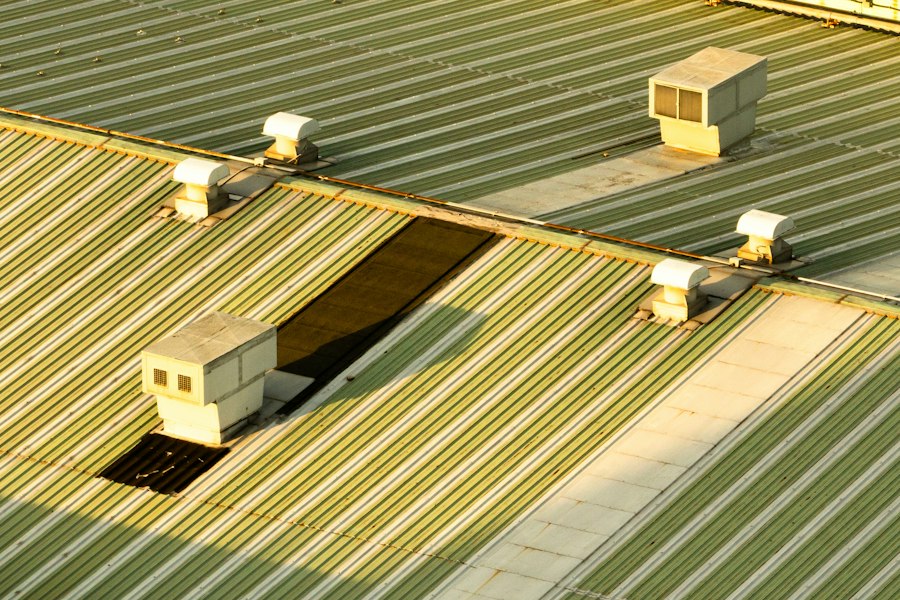
Achieving the unique optical properties required for PDRC isn’t as simple as applying a coat of white paint. It involves careful material selection and structural engineering at the micro and nanoscale.
Common Material Approaches
Current PDRC coatings generally fall into a few material categories, each with its own advantages and challenges.
Polymer-Matrix Composites
These coatings typically consist of highly reflective particles (like barium sulfate, silica, or titanium dioxide) dispersed within a polymer binder (e.g., acrylics, PVDF, or silicone). The polymer provides structural integrity and adhesion, while the particles are responsible for the desired optical properties. Barium sulfate is particularly effective due to its very high solar reflectivity and strong emissivity in the atmospheric window. The size and distribution of these particles are critical for optimizing both solar reflectance and thermal emissivity. These coatings are often applied as paints and can be quite durable, making them practical for enclosure applications.
All-Polymer Films
Some PDRC materials are designed as all-polymer films, where the polymer itself is engineered to have the necessary optical properties. For instance, certain polymers can be structured to reflect sunlight while also possessing strong emission bands within the atmospheric window. These films can be applied as thin layers and may offer advantages in terms of manufacturing scalability and lightweight applications.
Multilayer Dielectric Stacks
More advanced PDRC designs involve precision-engineered multilayer dielectric stacks. These are thin films composed of alternating layers of different dielectric materials, each with a specific refractive index. By carefully controlling the thickness and sequence of these layers, engineers can create highly selective optical filters that maximize solar reflectivity and atmospheric window emissivity while suppressing emission at other wavelengths. While offering superior performance, these coatings are often more complex and expensive to manufacture, limiting their widespread adoption for general electronics enclosures at present.
Nanoscale Engineering for Optimal Performance
The effectiveness of PDRC coatings often hinges on their nanoscale structure.
Particle Size and Distribution
For particle-based coatings, the size and distribution of the reflective and emissive particles are meticulously controlled. Particles that are too large might scatter light inefficiently, while particles that are too small might not interact strongly enough with specific wavelengths. Optimizing particle size ensures maximum scattering of solar radiation and strong emission in the infrared.
Porosity and Surface Roughness
Some PDRC coatings incorporate controlled porosity or surface roughness. Micro- or nanostructured surfaces can enhance diffuse reflection of sunlight, preventing glare and improving overall solar reflectance. Porosity can also influence the thermal properties and structural integrity of the coating.
Thickness Considerations
The thickness of the PDRC coating is another important factor. A certain minimum thickness is required to achieve full opacity and sufficient optical depth for optimal performance. However, excessively thick coatings can add weight and material cost without necessarily providing significant additional cooling benefits.
Benefits for Electronics Enclosures

Integrating PDRC coatings into electronics enclosures offers several compelling advantages, particularly for systems deployed in challenging outdoor or high-temperature environments.
Reduced Internal Temperatures
This is the most direct and significant benefit. By reflecting solar energy and radiating internal heat, PDRC coatings can substantially lower the peak internal temperature of an enclosure. This reduces the thermal stress on electronic components, leading to greater reliability and longevity.
Depending on the ambient conditions and solar irradiance, temperature reductions of 5-15°C below ambient are commonly reported, with some advanced systems achieving even greater deltas. For example, a typical electronics enclosure in direct sunlight might reach 60-70°C without cooling; with PDRC, this could be brought down to 45-55°C, or even lower, reducing the need for active cooling.
Enhanced Component Lifespan and Reliability
Electronic components, especially power electronics, batteries, and processors, are highly sensitive to temperature. High operating temperatures accelerate degradation mechanisms such as electromigration, material fatigue, and chemical reactions within components.
Every 10°C reduction in operating temperature can roughly double the lifespan of certain electronic components (following the Arrhenius equation). By keeping components cooler, PDRC coatings directly contribute to significantly extending the operational lifespan of the electronics and improving overall system reliability, reducing maintenance and replacement costs.
Elimination or Reduction of Active Cooling Systems
Many outdoor electronics enclosures rely on active cooling solutions like air conditioners, fans, or Peltier coolers to manage heat. These systems consume electricity, add complexity, increase maintenance requirements, and introduce potential points of failure.
PDRC coatings can eliminate the need for active cooling entirely in many applications, or at least drastically reduce its size and power consumption. This translates directly into lower energy bills, simpler designs, and enhanced system resilience, especially in remote or off-grid locations.
Energy Savings and Environmental Impact
The reduction in or elimination of active cooling directly leads to significant energy savings. This is not only a cost benefit but also an environmental one, reducing the carbon footprint associated with powering electronics enclosures.
For large-scale deployments, such as telecommunication infrastructure, street lighting controls, or solar inverter enclosures, the cumulative energy savings can be substantial.
Passive and Maintenance-Free Operation
Unlike active cooling systems that require power and regular maintenance (e.g., filter cleaning, refrigerant checks), PDRC coatings are entirely passive. Once applied, they function continuously without moving parts, electricity, or ongoing attention. This makes them ideal for remote or difficult-to-access installations where regular maintenance is impractical or costly.
Their ‘set and forget’ nature offers a compelling advantage for long-term deployment.
Practical Considerations for Implementation
While PDRC offers significant advantages, successful implementation requires careful consideration of various practical aspects.
Application Methods
PDRC coatings can be applied to electronics enclosures using several methods, similar to conventional paints or films.
Painting and Spraying
Many polymer-matrix composite PDRC coatings are formulated as paints and can be applied using standard painting techniques like brushing, rolling, or spraying. This offers flexibility for both new enclosure fabrication and retrofitting existing enclosures. Proper surface preparation (cleaning, priming) is crucial to ensure good adhesion and durability. Manufacturers provide specific guidelines for application thickness and curing times.
Film Lamination
For PDRC materials developed as films, lamination is the primary application method. These films often come with an adhesive backing and are applied directly to the enclosure surface. This method can offer more uniform thickness and potentially better optical performance for some advanced materials but may be less suitable for complex geometries or textured surfaces.
Durability and Longevity
The outdoor environment is harsh, exposing enclosures to UV radiation, moisture, abrasion, and temperature cycling. The durability of PDRC coatings is paramount.
UV Resistance
UV radiation can degrade polymers over time, leading to yellowing, chalking, and a reduction in solar reflectivity. PDRC coatings designed for outdoor use incorporate UV stabilizers and use inherently UV-resistant polymers to maintain their performance over many years.
Abrasion and Chemical Resistance
Depending on the application, the coating might need to withstand physical abrasion (e.g., sand, wind-blown debris) or exposure to chemicals (e.g., cleaning agents, pollutants). Coatings are formulated with specific binders and additives to enhance their resistance to these factors.
Adhesion
Good adhesion to the enclosure substrate (e.g., aluminum, steel, plastics) is critical to prevent peeling or delamination. This often involves proper surface preparation and the use of appropriate primers.
Long-Term Performance Degradation
While PDRC coatings are designed for longevity, some gradual degradation in performance (e.g., slight reduction in solar reflectivity due to dirt accumulation or minor material degradation) over many years is possible. Regular cleaning can mitigate performance loss due to dirt, and reputable manufacturers provide expected lifespan data for their products.
Cost-Benefit Analysis
The initial cost of PDRC coatings might be higher than conventional paints. However, this upfront investment should be weighed against the long-term savings.
Initial Material and Application Costs
The cost of PDRC materials varies widely based on their composition, performance, and manufacturer. Advanced multi-layer films will naturally be more expensive than simpler paint formulations. Application costs will depend on the method and labor involved.
Energy Savings and Maintenance Reduction
Significant savings come from reduced electricity consumption for active cooling and the elimination or reduction of maintenance for cooling systems. For a system with a long operational lifespan (5-15+ years), these recurring savings can far outweigh the initial coating cost.
Extended Equipment Lifespan
The improved reliability and extended lifespan of the electronics components themselves represent a substantial financial benefit, reducing replacement costs and downtime.
Payback Period
Calculating the payback period, which is the time it takes for the energy and maintenance savings to offset the initial coating cost, is crucial for decision-making. In many scenarios, especially for high-power electronics or systems in hot climates, the payback period can be surprisingly short.
Environmental Factors and Limitations
While powerful, PDRC has its limitations and considerations related to the environment.
Humidity and Dew Point
High humidity and the formation of dew or frost on the coating surface can temporarily reduce its cooling performance. Water has strong absorption bands in the atmospheric window, meaning a layer of water can impede thermal radiation escape. While the effect is usually temporary (until the moisture evaporates), it’s a consideration for very humid climates.
Dust and Dirt Accumulation
Accumulation of dust, dirt, or other pollutants on the coating surface can reduce its solar reflectivity, diminishing performance. Regular cleaning may be necessary in dusty environments to maintain optimal efficiency. Some coatings are formulated with self-cleaning properties (e.g., superhydrophobic surfaces) to mitigate this.
Ambient Temperature and Sky Temperature
The effectiveness of PDRC is directly related to the temperature difference between the enclosure surface and the “sky temperature.” On clear nights, the sky temperature can be significantly colder than ambient air, making nocturnal radiative cooling very effective. During the day, the sky temperature is influenced by atmospheric conditions, but the ability to radiate heat directly to space still provides a cooling advantage over simply being exposed to ambient air. In very cloudy or smoggy conditions, the atmospheric window can be partially closed, reducing the efficiency of radiative cooling.
Heat Load of the Electronics
PDRC is most effective when the internal heat load of the electronics is moderate. For very high-power applications that generate a lot of heat, PDRC alone might not be sufficient and may need to be combined with other passive or even active cooling strategies (e.g., heat sinks, heat pipes, or small fans). PDRC acts as the first line of defense, reducing the overall thermal burden.
In exploring innovative solutions for temperature management in electronics, the concept of Passive Daytime Radiative Cooling is gaining attention, particularly through the use of passive thermal coatings for electronics enclosures. These coatings can significantly enhance the thermal performance of devices by effectively dissipating heat without the need for active cooling systems. For those interested in the broader implications of design and technology in various fields, a related article on lighting design software can provide valuable insights into how effective design principles can be applied across different domains. You can read more about this in the article on the best lighting design software of 2023.
Future Outlook and Emerging Trends
| Metric | Value | Unit | Description |
|---|---|---|---|
| Solar Reflectance | 0.92 | Fraction | Percentage of solar radiation reflected by the coating |
| Thermal Emittance | 0.95 | Fraction | Efficiency of coating to emit infrared radiation |
| Cooling Power Density | 100 | W/m² | Net cooling power under direct sunlight |
| Temperature Reduction | 8 | °C | Average temperature drop of electronics enclosure surface |
| Coating Thickness | 50 | µm | Typical thickness of passive thermal coating layer |
| Durability | 5 | Years | Expected operational lifetime under outdoor conditions |
| Operating Temperature Range | -40 to 85 | °C | Temperature range for effective coating performance |
The field of passive daytime radiative cooling is continuously evolving, with exciting advancements on the horizon that promise even greater performance and broader applications for electronics enclosures.
Enhanced Performance and Novel Materials
Researchers are actively exploring new materials and composite structures to push the boundaries of PDRC performance.
Metamaterial and Photonic Crystal Designs
Beyond traditional particle-in-binder composites, the development of metamaterials and photonic crystals specifically engineered for PDRC is showing significant promise. These materials can achieve highly precise control over light reflection and thermal emission across specific wavelength ranges. By structuring materials at the nanoscale to interact with electromagnetic waves in tailored ways, it’s possible to create coatings with near-perfect solar reflectivity and extremely high emissivity within the atmospheric window. These advanced designs could offer even greater temperature reductions and operate effectively in more challenging environments.
Phase-Change Materials (PCMs) Integration
Combining PDRC coatings with phase-change materials (PCMs) represents another area of innovation. PCMs absorb and release large amounts of latent heat during their phase transition (e.g., melting and freezing), effectively buffering temperature fluctuations. Integrating PCMs within or beneath a PDRC coating could provide enhanced thermal stability for electronics, particularly during peak heat loads or when solar irradiance varies rapidly. The PDRC coating would reduce overall heat gain, while the PCM would absorb any remaining excess heat, releasing it slowly when the PDRC is most effective (e.g., at night).
Transparent PDRC Coatings
A particularly exciting development is the research into transparent or spectrally selective PDRC coatings. These materials would allow visible light to pass through (e.g., for displays, cameras, or windows on enclosures) while still reflecting solar infrared and emitting thermal infrared. This would open up new applications for enclosures that require optical transparency alongside thermal management. Achieving high transparency in the visible spectrum while maintaining strong performance in the solar and atmospheric window infrared is a complex challenge, but progress is being made.
Broader Adoption and Standardization
As PDRC technology matures, we can expect to see wider adoption and the development of industry standards.
Increased Commercial Availability
Currently, several manufacturers offer PDRC paint formulations and films. As demand grows and production scales, the cost of these materials is likely to decrease, making them more accessible for a broader range of electronics enclosure applications, from consumer electronics to large-scale industrial infrastructure.
Integration into Design Software
Thermal design software tools are becoming increasingly sophisticated. We can anticipate that PDRC properties will be more routinely integrated into these simulation tools, allowing engineers to accurately model and predict the thermal performance of enclosures with PDRC coatings during the design phase. This will streamline the design process and optimize material selection.
Industry Standards and Performance Metrics
For widespread adoption, clear industry standards and consistent performance metrics are crucial. This includes standardized testing protocols for solar reflectivity, thermal emissivity, durability, and long-term performance. Such standards will help designers compare different PDRC products objectively and ensure that chosen coatings meet specific application requirements.
Expanding Application Areas
While this article focuses on electronics enclosures, the principles of PDRC are applicable to a much wider array of thermal management challenges.
Buildings and Infrastructure
PDRC is already being explored for cooling buildings, rooftops, and urban infrastructure, reducing urban heat island effects and energy consumption for air conditioning. This experience will feedback into electronics enclosure design.
Automotive and Aerospace
Future applications could extend to automotive components, electric vehicle battery cooling, and even passive thermal management for satellites and spacecraft, where energy efficiency and weight are critical. The ongoing research in these diverse fields will undoubtedly accelerate innovation in PDRC technologies relevant to electronics.
The outlook for passive daytime radiative cooling in electronics enclosures is bright. With continuous material science advancements and increasing awareness of sustainable thermal management solutions, PDRC is poised to become a staple technology for extending the lifespan, improving the reliability, and reducing the energy footprint of electronics across countless applications.
FAQs
What is passive daytime radiative cooling?
Passive daytime radiative cooling is a technology that allows surfaces to cool down by radiating heat away into the atmosphere without the need for external energy sources. This process utilizes the natural properties of materials to reflect sunlight while emitting thermal radiation, effectively lowering the temperature of the surface during the day.
How do thermal coatings work for electronics enclosures?
Thermal coatings for electronics enclosures are designed to enhance the thermal management of electronic devices. These coatings typically have high reflectivity to solar radiation and high emissivity for thermal radiation, allowing them to dissipate heat efficiently. By applying these coatings, the enclosures can maintain lower temperatures, improving the performance and longevity of the electronic components inside.
What are the benefits of using passive thermal coatings?
The benefits of using passive thermal coatings include reduced energy consumption, improved thermal performance, and enhanced reliability of electronic devices. By minimizing the need for active cooling systems, these coatings can lead to lower operational costs and a smaller environmental footprint, making them an attractive option for various applications.
Are there specific materials used in passive thermal coatings?
Yes, passive thermal coatings are often made from materials that possess high solar reflectance and thermal emissivity. Common materials include specialized polymers, ceramics, and metallic coatings that are engineered to optimize their thermal properties. These materials are selected based on their ability to withstand environmental conditions while providing effective cooling performance.
What applications can benefit from passive daytime radiative cooling?
Applications that can benefit from passive daytime radiative cooling include outdoor electronics, telecommunications equipment, solar panels, and various industrial machinery. By implementing passive thermal coatings, these applications can achieve better thermal management, leading to improved efficiency and reduced risk of overheating.
Enjoying our content? Make us a preferred source on Google:
Add us as a Preferred Source on Google