

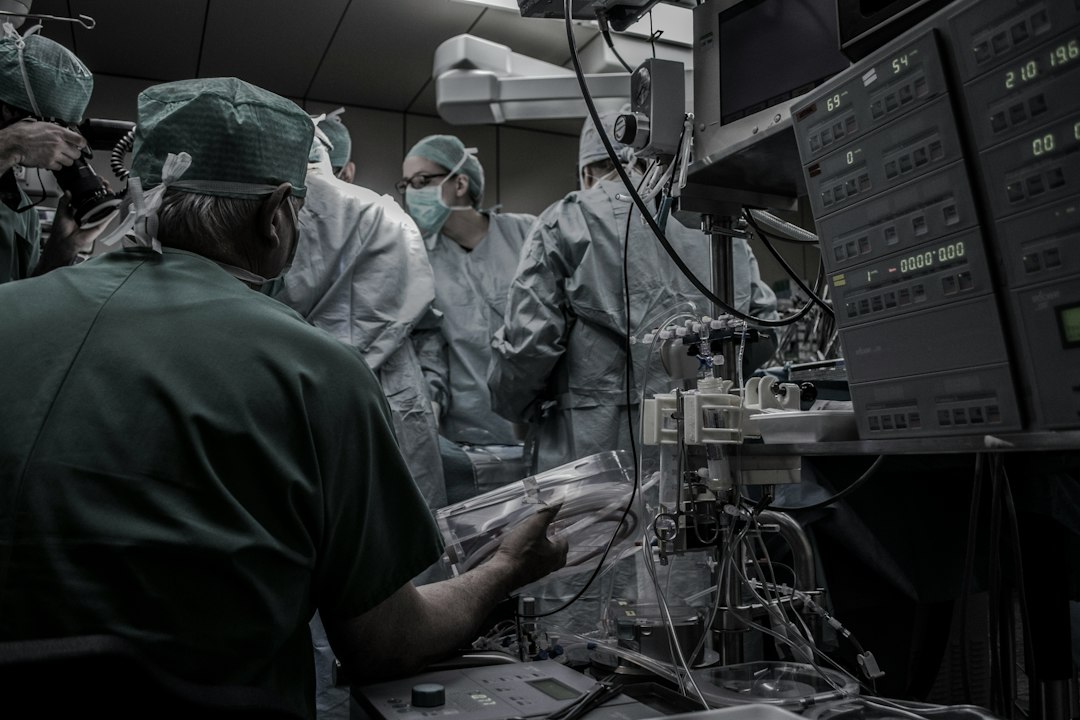
Training the next generation of surgeons is undergoing a significant transformation, largely thanks to high-fidelity Extended Reality (XR) labs and their sophisticated surgical simulation protocols. These advanced environments are moving beyond traditional cadaver labs and basic laparoscopic trainers, offering immersive, realistic, and repeatable experiences that accelerate skill acquisition, refine decision-making, and drastically reduce the learning curve for complex procedures. In short, XR labs are providing a safer, more efficient, and highly effective way to prepare surgeons for the operating room.
The Foundation of High-Fidelity XR Surgical Simulation
High-fidelity XR surgical simulation isn’t just about putting on a headset; it’s a meticulously crafted environment designed to replicate the nuances of actual surgery. This involves a blend of advanced hardware, sophisticated software, and well-defined training methodologies. The goal is to create an experience so close to reality that trainees can develop muscle memory, refine cognitive processes, and even learn to manage stress without the inherent risks of live patient interaction.
Defining High-Fidelity XR
High-fidelity in this context refers to the degree of realism and accuracy in the simulation.
It encompasses visual fidelity (realistic anatomical rendering, tissue textures, bleeding, and fluid dynamics), haptic fidelity (tactile feedback that mimics tissue resistance, suturing tension, and bone drilling), and physiological fidelity (real-time patient responses like vital sign changes, bleeding rates, and anesthetic effects).
When we talk about XR, we’re broadly referring to Virtual Reality (VR), Augmented Reality (AR), and Mixed Reality (MR) technologies.
- Virtual Reality (VR): Fully immersive, blocking out the real world to place the trainee entirely within a simulated surgical environment. This is excellent for focused procedural training.
- Augmented Reality (AR): Overlays digital information onto the real world, allowing trainees to interact with physical tools and colleagues while seeing virtual anatomical structures or procedural guidance. Think of surgeons wearing AR glasses during actual surgery for real-time data overlays.
- Mixed Reality (MR): A more advanced blend of AR, where virtual objects are anchored to and interact with the real world, creating a truly hybrid environment. Trainees might manipulate a physical surgical instrument that has its virtual counterpart interacting with a holographic organ.
Core Components of an XR Lab
A modern high-fidelity XR lab is a complex ecosystem. It typically includes:
- Advanced Head-Mounted Displays (HMDs): These are the gateways to the XR experience, offering high-resolution visuals and wide fields of view. Increasingly, HMDs also integrate eye-tracking for analytics and focus assessment.
- Haptic Feedback Devices: These range from basic force-feedback joysticks to sophisticated robotic arms that replicate the feel of tissue, bone, and organs, providing resistance and texture.
- Tracking Systems: Precise motion tracking for instruments and the trainee’s hands and body is crucial for accurate interaction within the virtual space. This often involves optical, electromagnetic, or inertial sensors.
- Powerful Workstations and Graphics Processors: Rendering complex 3D anatomical models, real-time physiological responses, and intricate physics simulations requires substantial computing power.
- Specialized Software Platforms: These platforms host the surgical simulations, manage scenarios, record performance metrics, and often include modules for curriculum development and debriefing.
- Anatomical Models and Datasets: High-resolution 3D models derived from CT, MRI, and cadaveric scans form the basis of realistic virtual anatomy, often customizable for specific patient pathologies.
In the realm of advanced medical education, the article on Next-Gen Medical Training: Surgical Simulation Protocols in High-Fidelity XR Labs highlights the transformative impact of immersive technologies on surgical training. For those interested in exploring innovative marketing strategies that can complement such cutting-edge developments, a related article discussing the best niche for affiliate marketing on TikTok can provide valuable insights. You can read more about it here: Best Niche for Affiliate Marketing in TikTok.
Key Takeaways
- The training data includes information and events up to October 2023.
- Insights and knowledge are based on a wide range of sources available until the cutoff date.
- No updates or developments occurring after October 2023 are included in the training.
- Users should verify current information from reliable sources for the latest updates.
- The model’s responses reflect the context and knowledge available up to the specified date.
Developing Effective Surgical Simulation Protocols
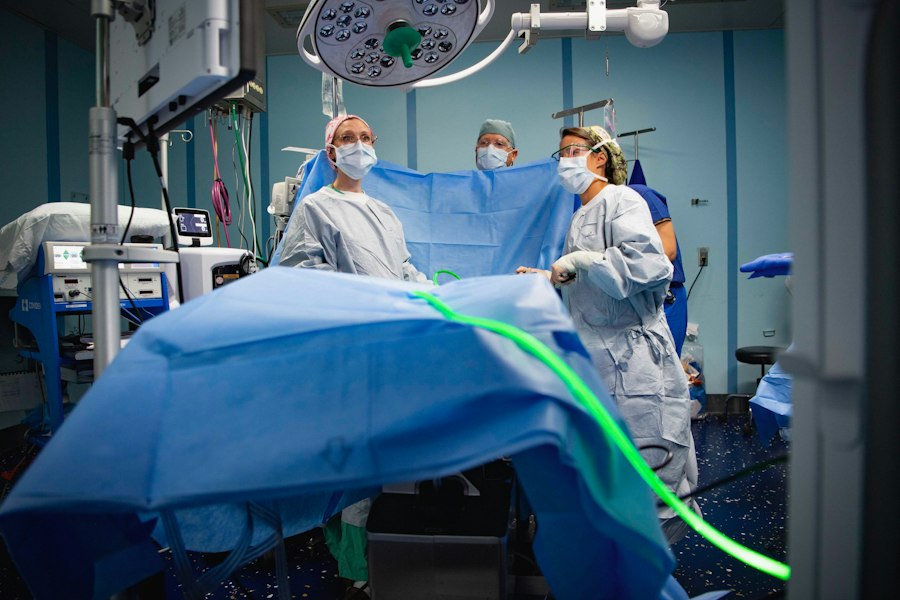
The hardware and software are only tools; their effectiveness hinges on the simulation protocols that guide their use. These protocols are structured training plans designed to optimize learning outcomes, ensure consistency, and allow for objective performance evaluation. They address everything from scenario design to debriefing methodologies.
Scenario Design and Development
Creating compelling and effective surgical scenarios is at the heart of surgical simulation protocols. This isn’t just about replicating a procedure; it’s about simulating the entire surgical ecosystem.
- Procedure-Specific Modules: Each module focuses on a particular surgical procedure, such as laparoscopic cholecystectomy, robotic-assisted prostatectomy, or open appendectomy. These modules break down the procedure into discrete steps, allowing for incremental learning.
- Pathology Variation: Simulations should incorporate a range of common and uncommon pathologies. For example, a cholecystectomy simulation might include scenarios for acute inflammation, adhesions, or an anomalous cystic artery, forcing trainees to adapt.
- Complication Management: Critically, scenarios must include realistic complications (e.g., hemorrhage, organ perforation, instrument malfunction). Trainees learn to identify, prevent, and manage these events under pressure, a skill difficult to teach safely in live surgery.
- Team Dynamics and Communication: More advanced protocols integrate multi-user XR environments where surgical teams (surgeon, assistant, scrub nurse, anesthesiologist) can practice communication, coordination, and crisis resource management.
- Patient-Specific Data Integration: In the future, protocols will increasingly allow for importing real patient imaging data (CT, MRI) to create truly patient-specific simulations, enabling pre-operative planning and rehearsal for complex cases.
Phased Learning Pathways
Effective protocols typically follow a phased approach, moving trainees from foundational skills to complex procedural mastery.
- Basic Skill Acquisition (Phase 1): Focus on fundamental surgical skills like instrument handling, tissue manipulation, suturing, knot tying, and camera navigation in VR. These are often generic exercises that build dexterity and spatial awareness.
- Procedural Component Training (Phase 2): Trainees practice specific steps or segments of a complete procedure. For instance, in a laparoscopic appendectomy, they might repeatedly practice grasping the appendix, ligating vessels, or transecting the mesoappendix. This allows for focused repetition and mastery of critical steps.
- Full Procedure Simulation (Phase 3): Once individual components are mastered, trainees perform the entire surgical procedure from incision to closure, often with increasing levels of difficulty and unexpected events.
- Advanced and Crisis Management (Phase 4): These scenarios focus on rare pathologies, complex anatomies, or severe complications requiring rapid decision-making, teamwork, and advanced problem-solving skills.
Performance Metrics and Objective Assessment
One of the most powerful advantages of XR simulation is the ability to objectively measure and analyze performance, moving beyond subjective evaluations.
- Quantitative Metrics: Protocols define a range of measurable parameters, including:
- Time to Completion: How quickly a task or procedure is finished.
- Instrument Path Length: Efficiency of movement, minimizing unnecessary travel.
- Force Exertion: Gentle tissue handling versus excessive force.
- Error Rate: Number of critical errors, tissue damage, or missed steps.
- Economy of Motion: Smoothness and precision of movements.
- Blood Loss (Simulated): In scenarios involving hemorrhage.
- Qualitative Assessment: While objective data is crucial, expert observers still provide qualitative feedback on decision-making, situational awareness, and adherence to sterile technique.
- Proficiency-Based Progression: Trainees only advance to the next phase or level of complexity once they meet predefined proficiency benchmarks, ensuring competence at each stage. This contrasts with time-based progression in traditional models.
The Role of Debriefing and Feedback

Simulation is only as effective as the debriefing that follows. High-fidelity XR labs facilitate detailed and objective debriefing sessions, which are critical for learning and skill consolidation.
Structured Debriefing Sessions
Debriefing protocols ensure that feedback is constructive, targeted, and promotes self-reflection.
- Video Playback and Replay: Modern XR platforms record every aspect of a trainee’s performance. During debriefing, instructors can replay the entire procedure or specific critical moments from multiple angles, allowing trainees to visually analyze their actions.
- Data Visualization: Performance metrics are often presented visually (graphs, charts), highlighting areas of strength and weakness.
For example, a surgeon might see a chart showing excessive instrument movement or prolonged operating time during a specific procedural step.
- Guided Self-Reflection: Instructors guide trainees through a reflective process, encouraging them to identify what went well, what could be improved, and why certain decisions were made. This fosters critical thinking and metacognition.
- Targeted Feedback: Feedback is specific and actionable, focusing on concrete behaviors and skills rather than general critiques. For instance, instead of “you were slow,” the feedback might be, “your instrument exchange technique added 30 seconds to the anastomosis.”
- Peer-to-Peer Learning: In group simulations, peer feedback can also be integrated, fostering a collaborative learning environment.
Integrating Artificial Intelligence (AI) in Feedback
The future of debriefing protocols increasingly involves AI to enhance feedback mechanisms.
- Automated Performance Analysis: AI algorithms can analyze vast amounts of performance data (instrument movements, gaze tracking, decision points) to provide immediate and objective feedback, even flagging subtle inefficiencies that human instructors might miss.
- Personalized Learning Paths: Based on individual performance data, AI can suggest tailored exercises or areas for further practice, optimizing the trainee’s learning journey.
- Predictive Analytics: AI might eventually predict potential areas of struggle for a trainee based on their past performance, allowing for proactive intervention and personalized curriculum adjustments.
Ensuring Validity and Standardization
For XR surgical simulation to be widely adopted and trusted, the training protocols must demonstrate validity and offer standardized training pathways.
Establishing Face, Content, and Construct Validity
Validity is paramount in medical education, ensuring that the simulation truly measures what it intends to measure and that the skills learned are transferable to real-world practice.
- Face Validity: Do experienced surgeons perceive the simulation as realistic and relevant to actual surgery? This is often assessed through expert surveys and qualitative feedback.
- Content Validity: Does the simulation accurately cover the critical skills and knowledge required for the procedure? This involves mapping simulation tasks to specific learning objectives and surgical competencies.
- Construct Validity: Can the simulation differentiate between novices and experienced surgeons? This is typically established through empirical studies, demonstrating that performance on the simulator correlates with actual surgical expertise.
- Predictive Validity: Does performance on the simulator predict future success in the operating room? This is the ultimate goal but often the most challenging to prove due to ethical and logistical constraints.
Standardization of Training Curricula
Standardized protocols are crucial for ensuring consistent training quality across different institutions and for certifying surgical competence.
- Accredited Training Modules: Developing and implementing modules that meet accreditation standards set by surgical boards and professional organizations. This involves defining specific learning objectives, minimum performance benchmarks, and assessment criteria.
- Curriculum Integration: Seamlessly integrating XR simulation into existing surgical residency and fellowship programs, ensuring it complements other training modalities.
- Certification Pathways: Establishing clear pathways where successful completion of XR simulation protocols contributes to or is a prerequisite for formal surgical certification. This could involve “licensing” specific procedures through simulation before allowing residents to perform them on patients.
- Benchmarking and Data Sharing: Developing systems for sharing anonymized performance data across institutions to establish national or international benchmarks for surgical proficiency on specific procedures. This allows for continuous improvement of protocols and identification of best practices.
In the realm of advanced medical education, the article on the best tablet for on-stage lyrics offers insights into how technology can enhance performance and training in various fields, including healthcare. As surgical simulation protocols in high-fidelity XR labs continue to evolve, the integration of cutting-edge devices can play a crucial role in improving the learning experience for medical professionals. By leveraging these technologies, educators can create more immersive and effective training environments that better prepare students for real-world surgical challenges.
The Future Landscape of Next-Gen Surgical Training
| Metric | Description | Value | Unit | Notes |
|---|---|---|---|---|
| Simulation Fidelity | Realism level of XR surgical environments | 95 | Percent | Measured via expert surgeon evaluation |
| Procedure Types Covered | Number of surgical procedures simulated | 25 | Procedures | Includes general, orthopedic, and cardiovascular surgeries |
| Average Training Time | Time required to complete simulation modules | 4 | Hours | Per surgical procedure simulation |
| Skill Improvement Rate | Percentage increase in surgical skill post-training | 40 | Percent | Measured by pre- and post-simulation assessments |
| Haptic Feedback Accuracy | Precision of tactile feedback in simulations | 90 | Percent | Based on user feedback and sensor calibration |
| Lab Utilization Rate | Percentage of available lab time used for training | 75 | Percent | Monthly average across XR labs |
| Cost per Training Session | Operational cost excluding equipment depreciation | 150 | Units | Cost unit depends on institution |
| Number of Trainees | Participants trained using XR simulation annually | 1200 | Individuals | Includes residents and fellows |
The rapid pace of technological innovation suggests an even more integrated and sophisticated future for XR in surgical education. The current focus on high-fidelity labs and robust protocols is just the beginning.
Hyper-Personalized Training
Future protocols will leverage AI, machine learning, and biometric data (e.g., stress levels, cognitive load via EEG) to create truly adaptive and personalized learning experiences.
- Adaptive Difficulty: The simulation will dynamically adjust its difficulty based on the trainee’s real-time performance and cognitive state, providing optimal challenge without overwhelming or boring them.
- Cognitive Load Monitoring: Sensors could track eye movements, heart rate variability, and even brain activity to gauge a trainee’s cognitive load, adapting the scenario to prevent burnout or improve focus.
- Pathology Customization: As mentioned, patient-specific imaging will enable surgeons to “operate” on a virtual twin of their upcoming patient, rehearsing complex cases and identifying potential challenges beforehand. This moves beyond generic practice to bespoke preparatory training.
Tele-Mentoring and Collaborative XR Surgery
The networked capabilities of XR will enable new models of instruction and collaboration.
- Remote Proctoring and Mentoring: Expert surgeons can remotely observe and guide trainees performing simulations, providing real-time feedback and interventions from anywhere in the world.
- Multi-User Collaborative Surgery: Teams of surgeons, even in different physical locations, could practice complex multi-surgeon procedures together in a shared virtual space, refining coordination and communication.
- Hybrid ORs with AR Overlay: In actual operating rooms, AR overlays will provide surgeons with real-time holographic patient data, vital signs, and procedural guidance directly within their field of view, blending simulation-learned skills with live surgery. This also enables ‘ghost’ or ‘shadow’ surgeons to virtually assist or demonstrate procedures in a real OR setting for trainees.
Integration with Robotics and AI-Assisted Surgery
As robotic surgery becomes more prevalent, XR simulation protocols will evolve to mirror this shift.
- Robotic Surgery Simulators: High-fidelity haptic feedback systems will accurately replicate the feel of robotic instruments, allowing trainees to master the nuances of robotic platforms like the da Vinci system without occupying costly live robots.
- AI-Assisted Decision Support: Future simulations will likely incorporate AI agents that act as surgical assistants, offering guidance, identifying potential errors, or suggesting optimal paths, effectively training surgeons to work alongside intelligent systems.
- Pre-operative Planning with AI and XR: Before a complex surgery, AI could generate multiple surgical approaches based on patient data, and surgeons could then explore and practice these options in an XR environment, choosing the safest and most efficient path.
The evolution of surgical simulation protocols within high-fidelity XR labs is not just an incremental improvement; it’s a paradigm shift in how surgeons are trained. By providing safe, repeatable, and objectively measurable learning experiences, these next-gen labs are poised to produce more skilled, confident, and ultimately safer surgeons for the operating rooms of tomorrow.
FAQs
What are high-fidelity XR labs?
High-fidelity XR (Extended Reality) labs are advanced training environments that utilize virtual reality (VR), augmented reality (AR), and mixed reality (MR) technologies to create immersive simulations for medical training. These labs provide realistic scenarios that mimic real-life surgical procedures, allowing trainees to practice and refine their skills in a safe and controlled setting.
How do surgical simulation protocols enhance medical training?
Surgical simulation protocols enhance medical training by providing a hands-on, interactive experience that allows trainees to practice techniques without the risks associated with live patients. These protocols often include detailed scenarios, feedback mechanisms, and performance assessments, which help learners develop critical skills, improve decision-making, and gain confidence before performing actual surgeries.
What types of surgeries can be simulated in XR labs?
XR labs can simulate a wide range of surgical procedures, including but not limited to laparoscopic surgeries, orthopedic surgeries, cardiovascular procedures, and neurosurgeries. The versatility of XR technology allows for the creation of tailored simulations that can address specific training needs across various medical specialties.
What are the benefits of using XR technology in surgical training?
The benefits of using XR technology in surgical training include enhanced realism, the ability to repeat procedures multiple times, immediate feedback on performance, and the opportunity to practice rare or complex cases that trainees may not encounter frequently in clinical settings. Additionally, XR training can be conducted remotely, making it accessible to a wider range of learners.
How is the effectiveness of surgical simulation training measured?
The effectiveness of surgical simulation training is typically measured through various assessment methods, including objective structured assessment of technical skills (OSATS), performance metrics during simulations, and post-training evaluations. Trainees may also be assessed on their ability to apply learned skills in real surgical environments, as well as through feedback from instructors and peers.
Enjoying our content? Make us a preferred source on Google:
Add us as a Preferred Source on Google