

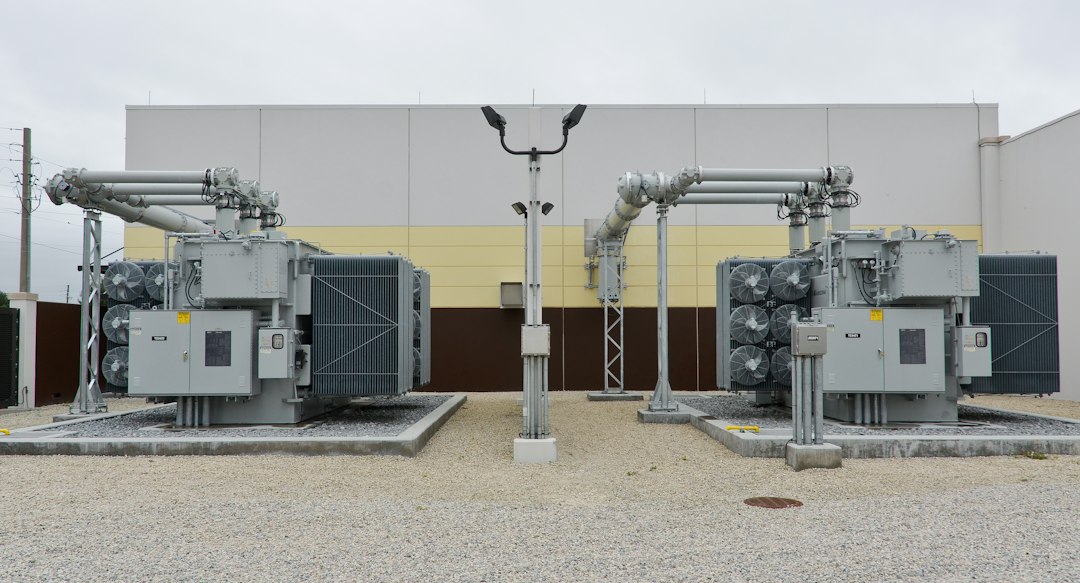
Next-generation small modular reactors (SMRs) are a game-changer for powering zero-emission industrial hubs by offering a compact, scalable, and reliable source of carbon-free energy. These advanced nuclear designs can integrate directly into industrial operations, providing not just electricity but also process heat, hydrogen production, and desalination – critical components for decarbonizing heavy industries.
Why SMRs are a Good Fit for Industrial Hubs
Heavy industries like steel, cement, chemicals, and mining are massive energy consumers, often relying on fossil fuels for both electricity and high-temperature process heat. Decarbonizing these sectors is incredibly challenging, but essential for meeting climate goals. Next-generation Small Modular Reactors present a compelling solution because they are designed with specific advantages that align well with industrial needs.
Meeting Diverse Energy Demands
Industrial hubs don’t just need electricity; they require a spectrum of energy outputs. Many industrial processes, for instance, demand very high temperatures (over 500°C) that traditional renewable sources struggle to provide economically and consistently. Next-generation SMRs, particularly High-Temperature Gas Reactors (HTGRs) and Molten Salt Reactors (MSRs), are designed to operate at these elevated temperatures, making them ideal for direct process heat applications. This eliminates the need for burning fossil fuels to achieve the necessary heat, directly tackling a major source of industrial emissions.
Scalability and Modularity Benefits
One of the core advantages of SMRs is their modular design. Unlike traditional large-scale nuclear power plants, which are custom-built and require immense upfront capital and years of construction, SMRs are designed to be factory-fabricated and transported to site. This significantly reduces construction time and costs, and allows for incremental expansion. An industrial hub can start with a single SMR unit to meet initial decarbonization targets and then add more modules as demand grows or as further processes are brought online. This flexibility is crucial for industries facing evolving energy needs and investment cycles.
Enhanced Safety and Resilience
Next-generation SMRs often incorporate advanced passive safety features that rely on natural phenomena like convection and gravity, rather than active systems requiring external power or operator intervention. This inherently safer design reduces the risk of accidents and simplifies operational procedures. For industrial hubs, this means a highly reliable and resilient energy source that can withstand external disruptions, ensuring continuous operation for critical industrial processes. The compact footprint also allows for integration within existing industrial sites, potentially reducing transmission losses and enhancing energy security.
Next-Generation Small Modular Reactors (SMRs) are poised to play a crucial role in powering zero-emission industrial hubs, offering a sustainable solution to meet the growing energy demands of various sectors. In a related article, the importance of innovative energy solutions in advancing mobility and industrial efficiency is discussed, highlighting the need for clean energy sources. For more insights on this topic, you can read the article here: Mobility 2021: Early Bird Price Extended for One More Day.
Key Takeaways
- The training data includes information and events up to October 2023.
- Insights and knowledge are based on a wide range of sources available until the cutoff date.
- No updates or developments occurring after October 2023 are included in the training.
- Users should verify current information from reliable sources for the latest updates.
- The model’s responses reflect the context and knowledge available up to the specified date.
SMR Technologies Best Suited for Industrial Integration
While many SMR designs are in various stages of development, a few types stand out for their potential to power zero-emission industrial hubs due to their specific characteristics, particularly their operating temperatures and output capabilities.
High-Temperature Gas Reactors (HTGRs)
HTGRs are particularly promising for industrial applications because they are designed to operate at very high temperatures, typically between 700°C and 950°C. This high-grade heat is invaluable for industrial processes like hydrogen production via thermochemical cycles (e.g., the sulfur-iodine cycle), synthetic fuel production, and direct heat for steelmaking or chemical processing. The fuel for HTGRs, often TRISO (TRi-structural ISOtropic) particles, is extremely robust and can withstand very high temperatures without melting, contributing to their inherent safety. Companies like X-energy and Kairos Power are developing HTGR designs aimed squarely at industrial heat and power markets.
Molten Salt Reactors (MSRs)
MSRs represent another class of advanced SMRs with significant potential. They use a liquid salt mixture as both the coolant and often the fuel, allowing for higher operating temperatures at lower pressures compared to traditional light water reactors. This reduces the risk of coolant loss accidents and enhances safety. MSRs can operate at temperatures exceeding 700°C, making them suitable for many of the same high-temperature industrial applications as HTGRs. Furthermore, some MSR designs offer the potential for very long operational cycles without refueling and efficient fuel utilization, including the possibility of consuming spent fuel from traditional reactors.
Terrestrial Energy’s IMSR (Integral Molten Salt Reactor) is an example of an MSR design targeting industrial applications.
Lead-Cooled Fast Reactors (LFRs)
LFRs use liquid lead or lead-bismuth eutectic as a coolant. They are designed to operate at high temperatures (around 500-600°C) and can utilize a wide range of fuel types, including recycled nuclear fuel. The high boiling point of lead allows for operation at atmospheric pressure, reducing the risk of a loss-of-coolant accident. LFRs are also highly efficient at converting heat into electricity and show promise for applications requiring substantial power output and high-temperature heat. While perhaps not reaching the absolute highest temperatures of some HTGRs, they still offer excellent process heat capabilities for many industrial sectors. Companies like Westinghouse are developing LFR SMR concepts.
Integrating SMRs into Industrial Hubs: Practical Considerations

Implementing next-generation Small Modular Reactors within existing or new industrial hubs requires careful planning and addresses several practical aspects beyond just the reactor technology itself.
Site Selection and Permitting
Choosing the right site for an SMR within or adjacent to an industrial hub is critical. Factors such as proximity to energy demand, access to cooling water (if needed), geological stability, and existing infrastructure (roads, rail, transmission lines) are paramount. The permitting process for nuclear facilities is rigorous and lengthy, often involving multiple federal and state agencies, public engagement, and extensive environmental assessments.
Streamlining this process while maintaining safety standards is an ongoing challenge but essential for timely deployment. Many SMR developers are working closely with regulatory bodies early in their design phases to address potential licensing hurdles proactively.
Grid Integration and Load Following
While SMRs offer continuous, baseload power, industrial hubs often have fluctuating energy demands. The ability of SMRs to “load follow” – adjust their power output to match demand – is an important consideration.
Next-generation SMRs are being designed with improved load-following capabilities compared to older nuclear plants. This flexibility, coupled with potential energy storage solutions like thermal energy storage or battery systems, can ensure a stable and responsive energy supply for industrial operations. For many industrial processes, the primary benefit will be the consistent supply of high-temperature process heat, which can significantly reduce reliance on fossil fuels regardless of minor electrical load fluctuations.
Heat Utilization and Distribution
Effectively capturing and distributing the process heat generated by SMRs is key to maximizing their decarbonization impact.
This might involve direct heat transfer loops, steam generators, or even molten salt heat exchangers. Designing efficient thermal networks within an industrial hub, capable of delivering heat at the required temperatures and pressures to various industrial users (e.g.
, for drying, curing, chemical reactions, or steam production), will be crucial.
This integrated energy system approach is where SMRs truly shine, moving beyond just electricity generation to become a central component of an industrial hub’s thermal energy infrastructure.
Economic Viability and Financing
The upfront capital cost of even an SMR, while significantly lower than traditional nuclear, is still substantial. However, the modular and factory-fabricated nature of SMRs is expected to drive down costs over time through economies of series production.
Government incentives, such as tax credits for clean energy technologies or direct funding for demonstration projects, will play a vital role in de-risking early deployments. Long-term energy price stability, carbon credits, and the avoidance of carbon taxes will also contribute to the overall economic attractiveness of SMRs for industrial users seeking predictable and emission-free energy. Financial models that account for the full life-cycle benefits, including environmental and social impacts, are crucial.
SMRs and the Production of Green Hydrogen
The production of green hydrogen is a cornerstone of decarbonizing many industrial processes and transportation sectors. Next-generation Small Modular Reactors are poised to become a critical enabler for large-scale, cost-effective green hydrogen production, directly supporting the creation of zero-emission industrial hubs.
High-Temperature Electrolysis (HTE)
Traditional electrolysis, which splits water into hydrogen and oxygen using electricity, is energy-intensive. High-Temperature Electrolysis (HTE) is significantly more efficient because it utilizes both electricity and high-temperature heat to reduce the electrical energy required for the reaction. As discussed, many next-generation SMRs, particularly HTGRs and MSRs, generate high-grade heat at temperatures perfectly suited for HTE. By coupling an SMR directly with an HTE plant, industrial hubs can produce hydrogen with significantly lower overall energy consumption and, crucially, zero carbon emissions. This integrated approach leverages the SMR’s unique capabilities for both power and heat.
Thermochemical Water Splitting
Even more advanced is thermochemical water splitting, a process that uses only high-temperature heat (typically above 700°C) to split water, without the need for electricity. Cycles like the sulfur-iodine cycle or the copper-chlorine cycle are under development, with some requiring temperatures as high as 900-1000°C. These processes are highly efficient and produce no greenhouse gases. Next-generation SMRs, especially HTGRs, are among the very few carbon-free energy sources capable of reliably providing the extremely high temperatures required for these thermochemical cycles. This represents a potentially revolutionary pathway to truly large-scale and economical green hydrogen production for industrial applications.
Fueling Industrial Decarbonization
Green hydrogen produced by SMRs can be used directly within the industrial hub to replace fossil fuels in a variety of applications:
- Steel Production: Replacing coke in direct reduced iron (DRI) processes.
- Chemical Feedstock: For ammonia synthesis, methanol production, and other chemical processes.
- Heavy Transportation: Fueling fuel-cell trucks, ships, and potentially aviation.
- High-Temperature Industrial Furnaces: Direct combustion of hydrogen for heat.
By providing a reliable and scalable source of carbon-free electricity and process heat, SMRs can effectively anchor large-scale green hydrogen production, making it a viable and economic pathway for industrial decarbonization.
Next-Generation Small Modular Reactors are poised to play a crucial role in powering zero-emission industrial hubs, offering a sustainable solution to meet the growing energy demands of various sectors. As industries strive to reduce their carbon footprints, the integration of advanced nuclear technology can significantly enhance energy efficiency and reliability. For further insights into innovative tools that can support such transitions, you may find this article on premium tools particularly enlightening, as it explores how technology can drive progress in various fields, including energy.
Global Progress and Future Outlook
| Metric | Value | Unit | Notes |
|---|---|---|---|
| Reactor Power Output | 50-300 | MW(e) | Typical range for next-generation SMRs |
| Thermal Efficiency | 35-45 | % | Efficiency of converting heat to electricity |
| Construction Time | 3-5 | Years | Modular design reduces build time |
| Carbon Emissions Reduction | 90-100 | % | Compared to fossil fuel power plants |
| Industrial Hub Power Demand | 100-1000 | MW | Typical power range for zero-emission hubs |
| Operational Lifetime | 40-60 | Years | Expected lifespan of SMR units |
| Load Following Capability | Yes | N/A | Supports variable industrial power demands |
| Water Usage Reduction | 50-70 | % | Compared to traditional large reactors |
The development and deployment of next-generation Small Modular Reactors are gaining significant momentum worldwide, with several countries and companies making substantial progress. This global push is driven by the urgent need for decarbonization and energy security.
Current SMR Development Landscape
As of late 2026, several SMR designs are moving through advanced regulatory reviews and demonstration phases. NuScale Power’s VOYGR SMR, a light water reactor design, is notably the first and only SMR design to receive standard design approval from the U.S. Nuclear Regulatory Commission (NRC). While its initial target market is utility-scale power generation, its modularity could still lend itself to larger industrial hubs.
However, it’s the advanced SMR designs, particularly HTGRs and MSRs, that are increasingly focusing on industrial process heat applications. Companies like X-energy are progressing with their Xe-100 HTGR, with projects planned to serve industrial facilities. Terrestrial Energy’s IMSR is also targeting industrial heat and power. China has commissioned its HTR-PM, a demonstration HTGR, providing valuable operational experience. Russia’s Akademik Lomonosov floating nuclear power plant (a KLT-40S reactor) is already in operation, demonstrating the practicality of smaller, modular units, though not specifically targeting industrial heat.
Regulatory Harmonization and Supply Chain Development
A key challenge and area of ongoing work is regulatory harmonization across different countries. Standardizing licensing processes and requirements could significantly accelerate SMR deployment. Organizations like the International Atomic Energy Agency (IAEA) are actively working on these efforts.
Concurrently, building out a robust and localized supply chain for SMR components and services is crucial. This involves investing in advanced manufacturing capabilities, training a skilled workforce, and fostering collaboration between SMR developers, industrial end-users, and governments. The modular nature of SMRs lends itself well to factory production, which can eventually drive down costs and improve construction schedules once series production is established.
The Path Forward for Zero-Emission Industrial Hubs
The future for zero-emission industrial hubs powered by next-generation SMRs looks increasingly promising. As SMR designs mature, regulatory processes streamline, and the economic benefits of decarbonization become more apparent, we can expect to see initial deployments by the early 2030s. These early projects will provide invaluable real-world operational data and further refine the integration strategies for industrial applications.
The ability of SMRs to deliver consistent, carbon-free electricity, high-temperature process heat, and enable large-scale green hydrogen production positions them as an indispensable tool in the global effort to decarbonize heavy industry. They offer a practical, scalable, and resilient energy solution that can truly transform how industrial hubs operate, leading to a significant reduction in global greenhouse gas emissions. The coming decade will be pivotal in demonstrating their full potential.
FAQs
What are small modular reactors (SMRs)?
Small modular reactors (SMRs) are a type of nuclear reactor that are designed to be built in factories and shipped to sites for assembly. They typically have a power output of up to 300 megawatts per unit, which is smaller than traditional nuclear reactors. SMRs are intended to provide a more flexible and scalable approach to nuclear energy, making it easier to integrate into various energy systems.
How do SMRs contribute to zero-emission industrial hubs?
SMRs contribute to zero-emission industrial hubs by providing a reliable and low-carbon source of energy. They can supply electricity and heat for industrial processes, reducing reliance on fossil fuels and lowering greenhouse gas emissions. This makes them an attractive option for industries looking to transition to more sustainable energy sources while maintaining operational efficiency.
What are the safety features of next-generation SMRs?
Next-generation SMRs incorporate advanced safety features, including passive safety systems that operate without the need for external power or human intervention. These designs often include features such as natural circulation cooling, containment structures, and advanced materials that enhance safety and reduce the risk of accidents. This focus on safety aims to address public concerns about nuclear energy.
What is the potential market for SMRs in industrial applications?
The potential market for SMRs in industrial applications is significant, particularly in sectors such as manufacturing, mining, and chemical production. As industries seek to decarbonize and meet regulatory requirements for emissions, SMRs offer a viable solution for providing consistent and clean energy. Analysts predict that the demand for SMRs could grow as more companies commit to sustainability goals.
What are the challenges facing the deployment of SMRs?
Challenges facing the deployment of SMRs include regulatory hurdles, public acceptance, and the need for significant upfront investment. Navigating the licensing process can be complex and time-consuming, while gaining public trust in nuclear technology remains a critical issue. Additionally, the initial costs of developing and deploying SMRs can be high, which may deter some investors and stakeholders.
Enjoying our content? Make us a preferred source on Google:
Add us as a Preferred Source on Google