

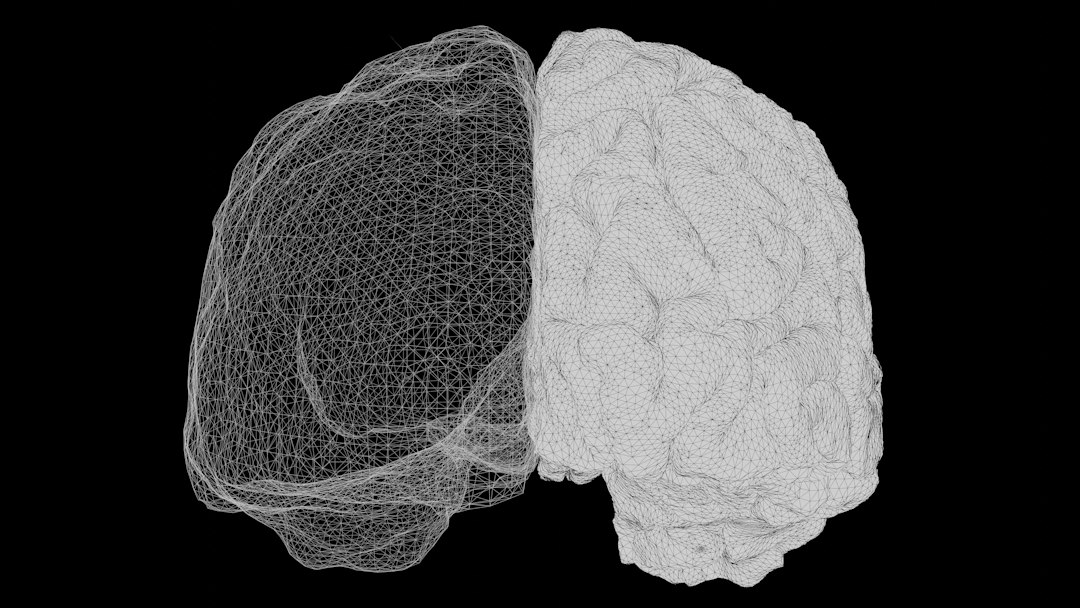
So, what’s the big deal with neural rendering and path tracing for PC graphics? Simply put, they’re the technologies that are going to fundamentally change how realistic and immersive our games and virtual experiences look, moving us beyond the current limitations of rasterization to deliver images that are practically indistinguishable from reality, and doing it in real-time. This isn’t just about ‘better shadows’ or ‘prettier reflections’; it’s a paradigm shift in how graphics are generated, promising a future where visual fidelity reaches new heights.
The Foundations: Understanding Current Graphics Limitations
Before we dive into the exciting new stuff, it’s helpful to quickly grasp what’s currently happening under the hood of your gaming PC. Most modern games rely heavily on a technique called rasterization. It’s fast, efficient, and has powered incredible visuals for decades, but it has inherent limitations.
Rasterization’s Strengths and Weaknesses
Rasterization works by taking 3D models (made of triangles), projecting them onto your 2D screen, and then figuring out which pixels each triangle covers. Once those pixels are identified, shaders apply colors, textures, lighting, and other effects. It’s a highly optimized process, designed for speed.
The problem? It’s fundamentally an approximation. Complex lighting, like global illumination (light bouncing around a scene), soft shadows, or accurate reflections, has to be faked or cleverly approximated using various techniques like shadow maps, screen-space reflections, and baked lighting. These approximations are often convincing but can break down, leading to visual artifacts, unrealistic lighting scenarios, and a clear distinction between what’s real and what’s rendered. Achieving truly accurate light transport with rasterization is incredibly difficult and computationally expensive, often resulting in visual inconsistencies that betray the “game” rather than a true simulation.
The Promise of Path Tracing
This is where path tracing steps in. Instead of projecting triangles, path tracing simulates light rays. It essentially traces the path of light from the camera, bouncing off surfaces in the scene until it hits a light source. Each bounce accounts for how light interacts with materials – how much is absorbed, reflected, or refracted. By tracing many such paths, the algorithm can build up a highly accurate picture of light transport, resulting in incredibly realistic global illumination, shadows, reflections, and refractions.
The catch? Path tracing is extremely computationally intensive. To get a clean, noise-free image, you need to trace millions or even billions of light paths for every frame. Doing this in real-time at playable frame rates has, until recently, been a distant dream for consumer hardware. While it’s been the standard for offline rendering in film and animation for years, getting that kind of quality interactively has been the holy grail.
Neural rendering and path tracing are revolutionizing the landscape of real-time PC graphics, pushing the boundaries of what is visually possible in gaming and simulation. For those interested in exploring this cutting-edge technology further, a related article can be found at Enicomp’s blog, which delves into the latest advancements and implications of these techniques in the realm of computer graphics. This resource provides valuable insights into how neural networks and advanced rendering methods are shaping the future of visual experiences.
Key Takeaways
- The training data includes information and events up to October 2023.
- Insights and knowledge are based on a wide range of sources available until the cutoff date.
- No updates or developments occurring after October 2023 are included in the training.
- Users should verify current information from reliable sources for the latest updates.
- The model’s responses reflect the context and knowledge available up to the specified date.
Introducing Neural Rendering: Beyond Traditional Pixels
Neural rendering is a relatively newer concept that’s gaining immense traction. It’s a broad term, but at its core, it involves using neural networks to generate or enhance images and scenes.
Instead of meticulously defining every single pixel and light interaction with handcrafted algorithms, you train a neural network to understand and reproduce visual properties.
What Exactly is Neural Rendering?
Think of it this way: instead of a traditional graphics pipeline that says “draw a polygon here, apply this texture, calculate this light bounce,” a neural rendering system might learn from a huge dataset of images or 3D scans how light behaves, what realistic textures look like, or even how an entire scene should appear from a given viewpoint.
One of the most prominent forms of neural rendering currently making waves is Neural Radiance Fields (NeRFs). NeRFs learn a continuous 3D representation of a scene from a few 2D images. Once trained, they can render novel views of that scene with astonishing fidelity, including complex light effects like reflections and transparency, something traditional photogrammetry often struggles with.
How Neural Networks Contribute to Graphics
Neural networks can contribute in several ways:
- Image Generation: Directly generating entire images or parts of images, like realistic textures, materials, or even entire environments, based on high-level prompts or sparse input.
- Super-Resolution and Upscaling: Enhancing lower-resolution images to higher resolutions, filling in detail that wouldn’t normally exist (like DLSS).
- Denoising: Crucially, neural networks are exceptional at removing the noise inherent in path-traced images. Since path tracing requires many samples for a clean image, a neural denoiser can take a few noisy samples and reconstruct a high-quality, noise-free image in real-time, drastically reducing the computational burden.
- Implicit Scene Representation: As with NeRFs, neural networks can store a scene’s visual information in a highly compact and efficient way, allowing for novel view synthesis without traditional mesh-based models. This opens doors for incredibly detailed environments that are expensive to create with polygons.
- Relighting and Material Editing: Neural networks can learn how light interacts with materials so well that they can potentially allow for real-time relighting of a scene or even changing material properties after the fact, without needing to re-render everything from scratch.
The key takeaway is that neural networks are becoming powerful tools for inference in graphics. Instead of explicit calculation, they infer what the output should look like based on learned patterns, often much faster and with better results for certain tasks than traditional methods.
The Synergy: Path Tracing and Neural Rendering Combined
This is where the magic truly happens. Separately, path tracing delivers ultimate realism but is too slow for real-time, and neural rendering offers powerful image generation/enhancement but might lack direct geometric control in some implementations. Together, they address each other’s weaknesses.
Neural Denoising: The Game Changer for Real-Time Path Tracing
The most immediate and impactful combination is neural denoising for path tracing.
As mentioned, path tracing generates noise if not enough light paths are sampled. Historically, this meant either accepting a noisy image or waiting for hundreds of samples per pixel to resolve.
Neural denoisers, however, are trained on vast datasets of noisy and clean path-traced images. They learn to identify and remove the noise while preserving fine details and textures.
This means a game can render a path-traced scene with far fewer samples per pixel – perhaps just 1-4 samples instead of hundreds – resulting in a noisy but geometrically accurate image. The neural denoiser then takes this noisy input and outputs a clean, high-quality image almost instantly.
This one application alone is why real-time path tracing is becoming feasible. Without neural denoising, the computational cost would still be prohibitive for the vast majority of consumer hardware.
It essentially acts as a massive “speed-up button” for path tracing.
Accelerating and Enhancing Path Tracing with AI
Beyond denoising, neural networks can further optimize the path-tracing process:
- Ray Guiding: Neural networks can learn which directions light is most likely to come from or reflect towards, guiding the path-tracing rays more efficiently to relevant parts of the scene or light sources. This reduces the number of “wasted” rays that don’t contribute meaningfully to the final image, speeding up convergence and reducing noise.
- Material and Light Estimation: AI could potentially help infer complex material properties or light source distributions from incomplete information, making the simulation more accurate even with fewer samples.
- Implicit Scene Representations for Path Tracing: Imagine path tracing not against traditional polygon meshes but against a neural representation of a scene, like a NeRF. This could allow for rendering incredibly complex and detailed environments that would be impossible to represent with traditional polygons, all while benefiting from the accurate light transport of path tracing.
This is a very active area of research, with “Neural Radiance Caches” and similar approaches aiming to accelerate queries against these implicit representations for path tracing.
Overcoming Computational Hurdles
The synergy fundamentally aims to overcome the massive computational cost of high-fidelity graphics. Path tracing handles the physical accuracy of light, while neural networks handle the efficiency and detail inference, bridging the gap between raw computational power and desired visual quality. This is a partnership where both components elevate each other.
Hardware Acceleration: The Engine for the New Frontier
None of this would be possible without significant advancements in GPU hardware. Software innovations are only as good as the underlying hardware that can execute them efficiently.
Dedicated Ray Tracing Cores (RT Cores)
NVIDIA’s introduction of dedicated RT Cores with their RTX series GPUs was a pivotal moment. These specialized cores are designed to accelerate the computationally intensive tasks of ray-triangle intersection and bounding volume hierarchy (BVH) traversal – the core operations of ray tracing and path tracing.
Before RT Cores, general-purpose shader units (CUDA cores) had to perform these calculations, which was incredibly slow. RT Cores do this much faster and more efficiently, allowing a significant number of rays to be cast and processed per frame, making real-time ray tracing (and thus path tracing) a practical reality for consumer hardware. While early implementations were limited, subsequent generations have vastly improved their performance and efficiency.
Tensor Cores for AI Acceleration
Equally crucial are Tensor Cores, also introduced by NVIDIA, and similar AI acceleration units in AMD’s GPUs (like their Matrix Cores). These specialized cores are designed for accelerating matrix multiplications, which are the fundamental operations underlying neural network computations.
Neural denoising, super-resolution (like DLSS), and other neural rendering techniques rely heavily on these operations.
Tensor Cores allow these AI models to run at very high speeds, processing neural networks quickly enough to be integrated into the real-time graphics pipeline without significant overhead.
Without these dedicated AI accelerators, the neural rendering component would bog down the entire system, defeating the purpose of real-time performance.
The Interplay of Architectures
Modern GPUs are now designed with a balanced architecture that includes:
- Shader Units: For traditional rasterization, general-purpose computations, and many shading effects.
- RT Cores: For accelerating ray traversal and intersection for ray tracing and path tracing.
- Tensor Cores (or equivalent): For accelerating neural network inferences, essential for denoising, upscaling, and other AI-driven rendering tasks.
This integrated approach means that games can leverage the strengths of each component, building complex scenes with rasterization, adding physically accurate lighting with ray/path tracing, and then using AI to clean up and upscale the final image, all in real-time. This synergistic design is why the “next frontier” is now within reach.
Neural rendering and path tracing are rapidly emerging as pivotal technologies in the realm of real-time PC graphics, pushing the boundaries of visual fidelity and performance. As developers strive to create more immersive experiences, understanding the tools and software that can enhance these technologies becomes essential. For those interested in exploring advanced techniques in graphics rendering, a related article provides an in-depth analysis of various software solutions that can optimize performance in different applications. You can read more about it in this insightful piece on order flow trading software. This exploration not only highlights the importance of software in achieving high-quality graphics but also emphasizes the ongoing evolution of the gaming and simulation industries.
Looking Ahead: The Future Landscape of PC Graphics
| Metric | Traditional Path Tracing | Neural Rendering Enhanced Path Tracing | Improvement |
|---|---|---|---|
| Render Time per Frame (ms) | 150 | 40 | ~73% Faster |
| Samples per Pixel | 1024 | 256 | 75% Reduction |
| Image Quality (PSNR) | 40 dB | 38 dB | ~5% Decrease |
| Memory Usage (MB) | 2048 | 2300 | ~12% Increase |
| Power Consumption (Watts) | 120 | 100 | ~17% Reduction |
| Real-Time Frame Rate (FPS) | 6-8 | 24-30 | 3-4x Increase |
Where does all this lead us? The implications for games, virtual reality, and other interactive 3D applications are profound. We’re moving towards a future where visual fidelity is no longer a major bottleneck in terms of realism.
Photorealism Becomes the Baseline
With widespread adoption of path tracing and neural rendering, photorealism will likely become an achievable baseline for many interactive experiences, rather than an aspirational goal. We’re already seeing glimpses of this in tech demos and even a few cutting-edge game implementations. Games will look less like “computer graphics” and more like interactive cinema or reality itself.
This doesn’t just mean prettier pictures; it means more immersive worlds where subtle lighting cues, natural reflections, and physically accurate shadows contribute to a deeper sense of presence and believability. The suspension of disbelief will be easier to maintain.
Democratizing High-End Content Creation
Neural rendering techniques also have the potential to democratize high-end content creation. Imagine a future where artists can use a few photographs to train a NeRF-like system that then generates an entire incredibly detailed, renderable 3D scene. This could drastically reduce the time and expertise required to build complex 3D environments, allowing smaller studios or even individual creators to produce visually stunning content.
Tools that allow for AI-driven material generation, automatic mesh reconstruction from sparse data, or even AI-assisted animation could significantly streamline the development pipeline. The focus could shift from painstakingly crafting every polygon and texture to guiding AI systems to generate the desired output.
Beyond Games: VR, AR, and Digital Twins
The benefits extend far beyond traditional games:
- Virtual Reality (VR) and Augmented Reality (AR): For VR and AR to truly trick our brains, photorealism is paramount. Path tracing and neural rendering can provide the visual fidelity needed to make virtual objects indistinguishable from real ones, and virtual environments feel truly present. The challenge here is rendering at very high frame rates for two eyes, making efficiency even more critical.
- Digital Twins and Industrial Applications: Industries relying on highly accurate visual simulations (e.g., architecture, automotive design, engineering) can leverage these technologies to create incredibly precise “digital twins” of real-world objects and environments. This allows for realistic testing, visualization, and collaboration before physical prototypes are ever built.
- Medical and Scientific Visualization: Rendering complex data sets with accurate light transport can lead to clearer, more insightful visualizations, aiding in diagnosis, research, and education.
The Evolution of GPU Capabilities
As these technologies mature, GPU architectures will continue to evolve. We can expect even more specialized hardware accelerators for various AI and rendering tasks. The interplay between rasterization, path tracing, and neural rendering will become increasingly sophisticated, with rendering engines intelligently deciding which technique to use for which part of a scene or effect, blending them seamlessly to achieve optimal performance and quality. The ultimate goal is to move towards a “hybrid rendering” future where the best tool is chosen for the job at any given moment, orchestrated by intelligent systems.
This journey is just beginning, but the path ahead promises a truly transformative era for real-time graphics, blurring the lines between the virtual and the real.
FAQs
What is neural rendering?
Neural rendering is a technique that utilizes artificial intelligence and deep learning algorithms to generate images or video content. It combines traditional rendering methods with neural networks to enhance visual quality, reduce rendering times, and create realistic textures and lighting effects in real-time graphics.
How does path tracing differ from traditional rendering techniques?
Path tracing is a rendering technique that simulates the way light interacts with surfaces to produce highly realistic images. Unlike traditional rasterization methods, which approximate lighting and shading, path tracing calculates the paths that light rays take as they bounce around a scene, resulting in more accurate reflections, refractions, and global illumination effects.
What are the benefits of combining neural rendering with path tracing?
Combining neural rendering with path tracing can significantly enhance the efficiency and quality of real-time graphics. Neural networks can accelerate the rendering process by predicting lighting and shading effects, allowing for faster frame rates while maintaining the photorealism achieved through path tracing. This synergy can lead to more immersive gaming and virtual reality experiences.
What challenges do developers face when implementing these technologies?
Developers face several challenges when implementing neural rendering and path tracing, including the need for powerful hardware to handle the computational demands, the complexity of training neural networks, and the integration of these technologies into existing graphics engines. Additionally, achieving real-time performance while maintaining high visual fidelity remains a significant hurdle.
What is the future of real-time graphics with neural rendering and path tracing?
The future of real-time graphics with neural rendering and path tracing looks promising, as advancements in AI and GPU technology continue to evolve. We can expect more games and applications to adopt these techniques, leading to unprecedented levels of realism and interactivity. As hardware becomes more capable, the gap between pre-rendered and real-time graphics will continue to narrow.
Enjoying our content? Make us a preferred source on Google:
Add us as a Preferred Source on Google