


Yes, multimodal AI tutors can significantly help close knowledge gaps in STEM education by offering personalized, interactive, and diverse learning experiences that adapt to individual student needs and preferences. Instead of a one-size-fits-all approach, these tutors can identify specific areas where a student struggles and provide targeted support through various formats like visual explanations, interactive simulations, and spoken dialogue. This makes learning more engaging and effective, especially for complex STEM concepts.
Understanding the STEM Education Challenge
STEM education faces a persistent challenge: knowledge gaps. These aren’t just minor misunderstandings; they often represent fundamental conceptual holes that hinder a student’s ability to progress in subjects like mathematics, physics, engineering, and computer science. Traditional teaching methods, while valuable, can struggle to address these individual discrepancies efficiently within a typical classroom setting.
The Nature of Knowledge Gaps
Knowledge gaps in STEM are often hierarchical. A student might struggle with calculus not because they lack the intelligence, but because they never fully grasped foundational algebra or trigonometry. These gaps can stem from various factors: missed classes, insufficient prior instruction, different learning styles not accommodated by traditional teaching, or even a simple moment of distraction during a crucial explanation. Identifying the root cause of a gap is paramount to effectively addressing it.
Limitations of Traditional Approaches
In a classroom with many students, a teacher’s time is inevitably divided. While dedicated and skilled, even the best educators can find it difficult to provide deep, individualized intervention for every student’s specific knowledge gaps. Homework assignments and standardized tests offer some insight, but they often reveal that a gap exists without adequately diagnosing its nature or providing immediate, tailored remediation. Tutoring services exist, but they can be expensive and not always accessible, creating another barrier for many.
The Promise of AI in Education
Artificial intelligence has long held promise in education. Early AI tutors often focused on rule-based systems or simple adaptive questioning. While these had their merits, they often lacked the flexibility, personalization, and rich interaction needed to truly mimic a human tutor’s ability to understand, explain, and motivate. The advent of multimodal AI, however, changes this landscape significantly, offering a much more nuanced and powerful approach to tackling educational disparities.
In the pursuit of enhancing STEM education, the deployment of multimodal AI tutors has emerged as a promising solution to close knowledge gaps among students. For those interested in exploring how technology can further educational tools, a related article discusses the best laptops for creative applications, which can be instrumental for students engaging with complex software in STEM fields. You can read more about it in this article: Discover the Best Laptops for Blender in 2023: Top Picks and Reviews.
Key Takeaways
- The training data includes information and events up to October 2023.
- Insights and knowledge are based on a wide range of sources available until the cutoff date.
- No updates or developments occurring after October 2023 are included in the training.
- Users should verify current information from reliable sources for the latest updates.
- The model’s responses reflect the context and knowledge available up to the specified date.
The Power of Multimodal AI Tutors
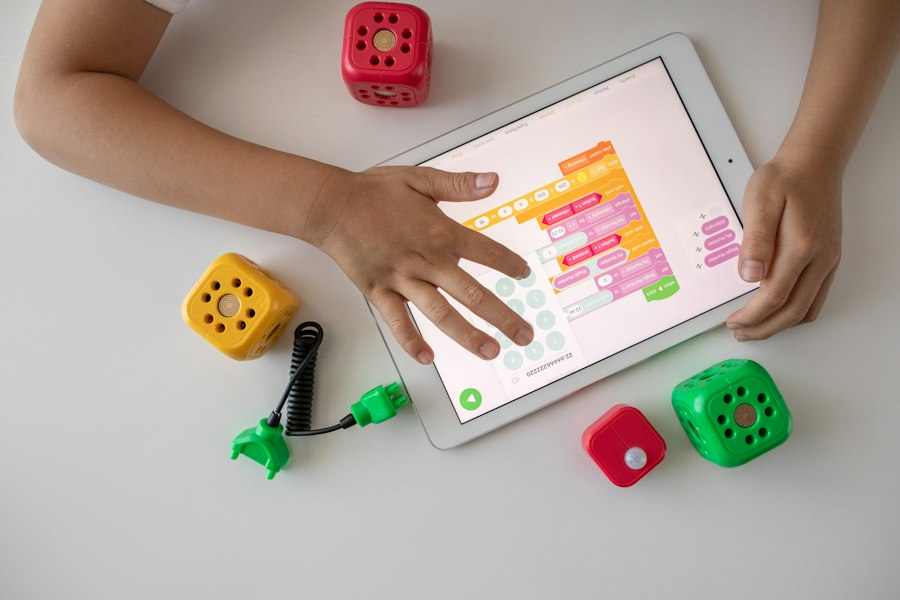
Multimodal AI tutors represent a significant leap forward because they don’t rely on just one form of interaction or data. Instead, they integrate and process information from various modalities – text, speech, images, videos, and even interactive simulations – to create a richer, more adaptive, and ultimately more human-like tutoring experience.
What is Multimodal AI?
At its core, multimodal AI refers to systems that can understand, process, and generate information across multiple input and output channels. Think of a human tutor: they listen to your questions (audio), observe your facial expressions for confusion (visual), look at your written work (text), and then explain concepts using diagrams (visual), spoken words (audio), and written equations (text). Multimodal AI aims to replicate this comprehensive interaction. For instance, a student might speak a question, the AI processes the audio and transcribes it, identifies a relevant concept, then responds with a visual animation of the concept, accompanied by a spoken explanation and perhaps a linked text-based resource.
How Multimodality Enhances Tutoring
This integration of different data types allows for several key enhancements:
- Richer Understanding of Student Input: Instead of just analyzing typed text, a multimodal tutor can interpret spoken questions, detect emotional cues in voice, and even understand visual inputs like a student drawing a diagram or pointing to a part of an equation on a screen. This leads to a more accurate assessment of a student’s understanding and confusion.
- Diverse Explanations and Feedback: Just as students have different learning styles, they also benefit from explanations presented in various formats. A visual learner might grasp a concept better through an interactive simulation or a detailed infographic, while an auditory learner might prefer a clear spoken explanation. Multimodal tutors can switch between these formats on the fly, tailoring the explanation to the student’s real-time needs.
- More Engaging and Interactive Experiences: Staring at text on a screen can quickly become monotonous. Multimodal elements like virtual whiteboards, 3D models, augmented reality overlays, and conversational interfaces make the learning process significantly more engaging and interactive, mimicking the dynamic nature of a human-led tutorial session.
- Identification of Non-Verbal Cues: While still an evolving area, some multimodal AI systems can analyze subtle non-verbal cues, such as changes in gaze, posture, or even hesitation in speech, which can signal confusion or frustration. This allows the tutor to intervene proactively before a student explicitly states they don’t understand.
Examples of Multimodal Interactions
Consider a student struggling with projectile motion in physics.
- Student Input: The student might say, “I don’t get why the horizontal velocity stays constant,” while also pointing to a graph of a projectile’s trajectory on their screen.
- AI Processing: The AI processes the spoken query (audio), identifies the specific concept (horizontal velocity in projectile motion), and understands the visual context (the graph) from the student’s gaze or pointer.
- AI Response (Multimodal):
- Visual: The AI could then display an animated simulation showing two balls dropped simultaneously, one straight down and one launched horizontally, demonstrating that their vertical motion is identical while the horizontal one continues independently.
- Audio: Simultaneously, the AI could provide a clear spoken explanation, “That’s a great question! Gravity only acts vertically, so once the projectile leaves the initial force, its horizontal velocity remains unchanged unless there’s air resistance.”
- Text/Interactive: It might also display a simple formula for horizontal velocity and prompt the student to manipulate variables in the simulation to observe the effect.
This integrated approach provides a comprehensive and tailored explanation that a text-only or audio-only tutor simply couldn’t match.
Deploying Multimodal AI Tutors in STEM

The practical deployment of multimodal AI tutors involves several critical steps, from infrastructure and data considerations to integration within existing educational ecosystems. It’s not just about building the AI, but about making it accessible and effective for real students and educators.
Technological Infrastructure Requirements
To function effectively, multimodal AI tutors require robust technological infrastructure.
- High-Performance Computing: Processing real-time audio, video, and complex simulations demands significant computational power, often requiring cloud-based GPU instances or powerful local hardware.
- Robust Network Connectivity: Smooth, low-latency communication is essential for interactive experiences. Dropped connections or slow loading times can severely disrupt the tutoring flow.
- Data Storage and Management: Large volumes of multimodal data (student interactions, learning materials, performance metrics) need secure and scalable storage solutions.
- Specialized Sensors/Peripherals: While many interactions can happen via standard webcams and microphones, more advanced multimodal tutors might leverage eye-tracking devices, haptic feedback tools, or specialized input devices for specific STEM applications (e.g., virtual dissection tools).
Data Collection and Model Training
The effectiveness of any AI system hinges on the quality and quantity of its training data. For multimodal AI tutors, this is particularly complex.
- Diverse Data Sources: Training requires vast datasets of text (STEM textbooks, problem sets, explanations), audio (human-tutoring sessions, lectures, student questions), images (diagrams, graphs, scientific visualizations), and video (demonstrations, simulations).
- Multimodal Alignment: A key challenge is aligning these different modalities.
For example, ensuring that a specific spoken explanation is correctly linked to the corresponding visual diagram and written formula. This often involves careful annotation and labeling.
- Ethical Data Considerations: Collecting student interaction data raises significant privacy and ethical concerns. Strict protocols for anonymization, consent, and data security are paramount.
Transparency about data usage is also crucial.
- Iterative Training and Fine-Tuning: AI models are rarely perfect on the first try. Continuous training with new data, feedback from human experts, and performance metrics is essential for improvement.
Integration with Existing Educational Platforms
For widespread adoption, multimodal AI tutors need to seamlessly integrate into the educational tools and platforms that students and teachers already use.
- Learning Management Systems (LMS): Integration with popular LMS like Canvas, Moodle, or Blackboard allows tutors to access student progress data, assign relevant materials, and report back on student performance.
- Single Sign-On (SSO): Streamlining access through SSO reduces friction for users.
- APIs and SDKs: Providing robust APIs and Software Development Kits allows developers to integrate the tutor’s functionalities into custom applications or platforms.
- Content Interoperability: Ensuring the AI tutor can ingest and work with various content formats (e.g., QTI for quizzes, SCORM for courses) is vital.
- Accessibility Standards: Adhering to accessibility guidelines (e.g., WCAG) ensures the tutor is usable by students with disabilities, providing alternative input/output methods.
Scaffolding and Human Oversight
While powerful, AI tutors are not meant to replace human educators entirely. Instead, they function best as a supplementary tool.
- Teacher Dashboards: Providing teachers with dashboards that show student progress, common misconceptions identified by the AI, and areas where students struggled allows educators to intervene strategically.
- Human-in-the-Loop: For complex or emotionally sensitive situations, the AI might flag an interaction for human review or intervention.
- Curriculum Alignment: The AI tutor’s content and pedagogical approach must align with existing curriculum standards and learning objectives.
This often requires collaboration with subject matter experts.
- Adaptive Pathways: The tutor should be able to guide students through different learning pathways based on their individual needs, offering prerequisite refreshers, advanced challenges, or alternative explanations.
Measuring Impact and Efficacy
Simply deploying an AI tutor isn’t enough; it’s crucial to rigorously measure its impact on learning outcomes and understand its efficacy in closing knowledge gaps. This involves careful research design and a focus on observable results.
Defining Success Metrics
Before deployment, clear success metrics must be established. These should go beyond simple engagement rates and focus on actual learning.
- Improved Learning Outcomes: This is the primary metric. Measured through pre/post-tests, standardized assessments, specific topic quizzes, and mastery checks.
- Reduced Time to Mastery: How quickly do students achieve proficiency in a given topic with the AI tutor compared to traditional methods?
- Identification and Remediation of Gaps: The AI’s ability to accurately diagnose specific knowledge gaps and provide effective remediation. This can be tracked by how many identified gaps are successfully closed.
- Student Engagement and Retention: While not the sole metric, sustained engagement indicates the tutor is appealing and useful. This can be measured through time spent, number of sessions, and completion rates.
- Teacher Satisfaction and Utility: How helpful do teachers find the AI tutor in their workflow? Does it genuinely reduce their burden or provide valuable insights?
- Equity of Access and Outcomes: Does the tutor help reduce achievement disparities across different student demographics?
Research Methodologies
Robust research methodologies are essential to accurately assess the tutor’s impact.
- Controlled Experiments: Ideally, A/B testing or randomized controlled trials (RCTs) where one group uses the AI tutor and a control group uses traditional methods. This helps isolate the tutor’s effect.
- Quasi-Experimental Designs: When full randomization isn’t possible, comparing outcomes in classrooms that adopt the AI with those that don’t, while controlling for other variables.
- Longitudinal Studies: Tracking student progress over extended periods (months or even years) to assess the sustained impact of early intervention with the AI tutor.
- Qualitative Studies: Interviews, focus groups, and surveys with students and teachers provide rich insights into their experiences, perceptions of the tutor’s usefulness, and areas for improvement.
Addressing Bias and Fairness
AI systems are susceptible to biases present in their training data. This is a critical concern in education.
- Bias Detection: Continuously monitoring the AI’s performance across different demographic groups to identify any differential impact or biases in its recommendations or explanations.
- Fairness Algorithms: Implementing algorithms designed to mitigate bias, ensuring that the tutor provides equitable support and opportunities to all students.
- Diverse Training Data: Actively seeking out and incorporating diverse datasets during training to represent the full spectrum of learners.
- Transparency and Explainability (XAI): Making the AI’s decision-making process as transparent as possible helps build trust and allows for scrutiny and identification of potential unfairness.
- Human Review and Oversight: Regular auditing of the AI’s interactions and outcomes by human educators to catch and correct biases that automated methods might miss.
Iterative Improvement and Feedback Loops
Effective AI deployment is an ongoing process of refinement.
- Continuous Monitoring: Regularly track key performance indicators and student outcomes.
- User Feedback Integration: Actively collect feedback from students and teachers through surveys, direct input, and behavioral analysis.
- Performance Analytics: Analyze data on where students get stuck, common questions, and how the AI responded to identify areas for model improvement.
- Ethical Review Boards: Establish a board or process to regularly review the tutor’s ethical implications, data privacy practices, and potential for unintended consequences.
- Adaptive Content Generation: As the AI learns more about student needs, it can even contribute to generating new, personalized learning content or modifying existing materials.
In exploring innovative approaches to enhance STEM education, the deployment of multimodal AI tutors presents a promising solution to bridge knowledge gaps among students. These advanced educational tools can adapt to various learning styles, providing personalized support that traditional methods often lack. For parents considering how to best equip their children for success in this digital age, understanding the importance of technology in learning is crucial. An insightful resource on this topic can be found in the article about selecting the right tablet for your child, which discusses how technology can facilitate learning experiences. You can read more about it here.
Future Directions and Ethical Considerations
| Metric | Description | Value | Unit | Notes |
|---|---|---|---|---|
| Student Engagement Rate | Percentage of students actively interacting with the AI tutor | 85 | % | Measured during STEM tutoring sessions |
| Knowledge Gap Reduction | Improvement in test scores after AI tutor intervention | 20 | Percentage points | Average increase in STEM subject scores |
| Multimodal Input Types | Number of input modes supported by the AI tutor | 4 | Types | Includes text, speech, images, and gestures |
| Response Time | Average time for AI tutor to respond to student queries | 2 | Seconds | Measured in real-time tutoring sessions |
| Personalization Accuracy | Accuracy of AI in tailoring content to individual student needs | 90 | % | Based on student feedback and performance |
| STEM Topics Covered | Number of STEM subjects the AI tutor supports | 6 | Subjects | Includes Math, Physics, Chemistry, Biology, Computer Science, and Engineering |
| Deployment Scale | Number of schools using the AI tutor system | 150 | Schools | Across multiple regions |
| Student Satisfaction Rate | Percentage of students satisfied with the AI tutor experience | 88 | % | Based on survey responses |
The field of multimodal AI tutors is rapidly evolving. As capabilities grow, so do the important discussions around their broader impact and the ethical responsibilities that come with their deployment.
Advancements in AI Capabilities
The future holds exciting possibilities for even more sophisticated multimodal AI tutors.
- Enhanced Emotional Intelligence: More accurate detection and response to student emotions (frustration, boredom, confusion, excitement) to adapt pedagogical strategies in real-time. This could involve combining facial recognition, voice tone analysis, and physiological data (e.g., heart rate monitors).
- Personalized Learning Pathways with Predictive Analytics: Moving beyond reactive tutoring to proactive guidance. Predicting future learning difficulties based on past performance and offering preventative interventions or alternative learning paths before a student gets stuck.
- Generative AI for Content Creation: AI not only explains existing content but also generates new, highly personalized exercises, examples, and even entire learning modules on the fly, tailored to a student’s specific learning style and current knowledge state.
- Augmented Reality (AR) and Virtual Reality (VR) Integration: Immersive learning environments where students can interact with complex STEM concepts in 3D, manipulate virtual objects, or perform simulated experiments with the AI tutor as their guide. Imagine virtually dissecting a frog with an AI tutor pointing out organs and explaining functions.
- Collaboration and Peer-to-Peer Learning Support: AI tutors facilitating peer interaction, grouping students with complementary strengths, or mediating group discussions, while still providing individual support.
- Cross-Lingual Tutoring: Real-time translation and tutoring across different languages, breaking down language barriers in STEM education for diverse student populations.
Addressing Ethical Challenges
As these systems become more powerful, the ethical responsibilities intensify.
- Data Privacy and Security: The collection of multimodal data (voice, video, behavioral analytics) necessitates stringent privacy safeguards, robust encryption, and transparent policies on data usage and retention. Who owns this data? How long is it kept?
- Algorithmic Bias and Fairness: The continuous challenge of ensuring that AI tutors do not perpetuate or exacerbate existing educational inequalities due to biases in their training data or algorithms. Regular auditing and fairness-aware AI design are crucial.
- Dependence and Over-Reliance: The risk that students might become overly reliant on AI tutors, potentially hindering their development of independent problem-solving skills or critical thinking. Striking a balance between support and fostering self-sufficiency is key.
- The Role of Human Educators: How do we redefine the role of teachers when AI tutors handle much of the individualized remediation? Teachers might shift towards roles focusing on project-based learning, fostering creativity, emotional support, and addressing complex social-emotional needs that AI cannot.
- Digital Divide: Ensuring equitable access to the technology required for multimodal AI tutors. If these tools are only available to well-resourced schools or students, they could widen, rather than close, existing gaps.
- Misinformation and Accuracy: The AI must always provide accurate and up-to-date information, especially in rapidly evolving STEM fields. Mechanisms for correcting errors and ensuring content validity are essential.
- Transparency and Explainability: Students and educators should understand how the AI tutor arrives at its explanations or recommendations. Opaque “black box” AI can erode trust and hinder learning.
Policy and Regulation
As multimodal AI tutors become more prevalent, clear policies and regulations will be needed to guide their ethical development and deployment. This includes standards for data privacy, algorithmic fairness, accessibility, and accountability. Collaboration between technologists, educators, policymakers, and ethicists will be vital to navigate this complex landscape and ensure that these powerful tools serve the best interests of all learners. Ultimately, multimodal AI tutors hold immense potential to revolutionize STEM education, but realizing this potential requires careful, thoughtful, and ethically grounded development.
FAQs
What are multimodal AI tutors?
Multimodal AI tutors are educational tools that utilize various forms of input and output, such as text, speech, images, and video, to facilitate learning. They can adapt to different learning styles and preferences, providing personalized support to students in subjects like STEM (Science, Technology, Engineering, and Mathematics).
How do multimodal AI tutors help close knowledge gaps in STEM education?
These tutors can identify specific areas where students struggle and provide targeted resources and explanations. By offering interactive and engaging content, they help reinforce concepts and improve understanding, ultimately bridging gaps in knowledge and enhancing overall academic performance in STEM subjects.
What technologies are used in multimodal AI tutors?
Multimodal AI tutors typically incorporate technologies such as natural language processing (NLP), machine learning algorithms, computer vision, and speech recognition. These technologies enable the tutors to understand and respond to student queries in real-time, analyze student performance, and adapt their teaching methods accordingly.
Are multimodal AI tutors effective for all students?
While multimodal AI tutors can be beneficial for many students, their effectiveness may vary based on individual learning styles, preferences, and prior knowledge. Research indicates that students who engage with these tutors often show improved understanding and retention of STEM concepts, but ongoing evaluation and adaptation are necessary to ensure they meet diverse educational needs.
What are the potential challenges of implementing multimodal AI tutors in education?
Challenges include ensuring equitable access to technology, addressing privacy concerns related to data collection, and integrating these tools into existing curricula. Additionally, educators may require training to effectively incorporate multimodal AI tutors into their teaching strategies, and ongoing support is essential for successful implementation.
Enjoying our content? Make us a preferred source on Google:
Add us as a Preferred Source on Google