

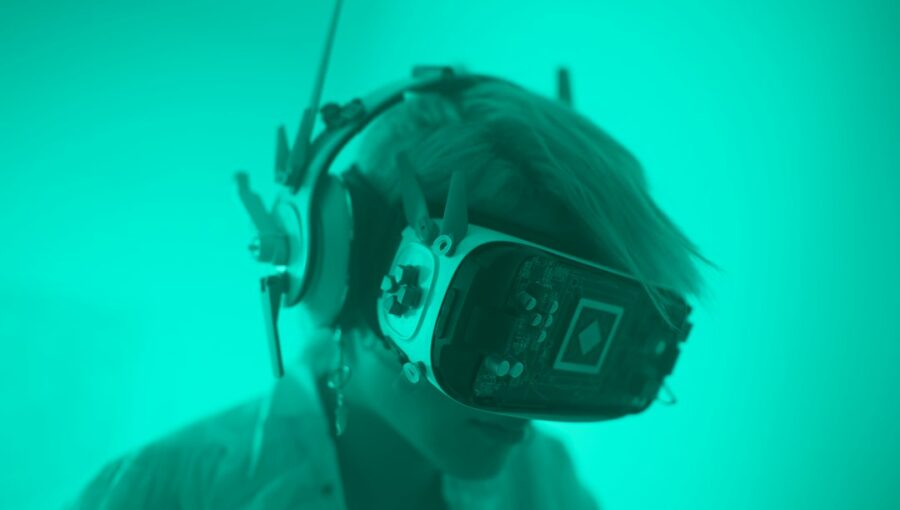
Merging Minds and Sound for Deeper Experiences
So, what’s the big deal with neural interfaces and spatial audio for making user experiences more immersive? Simply put, these technologies are moving beyond us just looking at or touching digital content, and instead, letting us think and hear our way into it, creating experiences that feel far more natural and engaging. Imagine controlling a game with your thoughts or having a virtual meeting where voices seem to come from exactly where people are positioned in a virtual room. That’s the core of it: bridging the gap between our minds, our perception of sound, and the digital world to make interactions feel less like using a tool and more like living an experience. This isn’t just about fancier graphics; it’s about fundamentally changing how we interact with technology and the worlds it creates.
As the fields of neural interfaces and spatial audio continue to evolve, they promise to revolutionize the immersive user experience in various applications, from gaming to virtual reality. A related article that explores the latest advancements in technology, including the best laptops for handling such demanding tasks, can be found at The Best HP Laptop 2023. This resource provides insights into the hardware capabilities necessary for supporting cutting-edge immersive experiences, making it a valuable read for tech enthusiasts and developers alike.
Key Takeaways
- The training data includes information and events up to October 2023.
- Insights and knowledge are based on a wide range of sources available until the cutoff date.
- No updates or developments occurring after October 2023 are included in the training.
- Users should verify current information from reliable sources for the latest updates.
- The model’s responses reflect the context and knowledge available up to the specified date.
Neural Interfaces: Beyond the Screen and the Controller
Neural interfaces, sometimes called brain-computer interfaces (BCIs), are technologies that allow direct communication pathways between the brain and an external device. This isn’t science fiction anymore; it’s a rapidly evolving field with real-world applications emerging. The ultimate goal is to enable users to control devices, interact with software, or even experience sensory input directly through their brain signals, bypassing traditional input methods like keyboards, mice, or touchscreens.
How Neural Interfaces Work
At a high level, neural interfaces operate by detecting and interpreting brain activity. This activity is essentially electrical signals generated by neurons firing. Different types of brain activity correspond to different mental states, intentions, or even imagined movements.
Invasive vs. Non-Invasive Approaches
There are two primary categories of neural interfaces based on how they interact with the brain.
Non-Invasive Methods
These are the most common and accessible types of BCIs today. They involve sensors placed on the scalp without requiring any surgical implantation.
Electroencephalography (EEG)
EEG is the most well-known non-invasive method. It uses electrodes placed on the scalp to detect electrical activity (brainwaves) produced by the brain. While it has good temporal resolution (can detect changes quickly), its spatial resolution (pinpointing the exact source of activity) is relatively low because the signals are attenuated and smeared by the skull and scalp. EEG is commonly used in research, medical diagnostics, and increasingly, in consumer-grade devices for things like meditation tracking, focus training, and simple game control. Think of it like listening to a conversation from outside a house – you can hear that people are talking and get a general idea of the intensity, but it’s hard to pinpoint exactly who is saying what or where they are in the house.
Functional Near-Infrared Spectroscopy (fNIRS)
fNIRS measures brain activity by monitoring changes in blood oxygenation levels. It uses near-infrared light shone through the skull, detecting how much light is absorbed by oxygenated versus deoxygenated blood. This method is less sensitive to motion artifacts than EEG and offers better spatial resolution than EEG for cortical areas near the surface. However, it has poorer temporal resolution compared to EEG. It’s like using an infrared camera to see where there’s more blood flow in the brain, indicating active areas.
Magnetoencephalography (MEG)
MEG measures the magnetic fields produced by electrical currents in the brain. It offers excellent temporal and spatial resolution, superior to EEG. However, MEG systems are incredibly expensive, require magnetically shielded rooms, and need to be cooled to extremely low temperatures, making them impractical for consumer applications. It’s used primarily in advanced research and clinical settings.
Invasive Methods
These methods involve surgically implanting electrodes directly into the brain. While this sounds intense (and it is), invasive BCIs offer significantly higher signal quality, precision, and bandwidth compared to non-invasive methods.
Electrocorticography (ECoG)
ECoG involves placing electrode grids directly on the surface of the brain, underneath the skull. This provides much clearer and stronger signals than EEG, as the signals don’t have to pass through bone and skin. ECoG is often used in patients undergoing brain surgery for epilepsy or tumor removal, allowing for temporary BCI applications in humans.
Intracortical Microelectrode Arrays
These are the most precise invasive BCIs, involving tiny arrays of electrodes implanted directly into the brain tissue, often targeting specific areas like the motor cortex. These arrays can detect the activity of individual neurons or small groups of neurons, providing incredibly detailed information. This is what you see in headlines about paralyzed individuals controlling robotic limbs with their thoughts. The trade-off is the significant surgical risk and the potential for long-term complications.
Potential Applications in User Experience
The implications of neural interfaces for user experience are vast, moving beyond mere convenience to entirely new modes of interaction.
Hands-Free Control
Imagine controlling a drone, navigating a complex 3D environment, or typing a document without lifting a finger. Non-invasive BCIs are already demonstrating proof-of-concept for such applications, particularly for individuals with motor disabilities. In augmented reality (AR) and virtual reality (VR), this could mean navigating menus, selecting items, or even initiating actions purely with thought.
Enhanced Accessibility
For individuals with severe motor impairments, neural interfaces represent a monumental leap in accessibility. They can regain control over their environment, communicate more freely, and interact with digital content in ways previously impossible. This extends beyond basic control to more nuanced interactions, improving quality of life significantly.
Direct Sensory Input
While most research focuses on output (controlling devices), the idea of direct sensory input is also being explored. This could mean feeding visual, auditory, or even tactile information directly into the brain, bypassing traditional sensory organs. While still very experimental, this could lead to hyper-realistic VR/AR experiences or even restore senses for those who have lost them.
Monitoring and Adapting to User State
Beyond direct control, BCIs can monitor cognitive states like attention, fatigue, stress, or even emotional responses. Imagine an adaptive interface that changes its complexity or pace based on your current cognitive load, or a game that dynamically adjusts difficulty based on your level of engagement. This moves towards truly personalized and responsive user experiences.
Spatial Audio: Hearing is Believing
Spatial audio, sometimes called 3D audio or immersive audio, is about creating an auditory experience where sounds appear to originate from specific locations in a three-dimensional space around the listener. It’s not just about left and right; it’s about front, back, above, and below.
This is a crucial component for immersion because our perception of space is heavily influenced by sound.
How Spatial Audio Works
Our brains naturally process sounds from our environment to determine their origin, distance, and movement. Spatial audio systems attempt to replicate these natural cues to trick our brains into perceiving virtual sounds as real-world phenomena.
Head-Related Transfer Functions (HRTFs)
The core of spatial audio technology lies in Head-Related Transfer Functions (HRTFs).
An HRTF describes how an ear receives a sound from a point in space. When a sound wave travels from a source to your ear, it’s modified by the shape of your head, torso, and outer ear (pinna). These modifications introduce subtle changes in volume, frequency content, and time delays between the sound reaching your left and right ears.
Our brains use these cues to localize sounds.
Individualized HRTFs
Everyone’s head and ears are shaped differently, meaning everyone has a unique HRTF. Ideally, a spatial audio system would use your personal HRTF for the most accurate and immersive experience. This can be achieved through measurements (using microphones placed in your ears and playing sounds from various directions) or sophisticated modeling techniques.
However, creating personalized HRTFs is complex and time-consuming, so many systems use generic HRTFs, which can still be very effective but might not be perfectly accurate for everyone.
Object-Based Audio
Traditional audio systems often mix sounds down into channels (stereo, 5.1, 7.1). Object-based audio takes a different approach. Instead of mixing channels, individual sounds (or “audio objects”) are assigned metadata that describes their position and movement in a 3D space.
The spatial audio renderer then processes these objects in real-time, applying the appropriate HRTFs and other spatialization techniques based on the listener’s head orientation. This allows for dynamic and incredibly precise positioning of sounds.
Binaural Rendering
Binaural rendering is the process of taking sound objects and their spatial metadata, applying HRTFs, and then outputting the result as two-channel (stereo) audio, specifically designed for headphones. Because headphones bypass the natural filtering of the head and ears, binaural rendering is essential for creating a convincing 3D soundstage with headphones. Without it, sounds would simply appear to be “inside your head.”
Key Elements of Spatial Audio
Beyond HRTFs and object-based rendering, several other elements contribute to a convincing spatial audio experience.
Distance Cues
Our brains use several cues to perceive how far away a sound source is.
Spatial audio systems replicate these by adjusting:
Volume (Amplitude)
Closer sounds are louder, and farther sounds are quieter. This is a fundamental cue.
Reverberation and Echo
Sounds in an environment bounce off surfaces, creating reflections. The characteristics of these reflections (their intensity, delay, and decay) tell us about the size and materials of the space.
Spatial audio engines simulate these effects, making a sound feel like it’s coming from a small room versus a vast outdoor space.
Air Absorption
High-frequency sounds are absorbed by the air more quickly than low-frequency sounds. So, very distant sounds tend to lose their crispness and clarity. Spatial audio can simulate this effect for sounds meant to be far away.
Environmental Acoustics
A truly immersive spatial audio experience doesn’t just place sounds; it makes them interact realistically with the virtual environment.
This includes:
Occlusion
When an object blocks the direct path between a sound source and the listener, the sound can be muffled, attenuated, or have its frequency content altered. Spatial audio engines can simulate these effects.
Obstruction
Similar to occlusion, but often referring to partial blockage or sounds traveling around an object, leading to subtle changes in sound quality.
The Synergy: Neural Interfaces and Spatial Audio
This is where things get really exciting. Combining neural interfaces with spatial audio isn’t just adding two cool technologies together; it’s about creating a powerful synergy that amplifies the immersive effect of each.
Enhancing Immersive Storytelling
Imagine a narrative experience where the story unfolds not just visually, but acoustically, with sounds dynamically responding to your mental state or focus.
Directing Attention and Focus
A neural interface could detect when a user’s attention drifts or when they show heightened interest in a particular aspect of a virtual environment. Spatial audio could then subtly direct their attention by bringing certain sounds forward, localizing key dialogue, or even triggering ambient cues to draw them towards a point of interest, all without explicit user input. For example, if a user is focusing intently on a particular object in a VR game, the sound associated with that object could become slightly more prominent or detailed.
Adaptive Soundscapes
Beyond simple focus, a BCI could infer emotional states or cognitive load. A serene spatial audio soundscape could gently shift to more stimulating sounds if the user appears bored, or conversely, a stressful sound environment could soften if the user shows signs of anxiety. This creates a truly responsive and personalized narrative experience.
Intuitive Control and Navigation
The combination allows for new, more fluid ways to interact with digital environments.
Thought-Controlled Audio Navigation
In a complex 3D audio environment, a neural interface could allow users to “mentally select” a sound source and focus on it, effectively filtering out other sounds or highlighting its spatial position. Imagine being in a virtual conference and being able to mentally “zoom in” on a specific speaker’s voice, making it clearer and more localized, even if others are talking.
Gaze-Independent Interaction
Often, in VR/AR, our gaze is used as an input for interaction. With neural interfaces, coupled with spatial audio, you could interact with sounds or objects that are not even in your direct line of sight. If you “think” about the sound of a rustle behind you, the system could interpret that as an intent to interact with or investigate that sound’s source, perhaps by rotating your virtual avatar or highlighting the object responsible.
Accessibility and Augmentation
This combination offers profound possibilities for accessibility and new forms of sensory augmentation.
Enhanced Hearing for the Hearing Impaired
For individuals with certain types of hearing impairment, spatial audio combined with neural interfaces could potentially bypass damaged auditory pathways by feeding spatial information directly to the brain, or by enhancing spatial cues in ways traditional hearing aids cannot. This is still very much in the realm of advanced research but holds immense promise.
Augmented Reality Audio
In AR, sounds aren’t just played through headphones; they are integrated into the real world. A neural interface could allow you to mentally “tag” real-world objects with virtual sounds, or to filter out unwanted real-world noise while enhancing virtual audio cues based on your cognitive needs. Imagine mentally focusing on a person across a crowded room and having an AR system use spatial audio to make their voice clearer and seem to come from exactly where they are, while reducing the surrounding chatter.
As advancements in technology continue to reshape our interaction with digital environments, the integration of neural interfaces and spatial audio is poised to revolutionize immersive user experiences. A fascinating exploration of this topic can be found in a related article that discusses how software innovations are enhancing user engagement and accessibility. For those interested in understanding the broader implications of these developments, this comprehensive guide on best software for NDIS providers offers valuable insights into how technology can be harnessed to create more inclusive and effective solutions in various fields.
Challenges and Ethical Considerations
| Metric | Current Status | Projected Breakthrough | Impact on User Experience |
|---|---|---|---|
| Neural Interface Latency | 50-100 ms | Below 10 ms | Near real-time brain-computer interaction |
| Spatial Audio Channel Count | Up to 32 channels | 128+ channels | Highly precise 3D sound localization |
| Signal-to-Noise Ratio (Neural Signals) | 20-30 dB | 40-50 dB | Clearer neural signal decoding for control |
| Immersive Audio Bandwidth | 20 Hz – 20 kHz | Extended to 40 kHz+ | Richer and more natural soundscapes |
| User Adaptation Time | Several hours to days | Minutes | Faster learning curve for neural interface use |
| Battery Life of Wearable Devices | 4-6 hours | 12-24 hours | Longer uninterrupted immersive sessions |
| Spatial Audio Rendering Latency | 10-20 ms | Below 5 ms | Seamless audio-visual synchronization |
While the promise is immense, bringing neural interfaces and spatial audio together at scale comes with significant hurdles.
Technical Roadblocks
The underlying technology still needs considerable refinement.
Signal Quality and Reliability
Non-invasive neural interfaces, especially EEG, suffer from low signal-to-noise ratio. Accurately and consistently deciphering complex intentions from brainwaves is extremely challenging. Movement artifacts, external electrical noise, and the inherent variability of brain signals across individuals are major obstacles. Invasive interfaces offer better signal quality but come with their own set of risks and ethical considerations.
Personalization of HRTFs
For spatial audio to be truly convincing for everyone, personalized HRTFs are ideal. Current methods for creating these are often impractical for consumer use. More efficient, accurate, and user-friendly methods for generating or adapting HRTFs are needed.
Latency
Both neural interfaces and spatial audio require extremely low latency to feel natural and responsive. Any noticeable delay between a thought and an action, or a head movement and a sound re-localization, breaks immersion and can lead to discomfort or motion sickness.
Processing Power
Real-time processing of complex neural signals and high-fidelity spatial audio (especially object-based audio with dynamic environmental acoustics) demands significant computational power, which can be a limitation for mobile or untethered devices.
Ethical and Societal Implications
Beyond the technical, the widespread adoption of these technologies raises important questions.
Privacy of Brain Data
What happens when our thoughts, intentions, or cognitive states are directly accessible by a device or a third party? The potential for misuse of highly personal brain data, from targeted advertising to surveillance, is a serious concern that needs robust safeguards and ethical frameworks.
Security
Just like any digital system, neural interfaces could be vulnerable to hacking. Imagine the implications of someone else being able to read your thoughts, influence your perceptions, or even control your connected devices through your BCI.
Consent and Agency
As neural interfaces become more sophisticated, questions arise about informed consent and individual agency. How do we ensure that users truly understand what their BCI is doing, and that they maintain full control over their interactions and data? The line between user input and system interpretation could blur, raising questions about who is truly “in control.”
The Nature of Reality and Identity
When immersive experiences become indistinguishable from reality, and our brains are directly interfaced with digital worlds, what are the long-term psychological and sociological impacts? How might this affect our perception of self, our relationships, and our understanding of what is real? These are profound philosophical questions that we will need to grapple with as these technologies mature.
The Road Ahead: Research and Development
Despite the challenges, research and development in both neural interfaces and spatial audio are progressing rapidly.
Advancements in Sensor Technology
New non-invasive sensor technologies are being explored, aiming for higher resolution, better signal-to-noise ratio, and greater comfort. This includes flexible electrode arrays, dry electrodes (reducing the need for conductive gels), and even novel optical methods. Miniaturization and increased battery life are also key areas of focus for making these devices more practical for everyday use.
Machine Learning and AI
Machine learning and artificial intelligence are critical for both fields. For neural interfaces, AI algorithms are essential for interpreting complex brain signals, adapting to individual brain patterns, and filtering out noise. In spatial audio, AI is being used to create more realistic and dynamic environmental acoustics, personalize HRTFs, and optimize rendering in real-time.
Standardized Frameworks and Tools
The development of standardized frameworks, APIs, and authoring tools for both neural interfaces and spatial audio will be crucial for broader adoption and innovation. This will enable developers to integrate these technologies into their applications more easily, without needing to reinvent the wheel. Game engines like Unity and Unreal Engine are already integrating advanced spatial audio capabilities, and we can expect similar trends for BCI integration.
Interdisciplinary Collaboration
The complexity of these technologies demands interdisciplinary collaboration. Neuroscientists, engineers, designers, ethicists, and artists all have a vital role to play in shaping the future of immersive user experiences that responsibly leverage neural interfaces and spatial audio.
The integration of neural interfaces and spatial audio represents a paradigm shift in how we interact with and experience digital content. It promises to move beyond mere interaction, towards true immersion where technology becomes an extension of ourselves, blurring the lines between the digital and the physical. While the journey is long and filled with technical and ethical challenges, the potential rewards – from unprecedented accessibility to entirely new forms of communication and entertainment – make this a frontier well worth exploring.
FAQs
What are neural interfaces and how do they work in immersive user experiences?
Neural interfaces are devices that connect directly to the brain to enable communication between the brain and external systems. In immersive user experiences, neural interfaces can interpret brain signals to control virtual environments, enhancing the user’s interaction and engagement.
How does spatial audio contribute to immersive user experiences?
Spatial audio technology creates a sense of 3D sound environment, allowing users to perceive sound coming from different directions and distances. This enhances the realism and immersion of virtual experiences by providing audio cues that match the visual content.
What are the potential benefits of combining neural interfaces and spatial audio in immersive user experiences?
By combining neural interfaces and spatial audio, users can have a more natural and intuitive interaction with virtual environments. This integration can lead to enhanced immersion, improved accessibility for individuals with disabilities, and new possibilities for communication and entertainment.
Are there any challenges or limitations to implementing neural interfaces and spatial audio in immersive user experiences?
Some challenges include the complexity of interpreting brain signals accurately, the need for precise calibration of neural interfaces, and the computational resources required for real-time processing. Spatial audio may face challenges related to hardware compatibility, audio quality, and the need for specialized audio production techniques.
What are some potential applications of neural interfaces and spatial audio in the future of immersive user experiences?
Future applications could include virtual reality training simulations for various industries, interactive storytelling experiences with personalized audio cues, therapeutic applications for mental health and rehabilitation, and innovative forms of communication and social interaction in virtual worlds.
Enjoying our content? Make us a preferred source on Google:
Add us as a Preferred Source on Google