

When we talk about making 5G work in the busiest city spots, especially with those super-fast millimeter-wave (mmWave) frequencies, one of the trickiest things to deal with is something called inter-cell interference. Simply put, this is when the signals from one small cell “bleed” into and mess with the signals of another nearby small cell. It’s a big deal because if we don’t handle it well, all that promised speed and reliability of 5G mmWave just won’t happen. Think of it like trying to have multiple conversations in a very small, crowded room – everyone is talking over each other, and nobody can hear clearly. In 5G mmWave, with so many small cells packed close together, this signal clash is a constant challenge that needs smart solutions to ensure a smooth, high-performance network.
Understanding the Inter-Cell Interference Challenge in mmWave
Inter-cell interference, at its core, is about signals from neighboring cells clashing. In a traditional cellular network, cells are spaced out more, and lower frequencies penetrate obstacles better, leading to a more predictable signal spread. But with 5G mmWave, we’re talking about extremely high frequencies (typically 24 GHz to 100 GHz). These signals have very short wavelengths, which is great for carrying lots of data, but they also behave quite differently. They’re highly susceptible to blockages like buildings, trees, and even heavy rain, and they don’t travel very far. This means we need a lot more small cells packed much closer together to provide continuous coverage, especially in dense urban areas.
The sheer density of these small cells is precisely what amplifies the interference problem. Each small cell is essentially a tiny base station, beaming out signals. When you have dozens, hundreds, or even thousands of these in a small area, their signals are bound to overlap significantly. Unlike lower frequencies where a signal might just be attenuated, mmWave signals can reflect off surfaces (like building facades) and bounce around, creating complex interference patterns. This isn’t just about one cell signal bumping into another; it’s a dynamic, constantly changing environment where multiple signals are arriving at a user’s device from various directions, often from different small cells, all at once. If not managed, this cacophony of signals can drastically reduce data rates, increase latency, and even lead to dropped connections, directly undermining the promise of 5G mmWave.
The Specific Nature of mmWave Signal Propagation
Millimeter-wave signals, while powerful for data capacity, have distinct propagation characteristics that make interference mitigation a unique challenge. Their short wavelengths mean they experience significant path loss over relatively short distances. This is why we need so many small cells.
More critically, mmWave signals are highly directional and prone to blocking.
A single human body or a parked car can temporarily block a direct line-of-sight path between a small cell and a user device.
When a direct path is blocked, the signal relies on reflections and diffractions to reach the receiver. While these indirect paths can still deliver a signal, they introduce delays and arrive from different angles. This multi-path propagation, while sometimes beneficial for diversity, also means that interfering signals can arrive via multiple reflected paths, making them harder to predict and cancel out. Furthermore, the atmospheric absorption for mmWave frequencies is higher than for sub-6 GHz bands, contributing to faster signal decay and further necessitating denser deployments, which, in turn, exacerbates the interference potential. The combination of high path loss, susceptibility to blockages, and reliance on complex multi-path propagation creates a highly dynamic and challenging interference environment.
The Impact of Dense Small Cell Deployment
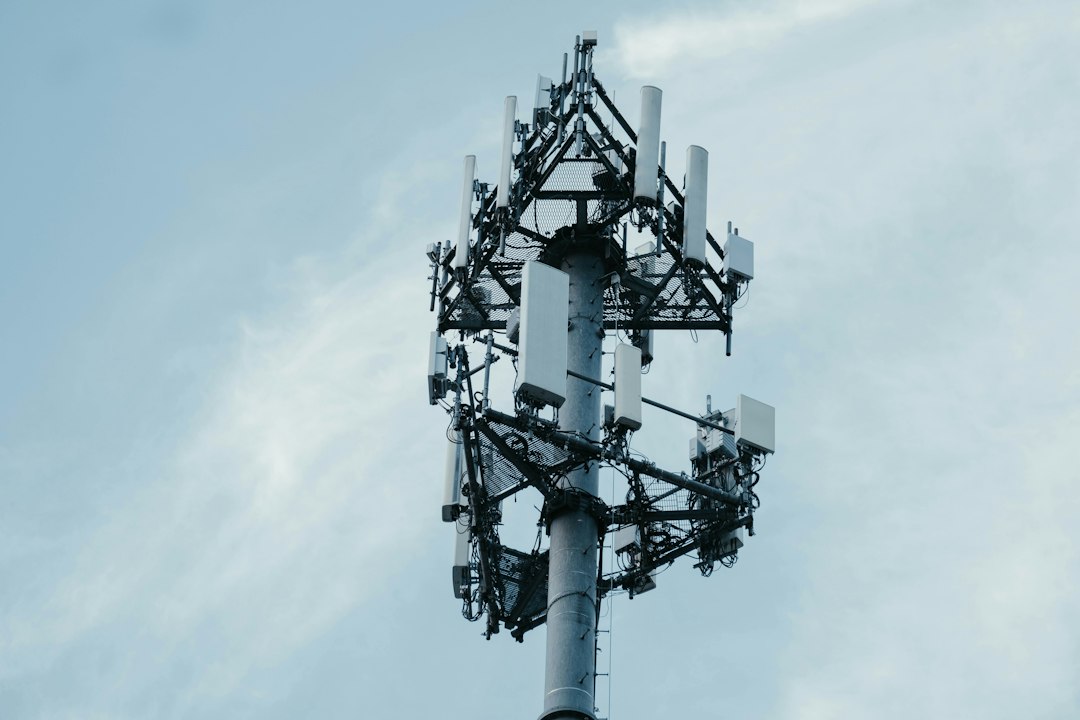
The deployment philosophy for 5G mmWave is “densification.” To achieve pervasive high-speed coverage in urban canyons and busy streets, small cells are mounted on lampposts, bus shelters, building facades, and utility poles – essentially wherever there’s space and power. This close proximity, often within tens of meters of each other, means that a user device is frequently within the coverage area of multiple small cells simultaneously.
While this multi-cell coverage can be leveraged for handover or diversity, it also means that the device is receiving strong signals from not just its serving cell but also from several neighboring cells. These neighboring cell signals, if not carefully managed, become direct sources of interference. The closer the cells, the stronger the potential interference. Moreover, with many users simultaneously accessing the network, each small cell is actively transmitting, increasing the overall interference floor. This isn’t just about a few isolated instances of interference; it’s a systemic problem that requires a coordinated approach across the entire network to maintain performance. Without robust interference mitigation strategies, the benefits of dense small cell deployments, like high capacity and low latency, would be severely limited by the resulting signal noise.
In the context of enhancing connectivity in dense urban environments, the article “Unlock the Possibilities with Galaxy Book2 Pro 360” discusses innovative technologies that can complement efforts in mitigating inter-cell interference in 5G mmWave small cell deployments. By leveraging advanced computing devices like the Galaxy Book2 Pro 360, users can experience improved data processing and communication capabilities, which are essential for optimizing network performance in high-density areas. For more insights on how technology can enhance connectivity, you can read the article here: Unlock the Possibilities with Galaxy Book2 Pro 360.
Key Takeaways
- The training data includes information and events up to October 2023.
- Insights and knowledge are based on a wide range of sources available until the cutoff date.
- No updates or developments occurring after October 2023 are included in the training.
- Users should verify current information from reliable sources for the latest updates.
- The model’s responses reflect the context and knowledge available up to the specified date.
Leveraging Advanced Beamforming and Massive MIMO
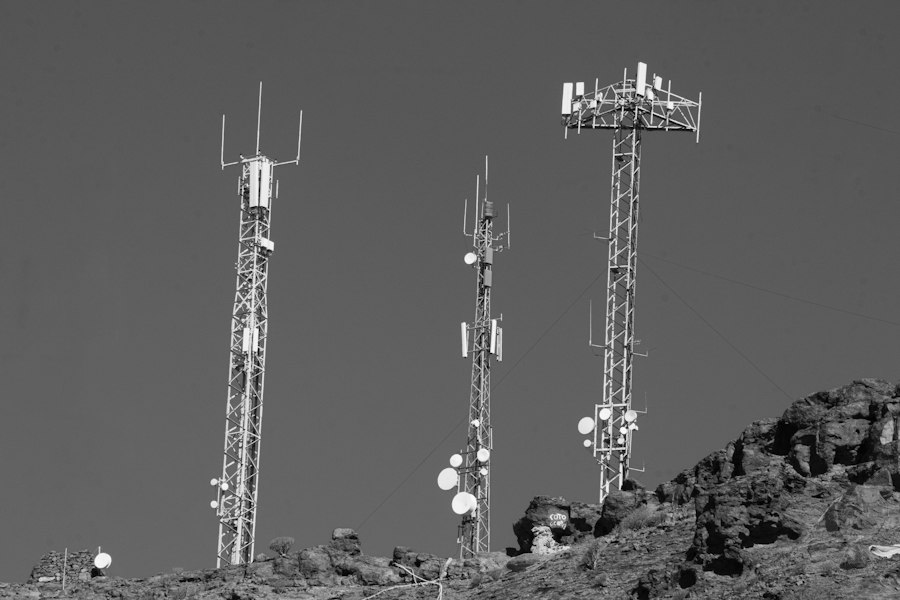
One of the most powerful tools in the mmWave arsenal for combating interference is advanced beamforming, often coupled with Massive MIMO (Multiple-Input, Multiple-Output) technology. Unlike traditional antennas that broadcast signals in a wide area, beamforming directs a narrow, focused beam of energy precisely towards the user device. Imagine a spotlight instead of a floodlight. This precise targeting has a double benefit: it boosts the signal strength for the intended user, and it simultaneously reduces the signal leaked into other directions, thereby lowering interference to other users served by neighboring cells.
Massive MIMO takes this concept further by employing a very large number of antenna elements (dozens, even hundreds) at the small cell. This allows for extremely fine-grained control over the beam’s direction, shape, and even multiple simultaneous beams. With Massive MIMO, a single small cell can serve multiple users simultaneously using spatial multiplexing, each with its own dedicated beam. This capability dramatically increases cell capacity and spectral efficiency. For interference mitigation, Massive MIMO can create nulls (areas of minimal signal strength) in the direction of interfering cells or users, actively suppressing unwanted signals. It’s a highly dynamic process, constantly adjusting beams as users move and the radio environment changes, making it a cornerstone for efficient mmWave operation.
Dynamic Beam Steering and Tracking
Dynamic beam steering is the art of constantly adjusting the direction of the mmWave beam. Because mmWave signals are highly directional and prone to blocking, a static beam wouldn’t work well with mobile users. Instead, the small cell’s antenna array continuously monitors the user’s position and adjusts the beam in real-time to maintain the strongest possible connection. This involves sophisticated algorithms and rapid processing to track user movement, predict future positions, and compensate for temporary blockages.
When a user moves, or an obstacle (like a bus) temporarily blocks the direct path, the system quickly re-steers the beam, potentially even switching to a reflected path if a direct one isn’t available. This agility ensures consistent connectivity and maximizes signal quality. From an interference perspective, dynamic beam steering minimizes the time that a beam is misaligned, reducing unnecessary signal spread and therefore reducing the potential for that signal to interfere with other users or cells. It’s a continuous dance between the small cell and the user, always optimizing for the best signal path.
Nulling and Spatial Filtering
Beyond just steering beams towards users, Massive MIMO and advanced beamforming can also actively suppress interference by creating “nulls.” A null is essentially a controlled cancellation of the radio signal in a specific direction. Imagine deliberately pointing the “dark” side of your spotlight towards an area you don’t want to illuminate. In the context of mmWave, if a small cell detects a strong interfering signal coming from a particular direction (perhaps from a neighboring cell or an unintended reflection), it can dynamically adjust its antenna weights to create a null in that precise direction. This effectively filters out the unwanted signal before it even reaches the user, significantly improving the signal-to-interference-plus-noise ratio (SINR).
Spatial filtering, a broader term, encompasses this nulling capability. It allows the small cell to isolate the desired signal in space while attenuating signals from other spatial directions. For example, if two users are in very different spatial locations relative to the small cell, Massive MIMO can create distinct beams for each, effectively “spatially separating” them. This reduces the inter-user interference within the same cell and also helps to distinguish between signals from different cells, making the network much more efficient and robust against interference.
Coordinated Multi-Point (CoMP) Transmission
Coordinated Multi-Point (CoMP) transmission is a more advanced interference mitigation technique that takes advantage of the fact that a user might be within range of multiple small cells. Instead of viewing these neighboring cells solely as sources of interference, CoMP sees them as potential collaborators. In a CoMP setup, multiple small cells work together to serve a single user.
There are different flavors of CoMP. In joint processing CoMP, multiple small cells simultaneously transmit the same data to a user, effectively combining their signals to strengthen the desired signal and improve coverage, especially at cell edges. In coordinated scheduling/beamforming CoMP, neighboring cells coordinate their transmissions so that their beams for different users don’t interfere with each other. For instance, if one cell is serving a user in a particular direction, a neighboring cell might temporarily reduce its power or avoid transmitting in that exact direction to minimize interference. This requires real-time information sharing and coordination between small cells, often orchestrated by a central controller. CoMP helps to transform potential interference into cooperative gains, boosting both capacity and coverage, particularly in those tricky border areas between cells where interference is usually at its worst.
Intelligent Resource Allocation and Scheduling

Beyond the physical layer improvements of beamforming, the network’s intelligence in how it allocates resources and schedules transmissions plays a crucial role in mitigating inter-cell interference. This involves smart algorithms that decide when, where, and with what power cells should transmit, ensuring that transmissions are orchestrated rather than haphazard. The goal is to maximize throughput for all users while minimizing the detrimental impact of interfering signals.
This isn’t a static plan; it’s a dynamic, constantly evolving strategy driven by real-time network conditions, user demands, and channel measurements.
It involves techniques like dynamic power control, interference alignment, and sophisticated scheduling algorithms that prioritize users and manage bandwidth. Effective resource allocation ensures that even in dense deployments, the available spectrum is used as efficiently as possible, allowing more data to flow with fewer collisions. It’s about making sure that every transmission counts and doesn’t disrupt others unnecessarily.
Dynamic Power Control
Dynamic power control is a straightforward yet effective way to manage interference.
Instead of transmitting at maximum power all the time, which would flood the environment with unnecessary signals and maximize interference, dynamic power control adjusts the transmit power of each small cell and even each user device based on the specific needs of the connection.
If a user is very close to a small cell and has a strong signal, the cell can reduce its transmit power significantly. This uses less energy and, critically, reduces the strength of the interfering signal it projects towards other cells and users. Conversely, if a user is at the edge of a cell or experiencing a temporary blockage, the power might be increased judiciously to maintain the connection, but only as much as necessary.
This constant optimization prevents “overpowering” the network. Implementing dynamic power control effectively requires continuous feedback from user devices about their received signal quality, allowing the network to make rapid adjustments. It’s about finding the sweet spot for power output – just enough to maintain quality of service, but not so much that it creates excessive interference for others.
Interference Alignment
Interference alignment is a more advanced and somewhat theoretical concept that aims to make interfering signals “align” in such a way that they can be effectively ignored or cancelled out.
Imagine you have two people trying to talk to you, and both are talking at the same time. Interference alignment, in an ideal scenario, would make them both talk on the exact same “frequency” but in a way that allows you to separate their voices, or perhaps combine them so you can hear your desired person clearly, and the other person’s voice aligns perfectly into a space that doesn’t bother you.
In a technical sense, it involves coordinating the pre-coding (signal processing before transmission) at multiple small cells so that the interfering signals arriving at a receiver occupy a minimal “dimension” in the signal space. This leaves more “dimensions” or space for the desired signal, effectively separating the desired signal from the interference.
While complex to implement perfectly in real-world, dynamic scenarios due to the need for precise channel state information across multiple cells, research and early implementations show its potential to significantly increase the achievable throughput by systematically dealing with interference rather than just avoiding it. It’s a proactive approach to interference that aims to turn a problem into a manageable characteristic of the radio environment.
Fractional Frequency Reuse (FFR) and Inter-Cell Interference Coordination (ICIC)
Fractional Frequency Reuse (FFR) and Inter-Cell Interference Coordination (ICIC) are methods to manage spectrum resources across neighboring cells to reduce interference. In a basic frequency reuse scheme, different cells might use completely different sets of frequencies, which avoids interference but wastes spectrum.
In a “reuse 1” scheme, every cell uses the same frequencies, which is spectrally efficient but maximizes interference.
FFR strikes a balance. It divides the available spectrum into sub-bands. Cells might use the full spectrum in their central areas (where signal strength is high), but at cell edges (where interference from neighbors is most problematic), they might use only a fraction of the available frequencies, often using different sub-bands from their immediate neighbors.
For example, Cell A’s edge users might use frequencies X, while Cell B’s edge users use frequencies Y. This ensures that users most susceptible to interference are assigned frequencies that are less likely to be interfered with by strong signals from adjacent cells.
ICIC is a broader framework that includes FFR and other techniques. It’s about coordinating the use of radio resources (frequency, time, power) between cells.
This can involve coordinating the allocation of Physical Resource Blocks (PRBs) in LTE and NR, or coordinating transmission power based on real-time interference measurements. Both FFR and ICIC require communication and coordination between cells, often managed by a central controller (like a Self-Organizing Network or SON function) that monitors the network’s interference levels and dynamically adjusts resource allocation to optimize performance across the entire system.
Smart Deployment Strategies and Network Architecture
The physical arrangement of small cells and the underlying network design are just as critical as the radio technologies themselves. A well-thought-out deployment strategy can inherently reduce interference, while a poorly planned one can exacerbate it, even with the most advanced beamforming. This involves considering factors like cell placement, antenna height, coverage overlap, and how the network connects these small cells to the core.
For mmWave, where signals are highly directional and prone to blockage, meticulous site planning is paramount. It’s not just about finding an available spot; it’s about finding the right spot that minimizes line-of-sight blockages to intended users while potentially using them to shield signals from interfering with other cells. The architecture also needs to support the rapid data exchange and coordination required for advanced interference mitigation techniques like CoMP and ICIC. This means robust backhaul and a highly intelligent control plane.
Strategic Small Cell Placement
The location of each mmWave small cell is a critical factor in managing interference. Unlike lower frequency macro cells that aim for broad, omnidirectional coverage, mmWave small cells benefit from precise, directional placement. The goal is to provide line-of-sight (LOS) to target user areas while simultaneously minimizing LOS paths to neighboring small cells or areas served by other cells.
For instance, strategically placing a small cell on one side of a building might serve users on that street effectively, while the building itself acts as a natural barrier to prevent its signal from strongly interfering with a small cell on the other side of the building. Antenna height also plays a role. Mounting cells at optimal heights can help avoid common obstacles or leverage them for shielding. Network planners meticulously analyze urban topography, building layouts, and traffic patterns to determine the best locations. This often involves detailed ray tracing simulations to predict signal propagation and identify potential interference hotspots before deployment. The idea is to “design out” as much interference as possible from the very beginning, rather than solely relying on reactive mitigation techniques.
Backhaul Connectivity and Edge Computing
The dense deployment of mmWave small cells places immense demands on the network’s backhaul – the connection that links the small cell to the rest of the core network. Each small cell will be handling gigabits per second of data, and with thousands of them, traditional fiber-to-the-cell becomes a massive undertaking. Reliable, high-capacity, and low-latency backhaul is essential, whether it’s fiber, high-capacity wireless microwave/mmWave links (E-band or V-band), or hybrid solutions.
More importantly for interference mitigation, backhaul directly impacts the ability to implement coordinated techniques. CoMP, ICIC, and even sophisticated dynamic beamforming require small cells to exchange data and control information in real-time. If the backhaul is latent or lacks capacity, this coordination becomes impossible. Edge computing, where processing power is moved closer to the small cells (e.g., in a local aggregation point or a nearby street cabinet), can help. By processing data and running coordination algorithms closer to the source, it reduces the reliance on long-haul backhaul for time-sensitive interference management decisions, lowering latency and enabling more responsive control actions between small cells.
Self-Organizing Networks (SON) and AI/ML
Self-Organizing Networks (SON) are a suite of functions designed to automate the planning, configuration, management, optimization, and healing of mobile networks. In the context of mmWave small cells and interference, SON plays a crucial, dynamic role. Instead of manual adjustments, SON algorithms continuously monitor network performance, detect interference patterns, and automatically apply optimization strategies.
This can include:
- Automatic Neighbor Relation (ANR) management: Identifying and maintaining the list of neighboring cells, crucial for handover and interference coordination.
- Interference Detection and Mitigation: Automatically detecting areas of high interference and adjusting cell parameters (power, frequency allocation, beamforming weights) to reduce it.
- Load Balancing: Shifting traffic between cells to prevent congestion in one cell from creating excessive interference while adjacent cells are underutilized.
The integration of Artificial Intelligence (AI) and Machine Learning (ML) takes SON capabilities to the next level.
AI/ML models can analyze vast amounts of real-time and historical network data – including user movement patterns, traffic demands, signal measurements, and environmental factors (like weather) – to predict interference hotspots and proactively apply mitigation measures.
For instance, an ML model could learn that during rush hour, a specific street canyon consistently experiences high interference from a particular set of cells, and then automatically adjust the beamforming patterns or power levels of those cells before the interference becomes critical. This proactive, intelligent optimization is vital for maintaining high performance in the constantly changing and complex mmWave environment.
In the context of enhancing 5G mmWave small cell deployments in dense urban areas, a related article discusses the latest advancements in technology that can help mitigate inter-cell interference. This is particularly relevant as urban environments pose unique challenges for network performance. For those interested in exploring cutting-edge devices that can complement such technologies, you might find insights in this article about the top smartwatches of 2023, which highlights how wearable technology is evolving alongside advancements in connectivity. You can read more about it here.
Advanced Receiver Techniques and User Equipment Capabilities
| Metric | Description | Typical Value / Range | Impact on Inter-Cell Interference | Mitigation Technique |
|---|---|---|---|---|
| Cell Density | Number of small cells per square kilometer | 100 – 500 cells/km² | Higher density increases interference probability | Optimized cell placement and power control |
| Transmit Power | Power level of small cell base stations | 10 – 30 dBm | Higher power increases interference range | Adaptive power control based on interference measurements |
| Beamforming Gain | Directional antenna gain to focus signal | 15 – 25 dBi | Higher gain reduces interference by spatial filtering | Advanced beamforming with null steering |
| Inter-Site Distance (ISD) | Distance between neighboring small cells | 50 – 200 meters | Smaller ISD increases interference overlap | Careful ISD planning and dynamic resource allocation |
| Frequency Reuse Factor | Number of cells sharing the same frequency | 1 (full reuse) to 3 | Lower reuse factor reduces interference but limits capacity | Fractional frequency reuse and dynamic spectrum allocation |
| Interference-to-Noise Ratio (INR) | Ratio of interference power to noise power at receiver | -10 to 10 dB | Higher INR indicates stronger interference | Interference cancellation and coordinated scheduling |
| Latency for Coordination | Delay in exchanging interference coordination info | Lower latency improves real-time interference mitigation | Low-latency backhaul and edge computing |
While much of the heavy lifting for interference mitigation happens at the small cell, the user equipment (UE) – your smartphone, tablet, or IoT device – also plays a significant role. The capabilities of the receiver in your device can make a substantial difference in how well it can distinguish desired signals from interfering ones. As mmWave networks become denser, the sophistication of UE receivers needs to evolve to keep up with the complex radio environment.
This includes technologies that help the device process multiple incoming signals, filter out noise, and reconstruct the desired data stream accurately. Without advanced receiver techniques, even a perfectly beamformed signal from the small cell might be corrupted by the time it reaches a less capable device, leading to reduced performance. It’s a symbiotic relationship: powerful transmitters and smart network coordination must be met with equally capable receivers to unlock the full potential of 5G mmWave.
Advanced Receiver Algorithms (e.g., MMSE-SIC)
User devices, particularly those designed for 5G mmWave, incorporate advanced receiver algorithms to cope with the complex signal environment. Two prominent examples are Minimum Mean Square Error (MMSE) receivers and Successive Interference Cancellation (SIC).
- MMSE Receivers: These algorithms aim to minimize the mean square error between the transmitted and received signals. In the presence of multiple interfering signals, an MMSE receiver intelligently weights different received signal components to suppress interference and noise while enhancing the desired signal. It essentially tries to find the optimal filter that “cleans up” the received signal as much as possible, given the known characteristics of the desired signal and the estimated interference.
- Successive Interference Cancellation (SIC): SIC is particularly useful when a receiver is getting strong signals from multiple sources (e.g., its serving cell and one or more strong interfering cells). The idea is to decode the strongest signal first, then regenerate that signal and subtract it from the total received signal. What’s left is a “cleaner” signal that now contains weaker, previously interfered signals. This process can be repeated, decoding and subtracting the next strongest signal, and so on. By iteratively removing strong interference, SIC allows the receiver to accurately decode weaker desired signals that would otherwise be drowned out. Implementing SIC requires significant processing power and accurate channel estimation but offers substantial gains in interference-limited scenarios.
Multi-Panel Antenna Arrays on Devices
Just as small cells use Massive MIMO and advanced antenna arrays, modern 5G mmWave user equipment also incorporates multi-panel antenna arrays. Traditional smartphones typically have a few antennas for various frequency bands. For mmWave, a device might have multiple small antenna arrays distributed around its chassis. This is crucial because, like the small cells, mmWave signals are highly directional and easily blocked.
Having multiple antenna panels allows the device to select the best available path or even combine signals from different paths to improve reception quality. For example, if one panel is blocked by the user’s hand, another panel on a different side of the device might still have a clear line-of-sight to the small cell. These multi-panel arrays also enable beamforming capabilities at the device level, though typically simpler than those at the small cell. The device can adaptively orient its “receive beam” towards the strongest signal source, helping to maximize the desired signal and reject interfering signals coming from other directions. This smart antenna placement and selection capability greatly enhances the device’s ability to maintain a robust connection in dynamic mmWave environments.
Channel State Information (CSI) Feedback
Channel State Information (CSI) feedback is a critical link between the user equipment and the small cell, enabling many of the advanced interference mitigation techniques discussed earlier. CSI refers to the known channel properties of a communication link. This information includes details about signal strength, interference levels, path loss, multipath components, and how these factors are changing over time.
The user device continuously measures the quality of the signals it receives from its serving cell and neighboring cells. It then compresses this complex information and feeds it back to the small cell. This feedback allows the small cell to make intelligent, real-time decisions about:
- Beamforming direction and nulling: The small cell uses CSI to precisely steer its transmit beams towards the user and create nulls towards interfering sources.
- Power control: CSI helps the small cell determine the minimum transmit power needed to reach the user with adequate quality.
- Scheduling and resource allocation: With CSI from multiple users, the small cell can schedule transmissions to different users at different times or frequencies to minimize inter-user and inter-cell interference.
- Handover decisions: CSI from neighboring cells helps the network decide when and to which cell a user should hand over for optimal performance.
The accuracy and timeliness of CSI feedback are paramount. In dynamic mmWave environments, outdated CSI can lead to misdirected beams and inefficient interference management. Therefore, 5G NR specifies advanced CSI reporting mechanisms to ensure that small cells have the most current and relevant information to make informed decisions.
In the quest to enhance the performance of 5G mmWave small cell deployments in densely populated urban areas, addressing inter-cell interference is crucial. A related article discusses innovative strategies for optimizing network performance and ensuring seamless connectivity in challenging environments. For those interested in exploring design tools that can aid in creating effective visual communication for such technologies, you might find this resource on logo design software particularly useful. By leveraging the right tools, developers can effectively convey the advanced capabilities of their 5G solutions while mitigating interference issues.
Future Outlook and Emerging Solutions
While the current suite of technologies offers robust solutions for mitigating inter-cell interference in dense mmWave deployments, the quest for ever-higher speeds and greater spectral efficiency continues. As networks evolve and traffic demands increase, new challenges and opportunities for innovation will emerge. The future of interference mitigation will likely involve a deeper integration of AI/ML, more sophisticated coordination across network layers, and novel approaches to managing the radio environment.
The goal isn’t just to reduce interference, but to turn it into a manageable or even beneficial aspect of the network. This includes moving towards concepts like dynamic spectrum sharing and proactive interference management that anticipate problems before they arise. The continuous evolution of standards, hardware capabilities, and software intelligence will be key to unlocking the full, transformative potential of 5G mmWave in the most challenging urban environments.
Joint Communication and Sensing (JCAS)
Joint Communication and Sensing (JCAS), also known as Integrated Sensing and Communication (ISAC), is an exciting frontier that could significantly enhance interference mitigation. Traditional cellular systems separate communication and sensing (radar, lidar). JCAS aims to integrate these functions, allowing the same mmWave signals and infrastructure used for communication to also perform sensing tasks, such as detecting and tracking objects in the environment.
How does this help interference? By enabling the small cell to “sense” its environment in real-time, it can gain a much richer and more immediate understanding of potential blockages, reflections, and even the movement of users and other vehicles. For example, if a small cell can detect that a large bus is about to move between it and a user, it can proactively adjust its beamforming, switch to a reflected path, or even coordinate with a neighboring cell before the direct path is completely blocked. This goes beyond relying solely on CSI feedback from the device (which is reactive) to a more proactive, predictive interference management based on real-world environmental awareness. JCAS could also help in identifying and categorizing sources of external interference, making the network more resilient.
Reconfigurable Intelligent Surfaces (RIS)
Reconfigurable Intelligent Surfaces (RIS), also known as Intelligent Reflecting Surfaces (IRS), represent a potentially game-changing technology for controlling the radio environment itself. Imagine a surface (like a wallpaper, a facade panel, or a sign) embedded with numerous tiny, low-power reflective elements. Each element can individually adjust the phase and amplitude of an incoming radio wave before reflecting it.
This allows the RIS to essentially “program” how radio waves bounce off it. Instead of reflections being random and often detrimental (creating interference or dead spots), an RIS can be configured to reflect a signal in a specific, desired direction. For interference mitigation, an RIS could be deployed on a building to:
- Direct desired signals: Guide a mmWave signal around an obstacle or into a coverage hole, strengthening the desired signal at the user’s location.
- Suppress interfering signals: Steer an interfering signal away from a sensitive receiver or reflect it into a null, thereby reducing interference.
- Create virtual line-of-sight: Turn a non-line-of-sight path into an effective communication link by intelligently reflecting the signal.
RIS technology is still in its early stages of research and development, particularly for large-scale urban deployment. However, its potential to actively shape the radio environment offers a powerful new tool for dynamic and intelligent interference management, moving beyond just managing transmitters and receivers to actively manipulating the propagation paths themselves.
AI-Driven Network Orchestration and Digital Twins
The ultimate future for mitigating interference in complex 5G mmWave networks lies in truly intelligent, end-to-end network orchestration powered by AI and ML, coupled with the concept of a “digital twin.” A digital twin is a virtual replica of a physical system – in this case, the entire 5G mmWave network, including all its small cells, backhaul, user devices, and even environmental factors.
This digital twin, continuously updated with real-time data from the physical network, would allow AI algorithms to:
- Simulate and predict interference: Accurately model signal propagation, predict interference patterns under various conditions, and identify potential hotspots before they manifest.
- Proactive optimization: Based on predictions, the AI can then proactively adjust parameters across the network – beamforming, power control, resource allocation, and even CoMP configurations – to prevent interference or optimize performance.
- “What-if” analysis: Operators could use the digital twin to test the impact of new cell deployments, software upgrades, or traffic surges on interference without affecting the live network.
- Automated root cause analysis: Quickly diagnose the source of interference issues and recommend corrective actions.
This level of AI-driven orchestration, combined with the detailed insights from a digital twin, moves us beyond reactive interference mitigation to a paradigm of predictive and self-optimizing networks. It promises to unlock unprecedented levels of efficiency and reliability in dense urban 5G mmWave deployments, making the network truly autonomous in its ability to manage its complex radio environment.
FAQs
What is inter-cell interference in 5G mmWave networks?
Inter-cell interference occurs when signals from different cells overlap and interfere with each other, leading to degraded performance for users. In dense urban environments, where small cells are deployed closely together, this interference can significantly impact the quality of service and overall network efficiency.
How does mmWave technology contribute to inter-cell interference?
mmWave technology operates at higher frequency bands, which allows for greater data rates and capacity. However, these higher frequencies have shorter wavelengths, resulting in limited range and penetration. This characteristic can lead to increased inter-cell interference, especially in densely populated areas where small cells are deployed in close proximity.
What strategies can be employed to mitigate inter-cell interference?
Several strategies can be used to mitigate inter-cell interference, including advanced beamforming techniques, dynamic resource allocation, and interference coordination among neighboring cells. Additionally, implementing network slicing and using machine learning algorithms for traffic prediction can help optimize resource usage and reduce interference.
Why is it important to address inter-cell interference in urban 5G deployments?
Addressing inter-cell interference is crucial for ensuring high-quality service in urban 5G deployments. As user demand for data increases, maintaining reliable connections and high throughput becomes essential. Effective mitigation strategies can enhance user experience, improve network efficiency, and support the growing number of connected devices in urban areas.
What role does network planning play in reducing inter-cell interference?
Network planning plays a vital role in reducing inter-cell interference by optimizing the placement of small cells, adjusting power levels, and configuring frequency reuse patterns. Proper planning can help minimize overlap between cell coverage areas, thereby reducing the likelihood of interference and improving overall network performance.
Enjoying our content? Make us a preferred source on Google:
Add us as a Preferred Source on Google