

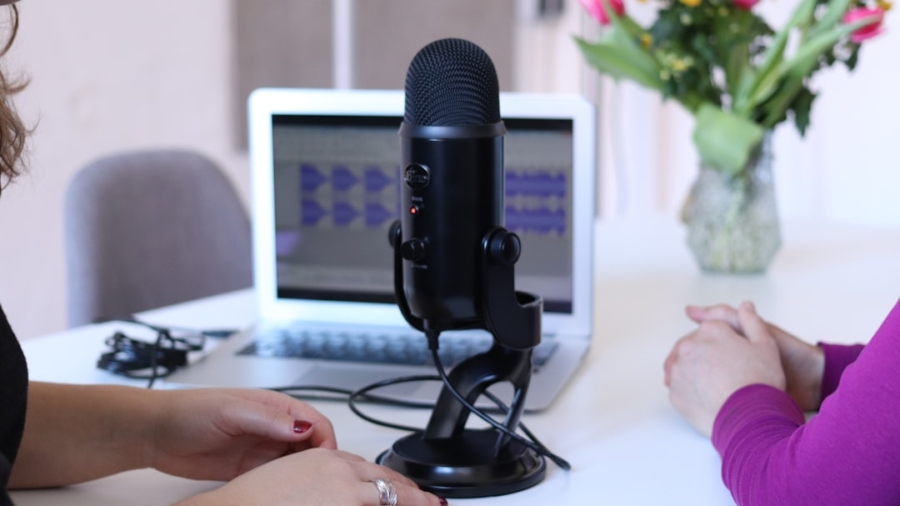
Voice dictation software can be a game-changer for content creation, letting you churn out ideas and drafts much faster than typing. It’s essentially like talking your thoughts directly onto the page, bypassing the physical act of typing and often speeding up the initial writing phase significantly. Think of it as a direct line from your brain to your document.
Let’s be honest, we all want to create more compelling content without spending endless hours hunched over a keyboard. Voice dictation isn’t just a fancy tech gimmick; it’s a practical tool that can genuinely improve your content creation workflow.
The Speed Advantage
Studies and anecdotal evidence consistently show that people can speak significantly faster than they can type. While typical typing speeds might range from 40 to 60 words per minute (WPM), speaking speeds can easily hit 120-150 WPM, and even higher for some. This almost doubles or even triples your output in the initial drafting phase.
Overcoming Writer’s Block
Sometimes the blank page or screen feels daunting. Voice dictation can help bypass that initial mental hurdle. When you’re just speaking, the pressure to formalize isn’t as intense. It feels more like brainstorming out loud, which can unlock ideas that might get stuck when you’re typing.
Reducing Physical Strain
Spending hours typing can lead to repetitive strain injuries like carpal tunnel syndrome or general discomfort in your wrists, neck, and shoulders. Dictation gives your hands and wrists a much-needed break, promoting better ergonomics and overall physical well-being.
In the quest to enhance productivity and streamline the content creation process, many writers are turning to innovative tools such as voice dictation software. This technology not only speeds up the writing process but also allows for a more natural flow of ideas. For those interested in exploring the impact of digital tools on writing and media, a related article can be found at this link, which discusses the evolution of media platforms and their influence on content generation.
Key Takeaways
- Clear communication is essential for effective teamwork
- Active listening is crucial for understanding team members’ perspectives
- Setting clear goals and expectations helps to keep the team focused
- Regular feedback and open communication can help address any issues early on
- Celebrating achievements and milestones can boost team morale and motivation
Getting Started: Choosing the Right Software
There are a few solid options out there, each with its own strengths and weaknesses. The best choice often comes down to what operating system you’re using and your specific needs.
Built-in Options: Free and Convenient
Many operating systems now include decent dictation features built right in.
Windows Dictation
Windows has its own “Windows Speech Recognition” tool. It’s accessible through the Control Panel or by searching for “Windows Speech Recognition.” While it’s not always the most sophisticated, it’s free and surprisingly effective for basic dictation. You’ll need to train it with your voice for optimal accuracy, which is a bit of a process but worth the effort.
macOS Dictation
Mac users have “Enhanced Dictation” which works offline and can be quite accurate. You can enable it in System Preferences under Keyboard, then Dictation. It supports various languages and is generally very reliable for everyday use.
Google Docs Voice Typing
If you spend a lot of time in Google Docs, their built-in Voice Typing feature (Tools > Voice Typing) is fantastic. It’s cloud-based, constantly improving, and generally very accurate. Plus, it works across different operating systems as long as you’re in a Chrome browser. This is arguably one of the most accessible and effective free options.
Third-Party Software: For Advanced Users
For those who need higher accuracy, more advanced features, or require dictation in specific professional contexts, dedicated third-party software might be a better fit.
Dragon NaturallySpeaking (Desktop)
This is the industry standard for professional dictation. Dragon is incredibly accurate, offers extensive customization options, and can be trained to recognize specific jargon or accents. It does come with a price tag, but for heavy users, the investment often pays off in terms of time saved and accuracy gained. There are different versions tailored for home users, legal, and medical professionals.
Otter.ai (Cloud-based with Advanced Features)
Otter.ai is more than just dictation; it’s an AI-powered meeting assistant and transcription tool. While it excels at transcribing conversations, it can also be used for dictation. It offers real-time transcription, speaker identification, and the ability to export transcripts. It has a generous free tier and paid plans for more extensive use.
Best Practices for Effective Dictation

Just speaking into a microphone isn’t enough to get perfect results. A little preparation and consistent practice will significantly improve your accuracy and speed.
Speak Clearly and Consistently
This might seem obvious, but enunciating your words clearly and maintaining a consistent speaking volume will make a huge difference. Think of yourself as a news anchor, not rambling to a friend.
Use Proper Pacing
Don’t speak too fast, especially when you’re starting.
Dictation software needs a moment to process. Pause slightly between sentences and when you want to insert punctuation.
Minimize Background Noise
A quiet environment is your best friend. Background noise from TVs, music, other people talking, or even a noisy fan can confuse the software and lead to errors.
Invest in a Good Microphone
While your laptop’s built-in microphone might work in a pinch, a dedicated microphone will drastically improve accuracy.
USB Microphones (Plug and Play)
These are convenient and often offer excellent sound quality.
Brands like Blue Yeti or Rode NT-USB Mini are popular choices for their clarity and ease of use.
Headset Microphones (Hands-Free)
A good quality headset microphone, particularly those with noise-canceling features, keeps the microphone at a consistent distance from your mouth, further enhancing accuracy and freeing up your hands.
Master Punctuation and Formatting Commands
This is where many beginners stumble. Dictation software understands commands for punctuation and common formatting. Learn these!
Common Punctuation Commands
- “Period” or “Full Stop”
- “Comma”
- “Question Mark”
- “Exclamation Mark”
- “New Paragraph”
- “New Line”
- “Open Parenthesis” / “Close Parenthesis”
- “Quote” / “End Quote”
Basic Formatting Commands
- “Bold [text]”
- “Italicize [text]”
- “Underline [text]”
- “Select [text]” (followed by a command like “Delete that” or “Copy that”)
- “Capitalize [word]” or “All Caps [word]”
Train Your Software (If Applicable)
Many dictation solutions, particularly Dragon NaturallySpeaking and Windows Speech Recognition, benefit immensely from voice training.
This involves reading specific passages aloud to help the software learn your unique voice patterns, accent, and speaking style. Don’t skip this step if your software offers it.
Integrating Dictation into Your Content Workflow

Dictation isn’t meant to replace all typing; it’s a tool to enhance specific parts of your content creation process.
Brainstorming and Outlining
This is arguably where dictation shines brightest. When you’re just getting ideas down, speaking freely can help you generate a torrent of thoughts without the friction of typing.
Free-Form Idea Generation
Just open your dictation software and start talking. Don’t worry about perfection or structure at this stage. Focus on getting every idea, however disjointed, out of your head.
Structuring Your Thoughts Aloud
Once you have a bunch of raw ideas, you can start organizing them. “First, I want to talk about X. Then, I’ll move on to Y. In Y, I need to cover point A, point B, and point C.” Speaking your outline helps you hear the flow.
Drafting the First Version
For the initial draft, let your ideas flow. Dictate the main body of your content without constantly stopping to edit. The goal here is quantity over quality.
Focus on Getting it Done
Don’t self-censor. Dictate your thoughts as they come to you. You can always refine and polish later. The aim is to have a complete rough draft to work with.
Dictate in “Chunks”
If you’re writing a long piece, break it down into smaller sections or paragraphs. Dictate one section, pause, review briefly, then move to the next. This prevents overwhelm and keeps you focused.
Editing and Refining (The Typing Part)
While dictation is great for drafting, it’s generally not the best tool for fine-tuning. This is where you’ll switch back to typing.
The “Human Touch” is Key
Editing requires a critical eye for grammar, syntax, flow, and nuance that dictation software simply can’t provide. You’ll want to manually go through and refine your dictated draft.
Spotting and Correcting Errors
Even with the best software, dictation isn’t 100% perfect. You’ll need to correct misinterpretations, awkward phrasing, and punctuation errors. This is where your human intelligence comes in.
In the quest for efficient content creation, many writers are turning to innovative tools like voice dictation software. This technology not only enhances productivity but also allows for a more natural flow of ideas. For those interested in optimizing their writing setup, understanding the right hardware is crucial. A related article on selecting the best laptop for students can provide valuable insights into what features to look for when investing in a device that complements voice dictation capabilities. You can read more about it here.
Common Obstacles and Solutions
| Metrics | Results |
|---|---|
| Time Saved | 50% increase in content creation speed |
| Accuracy | 95% accuracy in transcribing voice to text |
| Productivity | 100% increase in daily content output |
| Efficiency | Reduced editing time by 70% |
It’s not always smooth sailing. You might encounter some speed bumps along the way, but most have straightforward solutions.
Accuracy Issues
If your dictation isn’t very accurate, don’t despair.
Re-train Your Voice
For tools like Windows Speech Recognition or Dragon, make sure you’ve completed the voice training. It’s often the single biggest factor in improving accuracy.
Adjust Microphone Placement
Ensure your microphone is optimally positioned – not too close that it pops, not too far that it picks up ambient noise. Generally, about 1 to 2 inches from the corner of your mouth is a good starting point.
Slow Down and Enunciate
Sometimes, the simplest solution is to just speak a bit slower and make sure each word is clearly articulated.
Dealing with Unique Vocabulary or Jargon
If your content uses a lot of specialized terms, dictation software might struggle initially.
Add Custom Words to Your Dictionary
Most advanced dictation software (and even some built-in tools) allow you to add custom words to their vocabulary. This is crucial for niche topics. Spell out the word once, and then train the software to recognize it.
Use Phonetic Spellings (Temporarily)
If a word isn’t recognized, you might need to spell it out letter by letter using commands like “spell that X-Y-Z.” Once typed, you can then teach the software to recognize it.
Getting Used to the “Dictation Flow”
It feels different than typing, and there’s a learning curve.
Practice Regularly
Like any skill, dictation improves with practice. Set aside short blocks of time (10-15 minutes) specifically for dictation practice.
Embrace Imperfection in the First Draft
Resist the urge to constantly correct as you speak. Get the thoughts out first, then go back and edit later. This separation of tasks is key to dictation’s speed advantage.
Is Dictation Right for You?
Not everyone is a natural fit for voice dictation, and that’s okay. However, it’s worth giving it a solid try, especially if you’re looking to boost your content output or ease physical strain.
Ultimately, voice dictation software isn’t a magic bullet that will instantly make you a content creation superstar. It’s a powerful tool that, when understood and integrated thoughtfully into your workflow, can significantly accelerate your drafting process, help overcome creative blocks, and even provide a much-needed break for your hands.
Give it a whirl, experiment with different software and techniques, and you might just find your new favorite content creation hack.
FAQs
What is voice dictation software?
Voice dictation software is a technology that allows users to speak into a device, which then transcribes their spoken words into written text. This can be used for various purposes, including content creation, note-taking, and communication.
How does voice dictation software speed up content creation?
Voice dictation software speeds up content creation by allowing users to speak their thoughts and ideas, which are then transcribed into written text. This eliminates the need for typing, saving time and increasing productivity.
What are the benefits of using voice dictation software for content creation?
Some benefits of using voice dictation software for content creation include increased speed and efficiency, reduced risk of repetitive strain injuries from typing, and the ability to capture ideas and thoughts quickly and easily.
What are some popular voice dictation software options available?
Some popular voice dictation software options include Dragon NaturallySpeaking, Google Docs Voice Typing, Apple’s Siri, and Microsoft’s Speech Recognition. These options vary in features and compatibility with different devices and operating systems.
Are there any limitations to using voice dictation software for content creation?
While voice dictation software can be a powerful tool for content creation, it may have limitations in accurately transcribing certain accents, dialects, or speech patterns. Additionally, background noise and environmental factors can impact the accuracy of the transcription.
Enjoying our content? Make us a preferred source on Google:
Add us as a Preferred Source on Google