

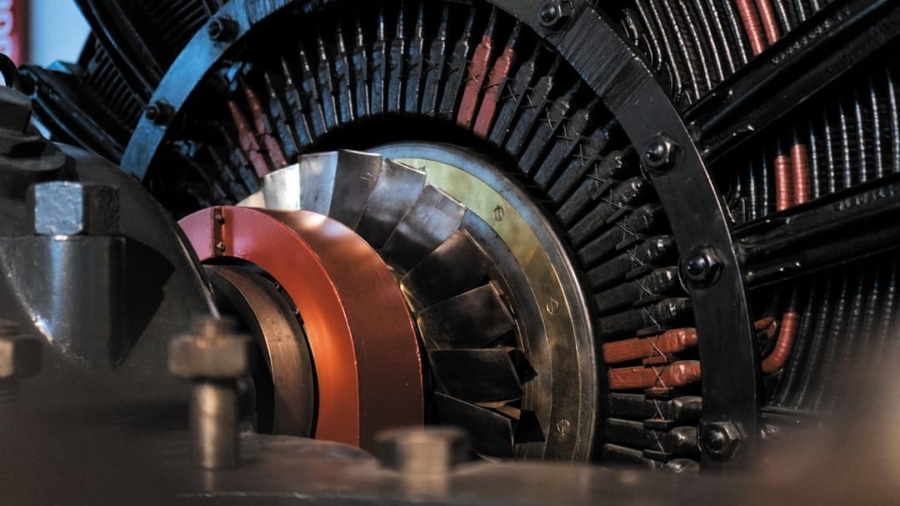
We’ve all seen those big, humming machines in factories, right? They’re the workhorses that keep everything running. But here’s a fact: electric motors are responsible for a huge chunk of the electricity used by industries worldwide – something like 65% to 75%, depending on who you ask. That’s a massive amount of energy.
So, when we talk about making industries more efficient, improving these motors is a pretty big deal.
The good news is, lots of smart people have been busy figuring out how to make them use less power without sacrificing their muscle. This article is going to dive into some of the key innovations that are making industrial motors more energy efficient, giving you a practical look at what’s happening.
Before we jump into the flashy new tech, it’s worth remembering that the basic design of motors has been refined over decades. Modern, efficient motors didn’t just appear out of nowhere. They’re built on solid engineering principles that have been tweaked and improved.
Material Science Marvels
Think about what makes a motor work: magnets, wires, and metal. The quality and properties of these materials have a direct impact on efficiency.
Advanced Magnetics
- Rare-Earth Substitutes: Traditional high-efficiency motors often use powerful rare-earth magnets like Neodymium. While effective, they can be costly and their supply chains can be complex. Researchers are constantly looking at ways to create magnets that offer similar performance with more accessible or sustainable materials, or to use less rare-earth material in existing designs. This often involves tweaks to the alloy composition and manufacturing processes to optimize magnetic field strength and reduce core losses.
- Improved Magnetic Lamination: The core of a motor is made of thin sheets of steel, called laminations. These are crucial for directing the magnetic field and reducing energy loss as heat (known as eddy currents and hysteresis losses). Innovations here include thinner laminations, new steel alloys with better magnetic properties (like lower core loss), and advanced insulation coatings between the laminations that further minimize energy wastage.
Enhanced Winding Techniques
The copper or aluminum wires wound around the motor’s core are where the magic of electromagnetism happens.
- Higher Purity Conductors: Using copper or aluminum with fewer impurities leads to lower electrical resistance. Less resistance means less energy is lost as heat when current flows through the windings, directly boosting efficiency.
- Optimized Winding Patterns: The way the wires are wound significantly affects the magnetic field distribution and overall performance. Modern designs use sophisticated software to determine the most efficient winding patterns for specific applications, ensuring a more uniform magnetic field and minimizing stray losses. This can involve techniques like multi-strand windings or specially shaped conductors.
Aerodynamics and Cooling
While it might sound more like designing a sports car, how a motor handles air is surprisingly important for efficiency.
Better Airflow Management
- Fan Design: Even simple things like the shape and size of cooling fans have been optimized. More efficient fan designs move air with less effort, reducing the fan’s own energy consumption. Improved shroud designs can also direct airflow more precisely to where it’s needed, making the cooling process more effective and allowing motors to operate at lower temperatures, which in itself improves electrical efficiency.
- Ventilation Optimization: The placement and size of ventilation openings on the motor housing are critical. Too little airflow leads to overheating, which drastically reduces efficiency and lifespan. Too much can create unnecessary drag. Modern designs use computational fluid dynamics (CFD) to precisely map airflow and ensure optimal cooling without excessive energy expenditure.
In exploring the advancements in energy-efficient industrial motors, it’s essential to consider the broader implications of technology in various sectors. A related article that discusses the impact of modern technology on system requirements is available at com/can-i-install-windows-11-without-tpm/’>this link.
It highlights how innovations in software and hardware can influence operational efficiency, paralleling the improvements seen in energy-efficient motor designs.
Key Takeaways
- Clear communication is essential for effective teamwork
- Active listening is crucial for understanding team members’ perspectives
- Setting clear goals and expectations helps to keep the team focused
- Regular feedback and open communication can help address any issues early on
- Celebrating achievements and milestones can boost team morale and motivation
The Electronics Revolution: Variable Speed Drives (VSDs)
If there’s one innovation that has truly transformed motor efficiency, it’s the Variable Speed Drive (VSD), also known as a Variable Frequency Drive (VFD). These are the unsung heroes of energy saving in many industrial settings.
What are VSDs and Why They Matter
Simply put, a VSD controls the speed of an electric motor by adjusting the frequency and voltage of the electrical power supplied to it. This might sound like a minor tweak, but its impact is profound, especially for applications where motors have historically been run at full speed all the time, even when that full speed wasn’t needed.
Matching Motor Speed to Demand
- The Power of the Cube Law: This is a crucial concept. For many industrial applications, like pumps and fans, the power consumed by the motor is related to the cube of its speed. This means if you reduce the speed by 20% (to 80%), the power consumption drops by a much larger percentage (around 50%). A VSD allows you to precisely dial in the motor speed required for a specific task, leading to massive energy savings. For example, a fan only needs to move a certain amount of air. If the demand for air decreases, instead of running the fan at full speed and having to somehow restrict the airflow (which wastes energy), a VSD simply slows the fan down.
- Eliminating Throttling and Dampers: Before VSDs became widespread, controlling fluid flow or air movement often involved inefficient methods like partially closing valves (throttling) or using dampers. These methods essentially force the motor to run at full speed while actively working against the desired output, wasting a lot of energy. VSDs eliminate the need for these wasteful control mechanisms.
Types of VSDs and Their Advantages
VSDs have evolved significantly, offering different approaches to speed control.
Direct Current (DC) vs. Alternating Current (AC) VSDs
- Focus on AC Motors: While DC motors exist, the vast majority of industrial motors are AC induction motors. VSDs for AC motors are overwhelmingly the most common and impactful. They work by converting the fixed frequency AC power from the grid into DC, and then back into variable frequency AC power to control the motor.
- Sophisticated Control Algorithms: Modern VSDs employ complex digital signal processing and advanced algorithms to achieve precise speed control, torque regulation, and smooth acceleration/deceleration. This not only saves energy but also reduces mechanical stress on the motor and connected equipment, leading to longer equipment life.
Benefits Beyond Energy Savings
- Improved Process Control: VSDs offer much finer control over industrial processes. This can lead to higher product quality, reduced waste, and increased throughput. For instance, in a conveyor belt system, a VSD can smoothly adjust the belt speed to match the rate of material flow, preventing jams or bottlenecks.
- Reduced Mechanical Stress: The ability to ramp motors up and down gradually instead of starting them abruptly significantly reduces the mechanical shock on the motor, gearboxes, belts, and other driven components. This translates to less wear and tear, fewer breakdowns, and lower maintenance costs.
- Lower Starting Current: Starting a large motor directly from the power grid can draw a very high inrush current, sometimes several times the motor’s normal running current. This can cause voltage dips on the power system and put stress on electrical components. VSDs provide a soft-start capability, gradually increasing the motor speed and thus limiting the starting current, which is beneficial for the entire electrical infrastructure.
The Next Generation: Advanced Motor Topologies

Beyond the basic squirrel cage induction motor that’s been a staple for years, new motor designs are emerging that are inherently more efficient.
Permanent Magnet Synchronous Motors (PMSMs)
PMSMs are gaining significant traction due to their excellent efficiency, particularly at lower speeds.
How PMSMs Achieve Higher Efficiency
- No Rotor Losses: Unlike induction motors, where current is induced in the rotor to create torque, PMSMs use permanent magnets on the rotor. This eliminates the rotor current and therefore eliminates the associated electrical losses, a major source of inefficiency in induction motors.
- Higher Power Density: PMSMs can often achieve higher power output for a given size and weight compared to induction motors. This can lead to smaller, lighter motor solutions, which can be beneficial in space-constrained applications.
- Precise Speed and Torque Control: Combined with VSDs, PMSMs offer very precise control over speed and torque, making them ideal for applications requiring high accuracy and responsiveness.
Applications Where PMSMs Shine
- Electric Vehicles (EVs): This is where PMSMs have seen huge advancements, thanks to their efficiency and power density.
- Robotics and Automation: The precise control offered by PMSMs makes them perfect for robotic arms and automated manufacturing processes.
- High-Efficiency Fans and Pumps: In applications where continuous operation and high efficiency are paramount, PMSMs are increasingly being adopted.
Reluctance Motors: A Simple Yet Powerful Alternative
Reluctance motors, in their various forms, are another area of active innovation, offering potentially simpler designs and high efficiency.
Switched Reluctance Motors (SRMs) and Synchronous Reluctance Motors (SynRMs)
- Switched Reluctance Motors (SRMs): SRMs have a simple stator winding and a rotor made of basic iron laminations with no windings or magnets.
They operate by switching current to different stator windings in sequence, creating magnetic forces that pull the rotor into alignment. They are known for their robustness and low cost, and newer control strategies are improving their efficiency and reducing noise.
- Synchronous Reluctance Motors (SynRMs): SynRMs are a more recent development. They also have a laminated rotor without magnets, but their rotor is designed with specific magnetic barriers that create paths of low magnetic reluctance.
When energized by a VSD, the rotor aligns itself with the rotating magnetic field of the stator, providing synchronous operation. SynRMs can achieve efficiencies comparable to PMSMs in certain applications and offer a potentially lower-cost alternative.
Advantages of Reluctance Motors
- Robustness and Reliability: The absence of rotor windings or permanent magnets makes SRMs and SynRMs very robust and capable of operating in harsh environments and at high temperatures.
- Cost-Effectiveness: For certain applications, the simpler rotor construction can lead to lower manufacturing costs compared to PMSMs.
- Cogging Torque Reduction: Innovations in SRM design and control aim to minimize “cogging torque,” which is a jerky torque that can occur at low speeds, leading to smoother operation.
Smarter Control Systems and Software

Technology isn’t just about the hardware; the brains behind the operation—the control systems—are also undergoing a revolution that directly impacts motor efficiency.
Advanced Control Algorithms
The way a motor is commanded to operate is as important as its physical design.
Predictive Control and Machine Learning
- Optimizing Performance in Real-Time: Modern control systems are moving beyond simple on/off or preset speed settings. They are leveraging data from sensors to predict upcoming load changes and adjust motor operation proactively. This can involve sophisticated algorithms that learn the operating characteristics of the application and optimize power delivery to match those needs precisely.
- Fault Detection and Prognostics: By closely monitoring motor performance parameters, control systems can detect subtle deviations that might indicate impending issues. This allows for preventative maintenance, avoiding costly unplanned downtime and ensuring the motor operates at peak efficiency for longer. Machine learning is increasingly used to analyze these patterns and predict failures before they occur.
Integration with Overall Plant Management
Motors don’t operate in isolation. Their efficiency is often linked to the efficiency of the entire system they’re part of.
Smart Grid and Demand Response
- Communicating with the Grid: Advanced motor control systems can communicate with smart grids, allowing them to adjust their power consumption in response to grid signals. During peak demand periods, for instance, motors could be programmed to slightly reduce their speed or shift their operation, helping to stabilize the grid and potentially leading to lower energy costs for the facility.
- Energy Monitoring and Analytics: Integrated platforms provide detailed energy usage data for each motor. This visibility allows plant managers to identify underperforming assets, track the impact of efficiency upgrades, and make data-driven decisions about energy management strategies.
In the quest for sustainability, innovations in energy-efficient industrial motors have become increasingly crucial for reducing operational costs and minimizing environmental impact. A related article discusses the latest trends in technology and how they are shaping various industries, highlighting the importance of adopting advanced solutions. For more insights on emerging technologies, you can read about the top trends on YouTube in 2023 by following this link. This connection underscores the broader movement towards efficiency and innovation across different sectors.
The Role of Lubrication and Maintenance
| Metrics | Data |
|---|---|
| Energy Savings | Up to 30% compared to standard motors |
| Efficiency | IE3 and IE4 efficiency levels |
| Cost Savings | Reduced operating costs over the lifespan |
| Environmental Impact | Lower carbon emissions and energy consumption |
| Reliability | Improved performance and durability |
While this might seem like a step back from bleeding-edge technology, good old-fashioned maintenance and proper lubrication play a surprisingly significant role in maintaining motor efficiency.
Optimized Lubrication Practices
The bearings of a motor are critical for smooth, low-friction operation.
Advanced Lubricants
- Low-Friction Formulations: The development of advanced lubricants with specific formulations can significantly reduce friction in bearings. This means the motor has to work less to overcome internal resistance, leading to direct energy savings.
- Synthetic Lubricants: In demanding industrial environments, synthetic lubricants can offer superior performance, longer service life, and better stability under extreme temperatures and pressures compared to traditional mineral-based oils and greases. This ensures the bearings remain well-protected and operate efficiently over extended periods.
Regular Maintenance Schedules
A well-maintained motor is an efficient motor.
Importance of Condition Monitoring
- Vibration Analysis: Monitoring the vibration patterns of a motor can reveal issues with bearings, rotor imbalance, or misalignment. Addressing these problems early prevents increased friction and energy loss.
- Thermal Imaging: Using thermal cameras to inspect motors can identify hot spots, which are often indicative of increased electrical resistance or bearing friction, both of which lead to wasted energy.
- Cleaning and Airflow: Ensuring ventilation pathways are clear of dust and debris is crucial. Clogged vents lead to overheating, forcing the motor to work harder and reducing its efficiency. Regular cleaning of the motor exterior also helps with heat dissipation.
By focusing on these innovations, industries can dramatically reduce their energy consumption, lower operating costs, and contribute to a more sustainable future. It’s not just about one big breakthrough, but a continuous evolution driven by smart design, advanced electronics, and dedicated maintenance.
FAQs
What are energy efficient industrial motors?
Energy efficient industrial motors are motors that are designed to operate with higher efficiency, resulting in lower energy consumption and reduced operating costs. These motors are designed to meet specific energy efficiency standards and regulations.
What are the benefits of using energy efficient industrial motors?
The use of energy efficient industrial motors can result in significant cost savings due to reduced energy consumption. These motors also produce less heat, which can lead to improved reliability and longer lifespan. Additionally, using energy efficient motors can help companies meet environmental regulations and reduce their carbon footprint.
How do energy efficient industrial motors differ from standard motors?
Energy efficient industrial motors are designed with advanced technologies such as improved insulation, better materials, and optimized designs to minimize energy losses and maximize efficiency. These motors also often incorporate variable speed drives and other control systems to further enhance their energy efficiency.
What are some examples of innovations in energy efficient industrial motors?
Innovations in energy efficient industrial motors include the use of advanced materials such as rare earth magnets, improved motor designs to reduce losses, and the integration of smart technologies for better control and monitoring. Additionally, the development of high-efficiency motor standards and regulations has driven further innovation in this field.
How can companies benefit from adopting energy efficient industrial motors?
Companies can benefit from adopting energy efficient industrial motors by reducing their energy costs, improving their environmental sustainability, and enhancing the reliability and performance of their industrial processes. Additionally, using energy efficient motors can help companies stay competitive in the market and meet increasingly stringent energy efficiency regulations.
Enjoying our content? Make us a preferred source on Google:
Add us as a Preferred Source on Google