

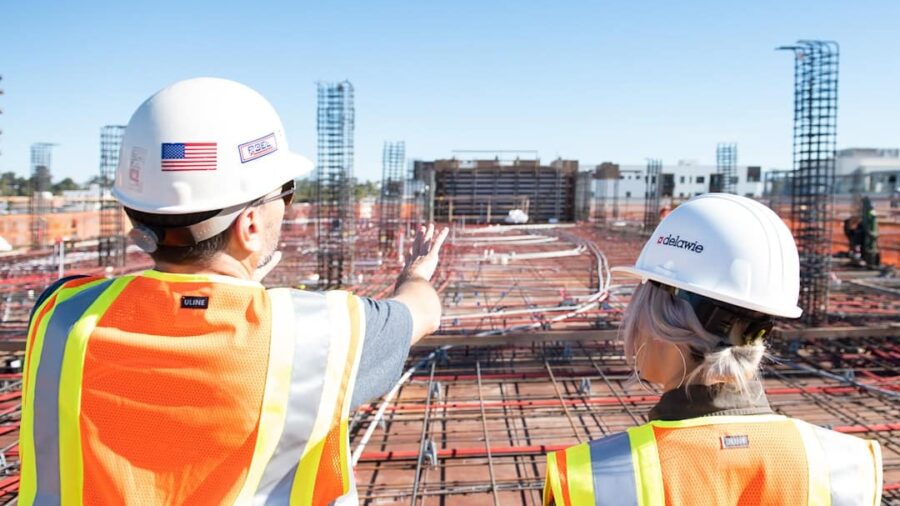
Wondering if robots can actually make construction sites safer? The short answer is a resounding yes, especially with advancements in autonomous rebar-tying and bricklaying robots. These machines aren’t just about speed; they’re tackling some of the most physically demanding and repetitive tasks that put human workers at risk.
The Rebar Dilemma: Why It’s a Safety Concern
Working with rebar, those steel rods that form the skeleton of concrete structures, is a huge part of construction. It’s also a task that has historically been pretty tough on the people doing it.
Repetitive Strain Injuries: The Silent Culprits
Imagine bending over, twisting your back, and using your hands to tie thousands of individual rebar intersections on a single project. That’s the reality for many ironworkers. This constant, repetitive motion takes a toll, leading to a high incidence of musculoskeletal disorders (MSDs). Things like carpal tunnel syndrome, tendonitis, and chronic back pain are unfortunately common occupational hazards in this line of work. These injuries aren’t just painful; they can lead to long periods of recovery, lost wages, and in some cases, an inability to continue in the trade.
The Dexterity Challenge
Tying rebar requires a certain level of dexterity. Workers need to manipulate wire ties around intersecting steel bars, often in awkward positions or in tight spaces. This can lead to strained muscles in the wrists, hands, and arms. The strength needed to bend and twist the wire ties also contributes to the physical stress.
Working in Unfavorable Conditions
Rebar work often happens outdoors, exposed to the elements. This means dealing with extreme heat, cold, rain, and wind, all while performing physically demanding tasks. These conditions exacerbate the risk of strain and injury, as workers might be less able to maintain proper form or might feel more pressure to push through discomfort to complete the job.
In the quest to enhance construction safety, the integration of autonomous technologies such as rebar-tying and bricklaying robots is proving to be a game changer. These innovations not only reduce the risk of accidents on-site but also improve overall efficiency. For those interested in understanding how advanced software tools can further support safety measures in construction, a related article discusses the best software for fault tree analysis in 2023. You can read more about it here: Best Software for Fault Tree Analysis in 2023.
Enter the Autonomous Rebar-Tying Robot: A Safer Solution
This is where autonomous rebar-tying robots come in. They are designed to take over the most physically taxing aspects of this job, significantly reducing the risk to human workers.
How They Work: More Than Just a Mechanical Arm
These robots aren’t just simple tools; they are sophisticated pieces of engineering. They typically use a combination of sensors, cameras, and advanced programming to identify where rebar needs to be tied.
Perception and Navigation
Equipped with LiDAR, cameras, and other sensors, these robots can “see” the rebar layout on a construction site. They can map their environment, understand the position and orientation of the rebar, and navigate around obstacles. This allows them to work autonomously on a designated section of the structure.
The Tying Mechanism
The core of the robot is its tying mechanism. This is usually a specialized end-effector designed to efficiently wrap and twist wire ties around rebar intersections. Some robots are designed to be mobile and can move along the rebar grid, while others might be mounted on a stationary platform and reach out to tie.
Precision and Consistency
One of the key advantages is their consistent performance. Unlike humans who might experience fatigue or lapses in concentration, robots can perform the same tying action with the same force and precision every single time. This not only improves the quality of the bond but also ensures a predictable level of safety in the execution of the task.
Benefits for Human Workers: Less Strain, More Safety
The impact on human workers is profound. By automating the rebar-tying process, these robots directly address the major safety concerns.
Drastically Reduced Musculoskeletal Injuries
This is the most significant benefit. When robots handle the repetitive bending, twisting, and tying, human workers are freed from the primary cause of MSDs. This means fewer workers suffering from chronic pain, fewer lost workdays, and a healthier workforce overall.
Improved Ergonomics and Work Posture
For tasks that remain human-operated, the presence of robots can indirectly improve ergonomics. Workers might be assigned to supervision, quality control, or more complex, less repetitive aspects of the rebar installation, allowing them to maintain better posture and work in more comfortable positions.
Reduced Exposure to Hazardous Environments
While not entirely eliminating the need for human oversight, robots can operate in areas that might be more difficult or dangerous for humans to access, such as higher elevations or confined spaces, reducing the need for humans to work in such precarious positions.
Focus on Higher-Skill Tasks
With robots handling the repetitive tying, human workers can shift their focus to more skilled and engaging tasks.
This could include complex rebar assembly, quality assurance, problem-solving, and collaborating with the robotic systems.
This not only enhances job satisfaction but also elevates the overall expertise on the construction site.
The Bricklaying Bottleneck: A Classic Safety Challenge
Bricklaying is another cornerstone of construction, but it’s a craft that comes with its own set of safety challenges, many of which are similar to rebar work.
Repetitive and Strenuous Labor
Just like tying rebar, laying bricks involves a lot of repetitive motion. Workers pick up bricks, apply mortar, place them precisely, and often tap them into position. This constant lifting, reaching, and precise placement puts significant strain on the back, shoulders, and wrists.
Working at Height and Awkward Angles
Often, bricklayers need to work at significant heights or in awkward positions to build walls. This increases the risk of falls, especially when scaffolding or platforms are involved. Maintaining balance while handling heavy materials and tools in these situations is a constant challenge.
Exposure to Materials and Dust
Bricklayers work with cement, sand, and aggregate, all of which can create dust. Inhaling this dust can lead to respiratory problems over time. Contact with wet cement can also cause skin irritation or chemical burns.
The Pace and Pressure
Construction projects often operate under tight deadlines. This can put pressure on bricklayers to work faster, which can lead to rushed movements, compromised form, and an increased likelihood of accidents or injuries.
Introducing Autonomous Bricklaying Robots: Precision and Protection
Autonomous bricklaying robots are engineered to tackle these exact issues, offering a safer and more efficient way to build with bricks.
How They Function: More Than Just Mortar and Bricks
These robots are sophisticated systems that can handle the entire bricklaying process, from picking up bricks to applying mortar and laying them in place.
Advanced Gripping and Manipulation
Robots are equipped with specialized grippers that can securely pick up bricks of various sizes and materials. Their articulated arms allow for precise placement, ensuring consistent spacing and alignment.
Mortar Application Systems
Many bricklaying robots incorporate a mortar application system. This can involve a nozzle that dispenses the right amount of mortar precisely where it’s needed on the brick or the wall, ensuring consistent mortar joints and reducing waste.
Vision Systems for Accuracy
Using cameras and advanced AI, these robots can accurately assess the position of previously laid bricks and plan their next move. This ensures straight, plumb, and level walls, reducing the need for human correction and rework.
Navigation and Mobility
These robots can be designed to move along the wall being built, often on a rail system or by independently navigating the construction site. This mobility allows them to work continuously on a section of the project.
The Safety Dividend for Bricklayers
The implementation of these robots directly translates into tangible safety improvements for human bricklayers.
Elimination of Strenuous Lifting and Repetitive Strain
By taking over the lifting and placement of bricks, robots eliminate the primary source of repetitive strain injuries for bricklayers. The constant bending and reaching are no longer the burden of human workers.
Reduced Risk of Falls from Height
When robots are handling the bricklaying at height, human workers are no longer required to work precariously on scaffolding or elevated platforms for this specific task. This significantly lowers the risk of falls.
Minimized Exposure to Dust and Hazardous Materials
While human oversight is still necessary, the direct handling of bricks and mortar is largely reduced for workers. This minimizes their exposure to harmful dust and potential skin irritations from cement.
Improved Work Quality and Reduced Rework
The precision of robotic bricklaying can lead to higher quality walls with fewer errors. This reduces the need for manual rework, which often involves uncomfortable or risky positions, further contributing to safety.
In the pursuit of enhancing construction safety, the integration of autonomous rebar-tying and bricklaying robots has shown promising results. These innovative technologies not only reduce the risk of injuries on site but also improve overall efficiency. For those interested in further exploring how technology can transform training and safety protocols in construction, a related article discusses the best software to create training videos, which can be instrumental in educating workers about new robotic systems. You can read more about it here.
The Synergistic Effect: Humans and Robots Working Together
It’s important to understand that these robots aren’t necessarily about replacing humans entirely, but rather about creating a safer and more efficient collaborative environment.
Redefining Roles: From Laborers to Supervisors
The introduction of autonomous robots frees up human workers from the most dangerous and physically demanding aspects of their jobs. This allows them to transition into roles that require critical thinking, problem-solving, and oversight.
Supervisors and Quality Controllers
Human workers become the eyes and ears on the ground, supervising the robots’ work, ensuring quality control, and intervening when necessary. This is a crucial role that requires keen observation and understanding of the construction process.
Maintenance and Operation Specialists
Someone needs to maintain these sophisticated machines. This creates new job opportunities for individuals with technical skills to operate, troubleshoot, and perform routine maintenance on the robots.
Project Planners and Strategists
With robots handling the execution of certain tasks, construction project managers and planners can focus more on optimizing workflows, scheduling, and integrating robotic capabilities into the overall project strategy.
Enhanced Site Safety Protocols
The presence of robots also encourages a re-evaluation and enhancement of overall site safety protocols.
Clearer Work Zones
Designating safe operating zones for robots helps to create clearer distinctions between where automated work is happening and where human workers should be. This reduces the potential for accidental collisions or interference.
Improved Communication and Coordination
Effective communication between human teams and robotic systems becomes paramount. This can lead to more structured communication channels and protocols on the site.
Data-Driven Safety Insights
Robots can collect vast amounts of data about their operations. This data can be analyzed to identify potential safety risks, optimize operational parameters, and continuously improve safety procedures. For instance, if a robot consistently encounters an unexpected obstacle, that data can inform future site planning and hazard identification.
The Future Landscape: Autonomous Construction
The integration of autonomous rebar-tying and bricklaying robots is just the beginning of a broader shift towards more automated and safer construction practices.
Expanding the Scope of Automation
As the technology matures, we can expect to see robots taking on more complex tasks. This could include autonomous concrete pouring, automated formwork assembly, and even robotic systems for demolition and site preparation.
Impact on Training and Education
The construction workforce of the future will require different skill sets. Training programs will need to adapt to include instruction on operating, maintaining, and collaborating with robotic systems. This will likely involve a greater emphasis on STEM fields and digital literacy.
The Economic and Social Implications
While initial investment in robotics can be significant, the long-term benefits in terms of reduced accidents, increased efficiency, and improved worker well-being are substantial. This can lead to more predictable project timelines and costs, ultimately making the construction industry more sustainable and attractive.
Ultimately, the adoption of autonomous rebar-tying and bricklaying robots represents a significant leap forward in making construction sites safer places to work. By taking on the most physically demanding and injury-prone tasks, these machines allow human workers to focus on higher-skill, less hazardous roles, paving the way for a healthier, more efficient, and ultimately, a more secure future for the construction industry.
FAQs
What are autonomous rebar-tying and bricklaying robots?
Autonomous rebar-tying and bricklaying robots are advanced construction robots equipped with artificial intelligence and automation technology to perform tasks such as tying rebar and laying bricks without human intervention.
How do autonomous rebar-tying and bricklaying robots improve construction safety?
These robots improve construction safety by reducing the need for human workers to perform physically demanding and potentially hazardous tasks, such as bending, lifting heavy materials, and working at heights. This helps to minimize the risk of injuries and accidents on construction sites.
What are the benefits of using autonomous rebar-tying and bricklaying robots in construction?
The use of autonomous rebar-tying and bricklaying robots in construction offers several benefits, including increased efficiency, higher productivity, improved quality of work, reduced labor costs, and enhanced safety for construction workers.
Are autonomous rebar-tying and bricklaying robots widely used in the construction industry?
While the adoption of autonomous rebar-tying and bricklaying robots is still relatively new, their use is steadily increasing in the construction industry as companies recognize the potential for improved safety, efficiency, and cost savings.
What are the future prospects for autonomous rebar-tying and bricklaying robots in construction?
The future prospects for autonomous rebar-tying and bricklaying robots in construction are promising, with ongoing advancements in technology and increasing demand for safer and more efficient construction methods. As the technology continues to evolve, these robots are expected to play a significant role in shaping the future of construction.
Enjoying our content? Make us a preferred source on Google:
Add us as a Preferred Source on Google