

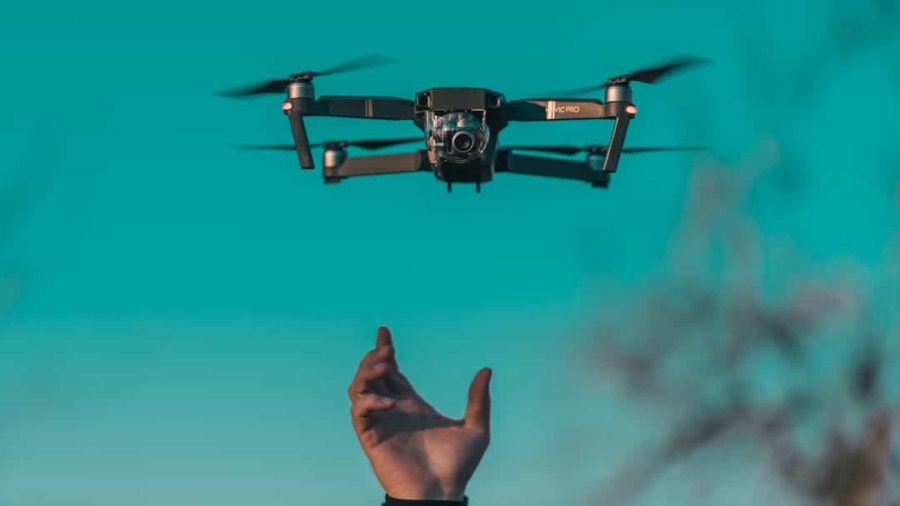
So, you’re looking at getting drones to manage inventory in a huge warehouse, huh? It sounds like something out of science fiction, but it’s becoming a real game-changer. The short answer is: yes, it’s absolutely doable, and it can significantly boost efficiency, accuracy, and safety if you approach it right. Think of it less as a magic bullet and more as a smart upgrade to your existing operations.
Getting Started: What You Really Need to Know
Before you even think about buying drones, let’s break down what’s involved. This isn’t just about picking the flashiest drone off the shelf. It’s a strategic move that requires careful planning and integration.
Understanding the Basics: Why Drones?
Why are companies even considering this? The primary drivers are:
- Speed: Drones can cover vast warehouse spaces far quicker than human checkers.
- Accuracy: Automated scanning reduces human error, leading to more reliable data.
- Safety: They can access high or difficult-to-reach areas, minimizing risks for personnel.
- Cost Savings: Over time, reduced labor, fewer errors, and improved operational flow can lead to significant financial benefits.
The Scale of the Challenge: Massive Warehouses
When we talk “massive,” we mean facilities spanning hundreds of thousands, or even millions, of square feet. These aren’t your local corner stores with a few aisles. Think sprawling distribution centers for e-commerce giants, large industrial supply depots, or massive cold storage facilities. The sheer volume and height of inventory storage (think towering racks) present unique challenges.
In exploring the innovative applications of technology in logistics, one can draw parallels to the article on selecting the right tablet for students, which discusses how effective tools can enhance productivity and efficiency in various environments. Just as choosing the appropriate tablet can significantly impact a student’s learning experience, implementing drone-based inventory management in massive warehouses can revolutionize the way businesses handle their stock. For more insights on optimizing technology for better outcomes, you can read the article here: How to Choose Tablet for Students.
The Technology Blueprint: What Drones and Software Do
This isn’t just about flying a drone around. It’s a sophisticated system.
Drone Selection: More Than Just Flying
Not all drones are created equal, especially for warehouse duty.
Payload Capabilities
- Scanning Hardware: Most warehouse drones are equipped with high-resolution cameras, barcode scanners (1D, 2D, QR codes), and sometimes RFID readers. The type of scanner depends on your existing inventory labeling.
- Lightweight and Agile: You need drones that can maneuver through tight spaces between racks without bumping into anything. Size and weight are critical.
Endurance and Reach
- Battery Life: Warehouse surveys can take hours. You’ll need drones with swappable batteries or those that can autonomously return to a charging station.
- Flight Time: Consider how long a single battery charge will last and factor that into your operational planning.
Navigation and Autonomy
- GPS vs. Indoor Positioning: Standard GPS doesn’t work well inside. You’ll likely need systems that use lidar, visual odometry, or pre-mapped digital twins of the warehouse for precise indoor navigation.
- Obstacle Avoidance: Advanced sensors are crucial to prevent collisions with racking, forklifts, or other moving equipment.
Software Integration: The Brains of the Operation
The drone is just the hardware; the software is what makes it intelligent.
Inventory Management Systems (IMS)
- Integration is Key: The drone system needs to talk to your existing IMS (like SAP, Oracle, or custom solutions). This is where the data gets updated.
- API Connections: Look for solutions that offer robust APIs for seamless data exchange.
Data Processing and Analysis
- Computer Vision: Software uses computer vision to read barcodes, identify product SKUs, and even count items.
- Cloud vs. On-Premise: Decide where the data processing will happen. Cloud solutions offer scalability, while on-premise might be preferred for security or latency reasons.
Route Planning and Mission Management
- Automated Flight Paths: Software generates optimal flight paths to cover entire sections of the warehouse efficiently.
- Real-time Updates: The system should provide real-time updates on inventory status and flag discrepancies.
Implementation Strategy: Making it Work in Practice
This is where the rubber meets the road.
It’s not just about plugging in the tech; it’s about integrating it into your workflow and getting your team on board.
Phased Rollout: Start Small, Scale Up
You don’t have to go all-in on day one.
Pilot Programs
- Test in a Specific Zone: Begin with a smaller, less complex section of your warehouse. This allows you to identify unforeseen issues and refine your processes.
- Gather Data and Feedback: Collect performance metrics and get feedback from the team members using the system.
Gradual Expansion
- Expand by Area or Function: Once the pilot is successful, gradually expand the drone coverage to other areas or introduce more complex inventory tasks.
- Continuous Improvement: Use the data from each phase to make ongoing adjustments.
Operational Workflow Integration: Merging Old and New
How will drones fit into your daily grind?
Traditional vs. Drone-Assisted Cycles
- Cycle Counting: Drones can perform regular, automated cycle counts, significantly reducing the need for manual checks.
- Full Inventory Audits: For comprehensive audits, drones can be deployed to scan entire sections much faster.
Handling Discrepancies
- Automated Alerts: The system should automatically flag any discrepancies between expected and actual inventory counts.
- Human Verification: While drones are accurate, a human element for verification of critical discrepancies is often still necessary.
Workforce Training and Adaptation
- New Roles: Your team will need training on operating the drones (if hands-on), managing the software, and interpreting data.
- Shifting Focus: Warehouse staff may shift from manual counting to roles involving system oversight, exception handling, and overall logistics optimization.
Key Considerations for Success: Don’t Overlook These
There are several critical factors that will determine whether your drone inventory management initiative flies or falters.
Data Accuracy and Integrity: The Holy Grail
Garbage in, garbage out. This is paramount.
Barcode and Labeling Standards
- Clear and Consistent Labeling: Drones can only read what’s there. Ensure all inventory items have clear, durable, and consistently placed barcodes or RFID tags.
- Label Condition: Damaged or faded labels will cause scanning failures.
Software Validation
- Error Checking: The software needs robust algorithms to validate scanned data and flag potential read errors.
- Confidence Scores: Some systems provide confidence scores for scans, helping to identify areas needing re-scanning.
Regulatory and Safety Compliance: Navigating the Rules
This isn’t a free-for-all.
Airspace Regulations
- Indoor Flight Restrictions: While less stringent than outdoor regulations, there can still be rules or best practices for drone operations within enclosed spaces, especially concerning safety and proximity to people.
- Local Ordinances: Be aware of any local municipality rules.
Operational Safety Protocols
- No-Fly Zones: Designate areas within the warehouse where drones should not fly (e.g., active loading docks, areas with moving machinery).
- Emergency Procedures: Have clear protocols for what to do in case of a drone malfunction or accident.
- Operator Training: Ensure any personnel involved in drone operation are adequately trained.
Environmental Factors and Warehouse Design
The warehouse itself plays a role.
Lighting Conditions
- Consistent Illumination: Drones perform best with consistent lighting. Poor lighting can impact scanning accuracy. Work with your facilities team to ensure adequate and uniform illumination.
- Shadows and Glare: These can interfere with optical scanners. Consider how your racking and layout might create these conditions.
Warehouse Layout and Obstacles
- Rack Height and Spacing: Taller racks require different drone models and flight strategies. Narrow aisles can be challenging.
- Obstacles: Any permanently fixed obstacles (e.g., sprinkler heads, support beams) need to be mapped into the drone’s navigation system.
In exploring innovative solutions for enhancing efficiency in large-scale operations, the concept of implementing drone-based inventory management in massive warehouses has gained significant attention. A related article discusses the latest advancements in technology that can streamline various processes, including inventory tracking and management. For those interested in the intersection of technology and logistics, this article provides valuable insights into how these advancements can be leveraged for improved productivity. You can read more about it in this informative piece.
Benefits Beyond the Obvious: The Ripple Effect
Implementing drones isn’t just about counting items; it can positively impact your entire operation.
Enhanced Real-Time Visibility
- Always-On Inventory: Imagine having an updated inventory count accessible at any moment, not just after a manual audit.
- Proactive Replenishment: Real-time data allows for more accurate demand forecasting and proactive material ordering, preventing stockouts.
Improved Labor Allocation
- Focus on Higher-Value Tasks: Freeing up human inventory staff from repetitive counting allows them to focus on tasks like exception handling, quality control, or process improvement.
- Reduced Physical Strain: Less time spent climbing ladders or navigating cluttered aisles means less physical fatigue for employees.
Data-Driven Decision Making
- Trend Analysis: The wealth of data collected can be analyzed to identify inventory movement patterns, popular SKUs, and potential issues with storage efficiency.
- Forecasting Accuracy: More accurate inventory data directly translates to better sales and operational forecasting.
The Future Landscape: What’s Next?
Drone technology is constantly evolving.
AI and Machine Learning Integration
- Predictive Maintenance: AI can analyze drone performance and predict when maintenance is needed.
- Anomaly Detection: Beyond simple count discrepancies, AI can start identifying unusual patterns that might indicate theft or damage.
- Automated SKU Identification: Future systems might leverage AI to identify SKUs even if barcodes are damaged or missing, by analyzing visual characteristics of the product itself.
Swarming and Collaboration
- Multiple Drones Working Together: Imagine fleets of drones working in tandem, covering vast areas even faster or performing more complex tasks simultaneously.
- Dynamic Task Allocation: AI can dynamically assign tasks to drones based on their availability, charge level, and proximity, optimizing overall throughput.
Beyond Inventory: Expanding Drone Applications
- Warehouse Inspections: Drones can routinely inspect racking for damage, check lighting, or monitor environmental conditions in hard-to-reach areas.
- Security Patrols: Drones can be programmed to patrol the warehouse perimeter or specific zones for security purposes.
In conclusion, implementing drone-based inventory management in massive warehouses is a significant undertaking, but one with profound potential. It’s about leveraging technology to make your operations smarter, safer, and more cost-effective.
The key is a well-thought-out strategy, an understanding of the technology involved, and a commitment to integrating these new tools seamlessly into your existing workforce and processes.
FAQs
What is drone-based inventory management?
Drone-based inventory management refers to the use of unmanned aerial vehicles (drones) to automate the process of tracking and managing inventory in large warehouses. Drones are equipped with cameras and sensors to capture real-time data on inventory levels and locations.
How do drones improve inventory management in massive warehouses?
Drones improve inventory management in massive warehouses by providing a faster and more accurate way to conduct inventory counts and locate specific items. They can cover large areas quickly and access hard-to-reach areas, reducing the time and labor required for inventory management tasks.
What are the benefits of implementing drone-based inventory management?
The benefits of implementing drone-based inventory management include increased efficiency, reduced labor costs, improved accuracy in inventory counts, and enhanced safety by minimizing the need for manual labor in hazardous or hard-to-reach areas of the warehouse.
What are the challenges of implementing drone-based inventory management?
Challenges of implementing drone-based inventory management include initial investment costs for drone technology, regulatory compliance for drone operations, integration with existing warehouse management systems, and potential resistance from employees to adopt new technology.
What are some examples of companies using drone-based inventory management in their warehouses?
Several companies, including Amazon, Walmart, and DHL, have started using drone technology for inventory management in their warehouses. These companies have reported improved efficiency and accuracy in inventory tracking and management through the use of drones.
Enjoying our content? Make us a preferred source on Google:
Add us as a Preferred Source on Google