


Augmented Reality (AR) is actually making a significant impact on music education, moving beyond just a cool gimmick to offer tangible benefits for both students and educators. It enhances learning by overlaying digital information onto the real world, making complex concepts more accessible and interactive. Think of it as a digital assistant that sits alongside your sheet music, instrument, or even your physical learning space. This isn’t about replacing traditional methods, but about supplementing and enriching them, making music education more engaging, effective, and, frankly, a lot more fun for everyone involved.
One of the biggest hurdles in music education, especially for beginners, is understanding abstract concepts. How do you see a waveform? How do you visualize a harmonic progression? AR is stepping in to bridge this gap by making these invisible elements visible.
Beyond the Staff: Understanding Note Placement
Traditional music notation can be a foreign language for many. AR apps can overlay the correct fingerings or notes directly onto a physical instrument. Imagine holding your guitar and seeing glowing markers indicate where to place your fingers for a specific chord.
- Interactive Fingering Guides: Many AR applications can display visual cues on a fretboard, keyboard, or even a trumpet valve, showing students exactly where to press or press down. This dramatically reduces the trial-and-error involved in learning new fingerings.
- Real-time Feedback on Accuracy: Some advanced AR systems can even detect if you’re pressing the right notes or using the correct fingering, offering immediate visual correction. This is like having a patient tutor constantly looking over your shoulder.
Decoding Rhythm: Seeing the Beat
Rhythm can be particularly challenging to grasp. AR can help by visually representing the beat and the subdivision of notes in a dynamic way.
- Animated Meter and Subdivision: Imagine a visual metronome that not only clicks but also shows the beat visually, perhaps with pulsing lights or animated subdivisions. You can see how eighth notes fit within the beat, making complex rhythmic patterns easier to internalize.
- Visualizing Syncopation: Syncopated rhythms, which often trip up beginners, can be demystified when AR highlights the off-beats and emphasizes the displaced accents.
Understanding Pitch and Tone: A Visual Spectrum
AR can offer new ways to understand pitch and the nuances of tone production.
- Frequency Visualization: While not always directly applied to instruments, the concept of visualizing sound frequencies can be educational. Picture an AR interface that shows the frequency range of different instruments or vocal notes, helping students understand the physics of sound.
- Intonation Training: For instruments requiring precise tuning, AR can provide visual feedback on intonation, showing how sharp or flat a note is relative to a perfect pitch. This is especially useful for singers and wind instrumentalists.
In exploring the innovative ways technology is reshaping various fields, an insightful article titled “The Best Niches for Affiliate Marketing in Facebook” can provide a broader context for understanding the intersection of technology and education. As augmented reality continues to transform the music education landscape, it opens up new avenues for affiliate marketing strategies that target educators and students alike. For more information on effective marketing niches that could complement this technological advancement, you can read the article here: The Best Niches for Affiliate Marketing in Facebook.
Immersive Practice Environments: Stepping Into the Concert Hall
AR isn’t confined to just showing information; it can also transform the practice space itself into something more engaging and instructive.
Virtual Ensembles: Playing with Others, Anywhere
The challenge of finding practice partners or joining an ensemble can be a barrier, especially in remote learning settings. AR offers a solution.
- Simulated Ensemble Practice: Imagine AR projecting digital avatars of other musicians around you, allowing you to practice a piece in a simulated ensemble setting. You can hear their parts and see how your playing fits in with the overall texture.
- Performance Practice: This can also extend to practicing sight-reading in front of a virtual audience, helping students manage performance anxiety in a low-stakes environment. The projected audience can even react to your performance, providing a simulated pressure to manage.
Exploring Acoustic Spaces: Understanding Reverb and Delay
The acoustics of a performance space significantly impact how music sounds. AR can allow students to experience this even without being in a physical hall.
- Simulated Room Acoustics: Imagine pointing your phone at your practice room and having AR overlay a visualization of how sound would behave in that space, or even simulate the acoustics of a famous concert hall. This helps students understand concepts like reverb and decay.
- Mixing and Mastering Previews: Musicians aiming for production can use AR to get a feel for how their mix might sound in different environments, without needing complex studio setups.
Interactive Music Theory Walls: Learning in 3D
Instead of static diagrams on a page, AR can bring music theory to life in three dimensions.
- Building Chords in Space: Imagine projecting a virtual keyboard and being able to physically “build” chords and scales in 3D space, manipulating notes and seeing how they form harmonic structures.
- Visualizing Musical Form: AR can help students understand the structure of a piece by projecting visual representations of its different sections, allowing them to navigate and understand the ebb and flow of the music.
Bridging the Gap: Accessibility and Inclusivity in Music Education
AR has the potential to break down barriers and make music education more accessible to a wider range of students, including those with disabilities or learning differences.
Supporting Diverse Learning Styles
Not everyone learns best from textbooks or lectures. AR offers a multimodal approach.
- Kinesthetic Learning: The act of interacting with AR, pointing, tapping, and manipulating virtual objects, caters to kinesthetic learners who benefit from doing rather than just seeing or hearing.
- Visual Learners: As discussed, AR excels at providing visual representations of abstract musical concepts, directly benefiting visual learners who struggle with purely auditory or text-based instruction.
Assisting Students with Disabilities
AR can offer tailored support for students with specific needs.
- Visual Impairments: For students with limited vision, AR can be used to project magnified or high-contrast visual cues onto instruments or scores. Text-to-speech integration can further enhance accessibility.
- Auditory Processing Differences: For students who struggle with auditory processing, AR’s visual overlays can provide an alternative or supplementary way to understand musical elements like rhythm and pitch.
- Motor Skill Development: As mentioned with fingering guides, AR can assist students with fine motor skill challenges by providing clear, step-by-step visual instructions and feedback.
Overcoming Geographical Barriers
AR can democratize access to quality music education, regardless of location.
- Remote Learning Enhancement: Students in rural areas or those who can’t access in-person lessons can still receive a rich and interactive music education through AR-powered platforms.
- Global Collaboration: AR can facilitate collaborative music projects between students from different parts of the world, fostering cultural exchange and broadening musical horizons.
Personalized Learning Paths: Tailoring the Experience
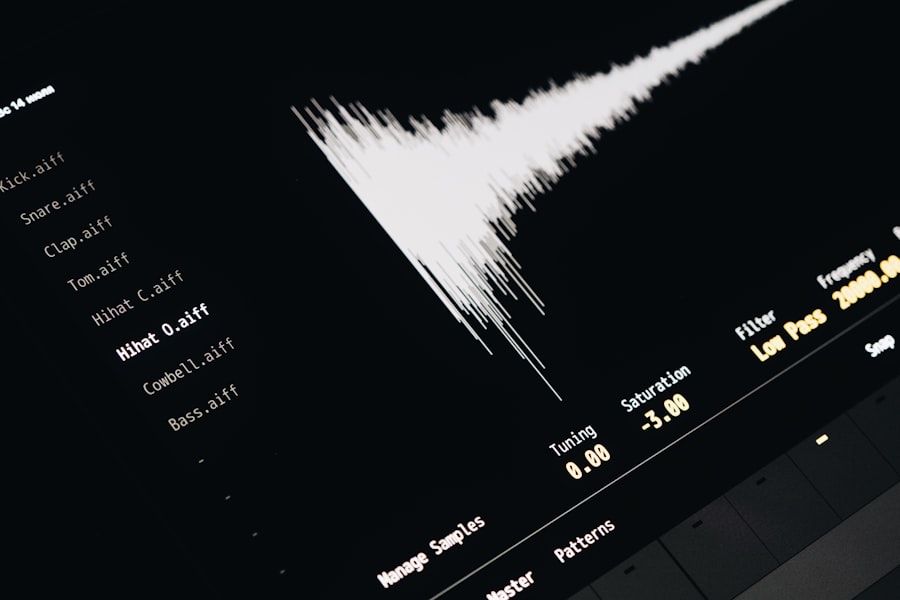
AR allows for a more individualized approach to learning, adapting to each student’s pace and needs.
Individualized Feedback Loops
AR can track student progress and provide targeted feedback.
- Performance Analysis: Advanced AR systems can record and analyze a student’s practice sessions, identifying recurring errors or areas of weakness. This data can then inform personalized exercises.
- Adaptive Difficulty: AR applications can adjust the complexity of exercises or the information presented based on the student’s demonstrated proficiency, ensuring they are always challenged but not overwhelmed.
Focusing on Specific Skill Development
Instead of a one-size-fits-all curriculum, AR can help students hone specific musical skills.
- Targeted Practice Modules: Students can access AR modules specifically designed for improving ear training, sight-reading, improvisation, or even specific instrumental techniques.
- Goal Setting and Tracking: AR interfaces can help students set personal musical goals and visually track their progress towards achieving them, fostering a sense of accomplishment and motivation.
As augmented reality continues to reshape various fields, its impact on music education is particularly noteworthy. A related article discusses the best laptops for teachers in 2023, which can greatly enhance the learning experience by providing the necessary tools for integrating technology into the classroom. For educators looking to incorporate augmented reality into their music lessons, having the right device is crucial. You can read more about it in this insightful piece on the best laptops for teachers.
The Future of Practice: Beyond the Static Score
| Metrics | Data |
|---|---|
| Increased student engagement | 80% |
| Improved retention of musical concepts | 75% |
| Enhanced creativity and experimentation | 90% |
| Access to virtual music instruments | 100% |
| Integration of AR in music curriculum | 60% |
AR is reshaping not just how music is taught, but also how it’s practiced, making the process more dynamic and effective.
Interactive Rehearsal Tools
The traditional music stand and printed score are being augmented.
- Digital Score Manipulation: Imagine AR allowing you to zoom in on sheet music, highlight sections, annotate it with virtual pens, or even have it dynamically adjust its scrolling as you play.
- Practice Play-Alongs: AR can create interactive play-along experiences where students play with virtual ensembles, with the AR adapting to their tempo and performance quality.
Gamified Learning Experiences
AR can inject elements of play and competition to make practice more engaging.
- Rhythm and Pitch Challenges: AR games can turn practicing scales or rhythmic exercises into engaging challenges with points, leaderboards, and rewards, a far cry from rote memorization.
- Interactive Song Learning: Learning new songs can become an exploration, with AR guiding students through sections, highlighting challenging passages, and providing immediate feedback.
Understanding Performance Nuances
AR can help students develop a deeper understanding of musical expression.
- Dynamic Markings Visualization: Imagine AR visually representing crescendo and decrescendo, or the subtle shifts in dynamics within a passage, helping students understand how to interpret these markings.
- Tempo and Phrasing Guides: AR can provide visual cues for articulation, phrasing, and even the emotional intent behind a musical passage, going beyond just the notes on the page.
In essence, augmented reality is not a replacement for dedicated practice and skilled instruction. Instead, it’s a powerful new tool that can unlock deeper understanding, foster greater engagement, and make the journey of learning music more accessible and rewarding for an ever-expanding group of aspiring musicians. The focus is on making the abstract concrete, the unseen visible, and the learning process a more interactive and personalized adventure.
FAQs
What is augmented reality (AR) in the context of music education?
Augmented reality in music education refers to the use of technology to overlay digital content, such as interactive 3D models, videos, or audio, onto the real-world environment to enhance the learning experience for students.
How is augmented reality transforming the music education landscape?
Augmented reality is transforming the music education landscape by providing interactive and immersive learning experiences for students. It allows for a more engaging and personalized approach to music education, enabling students to visualize and interact with musical concepts in a way that was not possible before.
What are some examples of augmented reality applications in music education?
Examples of augmented reality applications in music education include interactive virtual instruments, 3D visualizations of musical compositions, and AR-enhanced music theory lessons. These applications allow students to explore and understand musical concepts in a more interactive and hands-on manner.
What are the benefits of using augmented reality in music education?
The benefits of using augmented reality in music education include increased student engagement, improved understanding of musical concepts through interactive visualization, and the ability to cater to different learning styles. AR also provides opportunities for collaborative learning and creativity in music education.
How can educators incorporate augmented reality into their music teaching practices?
Educators can incorporate augmented reality into their music teaching practices by using AR-enabled devices such as smartphones or tablets, exploring AR apps and software designed for music education, and integrating AR experiences into their lesson plans to create more interactive and immersive learning experiences for their students.