

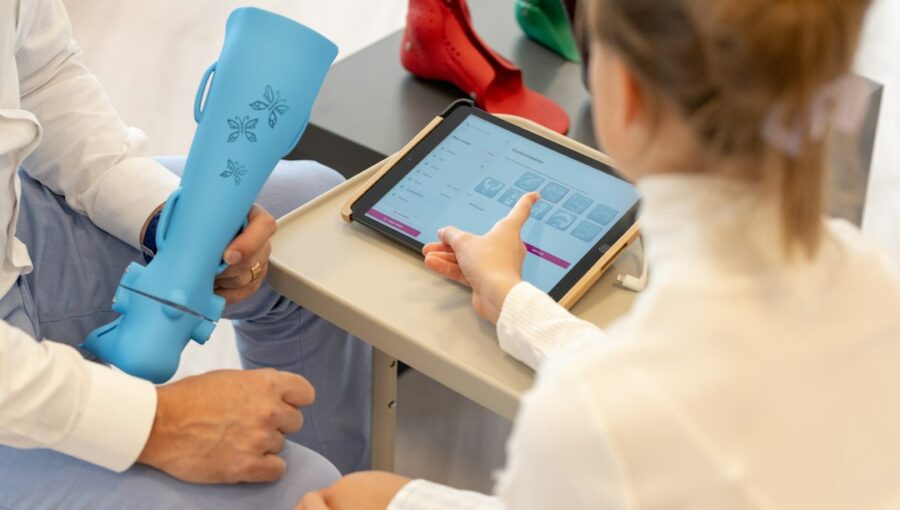
Haptic feedback systems are essentially what let you “feel” things in a virtual environment, and in medical and surgical simulation, they’re a game-changer. They provide tactile sensations that mimic real-world interactions, making training far more realistic and effective. Instead of just seeing and hearing, trainees can experience the pressure, resistance, and textures associated with procedures, which is crucial for developing fine motor skills and a nuanced understanding of anatomical structures. This technology bridges the gap between theoretical knowledge and practical application, allowing future healthcare professionals to practice complex tasks in a safe, controlled setting before ever touching a real patient.
The Core Mechanics of Haptic Technology in Simulation
At its heart, haptic technology translates digital information into physical sensations. Think of it as the reverse of a touchscreen, where your touch creates a digital input; here, digital output creates a physical sensation you can feel. In medical simulation, this involves a sophisticated interplay of hardware and software.
Transducers and Actuators: The Feel-Good Engines
The primary components that generate these sensations are transducers and actuators. Transducers convert energy from one form to another; in haptics, they often convert electrical signals into mechanical force. Actuators are specifically designed to move or control a mechanism or system. In a haptic device, these often take the form of small motors, vibrators, or even pneumatic systems that apply force or resistance to the user’s hand or instrument. For example, when a virtual surgical tool encounters a virtual organ, the software calculates the resistance that organ would provide, and the actuators in the haptic device then generate that corresponding resistance, pushing back against the user’s hand. This could be anything from the soft give of adipose tissue to the firm resistance of bone.
Force Feedback vs. Vibrotactile Feedback
There are generally two main types of haptic feedback used in these systems: force feedback and vibrotactile feedback. Force feedback, as the name suggests, applies physical forces to the user, mimicking resistance, weight, and impact. This is crucial for simulating tasks like suturing, cutting tissue, or navigating instruments through anatomical pathways. Imagine feeling the tension on a suture thread or the varying resistance as a scalpel cuts through different layers of tissue – that’s force feedback at work.
Vibrotactile feedback, on the other hand, focuses on vibrations and textures. These are often generated by small eccentric rotating mass (ERM) motors or linear resonant actuators (LRAs) within the device. This type of feedback can simulate the subtle sensations of touching different tissue types, the friction of an instrument against a surface, or even the feeling of a pulse. For instance, a surgeon might feel a slight vibration when their virtual instrument glides over a rough surface, or a distinct pattern of vibrations could represent the beating of a heart. Often, both force and vibrotactile feedback are combined to create a more comprehensive and realistic tactile experience.
Software Integration and Real-time Processing
The hardware is only half the equation. Sophisticated software is essential for making haptic systems work seamlessly. This software models the virtual environment, including the physical properties of simulated tissues, organs, and instruments. It continuously calculates the interactions between the user’s actions and the virtual environment in real-time. For example, if a trainee is performing a laparoscopic appendectomy, the software must determine the precise point of contact between the virtual grasper and the virtual appendix, calculate the force being applied, and then instruct the haptic device’s actuators to generate the appropriate resistance. This real-time processing is critical; any noticeable lag between the user’s action and the haptic response would break the immersion and reduce the effectiveness of the training.
Haptic feedback systems are revolutionizing the field of medical and surgical simulation by providing enhanced tactile precision that can significantly improve training outcomes. A related article that explores the advancements in haptic technology and its applications in consumer devices is available at this link: The iPhone 14 Pro: Experience the Power of Pro. This article discusses how the integration of haptic feedback in smartphones enhances user experience, showcasing the broader implications of this technology across various fields, including healthcare.
Key Takeaways
- The training data includes information and events up to October 2023.
- Insights and knowledge are based on a wide range of sources available until the cutoff date.
- No updates or developments occurring after October 2023 are included in the training.
- Users should verify current information from reliable sources for the latest updates.
- The model’s responses reflect the context and knowledge available up to the specified date.
Applications Across Medical Disciplines
The utility of haptic feedback in medical simulation extends across a vast spectrum of disciplines, offering unprecedented training opportunities.
Surgical Training and Skill Development
Perhaps the most obvious and impactful application is in surgical training. Traditional surgical training relies heavily on the “see one, do one, teach one” model, often involving cadavers or animal models, which have limitations in terms of availability, cost, ethical considerations, and the ability to replicate a wide range of pathological conditions. Haptic surgical simulators overcome many of these challenges.
Laparoscopic and Endoscopic Procedures
Haptic feedback is particularly valuable for minimally invasive procedures like laparoscopy and endoscopy.
These procedures are inherently challenging because surgeons operate indirectly, viewing their actions on a monitor while manipulating long, thin instruments.
The sense of touch is severely diminished or entirely absent in traditional laparoscopic surgery. Haptic simulators can restore this lost tactile feedback, allowing trainees to develop the delicate hand-eye coordination and spatial awareness required. They can practice suturing, dissecting, and manipulating tissues with realistic resistance, learning to differentiate between various tissue types by feel, which is crucial for avoiding accidental damage to healthy structures.
Open Surgery and Complex Dissections
While often associated with minimally invasive techniques, haptic feedback also plays a significant role in open surgical simulations. Simulators can replicate the feeling of cutting through skin, fascia, muscle, and bone, each with distinct tactile signatures. This allows trainees to refine their scalpel control, develop a precise understanding of anatomical layers, and practice complex dissections repeatedly without the constraints of a cadaver lab. Imagine feeling the varying resistance as you navigate around critical nerves and blood vessels in a virtual dissection, building muscle memory for delicate maneuvers.
Interventional Cardiology and Radiology
Beyond traditional surgery, haptic systems are revolutionizing training for interventional procedures. In interventional cardiology, for instance, trainees can practice navigating catheters and guidewires through virtual blood vessels, feeling the resistance as they encounter plaques or bifurcations. Similarly, in interventional radiology, haptic feedback allows practitioners to simulate complex embolization procedures or stent placements, experiencing the subtle forces involved in positioning devices within the body. This significantly reduces the learning curve for these high-stakes procedures and improves patient safety.
Diagnostic Skills Training
Haptic feedback isn’t just for intervention; it’s also proving invaluable in diagnostic training, particularly where palpation is a key skill.
Palpation and Physical Examination
Learning to effectively palpate for abnormalities – such as tumors, enlarged organs, or bony deformities – is a fundamental skill in medicine. Haptic simulators can replicate the subtle textures and stiffness associated with various pathological conditions. For example, medical students can practice palpating virtual breasts for lumps of varying sizes and consistencies, or simulate abdominal examinations to detect liver enlargement or a mass, receiving haptic feedback that mimics the real-world feel of these conditions. This provides a safe and reproducible environment to develop a highly subjective and crucial diagnostic skill.
Ultrasound and Imaging Guidance
While ultrasound itself provides visual feedback, the haptic sensation of pressing the transducer against the body and feeling underlying structures can also be simulated. This allows trainees to practice proper probe manipulation, understanding how pressure and angle affect image acquisition, and feeling the resistance as they scan over different tissue densities. Integrating haptic feedback with imaging simulators enhances the realism and effectiveness of training for procedures like biopsies or nerve blocks guided by ultrasound.
Benefits of Integrating Haptic Systems in Medical Education
The adoption of haptic feedback systems in medical and surgical education brings a multitude of tangible benefits that elevate the standard of training.
Enhanced Skill Acquisition and Retention
One of the most significant advantages is the acceleration and improvement of skill acquisition. By allowing trainees to “feel” their actions, haptic systems engage a critical sensory pathway that is often overlooked in traditional screen-based simulations. This multisensory learning experience leads to a deeper understanding and better retention of complex motor skills.
Instead of simply memorizing steps, trainees develop a kinesthetic understanding of procedures, making their movements more precise and intuitive. Repetitive practice, facilitated by simulators, builds muscle memory and refines dexterity, leading to increased proficiency.
Improved Patient Safety
The ability to practice complex and high-risk procedures in a risk-free virtual environment directly translates to improved patient safety. Trainees can make mistakes, learn from them, and refine their techniques without any consequences for a real patient.
This reduces the number of “first-time” procedures performed on live patients, minimizing complications and improving outcomes. Simulators can also expose trainees to rare or difficult cases that they might not encounter frequently in clinical practice, ensuring they are better prepared for a wider range of scenarios.
Objective Assessment and Performance Measurement
Haptic simulators often come equipped with sophisticated analytical tools that can objectively measure a trainee’s performance. These systems can track parameters such as force applied, tissue damage, path of instruments, time taken for specific tasks, and efficiency of movement.
This objective data provides invaluable feedback to trainees and instructors, highlighting areas of strength and weakness that might be difficult to observe or quantify in a live setting. This data-driven approach allows for personalized training plans and ensures that trainees meet specific proficiency benchmarks before progressing to real-world scenarios.
Cost-Effectiveness and Accessibility
While the initial investment in haptic simulators can be substantial, they offer long-term cost-effectiveness. They eliminate the need for expensive cadavers, animal models, or specialized lab equipment for initial training.
They also allow for training to occur at any time, without the logistical challenges of scheduling live cases or accessing operating rooms for practice. This increased accessibility to high-quality training resources can help address the growing demand for skilled medical professionals, particularly in remote or underserved areas where access to traditional training methods might be limited.
Bridging the Gap Between Novice and Expert
Haptic simulators serve as an effective bridge between novice learners and experienced practitioners. For beginners, they provide a foundational understanding of anatomical relationships and instrumental manipulation.
For intermediate learners, they offer opportunities to refine techniques and build confidence. Even experienced surgeons can use these systems to practice new procedures, maintain their skills, or prepare for particularly challenging cases, without putting patients at risk during their learning curve.
Challenges and Future Directions
While the benefits are clear, the widespread adoption and advancement of haptic feedback systems in medical simulation still face certain challenges and are continuously evolving.
Cost and Complexity of Development
One of the primary hurdles is the significant cost associated with developing and implementing these high-fidelity systems. Creating realistic haptic feedback requires sophisticated hardware, advanced robotics, and complex software that accurately models biological tissues and their interactions. The research and development involved in achieving nuanced tactile sensations are resource-intensive. As a result, the initial purchase price for advanced haptic simulators can be a barrier for many institutions, particularly smaller hospitals or training centers.
Fidelity and Realism Limitations
Despite impressive advancements, achieving perfect fidelity and realism remains an ongoing challenge. Simulating the exact tactile properties of every tissue type, bone, and fluid in the human body is incredibly complex. The subtle differences in elasticity, friction, and resistance can be difficult to replicate accurately across a wide range of pathological conditions. For instance, while a simulator might replicate the feel of cutting normal tissue, accurately replicating the feel of diseased or scarred tissue with all its variations is much harder. Furthermore, the limited workspace and degrees of freedom in some haptic devices can sometimes constrain the realism of certain surgical maneuvers compared to the vast flexibility of a human hand and arm.
Integration with Other Modalities
While haptic feedback adds a crucial layer of realism, it’s most effective when seamlessly integrated with other simulation modalities. This includes realistic visual feedback (high-resolution graphics), auditory feedback (sounds of instruments, tissue dissection, alarms), and even physiological feedback (patient vital signs responding to interventions). Ensuring that all these sensory inputs are synchronized and coherent in real-time is a complex technical challenge. A mismatch between what the user sees, hears, and feels can break immersion and reduce the effectiveness of the training.
Future Innovations: Towards Greater Realism and Accessibility
The future of haptic feedback in medical simulation is bright, with several key areas of innovation on the horizon.
Advanced Material Modeling
Research is ongoing to develop more sophisticated computational models of biological tissues that can accurately simulate their mechanical properties under various conditions. This includes dynamic models that change in real-time as they are cut, stretched, or manipulated. Imagine a virtual liver that bleeds and changes consistency as you operate on it, or a tumor that feels different after radiation therapy.
Wider Range of Haptic Devices
Expect to see a greater variety of haptic devices, including those that offer more degrees of freedom, smaller form factors, and even wearable haptic interfaces. This could include gloves that provide feedback to individual fingers, or exoskeletons that allow for full-arm feedback, further enhancing the realism of complex procedures. The goal is to move beyond generic instrument feel to highly specific and nuanced tactile sensations.
AI and Machine Learning Integration
Artificial intelligence and machine learning are poised to play a significant role. AI can help personalize training experiences by adapting the simulator’s difficulty based on a trainee’s performance. It can also be used to generate more realistic and varied patient scenarios, including rare complications, offering an even broader training ground. Machine learning algorithms could also help fine-tune haptic feedback parameters in real-time, learning from expert surgeon data to produce even more accurate and realistic sensations.
Multi-sensory Integration Beyond Haptics
While haptics is a major focus, the future will likely see even more robust integration with other sensory inputs, including advanced virtual reality (VR) and augmented reality (AR) systems. Imagine performing a complex surgery in a VR environment where you not only feel the tissues but also see highly realistic anatomical structures with photorealistic detail, all while hearing the sounds of the operating room. AR could allow haptic feedback to be overlaid onto real anatomical models or even live surgical environments for enhanced guidance.
In exploring the advancements in haptic feedback systems, particularly their role in enhancing tactile precision in medical and surgical simulation, it is interesting to consider how these technologies are being integrated into various fields. A related article discusses the potential of affiliate marketing strategies, which can also benefit from innovative technologies to reach targeted audiences effectively. For more insights on this topic, you can read about it in this