

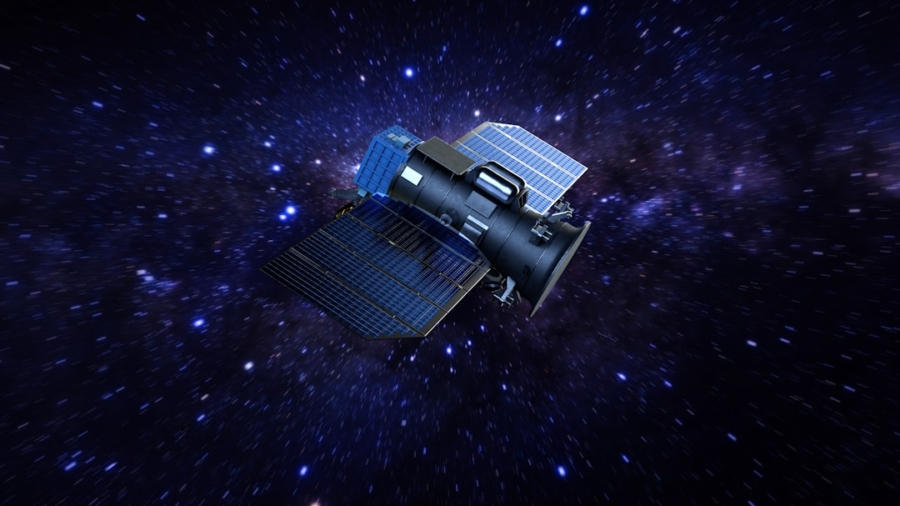
So, you’re curious about how we’re getting further out into the cosmos, beyond Mars and into the truly deep black? It all comes down to pushing things in a smarter, more efficient way, and that’s where advanced ion propulsion really shines. Think of it as the difference between revving a car engine constantly versus achieving a smooth, steady acceleration that lasts for ages. Ion drives are fundamentally different from the chemical rockets we’ve relied on for launches. Instead of a big, explosive bang, they use electricity to accelerate a stream of ions (charged atoms) out of a nozzle at incredibly high speeds. This gives them a gentle but persistent shove, allowing them to build up speed over extremely long periods, which is exactly what you need for those marathon journeys to other planets, moons, and even beyond our solar system.
The Power of Efficiency: Why Ion Drives Rule for the Long Haul
When we talk about deep space exploration, the biggest hurdle isn’t necessarily just getting there, but doing it with the limited amount of fuel we can carry. Traditional chemical rockets are fuel-hungry beasts. They provide a lot of thrust quickly, perfect for escaping Earth’s gravity, but they burn through their propellant in minutes or hours. For missions spanning years or even decades, this means carrying a gargantuan amount of fuel, which adds weight and complexity.
Inertial Efficiency: The Game Changer
This is where the magic of ion propulsion truly unfolds. The key concept is “specific impulse,” which is essentially a measure of how efficiently a rocket engine uses its propellant. Think of it like miles per gallon for your car, but for rocket fuel.
Understanding Specific Impulse
Chemical rockets typically have specific impulses in the range of 300-450 seconds.
Ion engines, on the other hand, can boast specific impulses of 2,000 to over 10,000 seconds.
That’s a massive difference. What this means in practical terms is that for the same amount of propellant, an ion engine can produce thrust for much longer.
The “Gentle Push” Advantage
It’s crucial to understand that ion engines don’t offer the high thrust that chemical rockets do. You wouldn’t use one to launch from Earth. Their thrust is often described as being as light as the weight of a piece of paper on your hand. However, this gentle push, applied continuously over extended periods, allows spacecraft to achieve incredibly high final velocities. Imagine a sailboat catching a steady breeze versus a speedboat making a quick splash; the sailboat might take longer to get going, but over a long distance, it can cover more ground and reach further destinations.
Mass Savings for Mission Planners
The high efficiency translates directly into less propellant mass needed for a given mission. This is a monumental advantage for spacecraft designers. Less propellant means:
- Smaller and lighter spacecraft: This reduces launch costs and allows for more complex payloads.
- Increased payload capacity: More room for scientific instruments, communication gear, or even more sophisticated propulsion systems.
- Longer mission durations: The spacecraft can operate for years, even decades, without needing to refuel or significantly alter its trajectory due to propellant limitations.
In the realm of space exploration, the development of advanced ion propulsion technologies is crucial for enhancing our capabilities in deep space missions. A related article discusses the innovative features of the Huawei Mate 50 Pro, which showcases cutting-edge technology that parallels advancements in propulsion systems. Just as the Mate 50 Pro integrates sophisticated engineering to improve user experience, advancements in ion propulsion are set to revolutionize how we explore the cosmos. For more insights, you can read the article here: Samsung S22 Ultra.
Challenges and the Road Ahead
Despite their immense promise, the widespread adoption of advanced ion propulsion technologies also faces significant hurdles that researchers and engineers are actively working to overcome.
Power Generation Limitations
As mentioned, the primary limitation for many ion drives is the available electrical power. This is particularly true for missions venturing into the outer solar system. Developing more powerful, compact, and reliable power sources is paramount.
The NEP Imperative
Nuclear Electric Propulsion remains the most promising path to overcoming power limitations. However, public perception, regulatory frameworks, and the sheer engineering complexity of developing space-rated nuclear reactors present considerable challenges. The development of compact, efficient, and safe fission reactors for space applications is a critical ongoing endeavor.
Thruster Lifespan and Reliability
While lifespans have improved dramatically, ensuring that ion thrusters can operate reliably for missions lasting 10, 20, or even more years is still an area of active research.
Material Science Innovations
Developing advanced materials that are more resistant to erosion from high-energy ion bombardment is crucial, particularly for gridded ion thrusters. This involves exploring ceramics, composites, and specialized alloys.
Redundancy and In-Orbit Servicing
Designing thruster systems with built-in redundancy and exploring capabilities for in-orbit servicing or refueling could also mitigate lifespan concerns and extend mission viability.
Propellant Storage and Management
While some propellants like iodine offer storage advantages, managing their phase transitions (solid to gas) and ensuring consistent flow rates under varying space conditions requires sophisticated engineering. For liquid propellants, managing boil-off and ensuring reliable delivery systems remain key.
Cost and Development Time
Developing and qualifying advanced propulsion systems like cutting-edge ion drives is a time-consuming and expensive process. It requires significant investment in research, development, testing, and validation.
The Future of Pushing Boundaries
The evolution of ion propulsion is not just an incremental improvement; it is a fundamental shift in our capabilities for exploring the cosmos. By offering unparalleled efficiency, these technologies are quietly revolutionizing what is possible. We’re moving from missions that are constrained by the immediate need to shed mass and burn fuel, to missions that are designed for sustained, efficient journeys, enabling us to see and understand more of our universe than ever before.
The ongoing advancements in novel propellants like iodine, coupled with the persistent efforts to develop more potent power sources, particularly NEP systems, paint a vivid picture of the future. Imagine spacecraft reaching Neptune in a few years instead of decades, or robotic probes making significant progress towards the Oort Cloud. These are not science fiction pipe dreams; they are tangible goals being pursued through the practical, persistent innovation in ion propulsion. The gentle, unwavering push of ions is the engine that will carry humanity’s curiosity to the farthest reaches of our solar system and, perhaps one day, beyond.
FAQs
What is ion propulsion technology?
Ion propulsion technology is a type of spacecraft propulsion that uses ionized gas as a propellant. It works by accelerating ions using electric or magnetic fields to generate thrust.
How does ion propulsion technology enhance deep space exploration?
Ion propulsion technology enhances deep space exploration by providing a more efficient and long-lasting propulsion system compared to traditional chemical rockets. This allows spacecraft to travel farther and faster, reaching distant destinations such as outer planets and beyond.
What are the advantages of ion propulsion technology?
The advantages of ion propulsion technology include higher efficiency, lower fuel consumption, and longer operational lifetimes compared to traditional chemical rockets. It also allows for continuous low-thrust acceleration, enabling spacecraft to reach higher speeds over time.
What are some examples of spacecraft that use ion propulsion technology?
Some examples of spacecraft that use ion propulsion technology include NASA’s Dawn spacecraft, which successfully explored the asteroid Vesta and the dwarf planet Ceres, and the European Space Agency’s SMART-1 mission to the Moon.
What are the challenges of ion propulsion technology?
Challenges of ion propulsion technology include the need for power-dense and lightweight energy sources, such as advanced solar panels or nuclear power systems, to provide the necessary electrical power for ion thrusters. Additionally, the development and maintenance of ion propulsion systems require specialized expertise and resources.
Enjoying our content? Make us a preferred source on Google:
Add us as a Preferred Source on Google